Kirjojen hintavertailu – 12 903 725 kirjaa ja 27 kauppaa

Kirjailija

Rob Watts

Kirjat ja teokset yhdessä paikassa: 23 kirjaa, julkaisuja vuosilta 1997–2026, suosituimpiin kuuluu Discovering Risk. Vertaile teosten hintoja ja tarkista saatavuus suomalaisista kirjakaupoista.

23 kirjaa

Kirjojen julkaisuvuodet: 1997–2026.

Making Groups Work

Making Groups Work

Rob Watts

Routledge
2021
sidottu
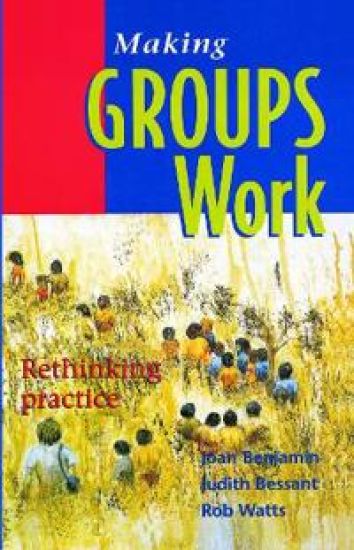
Most of us work in them, most of us live in them. Some are complex, some are simple. Some meet only once while others last for decades. Whatever form they take, groups are central to our lives. Making Groups Work offers a comprehensive introduction to the key issues in group work. It outlines the role of groups and the history of group work, discusses group politics, and shows how groups can help promote social change. Detailed case studies are used to make the crucial link between theory and practice. The authors also offer strategies for making groups work effectively. Making Groups Work is essential reading for social workers, health workers, counsellors, community workers, youth workers, trainers and anyone else interested in working with groups. It is also a good introductory text for students and a handy reference for professionals.
Sociology Australia

Sociology Australia

Rob Watts

Routledge
2021
sidottu
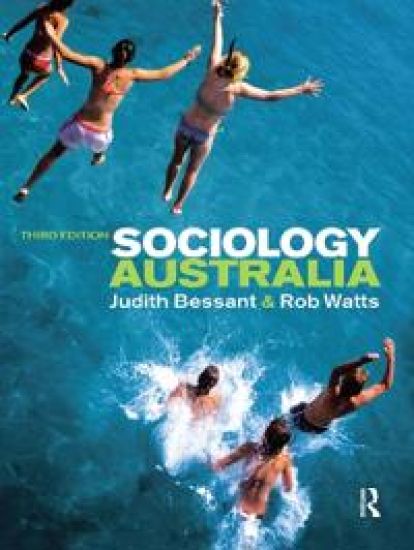
Sociology gives us the tools we need to understand our life and the lives of the people around us. It reveals that our commonsense view of the world isn't always right, and enables us to find out what actually shapes our experiences. In this widely used and very readable introductory text, Judith Bessant and Rob Watts show us how to develop a sociological perspective on what is happening in Australia today. Rapid and far-reaching social changes are taking place which affect us all: globalisation is impacting on our economy and culture; technological developments increase the pace of life; and many people worry about the decline of traditional values and about environmental and personal security. Using a sociological perspective we can explain why different groups of people experience these changes as exciting, unsettling or devastating. Sociology Australia is structured around six key questions:* What is sociology?* Who are we and how do we come to be who we are?* How do we know the world in which we live?* Can we make our lives as we want them?* Who makes the decisions that shape our society?* What changes are taking place in Australia today? Sociology Australia is an ideal introduction to the discipline of sociology and to the dynamics of Australian society today. This third edition of Sociology Australia has been substantially revised and updated, and includes new chapters on religion, education and sustainability.
Talking Policy

Talking Policy

Rob Watts

Routledge
2021
sidottu
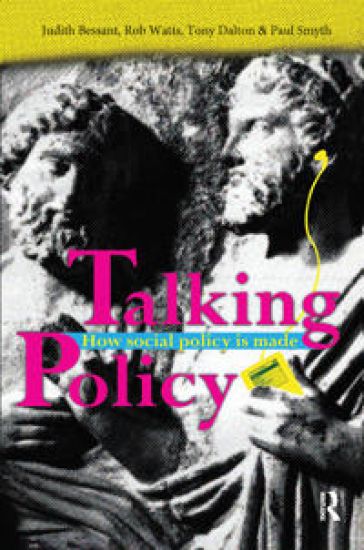
When we catch a bus, visit a doctor, borrow a book from the library or enrol in a course we benefit from the social policies of government. Talking Policy explains how the myriad programs and services we take for granted are developed and delivered, and how this fits into the political process. There is a human and political aspect to social policy-making; it's not all rational solutions to measurable problems. The authors explain how issues come to be defined as social problems, and offer an account of the historical development of social policy and the welfare state in Australia. They also outline the competing political and philosophical ideas which influence the different ways in which governments respond to social inequality and needs in the community. With detailed case studies from variety of areas of social policy making, Talking Policy is a valuable introduction to this complex and important field.'Talking Policy is an informative, insightful book that is also absorbing and challenging.'Lois Bryson, Emeritus Professor, University of Newcastle'With a commitment to reinvigorate policy debate, the authors make a convincing case that at its heart policy-making is about competing ethical visions, that ideas count, and that words serve as tools in this political and contested activity.'Associate Professor, Carol Bacchi, University of Adelaide
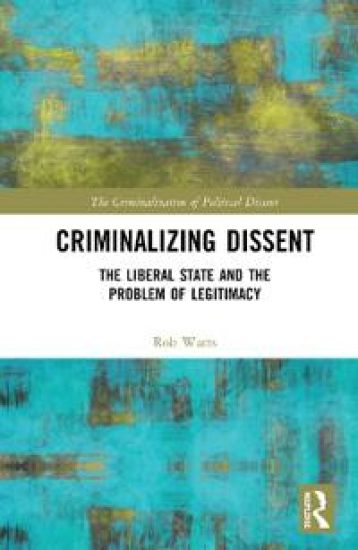
Criminalizing Dissent

Criminalizing Dissent

Rob Watts

Routledge
2020
nidottu
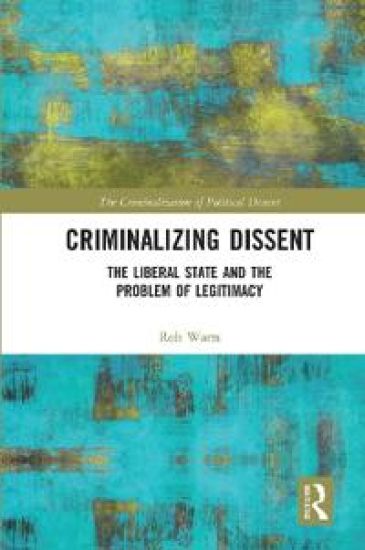
While liberal-democratic states like America, Britain and Australia claim to value freedom of expression and the right to dissent, they have always actually criminalized dissent. This disposition has worsened since 9/11 and the 2008 Great Recession. This ground-breaking study shows that just as dissent involves far more than protest marches, so too liberal-democratic states have expanded the criminalization of dissent. Drawing on political and social theorists like Arendt, Bourdieu and Isin, the book offers a new way of thinking about politics, dissent and its criminalization relationally. Using case studies like the Occupy movement, selective refusal by Israeli soldiers, urban squatters, democratic education and violence by anti-Apartheid activists, the book highlights the many forms dissent takes along with the many ways liberal-democratic states criminalize it. The book highlights the mix of fear and delusion in play when states privilege security to protect an imagined ‘political order’ from difference and disagreement. The book makes a major contribution to political theory, legal studies and sociology. Linking legal, political and normative studies in new ways, Watts shows that ultimately liberal-democracies rely more on sovereignty and the capacity for coercion and declarations of legal ‘states of exception’ than on liberal-democratic principles. In a time marked by a deepening crisis of democracy, the book argues dissent is increasingly valuable.
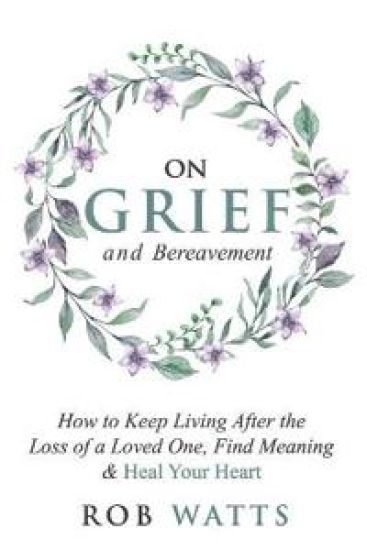
On Grief and Bereavement

On Grief and Bereavement

Rob Watts

Elkholy
2020
pokkari
Will Your Heart Ever Heal Again? In the very beginning, it feels like your heart is breaking into a thousand little pieces. You'll find it difficult to breathe, as if someone had punched you in the chest and squeezed every last drop of air from your lungs. Grief isn't just psychological, it can have profound effects on your health, your cognitive abilities and even your desire to live. When you lose a loved one the world stops making sense. Chances are that you find it difficult to maintain a sense of normalcy, to keep on going when you feel like crawling in bed, curling up in a little ball and spending the next year under your blanket. While loss is a normal part of our human existence, we are never fully prepared for its impact. If only we had one more day, a few more hours to tell that special someone how much we love and appreciate them. Unfortunately, reality doesn't work this way. On top of that, societal notions of grief are tremendously skewed. You're anticipated to be tough, you're often being told that you have to get over it. That's not how grief works. It's not a switch you can flick on and off. Grief will be with you for the rest of your life. Time doesn't heal such wounds. But you can learn to live with the loss, find purpose, meaning and joy in life again. In On Grief and Bereavement, you will discover: Why it's ok to feel that the world has gone mad and it's not making sense anymore (and no, you're not going crazy)The reasons why assurance and spiritual advice could make you hate people after a loved one has passedWhy numbness is normal and you're not broken if you don't feel anythingWhat to do when sorrow is substituted by confusion, anger and eventually apathyThe 5 stages of grief and reasons why the model is so wrongBiggest and most detrimental myths about grieving debunkedA step-by-step strategy for recovery and finding a new reason to liveWhen has the time come to go back to work and be a productive member of societyReasons to seek professional assistance, especially if the pain doesn't subsideThe length of the grieving process: How long will it take to stop feeling that intense painAnd a lot more. Right now, you feel like you're alone in this world. Nobody has gone through what you experience, nobody has been in your shoes. However, the truth is, millions of others have had to face a devastating loss. It has turned their lives upside down and some haven't been capable of recovering. You will get better. Right now, however, you have to gain a better understanding of what grief is doing to you, how it's affecting your family and what it takes to heal. One day, you will remember your dear departed fondly and the pain will subside. Get this book now if you want to discover new meaning and continue the legacy of that special person.

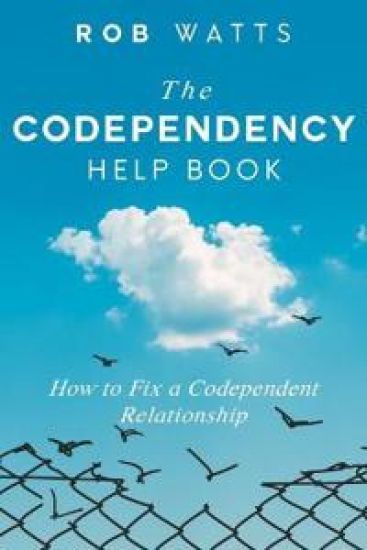
The Codependency Help Book
Do you only feel happy when your partner's needs are met? Then keep reading. In a relationship, do you think you have to sacrifice your own needs to keep peace and harmony? Do you feel scared or anxious about spending time alone? How often do you turn other peoples invitations down to keep your partner happy? Probably most of the times. You are a giving person, but your own emotional needs have started to fade away in your relationship. You put your attention on comforting your partner instead of comforting yourself. One of your core beliefs is, the more love I give, the more Iove I receive. Unfortunately, this is a misconception. Losing your identity and becoming your partner creates a dysfunctional relationship that won t last long term. All you do is put yourself down, comparing yourself with others and losing the trust in yourself. You live for your relationship and without your partner, you would be worthless. If you are struggling with your self-esteem and you use all your energy to take care of your partner, you are likely to be stuck in a codependent relationship. Sacrificing yourself causes stress and can lead to addiction, obesity and other compensation behavior patterns. Constantly pleasing your partner is not only unhealthy and dysfunctional for your relationship, but also for yourself. Creating and maintaining a healthy, loving relationship that can last requires some fundamental changes in yourself. In "The Codependency Help Book", you ll discover: What Codependency is and if you are suffering from it How to turn from people pleaser to self lover The Snow-ball effect that keeps you locked in your relationship and how to break the circle The underlying cause of your need to take more care of others than yourself The most common toxins in your relationship and how to get rid of them Warning signs of stepping into a codependent relationship to never fall back into the trap How to say goodbye if your relationship is expired How to create a happy and fulfilling future for yourselfAnd much more. You are terrified of losing your partner if you give them less attention and focus more on yourself. Yet, take a second and ask yourself what relationship means. In a relationship the needs of each partner have to be equally relevant. You are there to inspire each other and grow together instead of scaring or stressing each other. Your relationship is only supposed to last if you are loved for the unique person that you are. This guide is very easy to follow that you will have success with it, even if you tried to break free several times before and failed. You ́ll discover tools and strategies that will give you the strength you need to feel confident instead of lonely.. It s time to claim back your identity and make space for your own needs while still being a caring and supportive person. If you want to step out of your savior role and step up for yourself, then get this book right now.
Criminalizing Dissent

Criminalizing Dissent

Rob Watts

Routledge
2019
sidottu
While liberal-democratic states like America, Britain and Australia claim to value freedom of expression and the right to dissent, they have always actually criminalized dissent. This disposition has worsened since 9/11 and the 2008 Great Recession. This ground-breaking study shows that just as dissent involves far more than protest marches, so too liberal-democratic states have expanded the criminalization of dissent. Drawing on political and social theorists like Arendt, Bourdieu and Isin, the book offers a new way of thinking about politics, dissent and its criminalization relationally. Using case studies like the Occupy movement, selective refusal by Israeli soldiers, urban squatters, democratic education and violence by anti-Apartheid activists, the book highlights the many forms dissent takes along with the many ways liberal-democratic states criminalize it. The book highlights the mix of fear and delusion in play when states privilege security to protect an imagined ‘political order’ from difference and disagreement. The book makes a major contribution to political theory, legal studies and sociology. Linking legal, political and normative studies in new ways, Watts shows that ultimately liberal-democracies rely more on sovereignty and the capacity for coercion and declarations of legal ‘states of exception’ than on liberal-democratic principles. In a time marked by a deepening crisis of democracy, the book argues dissent is increasingly valuable.
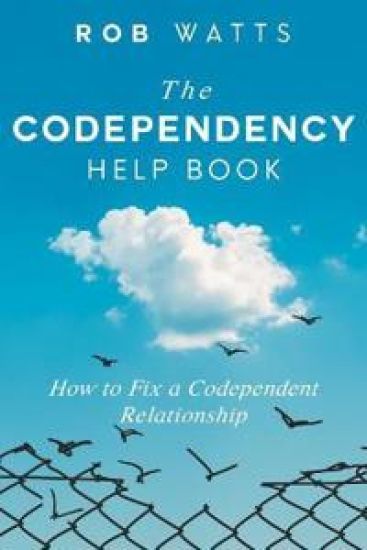
The Codependency Help Book

The Codependency Help Book

Rob Watts

Independently Published
2019
pokkari
Do you only feel happy when your partner's needs are met? Then keep reading. In a relationship, do you think you have to sacrifice your own needs to keep peace and harmony? Do you feel scared or anxious about spending time alone? How often do you turn other peoples invitations down to keep your partner happy? Probably most of the times. You are a giving person, but your own emotional needs have started to fade away in your relationship. You put your attention on comforting your partner instead of comforting yourself. One of your core beliefs is, the more love I give, the more Iove I receive. Unfortunately, this is a misconception. Losing your identity and becoming your partner creates a dysfunctional relationship that won t last long term. All you do is put yourself down, comparing yourself with others and losing the trust in yourself. You live for your relationship and without your partner, you would be worthless. If you are struggling with your self-esteem and you use all your energy to take care of your partner, you are likely to be stuck in a codependent relationship. Sacrificing yourself causes stress and can lead to addiction, obesity and other compensation behavior patterns. Constantly pleasing your partner is not only unhealthy and dysfunctional for your relationship, but also for yourself. Creating and maintaining a healthy, loving relationship that can last requires some fundamental changes in yourself. In "The Codependency Help Book", you ll discover: What Codependency is and if you are suffering from it How to turn from people pleaser to self lover The Snow-ball effect that keeps you locked in your relationship and how to break the circle The underlying cause of your need to take more care of others than yourself The most common toxins in your relationship and how to get rid of them Warning signs of stepping into a codependent relationship to never fall back into the trap How to say goodbye if your relationship is expired How to create a happy and fulfilling future for yourself And much more. You are terrified of losing your partner if you give them less attention and focus more on yourself. Yet, take a second and ask yourself what relationship means. In a relationship the needs of each partner have to be equally relevant. You are there to inspire each other and grow together instead of scaring or stressing each other. Your relationship is only supposed to last if you are loved for the unique person that you are. This guide is very easy to follow that you will have success with it, even if you tried to break free several times before and failed. You ́ll discover tools and strategies that will give you the strength you need to feel confident instead of lonely.. It s time to claim back your identity and make space for your own needs while still being a caring and supportive person. If you want to step out of your savior role and step up for yourself, scroll up and click the "Add to Cart" button right now.
The Precarious Generation

The Precarious Generation

Judith Bessant; Rys Farthing; Rob Watts

Routledge
2018
nidottu
This book draws on a wealth of evidence including young people’s own stories, to document how they are now faring in increasingly unequal societies like America, Britain, Australia, France and Spain. It points to systematic generational inequality as those born since 1980 become the first generation to have a lower standard of living than previous generations. While governments and experts typically explain this by referring to globalization, new technologies, or young people’s deficits, the authors of this book offer a new political economy of generations, which identifies the central role played by governments promoting neoliberal policies that exacerbate existing social inequalities based on age, ethnicity, gender and class. The book is a must read for social science students, human service workers and policy-makers and indeed for anyone interested in understanding the impact of government policy over the last 40 years on young people.
Book Signing 101: An Author's Guide: The Do's, Don'ts & Expectations in Professional Book Signing
Are you an author? Do you have a new book that you're looking to promote to potential new fans? Have you considered venturing out into the book signing circuit? Maybe you've thought about it for a while but haven't been sure how to go about it. Perhaps you're reluctant because you don't know what to expect. Book Signing 101: An Author's Guide gives you a simple and straightforward breakdown of everything involved in book signing events, from where to hold your event, what to have with you, what to avoid, how to save money, how to carry yourself like a professional author and much more.
The Precarious Generation

The Precarious Generation

Judith Bessant; Rys Farthing; Rob Watts

Routledge
2017
sidottu
This book draws on a wealth of evidence including young people’s own stories, to document how they are now faring in increasingly unequal societies like America, Britain, Australia, France and Spain. It points to systematic generational inequality as those born since 1980 become the first generation to have a lower standard of living than previous generations. While governments and experts typically explain this by referring to globalization, new technologies, or young people’s deficits, the authors of this book offer a new political economy of generations, which identifies the central role played by governments promoting neoliberal policies that exacerbate existing social inequalities based on age, ethnicity, gender and class. The book is a must read for social science students, human service workers and policy-makers and indeed for anyone interested in understanding the impact of government policy over the last 40 years on young people.
Public Universities, Managerialism and the Value of Higher Education
This book provides a rigorous examination into the realities of the current university system in Britain, America and Australia. The radical makeover of the higher education system which began in the 1980s has conventionally been understood as universities being transformed into businesses which sell education and research in a competitive market. This engaging and provocative book argues that this is not actually the case. Drawing on lived experience, Watts asserts that the reality is actually a consequence of contradictory government policy and new public management whose exponents talk and act ‘as-if’ universities have become businesses. The result of which is ‘market crazed governance’, whereby universities are subjected to expensive rebranding and advertising campaigns and the spread of a toxic culture of customer satisfaction surveys which ask students to evaluate their teachers and what they have learned, based on government ‘metrics’ of research ‘quality’. This has led to a situation where not only the normal teacher-student relationship is inverted, academic professional autonomy is eroded and many students are short-changed, but where universities are becoming places whose leaders are no longer prepared to tell the truth and too few academics are prepared to insist they do. An impassioned and methodical study, this book will be of great interest to academics and scholars in the field of higher education and education policy.
States of Violence and the Civilising Process
This book offers a distinctive and novel approach to state-sponsored violence, one of the major problems facing humanity in the previous and now the twenty-first century. It addresses the question: how is it possible that large numbers of ordinary men and women are able to do the killing, torturing and violence that defines crimes against humanity? In his striking analysis, Rob Watts shows how and why states, of all political persuasions, engage in crimes against humanity, including: genocide, homicide, torture, kidnapping, illegal surveillance and detention. This book advances a new interpretive frame. It argues against the ‘civilizing process’ model, showing how both states and social sciences like sociology and criminology have been complicit in splitting 'the social' from 'the ethical' while accepting too complacently that modern states are the exemplars of morality and rationality. The book makes the case that it is possible to bring together in the one interpretative frame, our understanding of social action involving personal motivation and ethical responsibility and patterns of collective social action operating in terms of the agencies of ‘the State’. Rob Watts identifies and charts the pathways of action and ‘practical’ (i.e. ethical) judgements which the perpetrators of these crimes against humanity constructed for themselves to make sense of what they were doing. At once challenging and highly accessible, the book reveals the policy-making processes that produce state crime as well as showing how ordinary people do the state’s dirty work.
International Criminology

International Criminology

Rob Watts; Judith Bessant; Richard Hil

Routledge
2008
sidottu
International Criminology is an easy-access critical introduction to how conventional criminologists in the international arena think about and research crime. By using examples from the US, UK and Australia, the authors outline key ideas, vocabulary, assumptions and findings of the discipline while opening up a set of critical underlying issues and problems. From theoretical traditions to historical perspectives; contemporary criminology to reflexive criminology; this all encompassing text covers it all. This is the most valuable introduction to international criminology available for undergraduates and works as a superb refresher for more experienced students.
International Criminology

International Criminology

Rob Watts; Judith Bessant; Richard Hil

Routledge
2008
nidottu
International Criminology is an easy-access critical introduction to how conventional criminologists in the international arena think about and research crime. By using examples from the US, UK and Australia, the authors outline key ideas, vocabulary, assumptions and findings of the discipline while opening up a set of critical underlying issues and problems. From theoretical traditions to historical perspectives; contemporary criminology to reflexive criminology; this all encompassing text covers it all. This is the most valuable introduction to international criminology available for undergraduates and works as a superb refresher for more experienced students.
Sociology Australia

Sociology Australia

Rob Watts

Allen Unwin
2007
nidottu
Sociology gives us the tools we need to understand our life and the lives of the people around us. It reveals that our commonsense view of the world isn't always right, and enables us to find out what actually shapes our experiences. In this widely used and very readable introductory text, Judith Bessant and Rob Watts show us how to develop a sociological perspective on what is happening in Australia today. Rapid and far-reaching social changes are taking place which affect us all: globalisation is impacting on our economy and culture; technological developments increase the pace of life; and many people worry about the decline of traditional values and about environmental and personal security. Using a sociological perspective we can explain why different groups of people experience these changes as exciting, unsettling or devastating. Sociology Australia is structured around six key questions:* What is sociology?* Who are we and how do we come to be who we are?* How do we know the world in which we live?* Can we make our lives as we want them?* Who makes the decisions that shape our society?* What changes are taking place in Australia today? Sociology Australia is an ideal introduction to the discipline of sociology and to the dynamics of Australian society today. This third edition of Sociology Australia has been substantially revised and updated, and includes new chapters on religion, education and sustainability.
Discovering Risk

Discovering Risk

Judith Bessant; Richard Hil; Rob Watts

Peter Lang Publishing Inc
2003
nidottu
Anxiety about unemployment, homelessness, poverty and crime has always been around. Today, governments, experts and the media spend a lot of time talking about people at risk, the measurement and prediction of risk factors, encouraging resiliency and the need for early intervention. What are the politics, origins and meanings behind risk talk? Is the discovery and management of risk factors capable of offering real solutions? This lively, provocative book asks these questions by examining youth employment, homelessness and juvenile crime. It is a must-read for policy makers, human service workers, researchers and anyone interested in the key social issues of our time.