Kirjojen hintavertailu – 12 903 724 kirjaa ja 27 kauppaa

Kirjailija

Rob White

Kirjat ja teokset yhdessä paikassa: 49 kirjaa, julkaisuja vuosilta 1990–2026, suosituimpiin kuuluu Todd Haynes. Vertaile teosten hintoja ja tarkista saatavuus suomalaisista kirjakaupoista.

49 kirjaa

Kirjojen julkaisuvuodet: 1990–2026.

Crime Prevention

Crime Prevention

Adam Sutton; Cherney Adrian; Rob White

Cambridge University Press
2013
pokkari
Crime Prevention: Principles, Perspectives and Practices is a concise, comprehensive introduction to the theory and practice of crime prevention. The authors contend that crime prevention strategies should include both social prevention and environmental prevention. It embraces these strategies as an alternative to policing, criminal justice and 'law and order'. Part I presents an overview of the history and theory of crime prevention, featuring chapters on social prevention, environmental prevention and evaluation. Part II explores the practice of crime prevention and the real life challenges of implementation, including policy making, prevention in public places, dealing with social disorder and planning for the future. Crime Prevention provides readers with an understanding of the political dimension of crime prevention and the ability to critically analyse prevention techniques. It is essential reading for undergraduate students of criminology, crime prevention and public policy.

Ghost

Ghost

Rob White; Julie Welch

Vintage
2012
pokkari
When Spurs legend John White was killed by a bolt of lightning in 1964, the football world was rocked by the tragedy. To find answers he set out to speak to White's former teammates, his family and followers, and built up a touching portrait of a gifted young footballer and of a lost era.
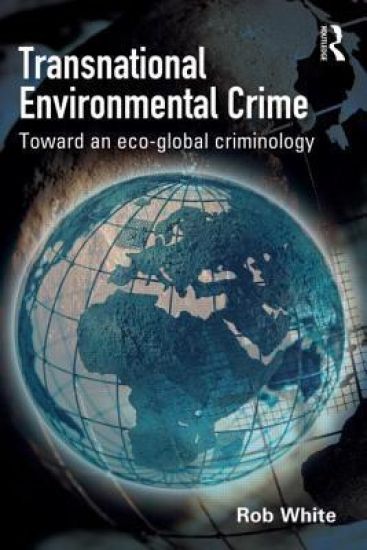
Transnational Environmental Crime

Transnational Environmental Crime

Rob White

Willan Publishing
2011
nidottu
This book provides a comprehensive introduction to and overview of eco-global criminology. Eco-global criminology refers to a criminological approach that is informed by ecological considerations and by a critical analysis that is global in scale and perspective. Based upon eco-justice conceptions of harm, it focuses on transgressions against environments, non-human species and humans. At the centre of eco-global criminology is analysis of transnational environmental crime. This includes crimes related to pollution (of air, water and land) and crimes against wildlife (including illegal trade in ivory as well as live animals). It also includes those harms that pose threats to the environment more generally (such as global warming). In addressing these issues, the book deals with topics such as the conceptualization of environmental crime or harm, the researching of transnational environmental harm, climate change and social conflict, threats to biodiversity, toxic waste and the transference of harm, prosecution and sentencing of environmental crimes, and environmental victimization and transnational activism. This book argues that analysis of transnational environmental crime needs to incorporate different notions of harm, and that the overarching perspective of eco-global criminology provides the framework for this. Transnational Environmental Crime will be an essential resource for students, academics, policy-makers, environmental managers, police, magistrates and others with a general interest in environmental issues.
Transnational Environmental Crime

Transnational Environmental Crime

Rob White

Willan Publishing
2011
sidottu
This book provides a comprehensive introduction to and overview of eco-global criminology. Eco-global criminology refers to a criminological approach that is informed by ecological considerations and by a critical analysis that is global in scale and perspective. Based upon eco-justice conceptions of harm, it focuses on transgressions against environments, non-human species and humans. At the centre of eco-global criminology is analysis of transnational environmental crime. This includes crimes related to pollution (of air, water and land) and crimes against wildlife (including illegal trade in ivory as well as live animals). It also includes those harms that pose threats to the environment more generally (such as global warming). In addressing these issues, the book deals with topics such as the conceptualization of environmental crime or harm, the researching of transnational environmental harm, climate change and social conflict, threats to biodiversity, toxic waste and the transference of harm, prosecution and sentencing of environmental crimes, and environmental victimization and transnational activism. This book argues that analysis of transnational environmental crime needs to incorporate different notions of harm, and that the overarching perspective of eco-global criminology provides the framework for this. Transnational Environmental Crime will be an essential resource for students, academics, policy-makers, environmental managers, police, magistrates and others with a general interest in environmental issues.
Working With Offenders

Working With Offenders

Rob White; Hannah Graham

Willan Publishing
2010
sidottu
This book provides a theoretically informed guide to the practice of working with offenders in different settings and for different purposes. It deals with topics such as offender rehabilitation, case management, worker-offender relationships, working with difficult clients and situations, collaboration, addressing complex needs, and processes of integration. The book offers a unique perspective on working with offenders in that it incorporates three key elements. As part of the latter, it provides different types of data, including descriptions of programs and selected statistics from each jurisdiction, and presents this information in easy-to-read formats. The chapters are structured around a dual focus of workers and their environments on the one hand, and the nature of the offenders with whom they work on the other. The condition and situation of workers is thus considered in the context of the condition and situation of offenders, and the relationship between the two. The book is intended to be relevant and familiar to those already working in the field, as well as to introduce contemporary principles and practices to those wishing to do so in the future. Each chapter concludes with two key features. The first, Further Reading, is oriented toward concepts and the 'why' questions of practice. The second, Key Resources, alerts readers to appropriate manuals and handbooks, and the 'how' questions of practice. This includes reference to evidence-based examples of good practice and specific intervention models.
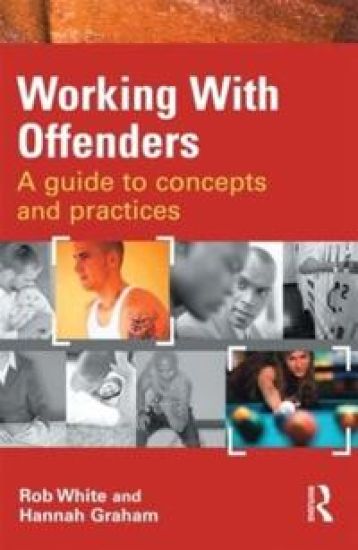
Working With Offenders

Working With Offenders

Rob White; Hannah Graham

Willan Publishing
2010
nidottu
This book provides a theoretically informed guide to the practice of working with offenders in different settings and for different purposes. It deals with topics such as offender rehabilitation, case management, worker-offender relationships, working with difficult clients and situations, collaboration, addressing complex needs, and processes of integration. The book offers a unique perspective on working with offenders in that it incorporates three key elements. As part of the latter, it provides different types of data, including descriptions of programs and selected statistics from each jurisdiction, and presents this information in easy-to-read formats. The chapters are structured around a dual focus of workers and their environments on the one hand, and the nature of the offenders with whom they work on the other. The condition and situation of workers is thus considered in the context of the condition and situation of offenders, and the relationship between the two. The book is intended to be relevant and familiar to those already working in the field, as well as to introduce contemporary principles and practices to those wishing to do so in the future. Each chapter concludes with two key features. The first, Further Reading, is oriented toward concepts and the 'why' questions of practice. The second, Key Resources, alerts readers to appropriate manuals and handbooks, and the 'how' questions of practice. This includes reference to evidence-based examples of good practice and specific intervention models.
Crimes Against Nature

Crimes Against Nature

Rob White

Willan Publishing
2008
sidottu
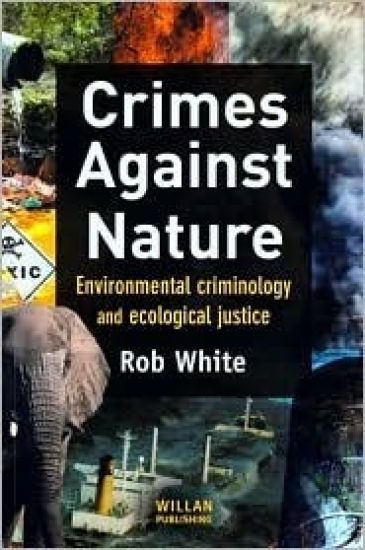
Crimes Against Nature provides a systematic account and analysis of the key concerns of green criminology, written by one of the leading authorities in the field. The book draws upon the disciplines of environmental studies, environmental sociology and environmental management as well as criminology and socio-legal studies, and draws upon a wide range of examples of crimes against the environment – ranging from toxic waste, logging, wildlife smuggling, bio-piracy, the use and transport of ozone depleting substances through to illegal logging and fishing, water pollution and animal abuse. The book is divided into three parts: Part 1 sets out theoretical approaches and perspectives on the subject; Part 2 explores the (national and international) dimensions of environmental crime and the explanations for it; Part 3 deals with the range of responses to environmental crime - environmental law enforcement, regulation, environmental crime prevention and the role of global institutions and movements.
Rethinking Youth

Rethinking Youth

Johanna Wyn; Rob White

Allen Unwin
1997
nidottu
Young people grow up in varied circumstances with different priorities and perspectives. While youth does not exist as a single group we need to understand what is happening in young people's lives. Rethinking Youth challenges the conventional wisdoms surrounding the position and opportunities of young people today and provides a systematic overview of the major perspectives in youth studies. The authors demonstrate how the concept of youth involves a tension between the social significance of age, which gives young people a common status, and the significance of social divisions. Drawing upon studies from different societies, they examine debates surrounding youth and economy, youth development, youth subcultures, youth transitions and youth marginalisation. Rethinking Youth offers a provocative critique of mainstream conceptions of youth, the programs and strategies designed for 'at risk' young people, and policy development in youth affairs. It calls for greater sensitivity to the complexities of youth, and greater emphasis on democracy and equality in dealing with the problems experienced by young people in a rapidly changing world. Johanna Wyn is Director of the Youth Research Centre at the University of Melbourne. Rob White lectures in Criminology at the University of Melbourne.
Rethinking Youth

Rethinking Youth

Johanna Wyn; Rob White

SAGE Publications Inc
1996
nidottu
Young people grow up in varied circumstances with different priorities and perspectives. While youth does not exist as a single group we need to understand what is happening in young people's lives. Rethinking Youth challenges the conventional wisdoms surrounding the position and opportunities of young people today and provides a systematic overview of the major perspectives in youth studies.