Kirjojen hintavertailu – 12 903 725 kirjaa ja 27 kauppaa

Kirjailija

Robert A. Larmer

Kirjat ja teokset yhdessä paikassa: 6 kirjaa, julkaisuja vuosilta 1988–2025, suosituimpiin kuuluu Dialogues on Miracle. Vertaile teosten hintoja ja tarkista saatavuus suomalaisista kirjakaupoista.

Nimi esiintyy myös muodoissa: Robert A Larmer

6 kirjaa

Kirjojen julkaisuvuodet: 1988–2025.

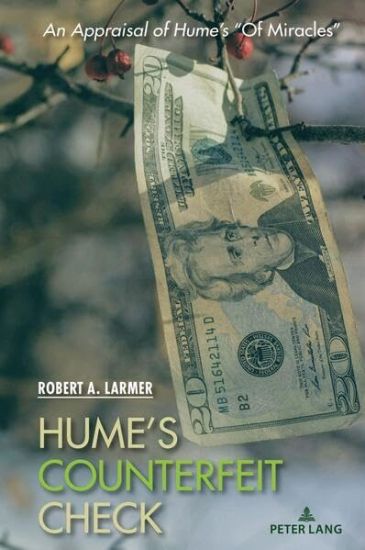
Hume’s Counterfeit Check

Hume’s Counterfeit Check

Robert A. Larmer

PETER LANG PUBLISHING INC
2025
sidottu
Hume’s essay "Of Miracles" has the reputation of providing, in Hume’s own words, an "everlasting check" to accepting reports of miracles. Author Robert Larmer demonstrates that this reputation is undeserved. Taking seriously the environment in which "Of Miracles" was composed reveals that its arguments are neither original to Hume nor compelling. Both before and after the publication of "Of Miracles" these arguments received devastating criticisms by Hume’s predecessors and contemporaries. Contemporary revisionary attempts to defend the argument by insisting that Hume cannot really have meant what he has traditionally been understood to claim are inevitably guilty of eisegesis and systematically ignoring crucial passages fatal to their idiosyncratic readings. The clarity of Larmer’s writing makes Hume’s Counterfeit Check accessible both to professional academics and interested lay persons. Anyone interested in assessing the rationality of accepting testimonial evidence for the occurrence of miracles should view this book as required reading. "Hume’s Counterfeit Check is the best book on the historical context and reception of Hume’s argument on miracles in over fifty years – deeply informed and judicious yet written with a light touch that makes this material accessible to non-specialist readers. I wish I had written it myself." —Tim McGrew, Professor and Chair of Philosophy, Western Michigan University
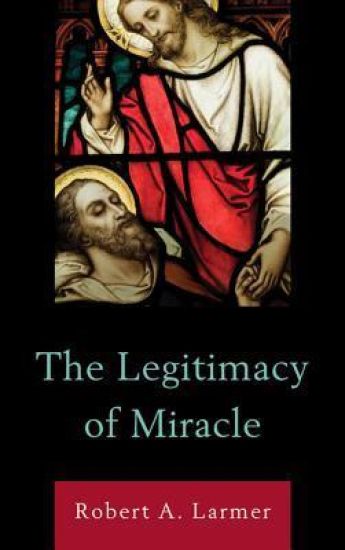
The Legitimacy of Miracle

The Legitimacy of Miracle

Robert A. Larmer

Lexington Books
2013
sidottu
The core contention of The Legitimacy of Miracle is that a priori philosophical dismissals of the possibility or probability of justified belief in miracles fail. Whether or not it is rational to believe that events best understood as miracles actually occur is not to be decided on the basis of armchair theorizing, but rather on the basis of meticulous examination of the evidence. Such examination, however, needs to be set free from unwarranted assumptions that miracles are “impossible, improbable, or improper.” Philosophical analysis can play an important role in clearing away conceptual underbrush and question-begging presuppositions, but it cannot take the place of detailed consideration of historical and contemporary evidence. Robert Larmer demonstrates that the proper role of philosophy, as regards to the belief in miracles, is to provide an in-principle rejection of in-principle arguments either for or against. The arguments contained in this book will be of particular interest to students and scholars of philosophy, theology, history, and religious studies, though it is written in a style accessible to anyone interested in a philosophical examination of belief in miracles.
Questions of Miracle

Questions of Miracle

Robert A. Larmer

McGill-Queen's University Press
1996
nidottu
Questions of Miracle will be a valuable reference book and teaching tool for scholars and students of theology, religious studies, and philosophy. Contents The Logic of Probabilities in Hume's Argument against Miracles - Fred Wilson (Toronto) David Hume and the Miraculous - Robert Larmer Miracles and the Laws of Nature - Robert Larmer Against Miracles - John Collier (University of Newcastle) Against "Against Miracles" - Robert Larmer Miracles and Conservation Laws - Neil MacGill (UNB) Miracles and Conservation Laws: A Reply to Professor MacGill - Robert Larmer Miracles and Criteria - Robert Larmer Miracles and Natural Explanations - David Basinger (Roberts Wesleyan College) Miracles and Natural Explanations: A Rejoinder - Robert Larmer Miracles as Evidence for Theism: A Surrejoinder - David Basinger Miracles, Evidence, and Theism: A Further Apologia - Robert Larmer Authenticating Biblical Reports of Miracles - Phillip Wiebe (Trinity Western University) Miracles and Testimony: A Reply to Wiebe - Robert Larmer Miracles as Evidence against the Existence of God - Christine Overall (Queen's) Miracles and the Existence of God: A Reply - Robert Larmer.
Water into Wine?

Water into Wine?

Robert A. Larmer

McGill-Queen's University Press
1996
nidottu
The first is that a miracle, understood as an event produced by a transcendent agent overriding the usual course of nature, involves a violation of the laws of nature. Larmer argues that events are explained by reference to both relevant laws and units of mass/energy in the sequences to be explained. He contends that a miracle need not be conceived as involving a violation of natural law, but rather as the creation or annihilation of mass/energy by a transcendent agent. In reply to the objection that this account would violate the first law of thermo-dynamics, he distinguishes two forms of the principle -- one metaphysical, one scientific -- and aruges that a miracle would not violate the principle considered as a scientific law. The second assumption is that miracle testimony cannot serve as evidence for theism. Larmer demonstrates that the logical ties connecting the concept of miracle to theism need not imply that one must be a theist to evaluate miracle testimony properly. All that is required is that one is prepared to entertain theism as a hypothesis. Attacking these assumptions allows Larmer to show that Humean balance-of-probabilities arguments, based on a presumed conflict between evidence which establishes belief in the laws of nature and evidence in favour of miracles, miss the point if miracles need not be defined as violations of the laws of nature. He argues that, in the absence of a general argument demonstrating that the testimonial evidence in favour of miracles conflicts with the evidence for the laws of nature, it is up to the atheist to demonstrate, on a case-by-case basis, why the testimonial evidence is to be rejected. His conclusion is that, contrary to what is usually thought, the burden of proof lies not upon the shoulders of the theist, but upon the shoulders of the atheist.
Water into Wine?

Water into Wine?

Robert A. Larmer

McGill-Queen's University Press
1988
sidottu
The first is that a miracle, understood as an event produced by a transcendent agent overriding the usual course of nature, involves a violation of the laws of nature. Larmer argues that events are explained by reference to both relevant laws and units of mass/energy in the sequences to be explained. He contends that a miracle need not be conceived as involving a violation of natural law, but rather as the creation or annihilation of mass/energy by a transcendent agent. In reply to the objection that this account would violate the first law of thermo-dynamics, he distinguishes two forms of the principle -- one metaphysical, one scientific -- and aruges that a miracle would not violate the principle considered as a scientific law. The second assumption is that miracle testimony cannot serve as evidence for theism. Larmer demonstrates that the logical ties connecting the concept of miracle to theism need not imply that one must be a theist to evaluate miracle testimony properly. All that is required is that one is prepared to entertain theism as a hypothesis. Attacking these assumptions allows Larmer to show that Humean balance-of-probabilities arguments, based on a presumed conflict between evidence which establishes belief in the laws of nature and evidence in favour of miracles, miss the point if miracles need not be defined as violations of the laws of nature. He argues that, in the absence of a general argument demonstrating that the testimonial evidence in favour of miracles conflicts with the evidence for the laws of nature, it is up to the atheist to demonstrate, on a case-by-case basis, why the testimonial evidence is to be rejected. His conclusion is that, contrary to what is usually thought, the burden of proof lies not upon the shoulders of the theist, but upon the shoulders of the atheist.