Kirjailija
Robert Aldrich
Kirjat ja teokset yhdessä paikassa: 25 kirjaa, julkaisuja vuosilta 1990–2024, suosituimpiin kuuluu The Ends of Empire. Vertaile teosten hintoja ja tarkista saatavuus suomalaisista kirjakaupoista.
25 kirjaa
Kirjojen julkaisuvuodet: 1990–2024.
First Published in 1984 Economy and Society in Burgundy Since 1850 provides a comprehensive overview of the modern history of Burgundy. Burgundy is best known for its wine and its capital of Dijon is most often associated with mustard. Yet the region’s modern history is more than a history of gastronomy. The coming of the railways in the 1850s greatly changed the economic life of the area, spurring the growth of Dijon and contributing to rural depopulation. Agricultural crises throughout the nineteenth century, such as phylloxera epidemic in the vineyards, caused further dislocation in rural life. Even in the twentieth century, the countryside remained agricultural while the city of Dijon owes its dynamism to the expansion of the service sector rather than to heavy industry. This book argues that this evolution -modernisation without industrialization- is not a matter of economic retardation but of the suitability of the region’s natural resources and the intentional choice of its population. Rich in archival sources this book is an interesting read for scholars and researchers of French history, European history, and modern history.

After spending over 20 years in Southern California and photographing food for over 350 restaurants, Robert and his wife moved back to their home state of Michigan and settled in Mt Pleasant. Soon, Robert became enamored with the beauty and unique architecture of Michigan's barns, traveling hundreds of miles on the back roads to capture images of different barns.
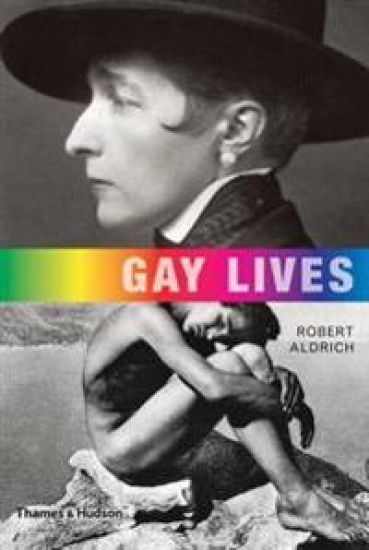
Gay Lives gives a voice to more than eighty people from all over the world and from all walks of life. It is a fascinating portrait of LGBTQ+ people throughout time, whose lives have influenced society at large, as well as today's varied LGBTQ+ culture. It includes poets and philosophers, rulers and spies, activists and artists. Alongside such celebrated figures as Michelangelo, Frederick the Great, and Harvey Milk are lesser-known but no less surprising individuals: Dong Xian and the Chinese emperor Ai, whose passion flourished in the first century BCE; the unfortunate Robert De P ronne, burned at the stake for sodomy; Katharine Philips, writing protolesbian poetry in seventeenth-century England; and Aimee and Jaguar, whose love defied the death camps of wartime Germany. Often colorful, sometimes tragic, but all in some way extraordinary, these life stories reflect, and have helped shape, contemporary attitudes toward same-sex intimacy. GayLives will entertain, give pause for thought, and celebrate the diversity of human history.
A fascinating portrait of gay men and women throughout time whose lives have influenced society at large, as well as what we recognize as today’s varied gay culture. This book gives a voice to more than eighty people from every major continent and from all walks of life. It includes poets and philosophers, rulers and spies, activists and artists. Alongside such celebrated figures as Michelangelo, Frederick the Great and Harvey Milk are lesser-known but no less surprising individuals: Dong Xian and the Chinese emperor Ai, whose passion flourished in the 1st century BC; the unfortunate Robert De Péronne, first to be burned at the stake for sodomy; Katharine Philips, writing proto-lesbian poetry in seventeenth-century England; and 'Aimee' and 'Jaguar', whose love defied the death camps of wartime Germany. With many striking illustrations, Gay Life Stories will entertain, give pause for thought, and ultimately celebrate the diversity of human history.
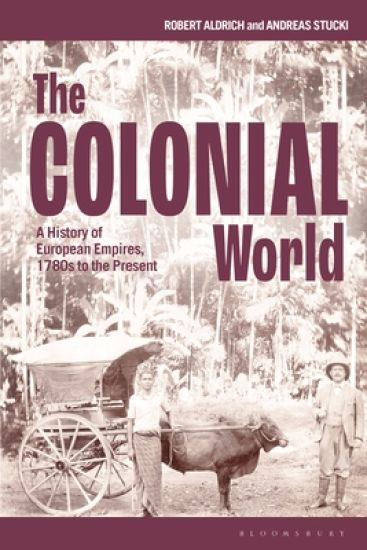
The Colonial World: A History of European Empires, 1780s to the Present provides the most authoritative, in-depth overview on European imperialism available. It synthesizes recent developments in the study of European empires and provides new perspectives on European colonialism and the challenges to it. With a post-1800 focus and extensive background coverage tracing the subject to the early 1700s, the book charts the rise and eclipse of European empires. Robert Aldrich and Andreas Stucki integrate innovative approaches and findings from the 'new imperial history' and look at both the colonial era and the legacies it left behind for countries around the world after they gained independence. Dividing the text into three complementary sections, Aldrich and Stucki offer an original approach to the subject that allows you to explore:- Different eras of colonisation and decolonisation from early modern European colonialism to the present day- Overarching themes in colonial history, like 'land and sea', 'the body' and 'representations of colonialism'- A global range of snapshot colonial case studies, such as Peru (1780), India (1876), The South Pacific (1903), the Dutch East Indies (1938) and the Portuguese empire in Africa (1971)This is the essential text for anyone seeking to understand the nature and complexities of modern European imperialism and its aftermath.
First Published in 1984 Economy and Society in Burgundy Since 1850 provides a comprehensive overview of the modern history of Burgundy. Burgundy is best known for its wine and its capital of Dijon is most often associated with mustard. Yet the region’s modern history is more than a history of gastronomy. The coming of the railways in the 1850s greatly changed the economic life of the area, spurring the growth of Dijon and contributing to rural depopulation. Agricultural crises throughout the nineteenth century, such as phylloxera epidemic in the vineyards, caused further dislocation in rural life. Even in the twentieth century, the countryside remained agricultural while the city of Dijon owes its dynamism to the expansion of the service sector rather than to heavy industry. This book argues that this evolution -modernisation without industrialization- is not a matter of economic retardation but of the suitability of the region’s natural resources and the intentional choice of its population. Rich in archival sources this book is an interesting read for scholars and researchers of French history, European history, and modern history.

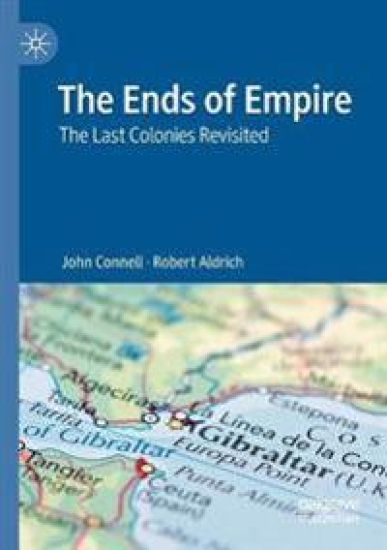
This book offers a fresh analysis of constitutional, economic, demographic and cultural developments in the overseas territories of Britain, France, the Netherlands, Denmark, Spain, the United States, Australia and New Zealand. Ranging from Greenland to Gibraltar, the Falklands to the Faroes, and encompassing islands in the Atlantic, Pacific and Indian Oceans, and the Caribbean, these territories command attention because of their unique status, and for the ways that they occasionally become flashpoints for rival international claims, dubious financial activities, illegal migration and clashes between metropolitan and local mores. Connell and Aldrich argue that a negotiated dependency brings greater benefits to these territories than might independence.
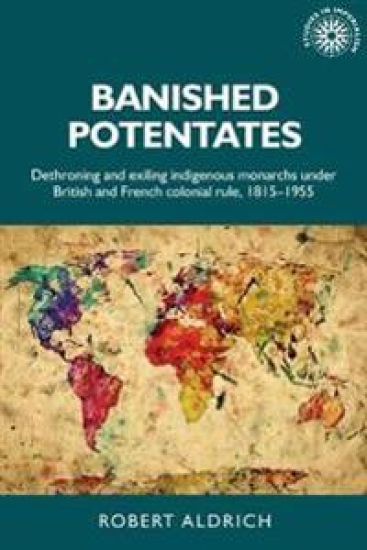
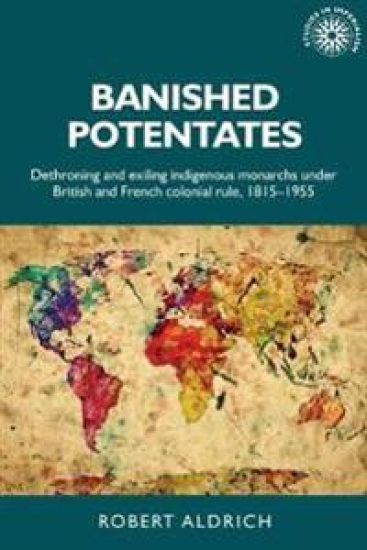
Though the overthrow and exile of Napoleon in 1815 is a familiar episode in modern history, it is not well known that just a few months later, British colonisers toppled and banished the last king in Ceylon. Beginning with that case, this volume examines the deposition and exile of indigenous monarchs by the British and French – with examples in India, Burma, Malaysia, Vietnam, Madagascar, Tunisia and Morocco – from the early nineteenth century down to the eve of decolonisation. It argues that removal of native sovereigns, and sometimes abolition of dynasties, provided a powerful strategy used by colonisers, though European overlords were seldom capable of quelling resistance in the conquered countries, or of effacing the memory of local monarchies and the legacies they left behind.
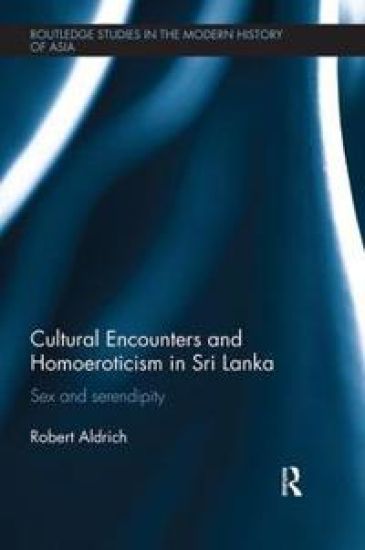
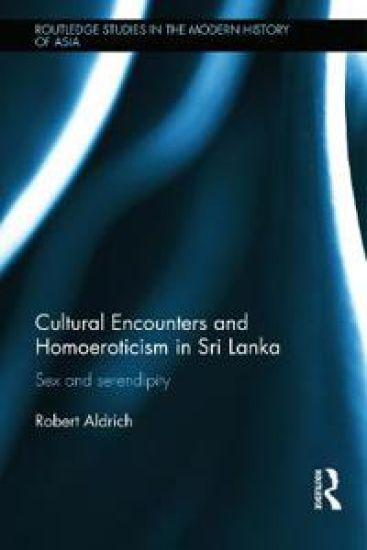
Ceylon, or Sri Lanka, was long known to travellers for its luxuriant landscapes, colourful temples and friendly inhabitants – the island once named Serendip. This book explores the sojourns of gay visitors from the late 1800s to the modern day, providing a history of homosexuality, travel and cultural encounter on the island. The book offers profiles of major figures in Sri Lankan culture and of homosexual visitors, both famous and infamous, to the island. It discusses the experiences of sojourners including the Victorian social reformer Edward Carpenter and the German naturalist Ernst Haeckel, such British and American writers as Paul Bowles and Arthur C. Clarke, and the Australian painter Donald Friend. It also pays particular attention to Lionel Wendt, one of the most important modernist photographers outside Europe. For these figures, an erotic appreciation of young men whom they encountered mixed with interest in Sinhalese art, Buddhist and Hindu spirituality, and the flora and fauna of the island. Their experiences influenced modern writing, art and dance. Cultural influences moved in both directions, however, and Sri Lankans also found inspiration from abroad. The book argues that homosexuals played a major role in the transmission of cultural influences from Sri Lanka to the rest of the world, and from the wider world to this Indian Ocean island. Providing an original analysis of gay cultures in Sri Lanka from Victorian encounters to the present day, this book is the first study of Sri Lanka as a site of gay travel. An excellent study of trans-national cultural exchange, sexuality and the relationships between them, it will be of interest to academics in the field of Asian Studies, Colonial History and Gay and Queer Studies.
Willie and Walter Walk to School
Robert Aldrich
Createspace Independent Publishing Platform
2013
nidottu
The exploits of the famous never cease to captivate our imaginations--rulers, artists, explorers, and all the great personalities of history. Yet many quieter lives also have the ability to impress, to teach us something about the remarkable qualities of human nature. In this book, Robert Aldrich presents a fascinating portrait of gay men and women throughout history that reveals the full diversity of gay lives as lived in their times. He gives a voice to more than seventy people from around the world and all walks of life, from poets, philosophers, and artists to radicals and activists. Along with celebrated names such as Michelangelo, Frederick the Great, and Harvey Milk are lesser-known but no less inspiring individuals: two men of ancient Egypt whose lives were closely linked over four thousand years ago; a Renaissance nun who blurred the boundaries between spiritual and physical love; and "Aim e" and "Jaguar," whose love defied the death camps of wartime Germany. Often colorful, occasionally tragic, but all in some way extraordinary, these life stories reflect--and have sometimes helped to shape--contemporary attitudes toward same-sex intimacy.
This comprehensive and authoritative book is about the last colonies, those remaining territories formally dependent on metropolitan powers. It discusses the surprisingly large number of these territories, mainly small isolated islands with limited resources. Yet these places are not as obscure as might be expected. They may be major tourist destinations, military bases, satellite tracking stations, tax havens or desolate, underpopulated spots that can become international flashpoints, such as the Falklands. The authors find that at a time of escalating nationalism and globalization, these remnants of empire provide insights into the meanings of political, economic, legal and cultural independence, as well as sovereignty and nationhood. This book provides a broad-based and provocative discussion of colonialism and interdependence in the modern world, from a unique perspective.
This 1992 book is a full-length study in English of the 'confetti of empire', the former French colonies which have not gained their independence but remain part of France as the départements et territoires d'outre-mer (DOM-TOMs). More recent French governments have shown a determination to retain these possessions, despite independence movements (notably in New Caledonia) and international criticism. The authors' comprehensive description of the history, economy, geography and politics of the DOM-TOMs will make this the standard English reference on France's overseas territories.
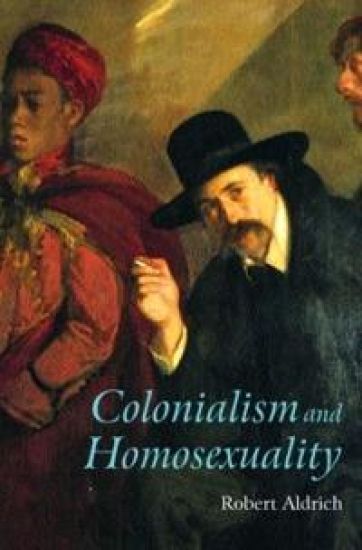
Colonialism and Homosexuality is a thorough investigation of the connections of homosexuality and imperialism from the late 1800s - the era of 'new imperialism' - until the era of decolonization. Robert Aldrich reconstructs the context of a number of liaisons, including those of famous men such as Cecil Rhodes, E. M. Forster or André Gide, and the historical situations which produced both the Europeans and their non-Western lovers. Colonial lands, which in the late nineteenth and early twentieth century included most of Africa, South and Southeast Asia and the islands of the Pacific and Indian Oceans and the Caribbean, provided a haven for many Europeans whose sexual inclinations did not fit neatly into the constraints of European society. Each of the case-studies is a micro-history of a particular colonial situation, a sexual encounter, and its wider implications for cultural and political life. Students both of colonial history, and of gender and queer studies, will find this an informative read.