Kirjojen hintavertailu – 12 903 725 kirjaa ja 27 kauppaa

Kirjailija

Robert B. Pippin

Kirjat ja teokset yhdessä paikassa: 34 kirjaa, julkaisuja vuosilta 1989–2026, suosituimpiin kuuluu Douglas Sirk. Vertaile teosten hintoja ja tarkista saatavuus suomalaisista kirjakaupoista.

Nimi esiintyy myös muodoissa: Robert B Pippin

34 kirjaa

Kirjojen julkaisuvuodet: 1989–2026.

Hegel on Self-Consciousness

Hegel on Self-Consciousness

Robert B. Pippin

PRINCETON UNIVERSITY PRESS
2010
sidottu
In the most influential chapter of his most important philosophical work, the Phenomenology of Spirit, Hegel makes the central and disarming assertions that "self-consciousness is desire itself" and that it attains its "satisfaction" only in another self-consciousness. Hegel on Self-Consciousness presents a groundbreaking new interpretation of these revolutionary claims, tracing their roots to Kant's philosophy and demonstrating their continued relevance for contemporary thought. As Robert Pippin shows, Hegel argues that we must understand Kant's account of the self-conscious nature of consciousness as a claim in practical philosophy, and that therefore we need radically different views of human sentience, the conditions of our knowledge of the world, and the social nature of subjectivity and normativity. Pippin explains why this chapter of Hegel's Phenomenology should be seen as the basis of much later continental philosophy and the Marxist, neo-Marxist, and critical-theory traditions. He also contrasts his own interpretation of Hegel's assertions with influential interpretations of the chapter put forward by philosophers John McDowell and Robert Brandom.
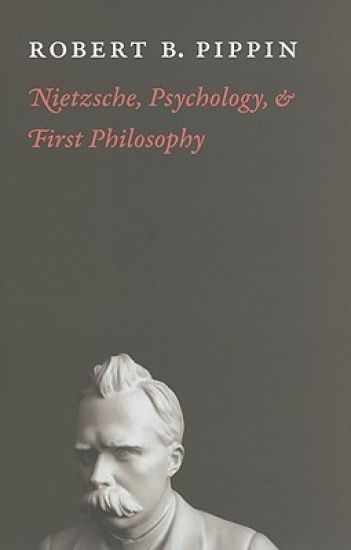
Nietzsche, Psychology, and First Philosophy

Nietzsche, Psychology, and First Philosophy

Robert B. Pippin

University of Chicago Press
2010
sidottu
Friedrich Nietzsche is one of the most elusive thinkers in the philosophical tradition. Nonetheless, certain readings of his work have become standard and influential. In this major new interpretation of Nietzsche, Robert B. Pippin challenges various traditional views, taking the philosopher at his word when he says that his writing can best be understood as a kind of psychology. Pippin traces this idea of Nietzsche as a psychologist to his admiration for the French moralists: La Rochefoucauld, Pascal, Stendhal, and especially Montaigne. In distinction from philosophers, Pippin shows, these writers avoided grand metaphysical theories in favor of reflections on life as lived and experienced. Pippin contends that Nietzsche's singular prose was an essential part of his goal of making psychology "the queen of the sciences", and so organizes the book around four of Nietzsche's most important images and metaphors: that truth could be a woman, that a science could be gay, that God could have died, and that an agent is as much one with his act as lightning is with its flash. Expanded from a series of lectures Pippin delivered at the College de France, "Nietzsche, Psychology, and First Philosophy" offers a brilliant, novel, and accessible reading of this seminal thinker.
Hegel's Practical Philosophy

Hegel's Practical Philosophy

Robert B. Pippin

Cambridge University Press
2008
sidottu
This fresh and original book argues that the central questions in Hegel's practical philosophy are the central questions in modern accounts of freedom: What is freedom, or what would it be to act freely? Is it possible so to act? And how important is leading a free life? Robert Pippin argues that the core of Hegel's answers is a social theory of agency, the view that agency is not exclusively a matter of the self-relation and self-determination of an individual but requires the right sort of engagement with and recognition by others. Using a detailed analysis of key Hegelian texts, he develops this interpretation to reveal the bearing of Hegel's claims on many contemporary issues, including much-discussed core problems in the liberal democratic tradition. His important study will be valuable for all readers who are interested in Hegel's philosophy and in the modern problems of agency and freedom.
Hegel's Practical Philosophy

Hegel's Practical Philosophy

Robert B. Pippin

Cambridge University Press
2008
pokkari

Halvin toimitettuna 30,20 €

This fresh and original book argues that the central questions in Hegel's practical philosophy are the central questions in modern accounts of freedom: What is freedom, or what would it be to act freely? Is it possible so to act? And how important is leading a free life? Robert Pippin argues that the core of Hegel's answers is a social theory of agency, the view that agency is not exclusively a matter of the self-relation and self-determination of an individual but requires the right sort of engagement with and recognition by others. Using a detailed analysis of key Hegelian texts, he develops this interpretation to reveal the bearing of Hegel's claims on many contemporary issues, including much-discussed core problems in the liberal democratic tradition. His important study will be valuable for all readers who are interested in Hegel's philosophy and in the modern problems of agency and freedom.
Of Farming and Classics

Of Farming and Classics

David Grene; Robert B. Pippin

University of Chicago Press
2008
nidottu
A fiercely independent thinker, colorful storyteller, and spirited teacher, David Grene devoted his life to two things: farming, which he began as a boy in Ireland and continued into old age; and classics, which he taught for several decades that culminated in his translating and editing, with Richmond Lattimore, the "Complete Greek Tragedies". In this charming memoir, which he wrote before his death in 2002 at the age of eighty-nine, Grene weaves together these interests to tell a quirky and absorbing story of the sometimes turbulent and always interesting life he split between the University of Chicago - where he helped found the Committee on Social Thought - and the farm he kept back in Ireland. Grene's form and humor are quite his own, and his brilliant story-telling will enthrall anyone interested in the classics, rural Ireland, or twentieth-century intellectual history, especially as it pertains to the University of Chicago.
Of Farming and Classics

Of Farming and Classics

David Grene; Robert B. Pippin

University of Chicago Press
2006
sidottu
A fiercely independent thinker, colorful storyteller, and spirited teacher, David Grene devoted his life to two things: farming, which he began as a boy in Ireland and continued into old age; and classics, which he taught for several decades that culminated in his translating and editing, with Richmond Lattimore, the "Complete Greek Tragedies". In this charming memoir, which he wrote before his death in 2002 at the age of eighty-nine, Grene weaves together these interests to tell a quirky and absorbing story of the sometimes turbulent and always interesting life he split between the University of Chicago - where he helped found the Committee on Social Thought - and the farm he kept back in Ireland. Grene's form and humor are quite his own, and his brilliant story-telling will enthrall anyone interested in the classics, rural Ireland, or twentieth-century intellectual history, especially as it pertains to the University of Chicago.
The Persistence of Subjectivity

The Persistence of Subjectivity

Robert B. Pippin

Cambridge University Press
2005
pokkari
The Persistence of Subjectivity examines several approaches to, and critiques of, the core notion in the self-understanding and legitimation of the modern, 'bourgeois' form of life: the free, reflective, self-determining subject. Since it is a relatively recent historical development that human beings think of themselves as individual centers of agency, and that one's entitlement to such a self-determining life is absolutely valuable, the issue at stake also involves the question of the historical location of philosophy. What might it mean to take seriously Hegel's claim that philosophical reflection is always reflection on the historical 'actuality' of its own age? Discussing Heidegger, Gadamer, Adorno, Leo Strauss, Manfred Frank, and John McDowell, Robert Pippin attempts to understand how subjectivity arises in contemporary institutional practices such as medicine, as well as in other contexts such as modernism in the visual arts and in the novels of Marcel Proust.
The Persistence of Subjectivity

The Persistence of Subjectivity

Robert B. Pippin

Cambridge University Press
2005
sidottu
The Persistence of Subjectivity examines several approaches to, and critiques of, the core notion in the self-understanding and legitimation of the modern, 'bourgeois' form of life: the free, reflective, self-determining subject. Since it is a relatively recent historical development that human beings think of themselves as individual centers of agency, and that one's entitlement to such a self-determining life is absolutely valuable, the issue at stake also involves the question of the historical location of philosophy. What might it mean to take seriously Hegel's claim that philosophical reflection is always reflection on the historical 'actuality' of its own age? Discussing Heidegger, Gadamer, Adorno, Leo Strauss, Manfred Frank, and John McDowell, Robert Pippin attempts to understand how subjectivity arises in contemporary institutional practices such as medicine, as well as in other contexts such as modernism in the visual arts and in the novels of Marcel Proust.
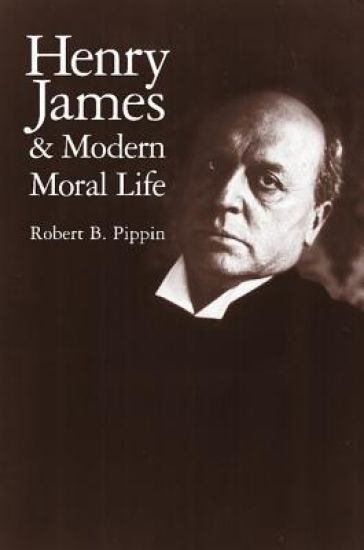
Henry James and Modern Moral Life

Henry James and Modern Moral Life

Robert B. Pippin

Cambridge University Press
2001
pokkari
This important new book argues that Henry James reveals in his fiction a sophisticated theory of moral understanding and moral motivation. The claim is that in his novels and short stories James is engaged in a distinctive kind of original thinking and reflecting on modern moral life. Sensitive to the precarious and extremely confusing situation of moral understanding in modern societies, James avoids skepticism and presents powerfully the full nature of moral claims and moral dependence. The book is written by one of the pre-eminent interpreters of the modern European philosophical tradition and will interest both philosophers and literary critics. However, the style is completely non-technical with no reliance on terms from contemporary literary or philosophical theory and will therefore be accessible to students and general readers of James.
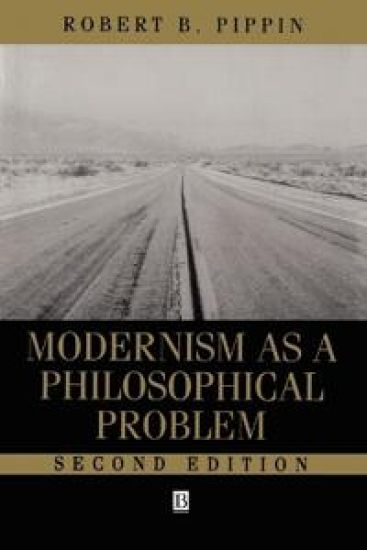
Modernism as a Philosophical Problem

Modernism as a Philosophical Problem

Robert B. Pippin

Blackwell Publishers
1999
sidottu
Modernism as a Philosophical Problem, 2e presents a new interpretation of the negative and critical self-understanding characteristic of much European high culture since romanticism and especially since Nietzsche, and answers the question of why the issue of modernity became a philosophical problem in European tradition.
Modernism as a Philosophical Problem

Modernism as a Philosophical Problem

Robert B. Pippin

Blackwell Publishers
1999
nidottu
Modernism as a Philosophical Problem, 2e presents a new interpretation of the negative and critical self-understanding characteristic of much European high culture since romanticism and especially since Nietzsche, and answers the question of why the issue of modernity became a philosophical problem in European tradition.
Idealism as Modernism

Idealism as Modernism

Robert B. Pippin

Cambridge University Press
1997
sidottu
‘Modernity’ has come to refer both to a contested historical category and to an even more contested philosophical and civilisational ideal. In this important collection of essays Robert Pippin takes issue with some prominent assessments of what is or is not philosophically at stake in the idea of a modern revolution in Western civilisation, and presents an alternative view. Professor Pippin disputes many traditional characterisations of the distinctiveness of modern philosophy. In their place he defends claims about agency, freedom, ethical life and modernity itself, all of which are central to the German idealist philosophical tradition, and in particular, to the writings of Hegel. Having considered the Hegelian version of these issues the author explores other accounts as found in Habermas, Strauss, Blumenberg, Nietzsche, and Heidegger.
Idealism as Modernism

Idealism as Modernism

Robert B. Pippin

Cambridge University Press
1997
pokkari
‘Modernity’ has come to refer both to a contested historical category and to an even more contested philosophical and civilisational ideal. In this important collection of essays Robert Pippin takes issue with some prominent assessments of what is or is not philosophically at stake in the idea of a modern revolution in Western civilisation, and presents an alternative view. Professor Pippin disputes many traditional characterisations of the distinctiveness of modern philosophy. In their place he defends claims about agency, freedom, ethical life and modernity itself, all of which are central to the German idealist philosophical tradition, and in particular, to the writings of Hegel. Having considered the Hegelian version of these issues the author explores other accounts as found in Habermas, Strauss, Blumenberg, Nietzsche, and Heidegger.
Hegel's Idealism

Hegel's Idealism

Robert B. Pippin

Cambridge University Press
1989
pokkari

Halvin toimitettuna 36,00 €

This is the most important book on Hegel to have appeared in the past ten years. Robert Pippin offers a completely new interpretation of Hegel’s idealism, which focuses on Hegel’s appropriation and development of kant’s theoretical project. Hegel is presented neither as a precritical metaphysician nor as a social theorist, but as a critical philosopher whose disagreements with Kant, especially on the issue of intuitions, enrich the idealist arguments against empiricism, realism and naturalism. In the face of the dismissal of absolute idealism as either unintelligible or implausible, Pippin explains and defends an original account of the philosophical basis for Hegel’s claims about the historical and social nature of selfconsciousness, and so of knowledge itself.