Kirjailija
Robert Bauval
Kirjat ja teokset yhdessä paikassa: 12 kirjaa, julkaisuja vuosilta 1994–2018, suosituimpiin kuuluu The Egypt Code. Vertaile teosten hintoja ja tarkista saatavuus suomalaisista kirjakaupoista.
12 kirjaa
Kirjojen julkaisuvuodet: 1994–2018.
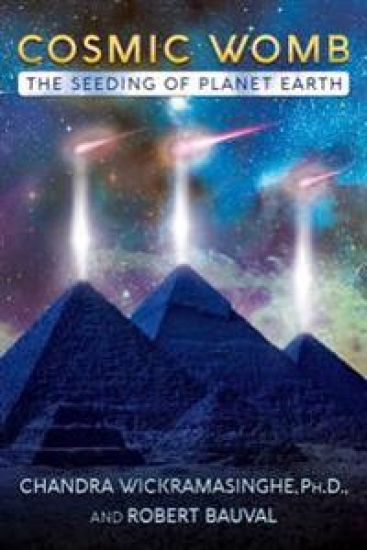
Compelling evidence that life, intelligence, and evolution on Earth were seeded by comets and cosmic intelligence * Explains how life first came from interstellar dust and comets and how later arrivals of cosmic dust and comets spurred evolution * Explores the possibility that universal knowledge may be stored in human DNA and how ancient cultures may have known a way to retrieve this knowledge All ancient cultures link humanity’s origins to the heavens. The Egyptians, for example, were adamant that their ancestors came from the stars of Orion and Sirius. Today, however, religion and science assert that life arose spontaneously here on Earth. Did the ancients know our true cosmic origins? Have they left us clues? Expanding on the panspermia theory developed with the celebrated astronomer Sir Fred Hoyle--namely that the building blocks of life were imported to Earth by comets in the distant past--Chandra Wickramasinghe and Robert Bauval explore the latest findings in support of a cosmic origin for humanity. They detail the astrobiological discoveries of organic molecules deep in space, how microbes are incredibly resistant to the harshest conditions of space--enabling the transfer of genes from one star system to another, and the recent recovery of microorganisms from comets still in space. They show how life arrived on our planet in the form of interstellar dust containing alien bacteria approximately 3.8 billion years ago and how later comets, meteoroids, and asteroids brought new bacterial and viral genetic material, which was vital for evolution. Using the latest advances in physics, cosmology, and neuroscience, the authors explore how universal knowledge may be stored in human DNA and cells, and they postulate that ancient cultures, such as the pyramid builders of Egypt and the temple builders of India, may have known a way to retrieve this knowledge.
Origins of the Sphinx
Robert M. Schoch; Robert Bauval
Inner Traditions Bear and Company
2017
pokkari
Halvin toimitettuna 28,70 €
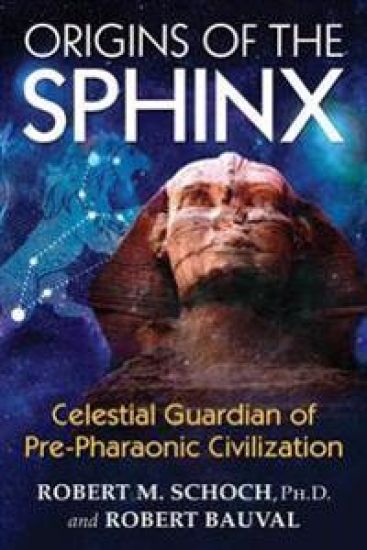
In this provocative collaboration from two Egyptology outsiders, Robert M. Schoch, Ph. D., and Robert Bauval combine their decades of research to show how the Sphinx is thousands of years older than the conventional Egyptological timeline and was built by a long forgotten pre-Pharaonic civilization. They examine the known history of the Sphinx, contrasting what Egyptologists claim with prominent historical accounts and new research, including updates to Schoch’s geological water weathering research and reanalysis of seismic studies. Building on Bauval’s Orion Correlation Theory, they investigate the archaeoastronomical alignments of the monuments of the Giza Plateau and reveal how the pyramids and Sphinx were built to align with the constellations of Orion and Leo. Analyzing the evidence for a significantly older construction phase at Giza and the restoration and recarving of the Sphinx during the Old Kingdom era, they assert that the Sphinx was first built by an advanced pre-Pharaonic civilization that existed circa 12,000 years ago on the Giza Plateau, contemporaneous with the sophisticated Göbekli Tepe complex.
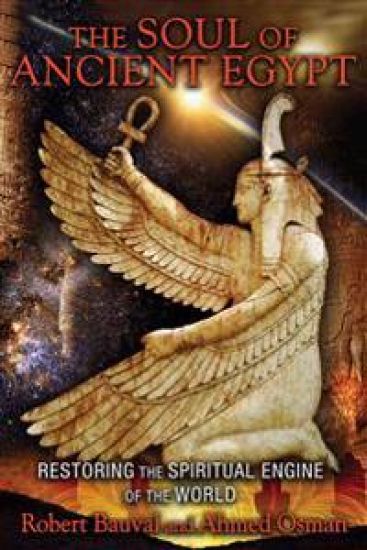
Imagine the paradise of ancient Egypt: a lush green valley with a gentle river, full of animals and birds of all sizes. The first settlers, arriving by way of the desert, would have marveled at this beautiful landscape. This awe held on through the first three millennia of settlement in Egypt. Centered on careful observations of the natural rhythms of their environment, particularly the Nile, this enlightened civilization lived in a state of spiritual balance and harmony they called "living in Maat." This state was further enhanced by the sacred landscape of Egypt and the colossal monuments and pyramids the Egyptians built to reflect the heavens, thus creating a cosmic "spiritual engine" for the ancient world. But sadly, the paradise and Maat of ancient Egypt were not to last, and for the past two thousand years Egypt has experienced many occupations by hostile forces bent on taking control of this magical land. Exploring the exemplary social and cultural model that produced the golden civilization of ancient Egypt as well as the many waves of conquest and destruction up to the present day, Robert Bauval and Ahmed Osman examine each phase of Egyptian history from its origins and the Pharaonic period, through the Roman conquest and its Christianization, to the Pan-Arabization of Nasser and the ongoing Islamization that began with the Muslim caliphate in the 7th century. They show how the current Islamic rulers are actively working to eradicate all traces of Egypt's spiritual roots, the source of the Western Mystery tradition. They provide a revised portrait of the life of Muhammad, revealing his connections to the Essene tradition, and explain how most Sharia Law is not based on the Koran. Revealing how even the dams built on the Nile are impeding Egypt's sacred role, the authors sound the call for a return to the original tenets of Egyptian civilization, one that sustained itself in harmony and peaceful creativity for more than three millennia.
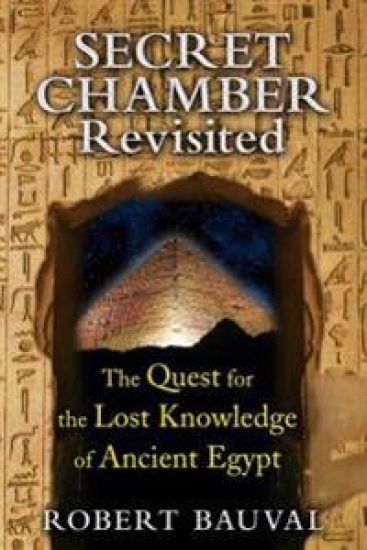
Since 1993 Robert Bauval has been embroiled in the many controversies involving the search for the lost treasures of the pyramid builders and the quest for the legendary Hall of Records of Atlantis. The strange but true story that he unfolds implicates American business moguls, the prestigious National Geographic Society, several Ivy League universities, the Edgar Cayce Foundation, the Freemasons, Christian fundamentalists, Zionists, and the Egyptian government. In this fully updated edition of Secret Chamber, including new color photographs, Robert Bauval pursues his in-depth investigation of clandestine events at Giza and the role played by the controversial ex-Minister of Antiquities Dr. Zahi Hawass. What lies behind the mysterious doors at the end of the star shafts in the Great Pyramid? What do the mysterious inscriptions found behind the Gantenbrink door mean? What is the real purpose of the Relief Chambers and the red ochre "graffiti" in them? Who is behind the secretly tunnelling and excavating in these chambers, and why? Is there really a hidden Hall of Records from Atlantis beneath the Great Sphinx? Is the Great Pyramid just a tomb or does it serve a higher purpose involving a lost science of immortality? Why do the ancient texts ascribe the Pyramid's design to the supreme god of wisdom Thoth, the writer of the fabled Books of Hermes? Will the Great Pyramid prove to be the "missing link" to our true origins or a "metaphysical machine" to access the world beyond? Providing a firsthand account of the strange events that have taken place at the Giza plateau in the last three decades, Bauval reveals the hidden agendas behind these events and raises important questions about the meaning of Egypt's ancient structures and the very origins of civilization.
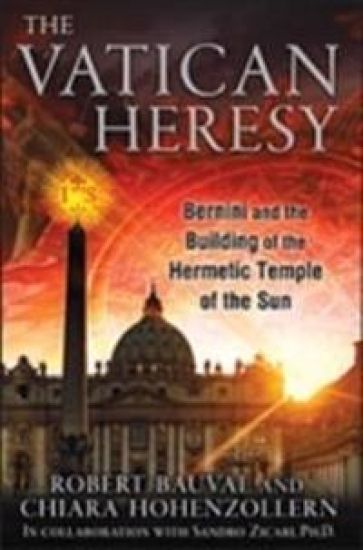
In 16th century Italy, in the midst of the Renaissance, two powerful movements took hold. The first, the Hermetic Movement, was inspired by an ancient set of books housed in the library of Cosimo de' Medici and written by the Egyptian sage Hermes Trismegistus. The movement expounded the return of the "true religion of the world" based on a form of natural magic that could draw down the powers of the heavens and incorporate them into statues and physical structures. The other movement, the Heliocentric Movement launched by Copernicus, was a direct challenge to the Vatican's biblical interpretation of a geocentric world system. Declared a heresy by the Pope, those who promoted it risked the full force of the Inquisition. Exploring the meeting point of these two movements, authors Robert Bauval and Chiara Hohenzollern reveal how the most outspoken and famous philosophers, alchemists, and scientists of the Renaissance, such as Giordano Bruno and Marsilio Ficino, called for a Hermetic reformation of the Christian religion by building a magical utopic city, an architectural version of the heliocentric system. Using contemporary documents and the latest cutting-edge theses, the authors show that this Temple of the Sun was built in Rome, directly in front of the Vatican's Basilica of St. Peter. They explain how the Vatican architect Bernini designed St. Peter's Square to reflect the esoteric principles of the Hermetica and how the square is a detailed representation of the heliocentric system. Revealing the magical architectural plan masterminded by the Renaissance's greatest minds, including Bernini, Jesuit scholars, Queen Christine of Sweden, and several popes, the authors expose the ultimate heresy of all time blessed by the Vatican itself.
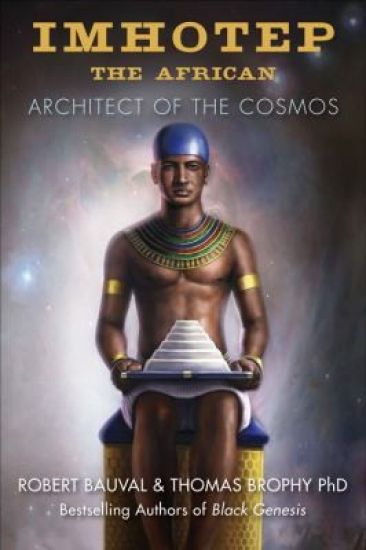
In this groundbreaking book, Egyptologist Robert Bauval and astrophysicist Thomas Brophy uncover the mystery of Imhotep, an ancient Egyptian superstar, pharaonic Da Vinci, Michelangelo, Galileo, and Newton all rolled into one. Based on their research at the Step Pyramid Complex at Saqqara, Bauval and Brophy delve into observational astronomy to "decode" the alignments and other design features of the Step Pyramid Complex, to uncover the true origins and genius of Imhotep. Like a whodunit detective story they follow the clues that take them on an exhilarating magical mystery tour starting at Saqqara, leading them to temples in Upper Egypt and to the stones of Nabta Playa and the black African stargazers who placed them there. Imhotep the African describes how Imhotep was the ancient link to the birth of modern civilization, restoring him to his proper place at the center of the birthing of Egyptian, and world, civilization.
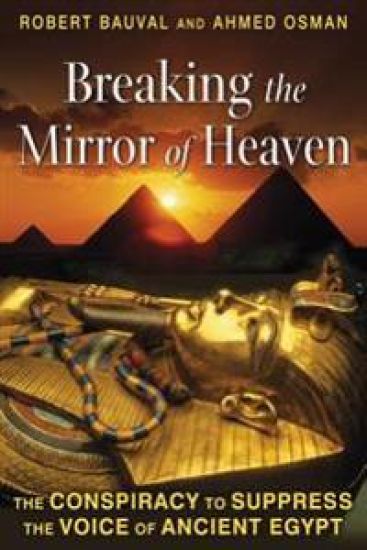
Called the “Mirror of Heaven” by Hermes-Thoth and regarded as the birthplace of civilization, science, religion, and magic, Egypt has ignited the imagination of all who come in contact with it since ancient times--from Pythagoras and Plato to Alexander the Great and Napoleon to modern Egyptologists the world over. Yet, despite this preeminence in the collective mind, Egypt has suffered considerable destruction over the centuries. Even before the burning of the Great Library at Alexandria, the land of the pharaohs was pillaged by its own people. With the arrival of foreign rulers, both Arabic and European, the destruction and thievery continued along with suppression of ancient knowledge as some rulers sought to cleanse Egypt of its “pagan” past. Exploring the many cycles of destruction and suppression in Egypt as well as moments of salvation, such as the first registered excavations by Auguste Mariette, Robert Bauval and Ahmed Osman investigate the many conquerors of Egypt through the millennia as well as what has happened to famous artifacts such as the Rosetta Stone. They show how Napoleon, through his invasion, wanted to revive ancient Egyptian wisdom and art because of its many connections to Freemasonry. They reveal how the degradation of monuments, theft of relics, and censorship of ancient teachings continue to this day. Exposing recent cover-ups during the tenure of Antiquities Minister Zahi Hawass, they explain how new discoveries at Giza were closed to further research. Clearing cultural and historical distortions, the authors reveal the long-hidden and persecuted voice of ancient Egypt and call for the return of Egypt to its rightful place as “the Mother of Nations” and “the Mirror of Heaven.”
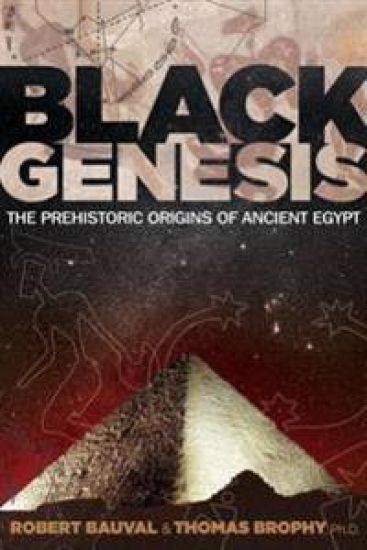
Relegated to the realm of archaeological heresy, despite a wealth of hard scientific evidence, the theory that an advanced civilization of black Africans settled in the Sahara long before Pharaonic Egypt existed has been dismissed and even condemned by conventional Egyptologists, archaeologists, and the Egyptian government. Uncovering compelling new evidence, Egyptologist Robert Bauval and astrophysicist Thomas Brophy present the anthropological, climatological, archaeological, geological, and genetic research supporting this hugely debated theory of the black African origin of Egyptian civilization. Building upon extensive studies from the past four decades and their own archaeoastronomical and hieroglyphic research, the authors show how the early black culture known as the Cattle People not only domesticated cattle but also had a sophisticated grasp of astronomy; created plentiful rock art at Gilf Kebir and Gebel Uwainat; had trade routes to the Mediterranean coast, central Africa, and the Sinai; held spiritual and occult ceremonies; and constructed a stone calendar circle and megaliths at the ceremonial site of Nabta Playa reminiscent of Stonehenge, yet much older. Revealing these “Star People” as the true founders of ancient Egyptian civilization, this book completely rewrites the history of world civilization, placing black Africa back in its rightful place at the center of mankind’s origins.
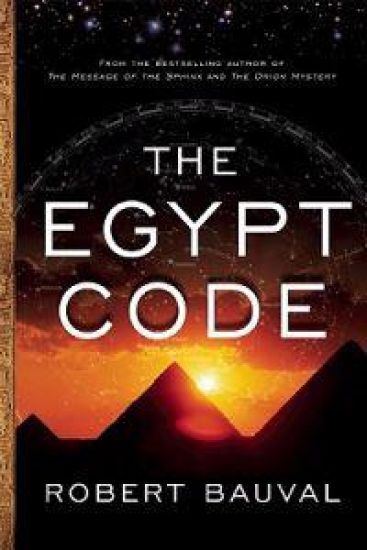
Why did the ancients align their monuments so precisely with the stars? What were the practical and symbolic reasons behind these mysterious configurations? From the author of The Orion Mystery, the bestselling book that introduced the revolutionary star correlation theory about the Giza pyramids, The Egypt Code reveals an amazing Grand Unified Plan behind the legendary temples of upper Egypt. Robert Bauval, one of the world's most prominent and controversial Egyptologists, completes his groundbreaking investigation of astronomy as related to Egyptian monuments and related religious texts. The Egypt Code revisits the Pyramid Age and the Old Kingdom, proposing a vast skyground correlation for the MemphiteHeliopolis region, and presenting the possibility of a grand plan spanning three thousand years of Pharaonic civilization and involving pyramids and major temple sites along the Nile. The central idea of the book is that the cosmic order, which the ancients referred to as "Maat," was comprised of the observable cycles of the sun and stars, in particular the star Sirius, and that the changes that took place due to the precession of the equinoxes and the so-called Sothic Cycle are reflected in the orientation and location of religious sites.
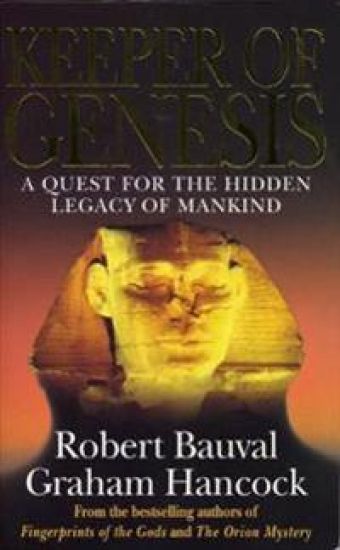
Keeper Of Genesis
Robert Bauval; Graham Hancock
Arrow Books Ltd
1997
pokkari
Halvin toimitettuna 20,90 €
Using computer simulations of the ancient skies to crack the millennial code that the monuments transcribe, the authors set out a new theory concerning the Pyramid Texts and other archaic Egyptian scriptures.
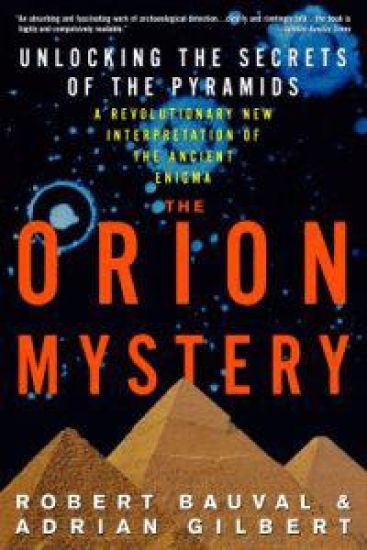
The Orion Mystery: Unlocking the Secrets of the Pyramids
Robert Bauval; Adrian Gilbert
Crown Publishing Group (NY)
1995
nidottu
Halvin toimitettuna 23,90 €
A revolutionary book that explains the most enigmatic and fascinating wonder of the ancient world: the Pyramids of Egypt. In 1993, German robotics engineer Rudolf Gatenbrink discovered a sealed door within the Great Pyramid of Giza--a door left unopened for 4,500 years. With this discovery, Robert Bauval--who spent the decade prior to the discovery researching the pyramids--and Adrian Gilbert used astronomical data to reveal that more than just tombs, the pyramids were created to serve as a gateway to the stars; in the process, they uncovered what they believe to be the key to the plan that governed the construction of the great pyramids: the Orion Constellation. " An] absorbing and fascinating work of archaeological detection...clearly and rivetingly told...the book is highly and compulsively readable."--London Sunday Times.
Unlocking the secrets of the pyramids. For thousands of years the pyramids have stood, imposing and enigmatic, refusing to give up their secrets.