Kirjojen hintavertailu – 12 903 735 kirjaa ja 27 kauppaa
Kirjailija
Robert C. Solomon
Kirjat ja teokset yhdessä paikassa: 59 kirjaa, julkaisuja vuosilta 1981–2024, suosituimpiin kuuluu What is Justice?. Vertaile teosten hintoja ja tarkista saatavuus suomalaisista kirjakaupoista.
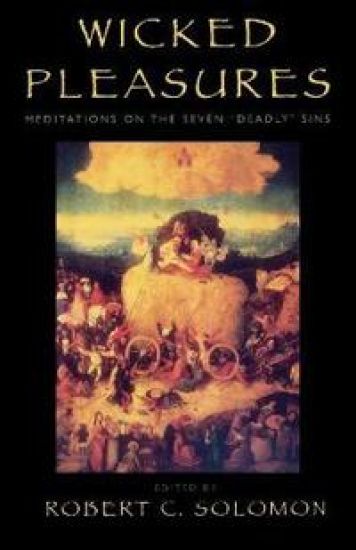
The seven deadly sins have provided gossip, amusement, and the plots of morality plays for nearly fifteen hundred years. In Wicked Pleasures, well-known philosopher, business ethicist, and admitted sinner Robert C. Solomon brings together a varied group of contributors for a new look at an old catalogue of sins. Solomon introduces the sins as a group, noting their popularity and pervasiveness. From the formation of the canon by Pope Gregory the Great, the seven have survived the sermonizing of the Reformation, the Inquisition, the Enlightenment, the brief French reign of supreme reason, the apotheoses of capitalism, communism, secular humanism and postmodernism, the writings of numerous rabbis and evangelical moralists, two series in the New York Times, and several bad movies. Taking their cue from this remarkable history, the contributors, allowed one sin apiece, provide a non-sermonizing and relatively light-hearted romp through the domain of the deadly seven.
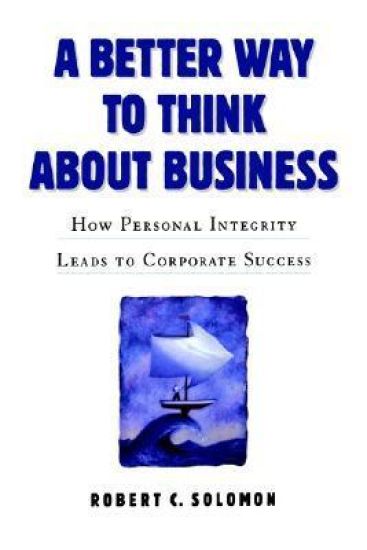
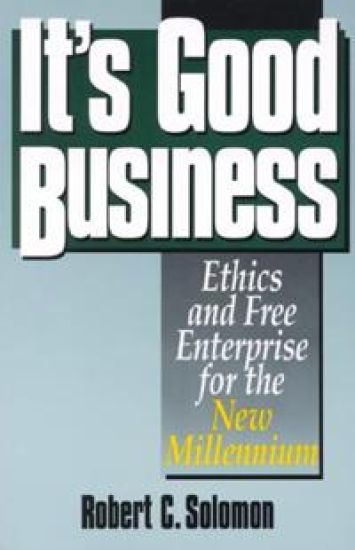
Is business ethics a contradiction in terms? Absolutely not, says Robert Solomon. In fact, he maintains that sound ethics is a necessary precondition of any long-term business enterprise, and that excellence in business must exist on the foundation of values that most of us hold dear. Drawing on twenty years of experience consulting with major corporations on ethics, Solomon clarifies the difficult ethical choices all people in business are faced with from time to time. He takes an "Aristotelian" approach to ethical questions, reminding readers that a corporation--like an individual--is embedded in a community, and that corporate values such as fairness and honesty are meaningless until transformed into action. Values--coupled with action--become virtues, and virtues make possible any good business corporate relationship. Without a base of shared values, trust and mutual benefits, today's national and international business world will fall apart. In keeping with his conviction that virtue and profit must thrive together, Solomon both examines the ways in which deficient values actually destroy businesses, and debunks the pervasive myths that encourage unethical business practices. Complete with a working catalog of virtues designed to illustrate the importance of integrity in any business situation, this compelling handbook contains a goldmine of wisdom for either the small business manager or the corporate executive struggling with ethical issues.
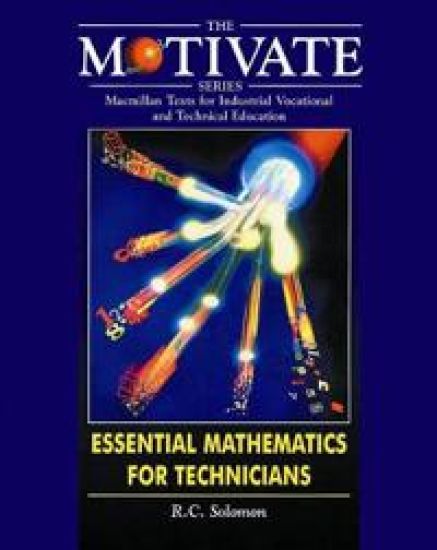
This text provides an introductory mathematics course at pre-degree level for students following science/engineering/technicians courses. The course leads the student from basic mathematical techniques through algebra and geometry to trigonometry, statistics and calculus, by means of clear explanations and many worked examples. There are many "self tests" to check understanding as the chapters progress, and each chapter concludes with exercises which summarize and extend the topics covered.
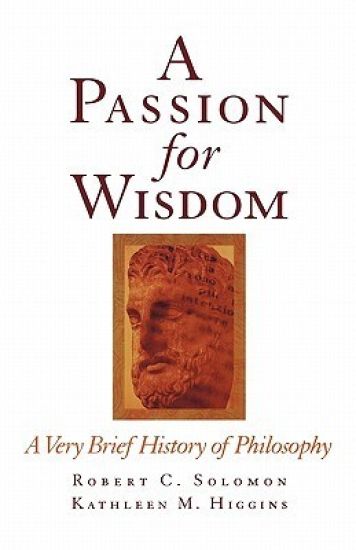
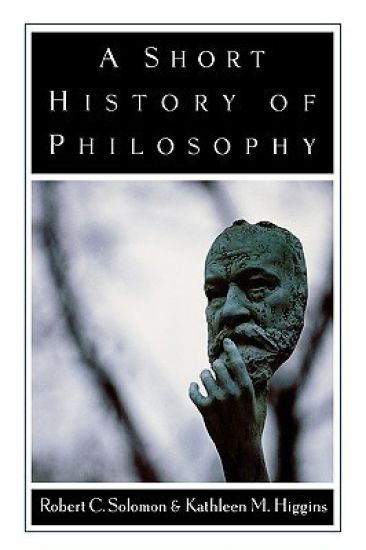
This is a greatly abridged adaptation of Solomon and Higgins' 1995 OUP publication, A Short History of Philosophy. As in the longer book, the authors offer a guided tour of the full panorama of philosophy. Here, however, they concentrate on a few highlights of world philosophical history, offering the general reader a quick and painless introduction to the world's great philosophers.
Tackling the most pressing challenges the global world of business will provide in the next millennium, internationally recognized philosopher Robert C. Solomon takes a hard look at the responsibilities and concerns of corporations, employees, and consumers. Solomon considers the demands of balancing profit making with social responsibility, the pressures of addressing sexual harassment and affirmative action in the workplace, and strategies for working within and creating a variety of corporate cultures. Solomon persuasively argues that success does not have to come at the price of integrity. "Good ethics," he concludes, "is good business." Extensive case studies, questionnaires, and problem-solving exercises make this an essential guide for navigating the sometimes treacherous terrain of ethical decision-making in a highly competitive environment.
When the ancient Greek philosopher, Pythagoras, was asked if he was a wise man, he humbly replied "No, I am only a lover of wisdom." This love of wisdom has been central to the philosophical enterprise for thousands of years, inspiring some of the most dazzling and daring achievements of the human intellect and providing the very basis for how we understand the world. Now, readers eager to acquire a basic familiarity with the history of philosophy but intimidated by the task will find in A Passion for Wisdom: Philosophy Through the Ages, a lively, accessible, and highly enjoyable tour of the world's great ideas. Without simplifying their subject, editors Robert Solomon and Kathleen Higgins tell the story of philosophy's development with great clarity and refreshing wit. The brevity of their study, in fact, allows readers to see more clearly the connections and divergences between philosophers, as well as the way ideas change, reappear, and evolve over time. The authors begin with the most ancient religious beliefs and bring us right up to the feminist and multicultural philosophies of the present. Along the way, major philosophers are highlighted, from Plato and Aquinas to William James and Simone deBeauvoir, and major categories explored, from metaphysics and ethics to politics and logic. We also see the evolution of enduring ideas--how, for example, the value of subjective experience is treated in Augustine, Luther, Descartes, and Kirkegaard, how the idea of dynamic change appears in the work of Heraclitus, Darwin, Hegel, and Nietzsche, and how the recurring dichotomies between faith and reason, belief and skepticism, mysticism and empiricism occupy philosophers from one generation to the next. The authors make clear the many ways philosophers have argued with, borrowed from, and built on each other's ideas throughout the ages. We see Francis Bacon rejecting Aristotelian dogma, the impact of Buddhism on Schopenhauer, and the influence of Hume and Rousseau on the monumental philosophy of Imanuel Kant. The book is enlivened as well by telling anecdotes and sparkling quotations. We're treated to Thomas Hobbes' assessment--"Life is nasty, brutish, and short," Hegel's description of Napoleon as "world history on horseback," Schopenhauer's assertion that Art allows us a "Sabbath from the penal servitude of willing," and many other memorable and provocative observations. Accessible, comprehensive, and delightfully written, A Passion for Wisdom is a splendid introduction to an intellectual tradition that reaches back over three thousand years. More than that, it is a much-needed reminder for the present of the power inherent in humanity's wonder before the world.
Provides a brief history of Western philosophy and philosophers, and provides information on Eastern philosophy and philosophers in such areas as Confucianism, Taoism, Buddhism, Zoroastrianism, and Jainism.
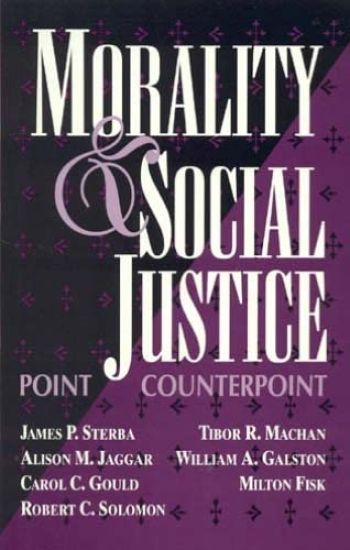
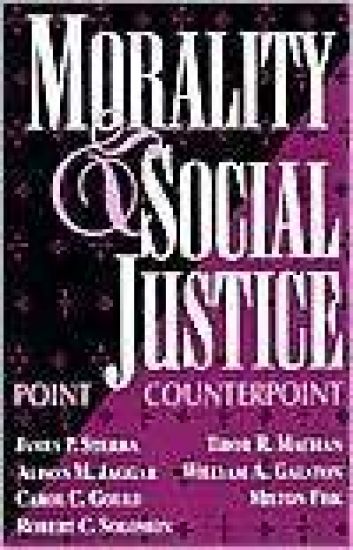
These original essays by seven leading contemporary political philosophers spanning the political spectrum explore the possibility of achieving agreement in political theory. Each philosopher defends in a principal essay his or her own view of social justice and also comments on two or more of the other essays. The result is a lively exchange that leaves the reader to judge to what degree the contributors achieve agreement or reconciliation.
These original essays by seven leading contemporary political philosophers spanning the political spectrum explore the possibility of achieving agreement in political theory. Each philosopher defends in a principal essay his or her own view of social justice and also comments on two or more of the other essays. The result is a lively exchange that leaves the reader to judge to what degree the contributors achieve agreement or reconciliation.
This delightful collection of fifty witty and insightful essays is written for real people in plain language by an internationally respected philosopher who is well-known for his efforts to 'popularise' philosophy. Originally published in newspapers and popular magazines, these essays are presented to 'elicit the joy of reflection', to provoke argument and intimacy, and to encourage understanding. Robert Solomon's aim is to make philosophy accessible and fun for everyone. You are cordially invited to join in a fascinating romp through many of the sticky intellectual brambles that have tantalised the human mind for centuries. Read about: "Becoming a Philosopher"; "What's Wrong with Sentimentality?"; "The Game of Love"; "The Politics of Sleep"; "Are the Three Stooges Funny?"; "Righteous Food"; "The One-Minute Moralist"; "In Defense of Kitsch"; "The New Illiteracy"; "Are Ethics Courses Useful?"; "Professors Riot: Kill Moby Dick"; and, much more. This book will captivate the curious and positively unnerve all those who believe that good ideas have to be dull, boring, and impossible to understand.
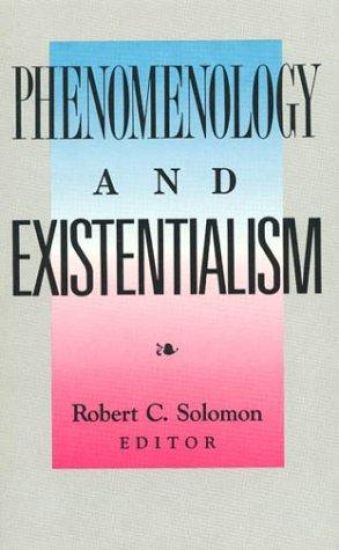
A reprint of the popular 1972 Harper and Row collection of essays in phenomenology and existential phenomenology. Contributions from a wide range of scholars are included, among them Husserl, Frege, Chisholm, Merleau-Ponty, Schmitt, Tillman, Gendlin, Sellers, Linsky, Dreyfus, Ryle, Solomon, Schlick, Ricoeur, Marcel, Heidegger, Sartre, Brentano, Olafson, Camus, and de Beauvoir.
Robert Solomon here brings together a collection of his published articles, focusing on key issues in the writings of major continental philosophers, including Hegel, Nietzsche, Kierkegaard, Sartre, and Camus.
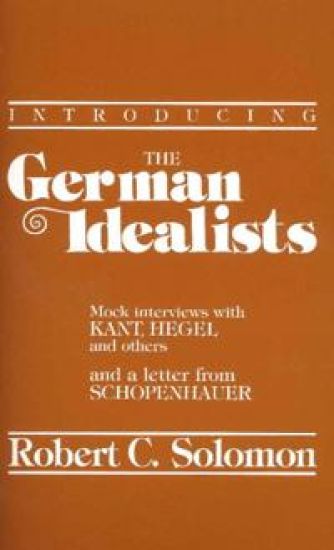
The explosion of creative and speculative philosophy that emerged in Europe in the second half of the eighteenth century is a thrilling intellectual adventure story, as well as an essential chapter in the history of philosophy. The main theme of this story is the rise and fall of the Self. The Self in question is no ordinary self - no individual personality nor even one of the many heroic or mock-heroic personalities of the early nineteenth century. The Self is the Transcendental Self, whose nature and ambitions are unprecedently arrogant, cosmic and often obscure. In modest terms, this universal self is human nature. In less modest terms, the Transcendental Self is nothing less than God. This thesis is what Solomon terms the Transcendental Pretence. The book is an accessible introduction to the difficult authors of modern European philosophy. The major figures and movements are treated in an integrated narrative, free of jargon. Included are: The Enlightenment and Romanticism, German Idealism, Kant, Fichte, Schelling and the Romantics, Hegel, Schopenhauer, Kierkegaard, Feuerbach, Max Bretano, Meinong, Frege, Dilthey, Bergson, Nietzsche, Husserl, Freud, Wittgenstein, Heidegger, Hermeneutics, Sartre, Post-Modernism, Structuralism, Foucault and Derrida.
Robert Solomon here brings together a collection of his published articles, focusing on key issues in the writings of major continental philosophers, including Hegel, Nietzsche, Kierkegaard, Satre, and Camus. The essays not only shed light on these writers, but also develop a set of provocative and forcefully-argued original theses, and encapsulate some of the central ideas of his most important books.
The Phenomenology of Spirit was Hegel's grandest experiment, changing our vision of the world and the very nature of philosophical enterprise. In this book, Solomon captures the bold and exhilarating spirit, presenting the Phenomenology as a thoroughly personal as well as philosophical work. He begins with a historical introduction, which lays the groundwork for a section-by-section analysis of the Phenomenology. Both the initiated and readers unacquainted with the intricacies of German idealism will find this to be an accessible and exciting introduction to this great philosopher's monumental work.
Originally published by Harcourt Brace Jovanovich in 1979, this volume offers a cross-disciplinary portrait of a fascinating period in modern European history and culture, 1750ó1850. It presents a philosophically contentious thesis about the nature of history and "human nature".