Kirjojen hintavertailu – 12 859 828 kirjaa ja 27 kauppaa

Kirjailija

Robert Crawford

Kirjat ja teokset yhdessä paikassa: 47 kirjaa, julkaisuja vuosilta 1990–2026, suosituimpiin kuuluu Eliot After The Waste Land. Vertaile teosten hintoja ja tarkista saatavuus suomalaisista kirjakaupoista.

47 kirjaa

Kirjojen julkaisuvuodet: 1990–2026.

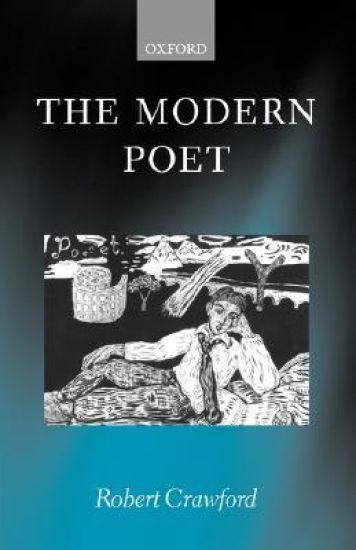
The Modern Poet

The Modern Poet

Robert Crawford

Oxford University Press
2004
nidottu
Addressed to all readers of poetry, this is a wide-ranging book about the poet's role throughout the last three centuries. It argues that a conception of the poets as both primitive and sophisticated emerged in the 1750s. Ever since English literary works became the focus of university studies, classroom discussion has shaped attitudes towards verse. Whether considering Ossian and the Romantics, Victorian scholar-gipsies, Modernist poetries of knowledge, or contemporary poetry in Britain, Ireland, and America, The Modern Poet shows how many successive generations of poets have needed to collaborate and to battle with academia.
Jäähyväiset pomolle

Jäähyväiset pomolle

Robert Crawford

WSOY/Sapo
2003
Pokkari
Hän on pukeutunut mustiin. Puku oli tyylikäs, mutta musta ei sopinut hänelle. Se oli liian hieno väri uudisraivaajan tyttärelle. Hameen reuna jäi polven yläpuolelle ja tummat sukat olivat seksikkäät... Brenda oli saapunut jättämään jäähyväisiä pomolle, saattamaan manalle mennyttä gangsteria siunattuun maahan. Sen piti olla viimeinen näytös, mutta muistatte kai miten kaikki alkoi. Forsythin vakuuttelujen mukaan ainoa tarkoitus oli raivata tieltä amerikkalaisen syndikaatin agentti, uhkaava kilpailija Lontoon uhkapelimarkkinoilla. Potti oli kuitenkin paljon suurempi ja yrittäjiä liian monta samallakaurahalmeella. Eikä siis pomokaan noinvainsuostunut jäähyväisiin. Englantilaisen Robert Crawfordin jäähyväiset pomolle on yhtä tehokas jännäri kuin salanimellä kirjoittaneen tekijän kaksi muutakin Sapo-sarjan teosta Takiainen (Sapo 125) ja Vakaa kuin kallio (Sapo 140).
What is Religion?

What is Religion?

Robert Crawford

Routledge
2001
nidottu
We all know what religion is - or do we? Confronted with religious pluralism and cultural diversity, it manifests itself in many forms. What is Religion? serves not only as an introduction to the different belief systems flourishing throughout the modern world, but asks us to consider how the very boundaries of faith might be drawn now and in the future. How might religion interact with political ends, or permeate culture, society and everyday life? Is the post-secular world in thrall to 'religions' of its own kind - materialism, humanism, medicine, science? And what logic separates 'common-sense' or academic knowledge from the immutable but unstable boudaries of faith? Which is the more certain? What does it mean to believe? Combining clear accounts of contemporary global religious practice with an incisive philosophical interrogation of the dynamics and aims of belief, What is Religion? offers a fresh and wide-ranging introduction to the perennial human questions of ritual, faith, ethics and salvation.
What is Religion?

What is Religion?

Robert Crawford

Routledge
2001
sidottu
We all know what religion is - or do we? Confronted with religious pluralism and cultural diversity, it manifests itself in many forms. What is Religion? serves not only as an introduction to the different belief systems flourishing throughout the modern world, but asks us to consider how the very boundaries of faith might be drawn now and in the future. How might religion interact with political ends, or permeate culture, society and everyday life? Is the post-secular world in thrall to 'religions' of its own kind - materialism, humanism, medicine, science? And what logic separates 'common-sense' or academic knowledge from the immutable but unstable boudaries of faith? Which is the more certain? What does it mean to believe? Combining clear accounts of contemporary global religious practice with an incisive philosophical interrogation of the dynamics and aims of belief, What is Religion? offers a fresh and wide-ranging introduction to the perennial human questions of ritual, faith, ethics and salvation.
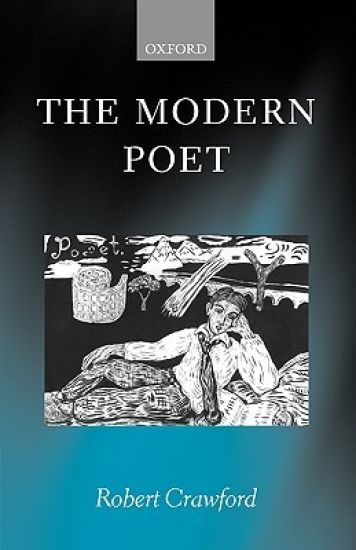
The Modern Poet

The Modern Poet

Robert Crawford

Oxford University Press
2001
sidottu
Addressed to all readers of poetry, this is a wide-ranging book about the poet's role throughout the last three centuries. It argues that a conception of the poets as both primitive and sophisticated emerged in the 1750s. Encouraged by the classroom when English literary works began to be studied in universities, this view continues to shape our own attitudes towards verse. Whether considering Ossian and the Romantics, Victorian scholar-gipsies, Modernist poetries of knowledge, or contemporary poetry in Britian, Ireland, and America, The Modern Poet shows how many successive generations of poets have needed to collaborate and to battle with academia.
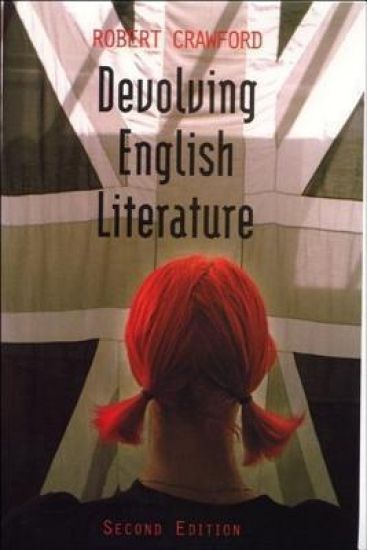
Devolving English Literature

Devolving English Literature

Robert Crawford

Edinburgh University Press
2000
nidottu
This widely-praised book looks at the rise and fall of 'Britishness' in literature over the last three centuries. Arguing that for much of its history the subject of 'English Literature' has been bound up with an assumed English cultural centre, Devolving English Literature examines the literary construction and questioning of a British (rather than simply English) literary identity. Surveying eighteenth and nineteenth-century writers, including Robert Burns, James Boswell, Walter Scott and Thomas Carlyle, Robert Crawford remaps literary history. He argues that Scottish and non-metropolitan authors left a crucial legacy to American literature, to the developing subject of anthropology, and to twentieth-century Modernism. In the work of T. S. Eliot, Ezra Pound, James Joyce, Hugh MacDiarmid and other Modernists there persist vitally 'provincial' as well as national elements. These continue to nourish the verse of sophisticated post-British 'barbarian' poets such as Seamus Heaney, Tony Harrison, Douglas Dunn, Les Murray, and Derek Walcott. More than that, they are bound up with the contemporary literature and politics of Britain after devolution. This second edition contains a substantial new chapter, 'Waving Citizens', which looks particularly at Scottish writing in the light of the political events that saw the establishment of a national Parliament in Edinburgh in 1999. Topics considered range from Walter Scott and European union to Trainspotting and right-wing politics. This new chapter argues for the need to read Scottish literature in ways that alert us not just to its political significance, but also to the breadth of its tonal spectrum, so that Muriel Spark and Kathleen Jamie are as much part of a redefined Scottish literary identity as are Irvine Welsh and James Kelman. Praise for the first edition: 'A stunning book: original, extraordinarily wide-ranging, coherent, reflective, and strongly argued.' - Susan Staves, Studies in English Literature 'Crawford's book produces a spine-icing thrill as new frontiers break open. It rethinks modern British literature with new meanings for students of history, politics, anthropology and sociology, and it does so with seminal clarity and captivating originality.' - Owen Dudley Edwards, New Statesman 'An incisive, indeed brilliant, critical investigation into Anglocentricity, nationalism and literature.' - Catherine Lockerbie, The Scotsman Key features: * Surveys the rise and fall of 'Britishness' in literature over three centuries. * New chapter (not in the first edition) surveys Scottish literature from a post-devolutionary perspective. * Includes material on US, Irish, English and Australian as well as Scottish literature. * Rave reviews for the first edition (1992).

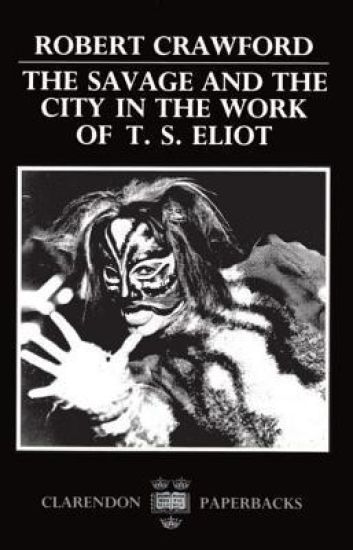
The Savage and the City in the Work of T. S. Eliot
The twin concerns of primitive and metropolitan life nourished T. S. Eliot's imagination through his childhood and student years and developed to mould and underpin his writing. Ranging from Dr Sweany of St Louis and Eliot's intense interest in anthropology to his interest in Victorian urban writing and popular American models, this book throws new light on Eliot's major works, particularly on The Waste Land and Sweeney Agonistes. In understanding how a great poet obsessively and continually brought together `savages' and the sophisticated as well as slum-dwelling members of modern urban society, we can see his work afresh as possessing remarkable and profound excitement as well as unusual integrity.