Kirjojen hintavertailu – 12 903 724 kirjaa ja 27 kauppaa
Kirjailija
Robert Crotty
Kirjat ja teokset yhdessä paikassa: 9 kirjaa, julkaisuja vuosilta 2012–2018, suosituimpiin kuuluu Three Revolutions. Vertaile teosten hintoja ja tarkista saatavuus suomalaisista kirjakaupoista.
The book puts the current interest in historical Jesus research into a proper historical context, highlighting Gnosticism’s lasting influence on early Christianity and making the provocative claim that nearly all Christian Churches are in some way descended from Roman Christianity. Breaking with the accepted wisdom of Christianity’s origins, the revised history it puts forward challenges the assumptions of Church and secular historians, biblical critics and general readers alike, with profound repercussions for scholarship, belief and practice.
The book puts the current interest in historical Jesus research into a proper historical context, highlighting Gnosticism’s lasting influence on early Christianity and making the provocative claim that nearly all Christian Churches are in some way descended from Roman Christianity. Breaking with the accepted wisdom of Christianity’s origins, the revised history it puts forward challenges the assumptions of Church and secular historians, biblical critics and general readers alike, with profound repercussions for scholarship, belief and practice.
Terrorism is the threat of the age, or so we are told, and inevitably associated with it is the word 'Islam'. The notion of the 'Muslim terrorist' has become a colloquialism in Western media. Interestingly, in all the history books about the Second World War, the phrase 'Christian fascist' is rarely seen in spite of the fact that skewed Christian theologies were used liberally by the Nazis to further their hatred. This points to a blind spot in Western understanding about the ways in which religious (and non-religious) ideology can be mutilated to serve hateful ends. We think we see it in Islam but we can't see it in ourselves. This book is dedicated to uncovering the many understandings of Islam we lack and the many misunderstandings we need to overcome.
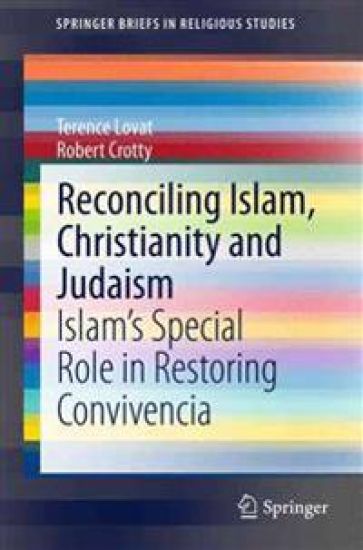
At the present time, when so-called Islamic radicalism, terrorism and Jihadism occupy major media space, with Islam often depicted as the main culprit, the book attempts a tour de force. It proposes that Islam is as much victim as culprit in the history that has led to the current hostility. This is because the common claims of both mainstream and radical Islam that Islam represents the high point of the Abrahamic tradition, and therefore a purification of Judaism and Christianity, have been largely ignored, misunderstood or blatantly rejected by these faiths and therefore by ‘the West’ in general. This rejection has effectively rendered Islam as the poor cousin, if not the illegitimate sibling, of the tradition. In turn, this has created long-term resentment and hostility within Islam as well as robbed the ‘Judaeo-Christian West’ of a rich, inter-faith understanding of the wider Abrahamic tradition. The book explores these claims through textual, historical and theological analyses, proposing that many of them stand up better to critical scrutiny than has been commonly acknowledged. It further proposes that seeing Islam in this way has potential to re-awaken its self-understanding as a leader of accord among the Abrahamic faiths, of the kind that characterized the era of Convivencia when, in medieval Spain, Islam constructed and contributed to advanced civilizations characterized by relatively harmonious co-existence between Muslims, Christians and Jews. The book focuses on the role that a more respected and self-confident Islam could play in forging enhanced inter-faith relations in a world that desperately needs them as it struggles to understand and deal with modern and particularly vicious forms of radical Islamism.
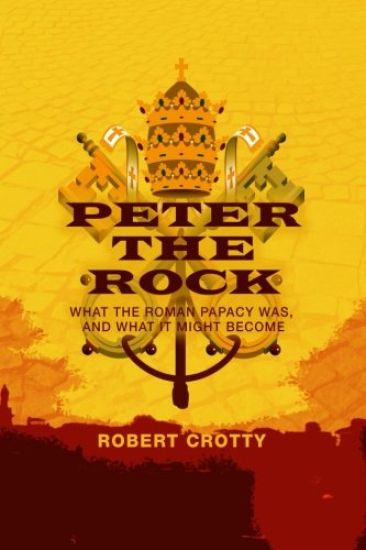
Who would dare to challenge the tradition that Jesus appointed Peter to be the rock, the foundation of the Christian Church? Who would even explore the possibility that Peter did not found the Christian Church and become the first bishop? Who? Another Martin Luther? No, a contemporary critic called Robert Crotty A brilliant critical analysis of a religious phenomenon called 'The Papacy, ' ... Norman Habel Professorial Fellow, Flinders University As in so many other times, the Church institution itself has to ask: who is 'Peter' today? The answer probably should be quite radical. It is not my place even to make suggestions as to a new structure - that is the role of the Church members. But it seems obvious that something must be done; the answer is not the Papacy as understood today. 'Peter' needs renewal. With the election of Pope Francis I, who shrugs off the trappings of high living and pompous ceremony there is a heightened interest in the Papacy, the line of Popes. This book claims to demonstrate that many statements are not at all historically valid and the seemingly logical conclusion must therefore be questioned. Here are some reasons for this position defended in the book: -Jesus of Nazareth was a Jewish teacher, proclaiming the Reign of God to a Galilean audience and he had nothing to do with the foundation of a separate Church, different to Judaism.-There is no historical evidence, as against the Synoptic gospels, that Jesus of Nazareth appointed Peter to any office or any succession.-Peter was never a universal Church leader, never a Roman leader or Bishop, possibly not even a house-church leader.-There was no monarchic Bishop of Rome until well into the second century-It was many centuries before the Pope in Rome even claimed to be the Head of the universal Church-The affirmation of a line of Popes as successors to 'Peter' belongs to the Church Story not to history.
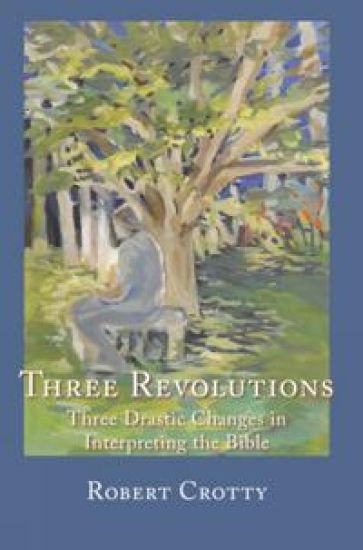
The author describes the drastic changes or revolutions that have occurred in the interpretation of the Bible during his own lifetime. The author uses his own experiences to describe these revolutions and to reflect on what consequences they have had for his own life-story. The first revolution was the introduction of the historical-critical approach. The Bible was interpreted as historical in a broad sense, not in all its details. In a Roman university the author later found that this broad historical verification of the Bible became more and more problematic. The second revolution is described as the Bible as Literature methodology. This approach puts aside his- tory and examines the Bible as a clever and subtle literary document which has controlled religious belief and practice but cannot be substantiated as historical fact. There was a third revolution. Within the secular university scene, the author became involved in the study of anthropology and sociology. Judaism and Christianity were seen as religions amongst other religions; their sacred writings were seen as sacred writings alongside others. The new approach forces him to rethink the history of Israel, the relevance of the Hebrew Scriptures and Judaism itself; he also has to rethink the history of Jesus, the relevance of the Christian Scriptures and Christianity. This life journey should be of interest to those working in the fields of biblical and religion studies.