Kirjojen hintavertailu – 12 859 818 kirjaa ja 27 kauppaa

Kirjailija

Robert Darnton

Kirjat ja teokset yhdessä paikassa: 32 kirjaa, julkaisuja vuosilta 1985–2026, suosituimpiin kuuluu The Kiss of Lamourette. Vertaile teosten hintoja ja tarkista saatavuus suomalaisista kirjakaupoista.

32 kirjaa

Kirjojen julkaisuvuodet: 1985–2026.

Le Grand Massacre Des Chats: Attitudes Et Croyances Dans L'Ancienne France
Un grand massacre de chats: d'apres un temoin, voila bien l'episode le plus comique qui se soit deroule dans l'imprimerie de Jacques Vincent, rue Saint-Severin, a Paris. Qu'y avait-il pourtant de si drole? Pour quelles raisons un groupe d'artisans parisiens trouvaient la un inoubliable sujet d'hilarite? C'est ainsi que Robert Darnton entame son exploration des attitudes et des croyances dans la France du XVIIIe siecle. Avec passion, il nous fait revivre la facon dont les Francais de l'age des Lumieres concoivent le monde et la facon dont les paysans, bourgeois, aristocrates ou philosophes pensent et ressentent leur environnement. Tout a la fois anthropologue et historien, Robert Darnton evoque avec sensibilite ce que representent le surprenant ou l'habituel dans les mentalites francaises du XVIIIe siecle. Il est facile et sans doute rassurant d'imaginer que nos ancetres pensaient comme nous le faisons aujourd'hui, abstraction faite des perruques et des jabots. C'est tout le merite d'un livre comme celui-ci de nous aider a nous liberer d'un sentiment trompeur de familiarite avec le passe.

George Washington's False Teeth

George Washington's False Teeth

Robert Darnton

WW Norton Co
2010
nidottu
George Washington was inaugurated as president in 1789 with one tooth in his mouth, a lower left bicuspid. The Father of His Country had sets of false teeth that were made of everything but wood, from elephant ivory and walrus tusk to the teeth of a fellow human. With characteristic learning and bracing insight, Robert Darnton shows us that the Enlightenment had false teeth alsothat it was not the Father of Our Modern World, responsible for all its advances and transgressions. In restoring the Enlightenment to human scale, Darnton locates its real aims, ambitions, and significance. So too with the French Revolution, another icon of the eighteenth century, approached here through the gossip, songs, and broadsides that formed the political nervous system of Paris in the Old Regime. Figures we think we knowVoltaire, Jefferson, Rousseau, Condorcet, even historians themselvesemerge afresh in Darnton's hands, their vitality, if not their teeth, intact. 17 b/w illustrations.
The Case for Books

The Case for Books

Robert Darnton

PublicAffairs,U.S.
2010
pokkari

Halvin toimitettuna 20,20 €

The era of the printed book is at a crossroad. E-readers are flooding the market, books are available to read on cell phones, and companies such as Google, Amazon, and Apple are competing to command near monopolistic positions as sellers and dispensers of digital information. Already, more books have been scanned and digitized than were housed in the great library in Alexandria. Is the printed book resilient enough to survive the digital revolution, or will it become obsolete? In this lasting collection of essays, Robert Darnton,an intellectual pioneer in the field of this history of the book,lends unique authority to the life, role, and legacy of the book in society.
The Great Cat Massacre

The Great Cat Massacre

Robert Darnton

Basic Books
2009
pokkari

Halvin toimitettuna 29,10 €

When the apprentices of a Paris printing shop in the 1730s held a series of mock trials and then hanged all the cats they could lay their hands on, why did they find it so hilariously funny that they choked with laughter when they reenacted it in pantomime some twenty times? Why in the eighteenth-century version of Little Red Riding Hood did the wolf eat the child at the end? What did the anonymous townsman of Montpelier have in mind when he kept an exhaustive dossier on all the activities of his native city? These are some of the provocative questions Robert Darnton answers in this classic work of European history in what we like to call The Age of Enlightenment."
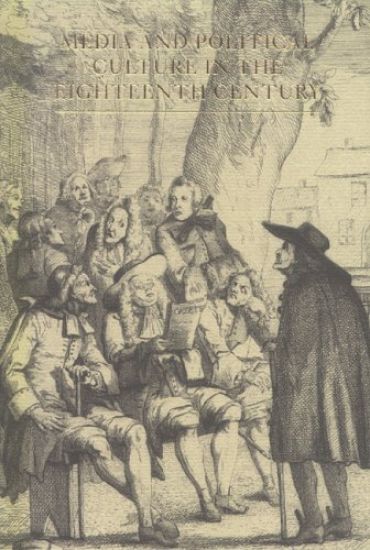
Media and political culture in the eighteenth century

Media and political culture in the eighteenth century

Marie-Christine Skuncke; Robert Darnton; Jean Sgard; John Brewer; Carla Hesse

Kungl. Vitterhetsakademien
2005
nidottu
The eighteenth century, in which the Royal Academy of Letters was created in Stockholm, was a time of intense political discussion. Concepts such as human rights and social equality were beginning to take shape in Europe and North America. Critical views spread through a variety of media which undermined the power structures of the Old Regime, gossip, newspapers, libels, memoirs, chroniques scandaleuses, engravings, etc. When the Royal Academy of Letters celebrated its 250th anniversary in 2003, one of the events was a symposium in Stockholm entitled ‘Media and Political Culture in the Eighteenth Century’. The present volume includes the contributions of the four keynote lecturers, John Brewer, Robert Darnton, Carla Hesse and Jean Sgard. The British historian JOHN BREWER is currently Professor of Humanities and Social Sciences at California Institute of Technology. The American scholar ROBERT DARNTON is Professor of European History at Princeton University. The American scholar CARLA HESSE is Professor of History at the University of California, Berkeley. The French press historian JEAN SGARD has been Professor of French Literature at the Université Stendhal in Grenoble 1969-1994. The editor, MARIE-CHRISTINE SKUNCKE, is Professor of Comparative Literature at Uppsala University.
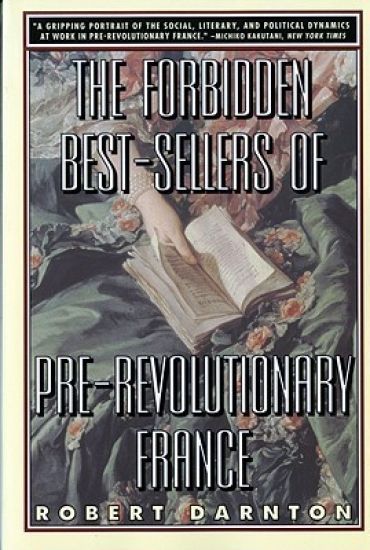
The Forbidden Best-Sellers of Pre-Revolutionary France
His latest book vibrates with the strange political and literary energies of ancien r gime France. The Forbidden Best-Sellers of Pre-Revolutionary France traces the merging of philosophical, sexual, and anti-monarchical interests into the pulp fiction of the 1780s, banned books that make fascinating reading more than two centuries later. French literature of the eighteenth century means to us today Rousseau and Voltaire and the "classic" texts that, we imagine, gave rise to the Revolution. Yet very few of the standard works of the Enlightenment were as widely read as books whose names we have never heard, books that were the currency of a huge literary underground during the reign of Louis XVI. Included in this volume are Darnton's translations of excerpts from three of these works. After twenty-five years of research, Darnton has summarized his findings in one brilliant work that examines the reciprocal relationship between private literature and the public world, the (illegal) spread of Enlightenment thought, and the interesting possibility that the writings of some not-so-famous authors contributed to the fall of the French aristocracy.
Berlin Journal, 1989-1990

Berlin Journal, 1989-1990

Robert Darnton

WW Norton Co
1993
nidottu
Shock waves from the fall of the Berlin Wall in November 1989 continue to pulse through German society. As the difficult process of reunification continues, it is worth recalling the revolutionary moment when immense crowds took to the streets of Leipzig and Berlin under the banner “We Are the People” and brought down one of the world’s most oppressive dictatorships. Robert Darnton’s eyewitness account of those historic days “is direct and vivid. His prose conveys the immediacy of the drama.” He gives us a memorable cast of characters, from two experts on the repair of broken-down Trabis to the environmental councilor for the polluted city of Bitterfeld, and Isaak Behar, a Jew who managed to survive the Holocaust while hiding in wartime Berlin. With wit and insight Darnton takes us behind the scenes to meet “ordinary people grappling with great change, humanizing history.”
The Business of Enlightenment

The Business of Enlightenment

Robert Darnton

The Belknap Press
1987
nidottu
”A major achievement of American scholarship and in the first rank of those which have been transforming our view of French history during the last twenty years.“ —New York Review of BooksA great book about an even greater book is a rare event in publishing. Robert Darnton’s history of the Encyclopédie is such an occasion. The author explores some fascinating territory in the French genre of histoire du livre, and at the same time he tracks the diffusion of Enlightenment ideas. He is concerned with the form of the thought of the great philosophes as it materialized into books and with the way books were made and distributed in the business of publishing. This is cultural history on a broad scale, a history of the process of civilization. In tracing the publishing story of Diderot’s Encyclopédie, Darnton uses new sources—the papers of eighteenth-century publishers—that allow him to respond firmly to a set of problems long vexing historians. He shows how the material basis of literature and the technology of its production affected the substance and diffusion of ideas. He fully explores the workings of the literary market place, including the roles of publishers, book dealers, traveling salesmen, and other intermediaries in cultural communication. How publishing functioned as a business, and how it fit into the political as well as the economic systems of prerevolutionary Europe are set forth. The making of books touched on this vast range of activities because books were products of artisanal labor, objects of economic exchange, vehicles of ideas, and elements in political and religious conflict. The ways ideas traveled in early modern Europe, the level of penetration of Enlightenment ideas in the society of the Old Regime, and the connections between the Enlightenment and the French Revolution are brilliantly treated by Darnton. In doing so he unearths a double paradox. It was the upper orders in society rather than the industrial bourgeoisie or the lower classes that first shook off archaic beliefs and took up Enlightenment ideas. And the state, which initially had suppressed those ideas, ultimately came to favor them. Yet at this high point in the diffusion and legitimation of the Enlightenment, the French Revolution erupted, destroying the social and political order in which the Enlightenment had flourished. Never again will the contours of the Enlightenment be drawn without reference to this work. Darnton has written an indispensable book for historians of modern Europe.
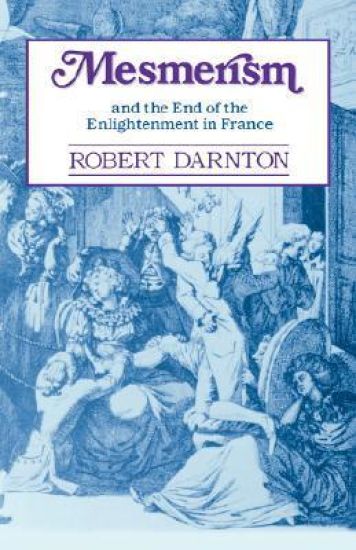
Mesmerism and the End of the Enlightenment in France

Mesmerism and the End of the Enlightenment in France

Robert Darnton

Harvard University Press
1986
nidottu
“[An] excellent and exemplary study in the history of ideas…Provides a commendable model for those interested in the way ‘true’ and ‘false’ ideas interact and broadly influence behavior.” —ScienceEarly in 1788, Franz Anton Mesmer, a Viennese physician, arrived in Paris and began to promulgate a somewhat exotic theory of healing that almost immediately seized the imagination of the general populace. Robert Darnton, in his lively study of mesmerism and its relation to eighteenth-century radical political thought and popular scientific notions, provides a useful contribution to the study of popular culture and the manner in which ideas are diffused down through various social levels.
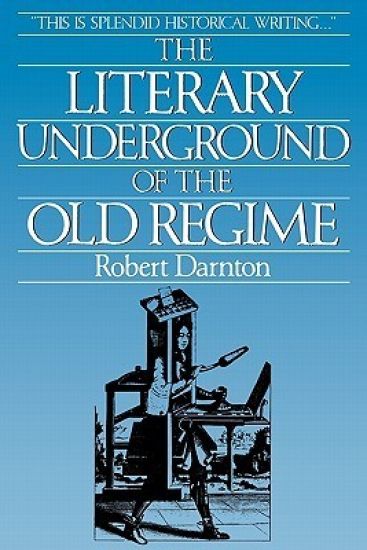
The Literary Underground of the Old Regime

The Literary Underground of the Old Regime

Robert Darnton

Harvard University Press
1985
nidottu

Halvin toimitettuna 37,90 €

“This is splendid historical writing…Darnton [has] a well-justified reputation as one of the most original contributors to our understanding of life in pre-revolutionary Paris.” —New York Review of BooksRobert Darnton introduces us to the shadowy world of pirate publishers, garret scribblers, under-the-cloak book peddlers, smugglers, and police spies that composed the literary underground of the Enlightenment. Here are the ambitious writers who crowded into Paris seeking fame and fortune within the Republic of Letters, but who instead sank into the miserable world of Grub Street—victims of a closed world of protection and privilege. Venting their frustrations in an illicit literature of vitriolic pamphlets, libelles, and chroniques scandaleuses, these “Rousseaus of the gutter” desecrated everything sacred in the social order of the Old Regime. Here too are the workers who printed their writings and the clandestine booksellers who distributed them. While censorship, a monopolistic guild, and the police contained the visible publishing industry within the limits of official orthodoxies, a prolific literary underworld disseminated a vast illegal literature that conveyed a seditious ideology to readers everywhere in France. Covering their traces in order to survive, the creators of this eighteenth-century counterculture have virtually disappeared from history. By drawing on an ingenious selection of previously hidden sources, such as police ledgers and publishers’ records, Robert Darnton reveals for the first time the fascinating story of that forgotten underworld. The activities of the underground bear on a broad range of issues in history and literature, and they directly concern the problem of uncovering the ideological origins of the French Revolution. This engaging book illuminates those issues and provides a fresh view of publishing history that will inform and delight the general reader.