Kirjojen hintavertailu – 12 859 828 kirjaa ja 27 kauppaa
Kirjailija
Robert E. Dugan
Kirjat ja teokset yhdessä paikassa: 7 kirjaa, julkaisuja vuosilta 2003–2017, suosituimpiin kuuluu Engaging in Evaluation and Assessment Research. Vertaile teosten hintoja ja tarkista saatavuus suomalaisista kirjakaupoista.
Both the Association of College and Research Libraries (ACRL) and the Public Library Association (PLA) provide important data services. For library managers and administrators, the key to the data s usefulness is knowing how to extract and apply the most relevant information to managing a library and improving accountability. A companion volume to the authors earlier book Getting Started with Evaluation, this guide illustrates how to use the data to support value, collection use, benchmarking, and other best practices. This important resourceIdentifies key metrics in ACRLMetrics and PLAmetricsDemonstrates how to perform techniques for developing and using metricsOffers exercises that illustrate how to produce meaningful metrics and reports, accessible via a free web portalShows how to move towards outcomes assessments while simultaneously embracing valueIncludes numerous examples to guide readers through the data services web interfaces screen-by-screenManagers at academic and public libraries, administrators, and library trustees will find this book a vital tool for accountability and advocacy.
Everyone agrees that evaluation of library services is essential, but without a background in research it can be a challenge to apply abstract concepts such as strategic planning, evidence-based decision making, and accountability to real-world situations. Finally library managers have a workbook to help them master key concepts of service quality assessment, offering directed exercises and worksheets to guide them. Firmly rooted in practical application, this book Presents an overview of evaluation and the types of metrics, linking them to strategic planning and infrastructure Examines qualitative versus quantitative measures Shows how to decide which metrics are relevant to one’s own institution, covering benchmarking, best practices, peer group filters, and those metrics that offer a high return on investment Includes pointers for launching and maintaining successful library evaluation through flexibility and smart delegation among library staff Offers advice on marshalling data to effectively communicate the value and impact of a library and its services, no matter the audience Complete with a detailed list of sources for metrics and concrete examples of evaluation in practice, this workbook will be both valuable and immediately useful to managers at academic and public libraries, as well as to library trustees and others interested in assessing service quality.
For library managers, this book explains evaluation and assessment research and identifies the components of proper execution, such as planning, decision making, and accountability. Increasingly, libraries must address questions of accountability, efficiency, effectiveness, and impact—the extent to which a program causes positive changes in the target population. All of these issues are important to library managers and those to whom they directly report. With the heightened interest in customer expectations and increased focus on service quality and customer satisfaction, evaluation and assessment research provides the essential methodology for library managers to obtain meaningful answers. Engaging in Evaluation and Assessment Research introduces evaluation and assessment, clearly distinguishing between the two; explains evaluation and assessment research as a formal inquiry process with individual components; and demonstrates the use of the evidence gathered for planning, decision making, and accountability. This book is not another research methods textbook; it is a resource that will provide real knowledge and strategies to expand the library manager's toolkit for operating in the real world. Beyond exposing the reader to the unique culture of research and to different ways of conducting research, the authors also offer advice on how to get published.
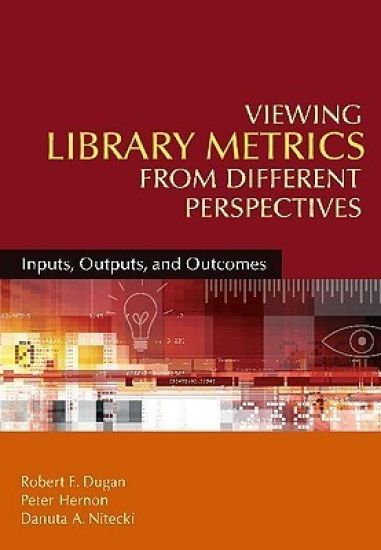
This guidebook shows academic libraries how to use innovative new performance metrics to achieve greater accountability and higher levels of service. Viewing Library Metrics from Different Perspectives: Inputs, Outputs, and Outcomes helps academic librarians go well beyond the basic guideposts of inputs and outputs to explore a wide range of metrics for measuring their effectiveness and improving performance. Based on their groundbreaking article, "Outcomes Assessment: Not Synonymous with Inputs and Outputs," Robert Dugan and Peter Hernon, along with coauthor Danuta Nitecki, give libraries the tools they need to see beyond their own walls and interpret both outcome and impact metrics from the perspective of the parent institution, the customer, and the stakeholder, as well as the library itself. Viewing Library Metrics from Different Perspectives makes a convincing argument for targeting the right audience with the right metric. The first three chapters introduce key concepts and the relevant literature, and helps libraries make the crucial distinction between assessment and evaluation. Chapters four through nine examine the four perspectives and their attendant metrics. The final chapters discuss how best to present and interpret the results.
Revisiting Outcomes Assessment in Higher Education complements rather than updates Hernon and Dugan's 2004 Outcomes Assessment in Higher Education. As with its predecessor, it offers a cross-campus diversity of voices: contributors hail from various segments of higher education, including officers of institutional accreditation organizations, an academic vice president, academic deans, a higher education consultant, faculty members, and librarians. Individually, they shed light on how their corner of the higher education universe views, facilitates, and substantiates outcomes assessment. Together, they document what is known about outcomes assessment in the middle of the first decade of the new century, as institutions and their programs take ever firmer steps from anecdotal evidence to more rigorous diagnosis and reporting. The current interest in outcomes assessment represents a major shift in recent decades in attitudes about evaluating education. Outcomes assessment deals not only with assessment, but with accountability, usually in terms of accomplishing goals defined as desirable by the institution in question. It questions the results of educational processes, and focuses the argument on what students, faculty, and administrators demonstrably do. Revisiting Outcomes Assessment in Higher Education complements rather than updates Hernon and Dugan's 2004 Outcomes Assessment in Higher Education. As with its predecessor, it offers a cross-campus diversity of voices: contributors hail from various segments of higher education, including officers of institutional accreditation organizations, an academic vice president, academic deans, a higher education consultant, faculty members, and librarians. Individually, they shed light on how their corner of the higher education universe views, facilitates, and substantiates outcomes assessment. Together, they document what is known about outcomes assessment in the middle of the first decade of the new century, as institutions and their programs take ever-firmer steps from anecdotal evidence to more rigorous diagnosis and reporting. For faculty, administrators, and librarians at all academic institutions; accreditation organizations and associations, including program accreditors; program officials in national associations; and other stakeholders, including members of state and other governments wanting to see what academe is doing to link accountability with continuous quality improvement.
The definitive guide to U. S. government information on the Web has been expanded and updated with the latest information from the current administration, including material on the Department of Homeland Security, the Patriot Act, and the E-Government Act of 2002. Peter Hernon, one of the country's foremost authorities on government information, and his colleagues provide additional Web sites and offer valuable strategies for effectively accessing and using government information online. More than a mere directory of Web sites, this authoritative work serves as a cardinal pointer through the government's labyrinthine structure and the myriad information resources available to the public, giving users a clearer understanding of U. S. government agencies and their online publications and services. An essential and regularly updated reference, this guide is a reliable roadmap to a vast and diverse field of important information.