

Kirjailija
Robert Epstein
Kirjat ja teokset yhdessä paikassa: 17 kirjaa, julkaisuja vuosilta 1996–2026, suosituimpiin kuuluu The Parliament of Mice: A Fable. Vertaile teosten hintoja ja tarkista saatavuus suomalaisista kirjakaupoista.
17 kirjaa
Kirjojen julkaisuvuodet: 1996–2026.

How easy it is to take for granted and overlook the everyday things that compose this life: from fresh blueberries for breakfast to the flannel pillowcases that make the winter nights of sleep more comfortable. In Sticky Notes Haiku, these seemingly ordinary and nearly invisible objects are moved to center stage where they can be acknowledged, seen and appreciated for their true significance. Along with that which we value most--friends, family, truth--these matter, too, and rightly deserve our attention. Especially in light of the pandemic, take a moment, look around, and cherish the little wonders that enrich and sustain your life.between morning tea& morning meditation waking up*open window -- the post-itsfluttering too*the living room clockstops telling time so do I*from onesticky note to another this life* no life is ever fully completea blooming and dying roseRobert Epstein, a psychotherapist living and working in the San Francisco Bay Area, is a haiku anthologist as well as a haiku poet. He has edited, The Helping Hand Haiku Anthology, and his own most recent book of original haiku on the coronavirus is, Pandemic Haiku: Living through COVID-19.


The Buddha taught that everything is impermanent; that is, all things arise and pass away. If this is a holy truth--beyond religious belief systems--then each of us must find a way to make peace with the fact that we age, we grow old. Trying to resist or deny the existential reality of bodily change will only lead to suffering, if not despair; we might call it a form of senior bypassing. To embrace the changes both big and small is the fine art of living fully. There is as much cause for celebration as for lament: Beyond the changes and losses, many will observe an abundance of wisdom, courage, integrity, compassion, creativity and love. Join with the poets from around the world in these pages as they grapple poignantly and movingly with the realities of aging. Whatever your age, you are likely to find yourself both inspired and uplifted, maybe even transformed.nursing home gardenthe Kansas wind tousleshis thin hair Randy Brooksthese Christmas lights --how I wish my childrenwere still small Lynn Edgewheeling her chairthrough leaf fall. . .we sure knew how to dance Bill Pauly it's happened we must be truly old . . .soundsof our neighbour shovelingour driveway Naomi Beth Wakan

There they are, dotting the hillsides and plains all across the country. Other than children in the backseats of cars or vans, few notice the wide-eyed cows and calves that lumber innocently along their self-created paths behind barbed wire. The lives of cows are quiet and uneventful. Or are they? These precious bovines are not just fodder for meat or leather; they are precious beings--as are all animals, birds and fish--regarded by many Hindus in India as sacred. How can anyone even think of killing it? No cow is an it; every cow is a she. What can we learn from the gentleness of bovines in our mist? Bashō, the father of Japanese haiku, said: "Go to the pine to learn from the pine." In the same spirit, I say: "Open your heart to the cows and deepen your capacity for kindness and ahimsa (harmlessness)."in that other world moo means mu*sweet grassa newborn calfnuzzling her mother*her face, her gazethat one could bemy mother now*freeway driveif I could, I would jointhe congregation of cows
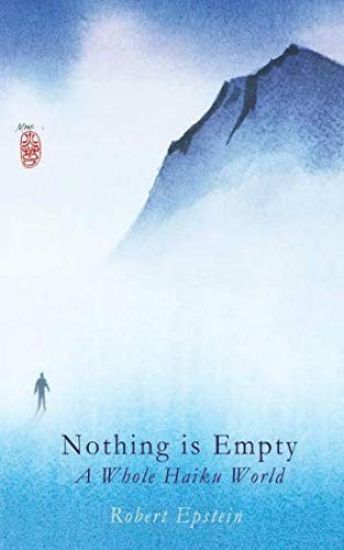
We are taught from an early age to steer clear of nothing and emptiness. These nonentities are dismissed as useless or disorganizing aspects of Life. Still, might it be possible that emptiness and nothing have something to offer us? Spiritually speaking, is there anything we can learn from listening to nothing or to emptiness? After all, emptiness and nothing may be found wherever you are. Through the power of careful attention and close observation, haiku endeavors to reveal the wisdom and truth lying at the heart of what Buddhists call the Void and Taoists refer to as The Way. (Cover art by Ron Moss.)

Haiku has the power to heal great loss, because it reveals to one's heart the midnight truth about life-and-death, which our everyday consciousness relegates to the margins. In the poems here that honor my father's life, the gap appearing between life and death is diminished. My father lives on in these haiku, which were mainly (but not exclusively) written in remembrance on his death day: the second Sunday in June over the past sixteen years. My father is your father is every father. Walk with me in haiku remembrance of my Dad through which the unbreakable bonds of love point us all back in the direction of wholeness. As novelist Thornton Wilder observed: "The highest tribute to the dead is not grief but gratitude."
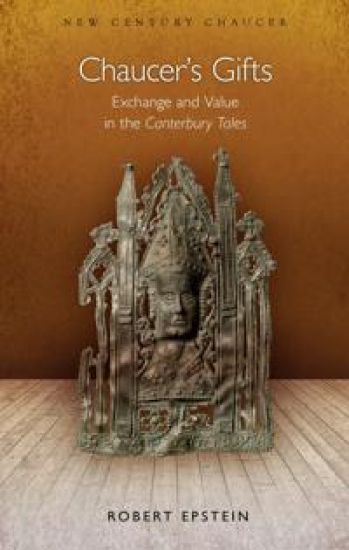
Geoffrey Chaucer's Canterbury Tales, the most celebrated literary work of medieval England, portrays the culture of the late Middle Ages as a deeply commercial environment, replete with commodities and dominated by market relationships. However, the market is not the only mode of exchange in Chaucer's world or in his poem. Chaucer's Gifts reveals the gift economy at work in the tales. Applying important recent advances in anthropological gift theory, it illuminates and explains this network of exchanges and obligations. Chaucer's Gifts argues that the world of the Canterbury Tales harbours deep commitments to reciprocity and obligation which are at odds with a purely commercial culture, and demonstrates how the market and commercial relations are not natural, eternal, or inevitable - an essential lesson if we are to understand Chaucer's world or our own.
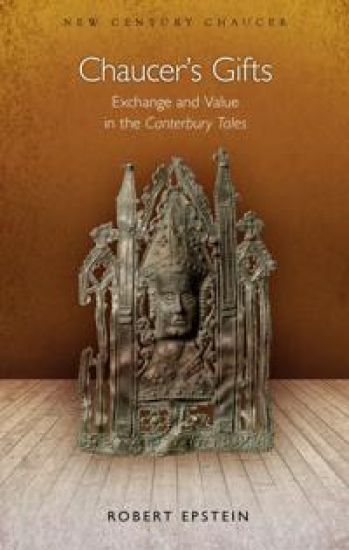
Geoffrey Chaucer’s Canterbury Tales, the most celebrated literary work of medieval England, portrays the culture of the late Middle Ages as a deeply commercial environment, replete with commodities and dominated by market relationships. However, the market is not the only mode of exchange in Chaucer’s world or in his poem. Chaucer’s Gifts reveals the gift economy at work in the tales. Applying important recent advances in anthropological gift theory, it illuminates and explains this network of exchanges and obligations. Chaucer’s Gifts argues that the world of the Canterbury Tales harbours deep commitments to reciprocity and obligation which are at odds with a purely commercial culture, and demonstrates how the market and commercial relations are not natural, eternal, or inevitable – an essential lesson if we are to understand Chaucer’s world or our own.
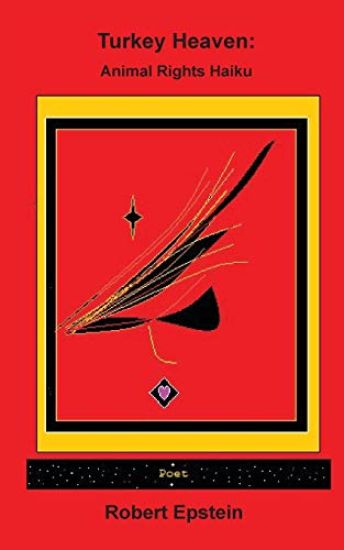
Turkey Heaven: Animal Rights Haiku
Robert Epstein
Createspace Independent Publishing Platform
2016
nidottu
From the back cover, penned by the poet: "Growing up, I relished hamburgers, chicken, steak, fish as well as dairy, and never gave any of it a moment's thought. Everyone I knew were avid meat-eaters. It seemed un-American to not eat meat. Then, one day, a young woman confronted me with an obvious question, as I was stir-frying ground beef for dinner: "What are you eating tonight, cow?" I was struck as if by lightning; the question cracked my consciousness wide open. By summer's end, I vowed to become vegan: I gave up meat, fish, fowl, and all animal by-products, forever. Family members poked fun at me; my beloved grandmother predicted that the meatless diet I adopted was nothing more than a fad. I have lived that so-called fad for more than 40 years. Why? Because I love animals, and take seriously Dr. Albert Schweitzer's clarion call to embrace a reverence for life--all life. We are all related--no exceptions--human and nonhuman alike. Will you dare to take the bold step of embodying a reverence for life in your own daily living? On your deathbed, you may breathe your last with a quiet dignity and peace for having extended love and compassion to all living beings."

The Sacred In Contemporary Haiku
Robert Epstein
Createspace Independent Publishing Platform
2014
nidottu

Sacred and Profane in Chaucer and Late Medieval Literature
Robert Epstein; William Robins
University of Toronto Press
2010
sidottu
Literary depictions of the sacred and the secular from the Middle Ages are representative of the era's widely held cultural understandings related to religion and the nature of lived experience. Using late Medieval English literature, including some of Chaucer's writings, these essays do not try to define a secular realm distinct and separate from the divine or religious, but instead analyze intersections of the sacred and the profane, suggesting that these two categories are mutually constitutive rather than antithetical. With essays by former students of John V. Fleming, the collection pays tribute to the Princeton University professor emeritus through wide-ranging scholarship and literary criticism. Including reflections on depictions of Bathsheba, Troilus and Criseyde, the Legend of Good Women, Chaucer's Pardoner, and Margery Kempe, these essays focus on literature while ranging into history, philosophy, and the visual arts. Taken together, the work suggests that the domain of the sacred, as perceived in the Middle Ages, can variously be seen as having a hierarchical or a complementary relationship to the things of this world.

Arguing that adolescence is an unnecessary period of life that people are better off without, this groundbreaking study shows that teen confusion and hardships are caused by outmoded systems that were designed to destroy the continuum between childhood and adulthood. Documenting how teens are isolated from adults and are forced to look to their media-dominated peers for knowledge, this discussion contends that by infantilising young people, society does irrevocable harm to their development and well-being. Instead, parents, teachers, employers, and others must rediscover the adults in young people by giving them authority and responsibility as soon as they exhibit readiness. Teens are highly capable - in some ways more than adults - and this landmark discussion offers paths for reaching and enhancing the competence in America's youth.
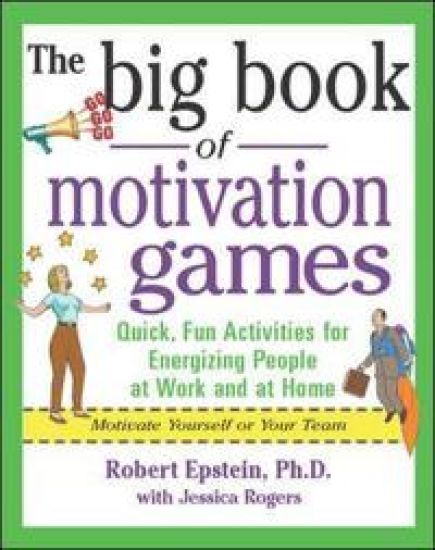
The Big Book of Motivation Games
Robert Epstein; Jessica Rogers
McGraw-Hill Professional
2001
nidottu
Behind these motivation boosting games - the experience and creativity of one of the world's leading experts on behavior! Did you know that... Disorganization is one of life's major sources of stress - and motivation killers? Anonymity is one of the greatest factors in motivating uninhibited creativity? Will power is poor tool for achieving motivation - skill power is a much more effective approach! For managers, leaders, and individuals seeking to motivate their teams - or themselves - here is a light-hearted book of games that are based on rigorous behavioral research, not just hype. Written by Dr. Robert Epstein, editor-in-chief of "Psychology Today" magazine and a Harvard-trained psychologist, this collection includes dozens of fast, simple games and exercises, as well as two unique tests that you can use to measure your "motivation competencies" and select the games you need the most. The energy-enhancing games help participants to: jump-start personal as well as team motivation; use color to boost mood - and energy; create a motivational environment; fight boredom and burnout; boost performance; overcome failure; stop procrastination; and much more!
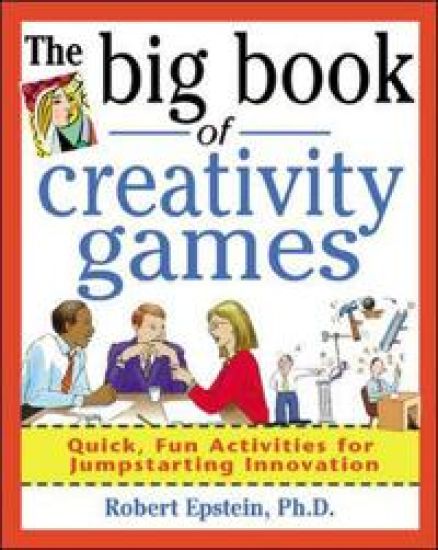
The Big Book of Creativity Games: Quick, Fun Acitivities for Jumpstarting Innovation
Robert Epstein
McGraw-Hill Professional
2000
nidottu
Behind these creativity-boosting games is more than 20 years of scientific research by one of the world's leading experts on creativity! Did you know that: Group creativity techniques like brainstorming can actually inhibit creativity? Failure spurs creativity better than success does? Creativity is not an exclusively right-brained activity? For work groups and individuals who do creative work, here is a light-hearted book of games that are based on rigorous creativity research, not just hype. Written by Robert Epstein, Editor-in-Chief of "Psychology Today" magazine and a Harvard-trained psychologist, all the exercises in this collection are based on Dr. Epstein's groundbreaking scientific research on the nature of the creative process. "The Big Book of Creativity Games" includes dozens of fast, simple games that foster and encourage creativity in the workplace and at home. The creativity games help to: produce dramatically innovative work; convince people that they're creative; get a new project off the ground; perk up a meeting; overcome a creative "block"; use failure to spur creativity; make people more inventive; and, much more!
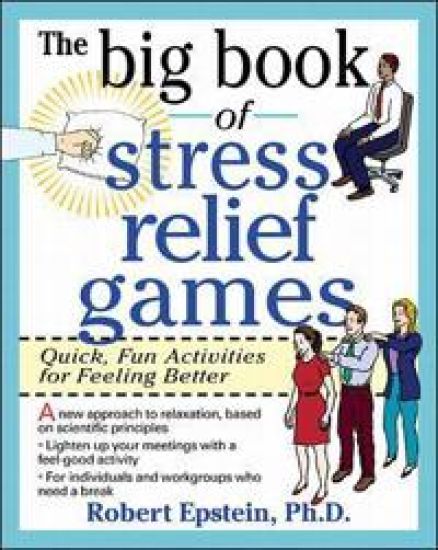
The Big Book of Stress Relief Games: Quick, Fun Activities for Feeling Better
Robert Epstein
McGraw-Hill Professional
2000
nidottu
This is a research-proven, innovative, and fun approach to stress relief and relaxation. These quick games, exercises, and activities provide fast, fun stress relief wherever and whenever it strikes, during the morning commute, in front of the computer, or when dealing with difficult people. To make dealing with stress less stressful - and more fun - "Psychology Today" Editor-in-Chief Robert Epstein has created dozens of games that teach every major stress-management and relaxation technique validated by scientific research. For everyone from deskbound, time pressed office workers to managers in important meetings - even speakers addressing large audiences - this creative collection of stress-relief games: helps alleviate high-pressure situations at home and at work; goes beyond relaxation exercises with stress-fighting life - planning and life-organization activities; can be used by individuals or groups; and, includes 50 activities and techniques - most requiring less than 5 minutes.
This diverse set of essays traces Epstein's experimental and theoretical work over a 15 year period. Four of the essays were coauthored by the eminent psychologist B. F. Skinner. The book demonstrates how the scientific study of behavior can increase our understanding and effectiveness in many domains: creativity and innovation, parenting, artificial intelligence, self-improvement, and even world peace. Reviewers have praised the volume as an impressive effort by one of America's most notable psychologists. Epstein's goals in writing this book were (a) to present some relatively interesting papers that can stand alone and (b) to organize and edit them so that sections have some integrity and so that the overall volume paints a fairly consistent picture of his evolving views on cognition, creativity, and behavior. Parts I and II focus on generativity research and theory and on some Columban (pigeon) simulations of human behavior, and Part III includes some related laboratory studies. Part IV is concerned with efforts to create a comprehensive science of behavior, and Part V includes essays about Skinner, one of the principle architects of behaviorism. Part VI includes forays into artifical intelligence, child rearing, categorization research, and other topics, and Part VII takes the volume to some uncertain reflections on growing older, and to a modest proposal for a day of world peace.