Kirjojen hintavertailu – 12 903 725 kirjaa ja 27 kauppaa

Kirjailija

Robert F. Bornstein

Kirjat ja teokset yhdessä paikassa: 4 kirjaa, julkaisuja vuosilta 1993–2024, suosituimpiin kuuluu The Dependent Patient. Vertaile teosten hintoja ja tarkista saatavuus suomalaisista kirjakaupoista.

4 kirjaa

Kirjojen julkaisuvuodet: 1993–2024.

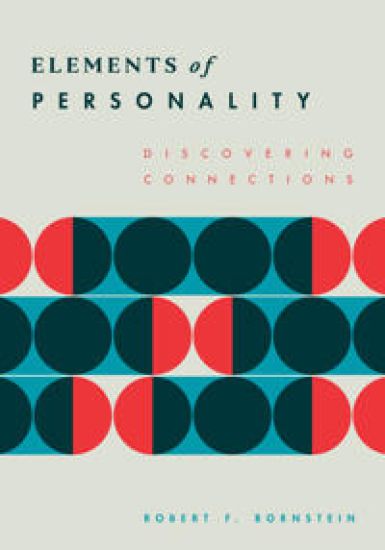
Elements of Personality

Elements of Personality

Robert F. Bornstein

AMERICAN PSYCHOLOGICAL ASSOCIATION
2024
pokkari

Halvin toimitettuna 71,50 €

The fascinating field of personality psychology not only helps us understand human behavior and mental life, but also provides an important lens to understanding ourselves in ways we never did before. In his concise and timely textbook, Dr. Robert F. Bornstein provides a fresh and appealing approach to personality theory and research that embeds personality in the broader intellectual landscape of psychology today. Elements of Personality focuses on the four major theoretical approaches to understanding personality: psychodynamic, behavioral and cognitive-behavioral, trait/interpersonal, and humanistic/existential. The author provides detailed coverage of these four major viewpoints and ignores the extraneous amp ldquo mini-theories amp rdquo covered in other textbooks. The result is a textbook that offers complex material in an accessible, student-friendly way. Chapters build upon one another, showing how these four perspectives differ alongside various points of convergence. Further drawing on the theme of amp ldquo connections, amp rdquo Dr. Bornstein integrates feature boxes to illustrate how the study of personality intersects with work in related psychological subfields (social, cognitive, developmental, and neuropsychology), disciplines outside of psychology, and with aspects of students amp rsquo own lives. Rich and relevant examples cover contemporary topics such as social media and online self, personality and politics, friendship formation and maintenance, self-actualization and activism, and more. The book closes by integrating ideas and findings into a holistic understanding of the psychology of personality, with an eye firmly aimed toward the future of personality theory and research. To help with comprehension and retention of the material and provide flexibility for the professor, each chapter ends with a review of key concepts and principles, critical thinking and discussion questions, key terms, and additional readings and resources. For instructors: a companion website is available containing PowerPoint slides, a testbank with multiple-choice and essay questions, sample syllabi, tables and figures files, and more.

Principles of Psychotherapy

Principles of Psychotherapy

Irving B. Weiner; Robert F. Bornstein

John Wiley Sons Inc
2009
sidottu
Generations of clinicians have valued Principles of Psychotherapy for its breadth of coverage and accessibility and the author's ability to gather many elements into a unified presentation. The Third Edition presents the conceptual and empirical foundations of evidence-based practice perspectives of psychodynamic theory. It also offers case examples illustrating what a therapist might say and do in various circumstances. In addition, it includes discussion of broader psychodynamic perspectives on short-term therapy. Mental health professionals will benefit from the revised edition s inclusion of empirically based guidelines for conducting effective psychotherapy.
The Dependent Patient

The Dependent Patient

Robert F. Bornstein

American Psychological Association
2005
sidottu
Virtually every mental health professional has worked with patients who are overly dependent -- patients who have trouble asserting themselves within and outside therapy, alienate others with a pervasive pattern of clinging insecurity, and undermine their social and work relationships with frequent requests for help and reassurance. Such patients have always presented unique treatment challenges for therapists, but in today's managed care-driven environment, with its emphasis on time-limited therapy and cost-effective treatment, the overly dependent patient can be even more challenging. The Dependent Patient: A Practitioner's Guide presents an integrated, empirically based framework for diagnosis, assessment, and treatment of dependent psychotherapy patients. Rather than being bound to a single theoretical view, The Dependent Patient integrates ideas and findings from a broad array of theoretical perspectives. This book will be a valuable resource for any practitioner who works in an inpatient, outpatient, rehabilitation, or day treatment/partial hospitalization setting, regardless of the practitioner's background and level of training.
The Dependent Personality

The Dependent Personality

Robert F. Bornstein

Guilford Publications
1993
sidottu
Over the past few decades, developmental, social, and clinical research has generated a wealth of information regarding the etiology and dynamics of dependent personality traits in children, adolescents, and adults. Integrating the work from these disciplines for the first time, this volume fills a significant gap in the literature by presenting a comprehensive and detailed review of what is known about the antecedents, correlates, and consequences of dependency. The volume opens with a review of theoretical frameworks that have influenced previous research on dependency. An overview and critique of commonly used assessment techniques contrasts the strengths and weaknesses of objective, projective, behavioral and interview-based dependency scales. Chapters covering etiology deal with the development of dependency at various stages of the life cycle and allow for comparison of the predictive validities of two important theoretical frameworks: the psychoanalytic and social learning models. Social and interpersonal consequences are considered, with attention to both the person's behavior and its effect on others. The chapter on psychopathological dependency thoroughly covers the enormous amount of research on this subject. Dependent personality disorder is next addressed, as well as the relationship of dependency to risk for physical disorders, followed by a discussion of dependent individuals as psychiatric and medical patients. In the concluding chapter, Bornstein presents a new theoretical model, expanding on the traditional view of dependency as a deficit to encompass the positive, adaptive qualities of dependent individuals as well. This book will be of value to both academic and clinical readers. Incisive reviews of personality development as well as social cognition and behavior will appeal to social, personality, and developmental psychologists, while clinical researchers will be particularly interested in Bornstein's discussion of the etiology and psychodynamics of psychopathology. Because dependency is so tightly linked to transference and countertransference issues, the dynamics of the supervisory relationship, psychological processes associated with psychiatric hospitalization and discharge, and psychotherapy initiation and termination, clinical psychologists, psychiatrists, social workers, counselors, and other mental health practitioners will benefit from the book's accessible review of empirical findings concerning the dependent personality.