Kirjojen hintavertailu – 12 859 828 kirjaa ja 27 kauppaa
Kirjailija
Robert Fisher
Kirjat ja teokset yhdessä paikassa: 67 kirjaa, julkaisuja vuosilta 1981–2026, suosituimpiin kuuluu The Survivor Guide(TM). Vertaile teosten hintoja ja tarkista saatavuus suomalaisista kirjakaupoista.
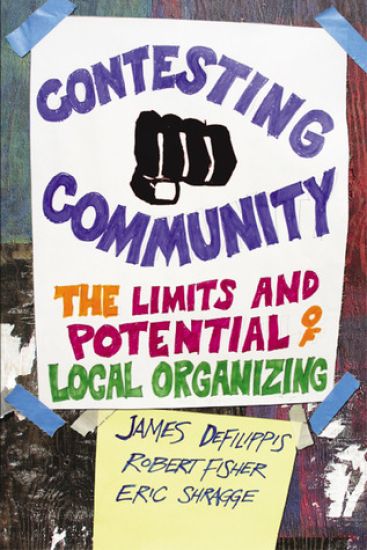
What do community organizations and organizers do, and what should they do? For the past thirty years politicians, academics, advocates, and activists have heralded community as a site and strategy for social change. In contrast, Contesting Community paints a more critical picture of community work which, according to the authors--in both theory and practice--has amounted to less than the sum of its parts. Their comparative study of efforts in the United States, the United Kingdom, and Canada describes and analyzes the limits and potential of this work. Covering dozens of groups, including ACORN, Brooklyn's Fifth Avenue Committee, and the Immigrant Workers Centre in Montreal, and discussing alternative models, this book is at once historical and contemporary, global and local. Contesting Community addresses one of the vital issues of our day--the role and meaning of community in people's lives and in the larger political economy.
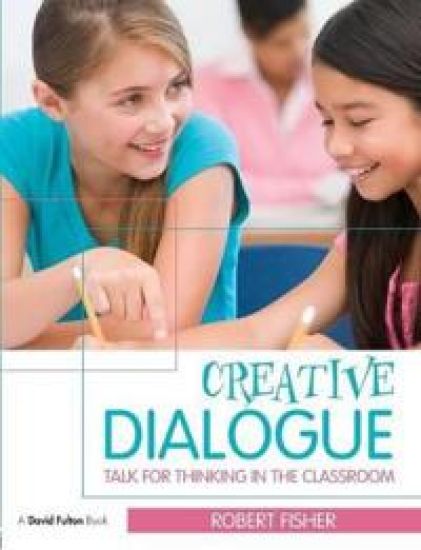
Creative Dialogue is an essential guide to dialogic learning for every trainee and practising teacher. It presents practical ways of teaching children to be more thoughtful and creative, and to learn more effectively through speaking and listening in school and at home. The book includes:practical ways to develop dialogic learning across the curriculum a guide to developing talk for thinking in the classroom more than 100 activities for stimulating talk with children of all ages and abilitiesadvice on using dialogue to support assessment for learningideas for developing listening skills and concentration. Written by a leading expert in teaching thinking, Creative Dialogue is essential reading for all who wish to understand and develop dialogic learning in education today.
Creative Dialogue is an essential guide to dialogic learning for every trainee and practising teacher. It presents practical ways of teaching children to be more thoughtful and creative, and to learn more effectively through speaking and listening in school and at home. The book includes:practical ways to develop dialogic learning across the curriculum a guide to developing talk for thinking in the classroom more than 100 activities for stimulating talk with children of all ages and abilitiesadvice on using dialogue to support assessment for learningideas for developing listening skills and concentration. Written by a leading expert in teaching thinking, Creative Dialogue is essential reading for all who wish to understand and develop dialogic learning in education today.
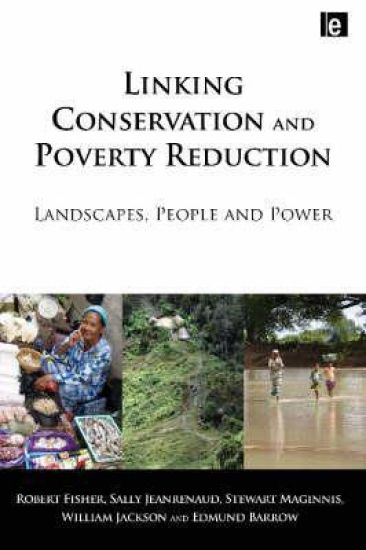
'This book aims to inspire the conservation community not to regard poverty reduction as someone else's job but to take responsibility for it as part of ecosystem restoration. Though no solutions are perfect,the text and examples given offer encouraging and useful guidance.' Gill Shepherd, poverty and landscapes thematic leader, IUCN Forest Conservation Programme. 'This book could be the catalyst for a real paradigm shift - not just in capital cities and international conference centres, but also on the ground in locations where poor people are struggling to make a living.' Policy Matters (praise for the first edition). High levels of rural poverty in many of the world's ecosystems make it an ethical and practical imperative to find more equitable and realistic ways of achieving conservation. Livelihoods of the rural poor and options for conservation and sustainable use of biological diversity are so intimately entwined that they are better addressed through an integrated approach, irrespective of whether the primary motivation is one of development or one of conservation. This highly accessible book, a revised edition of the 2005 book Poverty and Conservation: Landscapes, People and Power, offers a grand overview of the issues and a conceptual framework for addressing poverty reduction in the context of conservation, and conservation in the context of poverty reduction. It will appeal to professionals working in the field as well as to students across the fields of conservation, development and sustainability. It looks at the rationale for addressing the links between conservation and poverty reduction, arguing that such a focus is both ethically essential and a source of opportunities. It alsoreviews experiences in dealing with people and conservation and identifies some key lessons and concepts. The book presents cases studies illustrating various approaches and a discussion of some of the issues that appear when implementing combined conservation and poverty reduction. The book emphasizes the importance of multiple spatial scales and negotiating trade-offs between scales. It also tackles the complex issue of institutional landscapes and the way in which changes at various institutional levels can lead to different and often more positive outcomes. The Final part summarizes some of the main features of the authors' integrated approach and identifies some of the challenges involved in efforts to combine conservation and poverty reduction. Published with IUCN - The World Conservation Union.
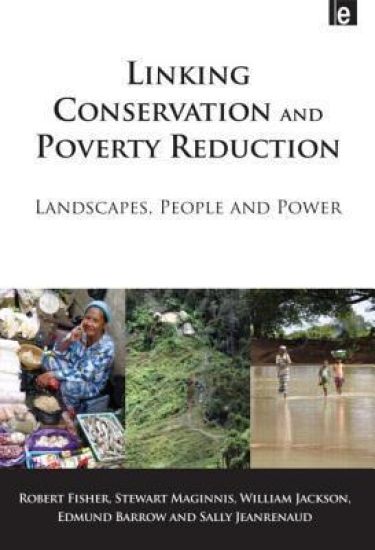
'This book aims to inspire the conservation community not to regard poverty reduction as someone else's job but to take responsibility for it as part of ecosystem restoration. Though no solutions are perfect,the text and examples given offer encouraging and useful guidance.' Gill Shepherd, poverty and landscapes thematic leader, IUCN Forest Conservation Programme. 'This book could be the catalyst for a real paradigm shift - not just in capital cities and international conference centres, but also on the ground in locations where poor people are struggling to make a living.' Policy Matters (praise for the first edition). High levels of rural poverty in many of the world's ecosystems make it an ethical and practical imperative to find more equitable and realistic ways of achieving conservation. Livelihoods of the rural poor and options for conservation and sustainable use of biological diversity are so intimately entwined that they are better addressed through an integrated approach, irrespective of whether the primary motivation is one of development or one of conservation. This highly accessible book, a revised edition of the 2005 book Poverty and Conservation: Landscapes, People and Power, offers a grand overview of the issues and a conceptual framework for addressing poverty reduction in the context of conservation, and conservation in the context of poverty reduction. It will appeal to professionals working in the field as well as to students across the fields of conservation, development and sustainability. It looks at the rationale for addressing the links between conservation and poverty reduction, arguing that such a focus is both ethically essential and a source of opportunities. It alsoreviews experiences in dealing with people and conservation and identifies some key lessons and concepts. The book presents cases studies illustrating various approaches and a discussion of some of the issues that appear when implementing combined conservation and poverty reduction. The book emphasizes the importance of multiple spatial scales and negotiating trade-offs between scales. It also tackles the complex issue of institutional landscapes and the way in which changes at various institutional levels can lead to different and often more positive outcomes. The Final part summarizes some of the main features of the authors' integrated approach and identifies some of the challenges involved in efforts to combine conservation and poverty reduction. Published with IUCN - The World Conservation Union.
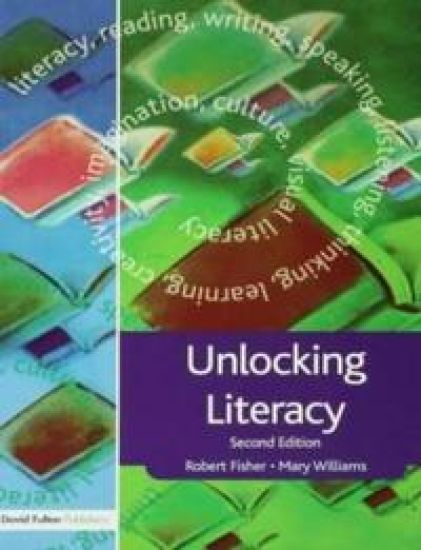
An edited collection describing key issues in supporting literacy development, this book helps to 'unlock' the mysteries behind helping children learn to read, write, speak and listen. It explores ways to help children develop their skills in literacy, thinking and learning, and shows how literacy teaching can be used creatively and imaginatively with children of all ages and abilities. The new edition of this well-known text: reflects the importance of creativity and the new Primary Strategyoffers approaches to teaching literacy that accord with and beyond the literacy hourincludes coverage of the Foundation Stage curriculum in every chaptercovers the inclusion agenda and supporting EAL pupilshighlights the importance of popular culture and visual literacy in children's lives. Interweaving pedagogy with theory and practical suggestions, this book is firmly based in classroom and academic research to support both trainee and practising teacher in the realities of teaching and learning in literacy.
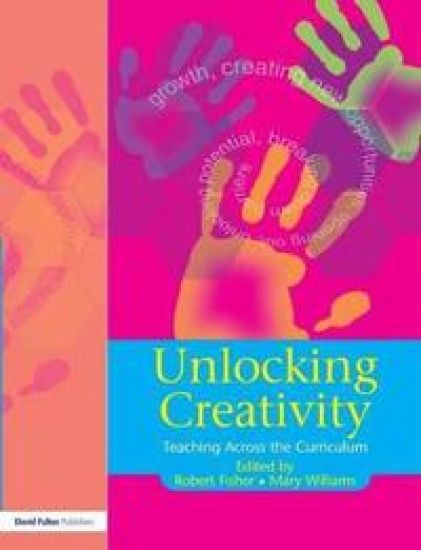
First Published in 2005. Promoting creativity can be a powerful way of engaging children in their learning. Showing how creativity can be developed across the curriculum, this book offers advice on how to: Develop children's capacity for creative thinking and achievement; use creativity to increase levels of motivation and self-esteem; teach the creative skills pupils need for success in learning and life. Combining the latest research with practical ideas and tasks, this multi-dimensional book is a must for teachers, students and educators who wish to know more about creativity in teaching and learning.
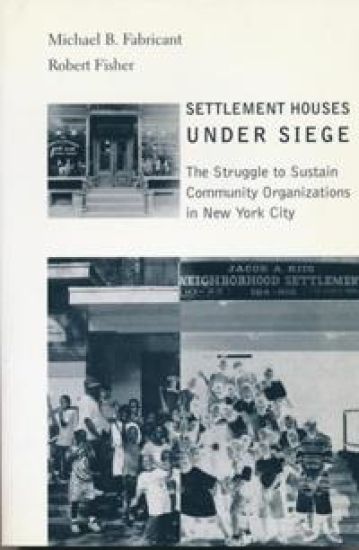
Settlement Houses Under Siege: The Struggle to Sustain Community Organizations in New York City examines the past, present, and future of the settlement house in particular and nonprofit community-based services as a whole. Too often viewed as an artifact of the Progressive era, the settlement house remains today, in a variety of guises, a vital instrument capable of strengthening the social capital of impoverished communities. Yet it has been under attack in recent years, particularly in New York City. Cutbacks in social service funding at federal, state, and local levels during the late 1990s left many nonprofit agencies in an essentially untenable position, dependent on a public sector interested primarily in cutting costs. Both this trend and a concomitant shift to privatization continue today, challenging the flexibility and creativity of social service administrators and undermining neighborhoods and community organizations. The findings contained in this book extend well beyond just settlement houses. The tension between the ever more restrictive business practices required by government contracts and the provision of effective social services is a powerful trend in the larger world of nonprofit agencies. Michael B. Fabricant and Robert Fisher offer a ground-level exploration of the complexity of developing and implementing a service-based community-building agenda in a hostile climate. Community building, they argue, will be the most important social service work of the twenty-first century. Drawing on more than one hundred interviews with directors and staff members of social service and nonprofit agencies throughout New York City, Settlement Houses Under Siege makes the case for a holistic view of the structural pressures confronting poor communities, one that seeks not only to reposition the idea of social service and revision social assets in a conservative age but also to pose important questions about our broader civic life.
Settlement Houses Under Siege: The Struggle to Sustain Community Organizations in New York City examines the past, present, and future of the settlement house in particular and nonprofit community-based services as a whole. Too often viewed as an artifact of the Progressive era, the settlement house remains today, in a variety of guises, a vital instrument capable of strengthening the social capital of impoverished communities. Yet it has been under attack in recent years, particularly in New York City. Cutbacks in social service funding at federal, state, and local levels during the late 1990s left many nonprofit agencies in an essentially untenable position, dependent on a public sector interested primarily in cutting costs. Both this trend and a concomitant shift to privatization continue today, challenging the flexibility and creativity of social service administrators and undermining neighborhoods and community organizations. The findings contained in this book extend well beyond just settlement houses. The tension between the ever more restrictive business practices required by government contracts and the provision of effective social services is a powerful trend in the larger world of nonprofit agencies. Michael B. Fabricant and Robert Fisher offer a ground-level exploration of the complexity of developing and implementing a service-based community-building agenda in a hostile climate. Community building, they argue, will be the most important social service work of the twenty-first century. Drawing on more than one hundred interviews with directors and staff members of social service and nonprofit agencies throughout New York City, Settlement Houses Under Siege makes the case for a holistic view of the structural pressures confronting poor communities, one that seeks not only to reposition the idea of social service and revision social assets in a conservative age but also to pose important questions about our broader civic life.