

Kirjailija
Robert Folger
Kirjat ja teokset yhdessä paikassa: 4 kirjaa, julkaisuja vuosilta 1998–2012, suosituimpiin kuuluu Generaciones y semblanzas. Vertaile teosten hintoja ja tarkista saatavuus suomalaisista kirjakaupoista.
4 kirjaa
Kirjojen julkaisuvuodet: 1998–2012.
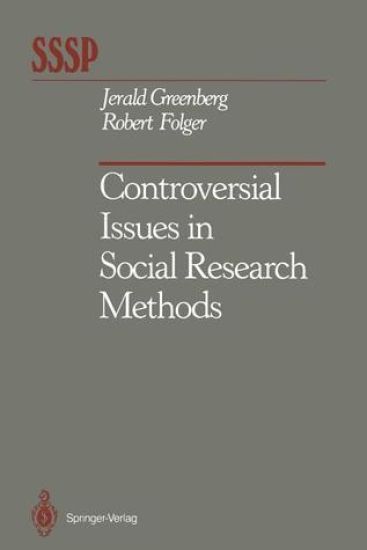
Controversial Issues in Social Research Methods
Jerald Greenberg; Robert Folger
Springer-Verlag New York Inc.
2011
nidottu
It is often said that one of the key determinants of a book's wmth is the extent to which it fulfills the reader's expectations. As such, we welcome this oppor tunity to help formulate the expectations of our readers, to express our view of what this book is and what it is not. We believe that fully appreciating this volume requires understanding its mission and how it differs from that of other books on research methodology. We have not prepared a primer on research techniques. We offer no "how to" guides for researchers-nothing on how to conduct interviews, how to design studies, or how to analyze data. We also have not prepared a partisan platform documenting "our way" of thinking about research. Very few, if any, attempts at proselytizing may be found in these pages. What we have done, we believe, is to bring together a number of recurring controversial issues about social psychological research-issues that have divided profes sionals, puzzled students, and filled the pages of our journals. Few scholars have missed reports arguing the sides of various methodological contro versies, such as those surrounding the merits or shortcomings of field research in comparison to laboratory research, the use of role playing as an alternative for studies involving deception, or the value of informed consent procedures, to name only a few examples. Our aim in preparing this volume has been to organize and summarize the salient aspects of these and other impmtant controversial issues.

Organizational Justice and Human Resource Management
Robert Folger; Russell Cropanzano
SAGE Publications Inc
1998
sidottu
Why are some acts, but not others, perceived to be fair? How do people who experience unfairness respond toward those held accountable for the unfairness? Organizational Justice and Human Resource Management reviews the theoretical organizational justice literature and explores how the research on justice applies to various topics in organizational behavior, including personnel selection systems, performance appraisal, and the role of fairness in resolving workplace conflict. Authors Robert Folger and Russell Cropanzano introduce a framework of organizational justiceùFairness Theoryùthat integrates previous work in this area by focusing on accountability for events with negative impact on material or psychological well-being. The book concludes with a chapter highlighting those topics that represent promising future directions for research. Researchers, scholars, and doctoral-level students in human resources, organizational behavior, and ethics will find this a timely, thought-provoking resource.

Organizational Justice and Human Resource Management
Robert Folger; Russell Cropanzano
SAGE Publications Inc
1998
nidottu
Why are some acts, but not others, perceived to be fair? How do people who experience unfairness respond toward those held accountable for the unfairness? Organizational Justice and Human Resource Management reviews the theoretical organizational justice literature and explores how the research on justice applies to various topics in organizational behavior, including personnel selection systems, performance appraisal, and the role of fairness in resolving workplace conflict. Authors Robert Folger and Russell Cropanzano introduce a framework of organizational justiceùFairness Theoryùthat integrates previous work in this area by focusing on accountability for events with negative impact on material or psychological well-being. The book concludes with a chapter highlighting those topics that represent promising future directions for research. Researchers, scholars, and doctoral-level students in human resources, organizational behavior, and ethics will find this a timely, thought-provoking resource.