Kirjojen hintavertailu – 12 859 818 kirjaa ja 27 kauppaa

Kirjailija

Robert Frank

Kirjat ja teokset yhdessä paikassa: 46 kirjaa, julkaisuja vuosilta 1996–2025, suosituimpiin kuuluu Für Ulrich Conrads. Vertaile teosten hintoja ja tarkista saatavuus suomalaisista kirjakaupoista.

46 kirjaa

Kirjojen julkaisuvuodet: 1996–2025.

Für Ulrich Conrads

Für Ulrich Conrads

Gerd Albers; Horst Von Bassewitz; Jürgen Becker; Günter Bock; Franziska Bollerey; Lucius Burkhardt; Peter Conradi; Lore Ditzen; Martina Düttmann; Werner Durth; Martin Einsele; Gerhard Fehl; Hermann Fehling; Daniel Gogel; Walter Förderer; Karin Fratzscher; Robert Frank; Joachim Ganz; Walter Rolfes; Werner Gehrmann; Anatol Ginelli; Max Guther; Hardt-Waltherr Hämer; Manfred Hamm; Kristiana Hartmann; Hermann Henselmann; Rainer Höynck; Hubert Hoffmann; Dieter Hoffmann-Axthelm; Gert Kähler; Claus Peter Koch; Hans P. Koellmann

Vieweg+teubner Verlag
2012
nidottu
Construire l'Europe politique

Construire l'Europe politique

Laëtitia Guittard; Robert Frank

Editions L'Harmattan
2025
pokkari
La construction europ enne, n e en 1951 sous la forme d'une communaut pour le charbon et l'acier (la CECA), se d veloppe partir de 1957 avec le march commun et le Trait de Rome (la CEE). Il faut ensuite passer d'une Europe conomique une Europe politique. La d claration du sommet de Paris d'octobre 1972 souligne avec force la n cessit politique de transformer la Communaut conomique europ enne en une Union europ enne. La d claration sur l'identit europ enne adopt e en d cembre 1973, par l'Europe largie de six neuf membres se d finit par le pass (les h ritages), le pr sent (les valeurs d mocratiques) et l'avenir: la n cessit de b tir une identit de vues sur les affaires mondiales. Ce processus va aboutir en f vrier 1986 l'acceptation par tous, de l'Acte unique qui constitue la premi re r vision du trait de Rome. Depuis l'Acte unique et Maastricht, d'autres trait s sont venus compl ter l'arsenal institutionnel: Amsterdam en 1997, Nice en 2000, le trait de Rome de 2004 qui a t rejet en 2005 par les r f rendums fran ais et n erlandais, mais repris en partie par le trait de Lisbonne en 2007. Parall lement, l'euroscepticisme s'est d velopp et les populismes ont connu un essor spectaculaire face l'inefficacit de l'UE, ce qui a conduit le peuple britannique choisir le Brexit, qui montre que l'identit europ enne est fragile. Mais, comme le montre cette longue construction, si l'ann e 2016 fut un tournant, tout n'est pas perdu pour l'Europe dans ce contexte d favorable.
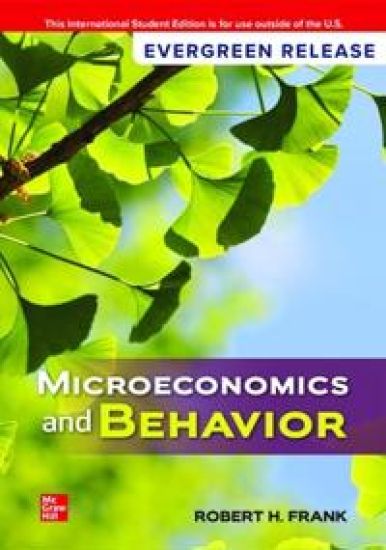
Microeconomics and Behaviour, 4e

Microeconomics and Behaviour, 4e

Robert Frank; Edward Cartwright

McGraw-Hill
2025
nidottu

Halvin toimitettuna 79,90 €

The fourth European edition of Microeconomics and Behaviour builds on its core analytical foundations, and embeds them in accessible and engaging real-world examples to demonstrate the relationship between economic thinking and analysis and human behaviour. By blending theory with practical application, students are encouraged to think like economists and critically assess the technical tools of microeconomics and to find more interesting and innovative ways of applying them, ultimately developing a lasting interest in the discipline. Key Features• Fully updated chapters, with new and expanded material on the economics of happiness, halo and decoy effects, price discrimination, the gig economy and self-employment, and partial versus general equilibrium.• Extensive pedagogical features including worked examples, key terms and definitions, in-chapter exercises, chapter summaries, and review questions to enhance understanding and retention• Economic Naturalist examples illustrate how economic principles can explain everyday experiences and observations. New examples include: “Why does an efficient health service not do everything to keep people alive?”, “Why did Taylor Swift fans not sell their tickets for The Eras Tour?” and “Why do most cryptocurrencies fail within a few years?” Connect® ResourcesAvailable on McGraw Hill’s Connect®, the well-established online learning platform, which features our award-winning adaptive reading experience as well as resources to help faculty and institutions improve student outcomes and course delivery efficiency. To learn more, visit mheducation.co.uk/connect Key Connect® features for this edition include:• Economic Application Based Activities that provide students with valuable practice, using problem solving skills to apply their knowledge to realistic scenarios. Students’ progress from understanding basic concepts to using their knowledge to analyse complex scenarios and solve problems.• Economic Naturalist graphing questions which have been developed to complement this key pedagogical feature from the textbook.• Interactive Graphs that help students see the relevance of the subject matter by providing visual displays of real data for students to manipulate. All graphs are accompanied by assignable assessment questions and feedback for students. Edward J. Cartwright is a Professor of Economics at De Montfort University in the UK. He is also Director of the Institute for Applied Economics and Social Value. One of his passions is the use of interactive classroom experiments in economics teaching. His research has focused primarily on cooperation and coordination in economic and social behaviour. Robert H. Frank is the Henrietta Johnson Louis Professor of Management and Professor of Economics at the Johnson Graduate School of Management at Cornell University, USA. He is also a Distinguished Senior fellow at Demos, USA. For more than a decade his ‘Economic View’ column appeared monthly in the New York Times. His research has focused on rivalry and cooperation in economic and social behaviour. This European edition is originally based on the Microeconomics and Behavior text by Robert Frank.

Principles of Microeconomics: 2024 Release ISE

Principles of Microeconomics: 2024 Release ISE

Robert Frank; Ben Bernanke; Kate Antonovics; Ori Heffetz

McGraw-Hill Education
2024
nidottu

Halvin toimitettuna 79,90 €

Microeconomics Reimagined: Focused Learning, Maximum Impact Embark on a journey into the world of microeconomics with the 2024 release of Principles of Microeconomics. As economic landscapes evolve, this streamlined approach equips faculty to navigate the intricacies of today's economic challenges for their students. Redefine microeconomic education, where focus equals understanding, and every concept resonates with real-world relevance without overwhelming details. This release is your key to mastering microeconomics in a single semester. Cut through the clutter and emphasize a select set of core principles that form the backbone of this discipline. Our goal extends beyond textbooks. Become a fluent speaker of microeconomic language by actively engaging with real-world examples. From cinema ticket discounts to social norms, our textbook sparks curiosity, fostering meaningful discussions and a deeper understanding of economic principles. Frank, Nobel-Prize winner: Bernanke, Antonovics, and Heffetz bring their expertise to every chapter. Join the movement towards economic enlightenment, where learning is fresh, engaging, and always current.
Principles of Economics: 2024 Release ISE

Principles of Economics: 2024 Release ISE

Robert Frank; Ben Bernanke; Kate Antonovics; Ori Heffetz

McGraw-Hill Education
2024
nidottu

Halvin toimitettuna 79,90 €

Uncover the Essence of Economics with the 2024 Release of Principles of Economics. Dive into the heart of economics with our Principles of Economics 2024 Release. We strip away unnecessary details, focusing on seven core principles that transform students into economic naturalists. Say goodbye to overwhelming encyclopedic texts; this approach ensures all backgrounds gain practical economic insights. Step beyond the theoretical: engaging questions, explanations, exercises, and videos connect economic principles to everyday experiences. Whether it's using the ATM or buying airline tickets, students become economic naturalists who apply basic principles to decipher the world around them. Economic Naturalist, Learning Glass concept overview and Worked Problem videos, created by the authors, provide a clear understanding of complex concepts. No more struggling with abstract ideas; videos make learning both accessible and enjoyable. Frank, Nobel-Prize winner: Bernanke, Antonovics, and Heffetz bring their expertise to every chapter. Join the movement towards economic enlightenment, where learning is fresh, engaging, and always up-to-date.
Microeconomics and Behavior: 2024 Release ISE

Microeconomics and Behavior: 2024 Release ISE

Robert Frank

McGraw-Hill Education
2024
nidottu
Robert Frank's Microeconomics and Behavior covers microeconomic topics while exploring the relationship between economic analysis and human behavior. Written in a way that is intellectually challenging, but also accessible and engaging to students. Earlier revisions of Microeconomics and Behavior focused on updating its examples and enriching its set of learning aids. This 2024 release marks a departure from that pattern. Although the author has long believed that the economic decisions that govern energy use have been a fruitful way to introduce basic microeconomic concepts, these received only limited attention in earlier editions. Now, with the climate crisis having become the defining issue of our era, the author has focused more intensively on how basic microeconomic concepts can help students think more clearly about, and respond more effectively to, the climate challenges we face. Core analytical tools are embedded in a diverse collection of examples and applications to illuminate the power and versatility of the economic way of thinking. Students are encouraged to become Economic Naturalists who see ordinary existence in a sharp new light.
Principles of Macroeconomics ISE

Principles of Macroeconomics ISE

Robert Frank; Ben Bernanke; Kate Antonovics; Ori Heffetz

McGraw-Hill Education
2021
nidottu
Principles of Macroeconomics focuses on seven core principles to produce economic naturalists through active learning. By eliminating overwhelming detail and focusing on core principles, students from all backgrounds are able to gain a deeper understanding of economics. Focused on helping students become "economic naturalists," people who employ basic economic principles to understand and explain what they observe in the world around them. COVID-19 pandemic content, analysis, and examples further engage students. With engaging questions, explanations, exercises and videos, the authors help students relate economic principles to a host of everyday experiences such as going to the ATM or purchasing airline tickets. Throughout this process, the authors encourage students to become "economic naturalists." Author developed Learning Glass concept overview videos and Worked Problem videos give students an overview of challenging and important concepts. With new videos and engagement tools in Connect, like Application-Based Activities, alongside SmartBook's adaptive reading experience, the 8th edition enables instructors to spend class time engaging, facilitating, and answering questions instead of lecturing on the basics.
Principles of Microeconomics ISE

Principles of Microeconomics ISE

Robert Frank; Ben Bernanke; Kate Antonovics; Ori Heffetz

McGraw-Hill Education
2021
nidottu
Principles of Microeconomics focuses on seven core principles to produce economic naturalists through active learning. By eliminating overwhelming detail and focusing on core principles, students from all backgrounds are able to gain a deeper understanding of economics. Focused on helping students become "economic naturalists," people who employ basic economic principles to understand and explain what they observe in the world around them. COVID-19 pandemic content, analysis, and examples further engage students. With engaging questions, explanations, exercises and videos, the authors help students relate economic principles to a host of everyday experiences such as going to the ATM or purchasing airline tickets. Throughout this process, the authors encourage students to become "economic naturalists." Author developed Learning Glass concept overview videos and Worked Problem videos give students an overview of challenging and important concepts. With new videos and engagement tools in Connect, like Application-Based Activities, alongside SmartBook's adaptive reading experience, the 8th edition enables instructors to spend class time engaging, facilitating, and answering questions instead of lecturing on the basics.
Principles of Economics ISE

Principles of Economics ISE

Robert Frank; Ben Bernanke; Kate Antonovics; Ori Heffetz

McGraw-Hill Education
2021
nidottu
Principles of Economics focuses on seven core principles to produce economic naturalists through active learning. By eliminating overwhelming detail and focusing on core principles, students from all backgrounds are able to gain a deeper understanding of economics. Focused on helping students become “economic naturalists,” people who employ basic economic principles to understand and explain what they observe in the world around them. COVID-19 pandemic content, analysis, and examples further engage students. With engaging questions, explanations, exercises and videos, the authors help students relate economic principles to a host of everyday experiences such as going to the ATM or purchasing airline tickets. Throughout this process, the authors encourage students to become "economic naturalists." Author developed Learning Glass concept overview videos and Worked Problem videos give students an overview of challenging and important concepts. With new videos and engagement tools in Connect, like Application-Based Activities, alongside SmartBook's adaptive reading experience, the 8th edition enables instructors to spend class time engaging, facilitating, and answering questions instead of lecturing on the basics.
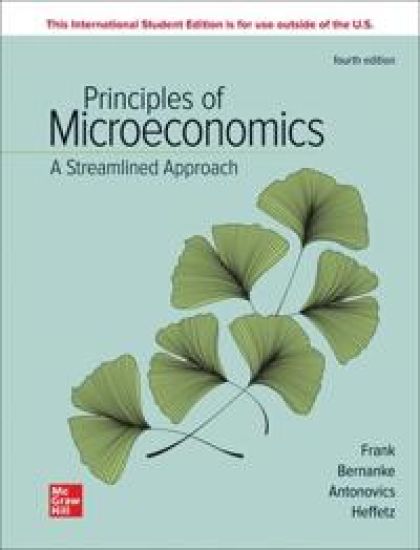
Principles of Microeconomics A Streamlined Approach ISE

Principles of Microeconomics A Streamlined Approach ISE

Robert Frank; Ben Bernanke; Kate Antonovics; Ori Heffetz

McGraw-Hill Education
2021
nidottu
Principles of Microeconomics: A Streamlined Approach seeks to promote a deeper understanding of economics by focusing on core concepts to produce economic naturalists through active learning. By eliminating overwhelming detail and focusing on core principles, students from all backgrounds are able to grasp a deeper understanding of economics. Instead of quantitative detail, the focus is on helping students become “economic naturalists,” people who employ basic economic principles to understand and explain the world around them. COVID-19 pandemic content, analysis, and examples further engage students. Fewer themes, less math rigor, and a new suite of video resources allow instructors the flexibility to teach the course they want to teach, whether it’s adopting a flipped classroom format, administering a course online, or just bringing more engaging, digital content into their lectures. Students benefit from more repetition of basic concepts and support through the interactive resources in Connect, resulting in a greater mastery and retention of core economic ideas. With new videos and engagement tools in Connect, like Application-Based Activities, alongside SmartBook's adaptive reading experience, the 4th edition enables instructors to spend class time engaging, facilitating, and answering questions instead of lecturing on the basics. Connect is the only integrated learning system that empowers students by continuously adapting to deliver precisely what they need, when they need it, and how they need it, so that your class time is more engaging and effective.
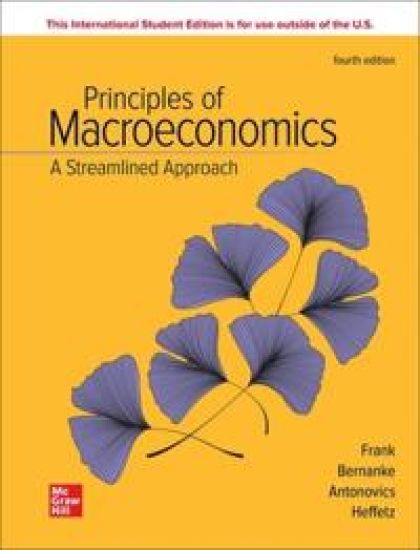
Principles of Macroeconomics A Streamlined Approach ISE

Principles of Macroeconomics A Streamlined Approach ISE

Robert Frank; Ben Bernanke; Kate Antonovics; Ori Heffetz

McGraw-Hill Education
2021
nidottu
Principles of Macroeconomics: A Streamlined Approach seeks to promote a deeper understanding of economics by focusing on core concepts to produce economic naturalists through active learning. By eliminating overwhelming detail and focusing on core principles, students from all backgrounds are able to grasp a deeper understanding of economics. Instead of quantitative detail, the focus is on helping students become “economic naturalists,” people who employ basic economic principles to understand and explain the world around them. COVID-19 pandemic content, analysis, and examples further engage students. Fewer themes, less math rigor, and a new suite of video resources allow instructors the flexibility to teach the course they want to teach, whether it’s adopting a flipped classroom format, administering a course online, or just bringing more engaging, digital content into their lectures. Students benefit from more repetition of basic concepts and support through the interactive resources in Connect, resulting in a greater mastery and retention of core economic ideas. With new videos and engagement tools in Connect, like Application-Based Activities, alongside SmartBook's adaptive reading experience, the 4th edition enables instructors to spend class time engaging, facilitating, and answering questions instead of lecturing on the basics. Connect is the only integrated learning system that empowers students by continuously adapting to deliver precisely what they need, when they need it, and how they need it, so that your class time is more engaging and effective.
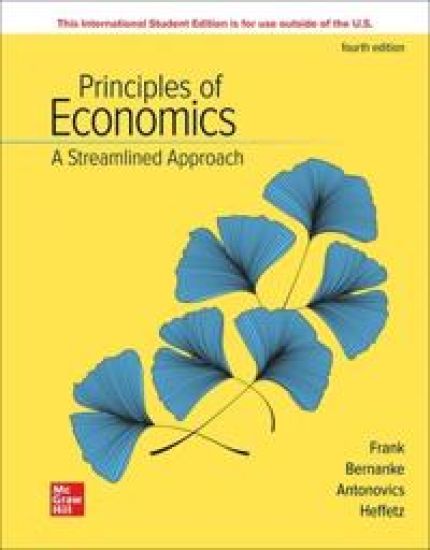
ISE Principles of Economics, A Streamlined Approach

ISE Principles of Economics, A Streamlined Approach

Robert Frank; Ben Bernanke; Kate Antonovics; Ori Heffetz

McGraw-Hill Education
2021
nidottu
Principles of Economics: A Streamlined Approach seeks to promote a deeper understanding of economics by focusing on core concepts to produce economic naturalists through active learning. By eliminating overwhelming detail and focusing on core principles, students from all backgrounds are able to grasp a deeper understanding of economics. Instead of quantitative detail, the focus is on helping students become “economic naturalists,” people who employ basic economic principles to understand and explain the world around them. COVID-19 pandemic content, analysis, and examples further engage students. Fewer themes, less math rigor, and a new suite of video resources allow instructors the flexibility to teach the course they want to teach, whether it’s adopting a flipped classroom format, administering a course online, or just bringing more engaging, digital content into their lectures. Students benefit from more repetition of basic concepts and support through the interactive resources in Connect, resulting in a greater mastery and retention of core economic ideas. With new videos and engagement tools in Connect, like Application-Based Activities, alongside SmartBook's adaptive reading experience, the 4th edition enables instructors to spend class time engaging, facilitating, and answering questions instead of lecturing on the basics. Connect is the only integrated learning system that empowers students by continuously adapting to deliver precisely what they need, when they need it, and how they need it, so that your class time is more engaging and effective.