Kirjojen hintavertailu – 12 903 725 kirjaa ja 27 kauppaa

Kirjailija

Robert G. Wirsing

Kirjat ja teokset yhdessä paikassa: 5 kirjaa, julkaisuja vuosilta 1998–2014, suosituimpiin kuuluu Baloch Nationalism and the Geopolitics of Energy Resources: The Changing Context of Separatism in Pakistan. Vertaile teosten hintoja ja tarkista saatavuus suomalaisista kirjakaupoista.

5 kirjaa

Kirjojen julkaisuvuodet: 1998–2014.

Baloch Nationalism and the Geopolitics of Energy Resources: the Changing Context of Separatism in Pakistan
Today the quest for energy security stands at or near the top of most nations' foreign policy agendas. For energy-dependent countries lacking sufficient energy resources of their own, achieving energy security is a formidable problem. Pakistan, currently the world's sixth most heavily populated nation, is one such country. To ensure its energy future, its government is active on several fronts, including efforts to more fully exploit the country's own energy resources, to negotiate the construction of transstate natural gas pipelines, and to build a new coastal seaport at Gwadar, an ambitious project which its developers hope will enable Pakistan to occupy an important place in the emerging Asian energy refining and distribution system. As Dr. Robert G. Wirsing makes clear in his monograph, Baloch Nationalism and the Geopolitics of Energy Resources, Pakistan's quest for energy security has run up against a resurgent tribal separatist rebellion in its sprawling southwestern province of Balochistan...
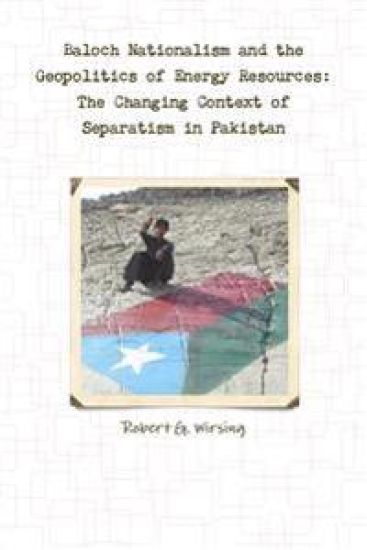
Baloch Nationalism and the Geopolitics of Energy Resources: The Changing Context of Separatism in Pakistan
The author examines the energy context of the simmering Baloch separatist insurgency that has surfaced in recent years in Pakistan's sprawling Balochistan province. In particular, he looks at how Pakistan's mounting energy insecurity--a product of rapid increase in demand coupled with rising scarcity and the region's intensified energy rivalry--has both magnified the economic and strategic importance of this province while at the same time complicating Pakistan's efforts to cope with the province's resurgent tribal separatism. The author concludes that Pakistan's government needs to overhaul its counterinsurgent policies to avoid protracted conflict and to enlist the Baloch as partners in energy development, not antagonists of it.
Kashmir in the Shadow of War

Kashmir in the Shadow of War

Robert G. Wirsing

Routledge
2003
nidottu
This timely study examines the Indian-Pakistani conflict over Kashmir as this long-standing confrontation between regional rivals became inflamed. It focuses on the period from the effective nuclearization of the dispute in 1998 to the introduction of U. S. troops into the region in connection with the war in Afghanistan. Four chapters take on key problems illustrated by this case: Regional rivalry, Intervention, Religious conflicts, Conflict resolution. The author is an advocate of international intervention in regional conflicts and does not think that leaving the contesting parties to settle their dispute (a sort of benign neglect) is a responsible U. S. policy.
Kashmir in the Shadow of War

Kashmir in the Shadow of War

Robert G. Wirsing

Routledge
2003
sidottu
This timely study examines the Indian-Pakistani conflict over Kashmir as this long-standing confrontation between regional rivals became inflamed. It focuses on the period from the effective nuclearization of the dispute in 1998 to the introduction of U. S. troops into the region in connection with the war in Afghanistan. Four chapters take on key problems illustrated by this case: Regional rivalry, Intervention, Religious conflicts, Conflict resolution. The author is an advocate of international intervention in regional conflicts and does not think that leaving the contesting parties to settle their dispute (a sort of benign neglect) is a responsible U. S. policy.
India, Pakistan, and the Kashmir Dispute

India, Pakistan, and the Kashmir Dispute

Robert G. Wirsing

Palgrave Macmillan
1998
nidottu
Kashmir is the focal point of an acute regional dispute that has pitted India and Pakistan against one another ever since they gained their independence from Great Britain in 1947. Already, these bitter rivals have gone to war twice over Kashmir, leaving the state physically divided and heavily militarized. The eruption of massive anti-Indian violence in Indian Kashmir in early 1990 has changed the dispute, worsening India-Pakistan relations and lending even greater urgency to the search for settlement. The reasons for, and possible resolutions of, this dispute are the themes of Professor Wirsing's book. Drawing on repeated field visits and wide-ranging interviews with government officials, political leaders, military officers, and diplomats in both India and Pakistan, the author provides abundant new material on the Kashmir dispute's political and military, domestic, and international dimensions. The book responds to mounting international concern about Kashmir with specific, step-by-step recommendations for breaking the existing diplomatic stalemate between India and Pakistan.