Kirjojen hintavertailu – 12 875 188 kirjaa ja 26 kauppaa
Kirjailija
Robert Glück
Kirjat ja teokset yhdessä paikassa: 7 kirjaa, julkaisuja vuosilta 2015–2025, suosituimpiin kuuluu Pitkä muistiinpano uuskerronnasta. Vertaile teosten hintoja ja tarkista saatavuus suomalaisista kirjakaupoista.
Robert Glückin essee ”Pitkä muistiinpano uuskerronnasta” (”Long Note on New Narrative”, 2000) johdattaa queerin ja kokeellisen kirjallisuussuuntauksen syntyvaiheisiin 1970–80-luvun San Franciscossa. Seksiä ja jälkistrukturalismia, politiikkaa ja juoruilua – uuskerronta on avointa kaikelle. Sen kirjallisuuskäsitys muotoutuu sallivassa yhteisössä, eivätkä omakohtainen ja muototietoinen ilmaisu sulje toisiaan pois. Glück tarjoaa liikehdintään sisäpiiriläisen näkökulman mutta ajallisen etäisyyden turvin sijoittaa sen myös laajempiin yhteyksiin. Vihko sisältää suomentaja Juha-Pekka Kilpiön laajat jälkisanat, joissa uuskerronnan poetiikkaa, eetosta ja pervoutta tarkastellaan oivaltavasti ja lämmöllä. Kilpiö esittelee myös uuskerronnan vaiheita Glückin esseen julkaisun jälkeisiltä ajoilta sekä suuntia, joilla liikkeen laahukset ja ajatukset ovat levinneet 2000-luvulla.
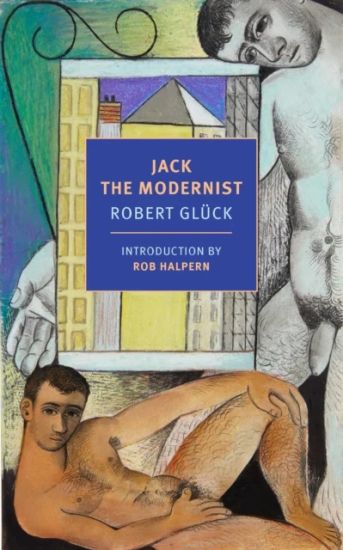
A cult classic now back in print, this novel about sex, obsession, and art is one of the defining works of 1980s gay fiction. A classic of postmodern gay fiction, Robert Gl ck's Jack the Modernist portrays the slow disintegration of a love affair set in the early 1980s. Bob is excited and lonely. He meets and pursues the elusive Jack, a director who is able to transform others without altering himself. Bob goes to the baths, gossips on the phone, goes to a bar, thinks about werewolves, has an orgasm, and discovers a number of truths about Jack. Out of print for decades, Gl ck's paean to desire and obsession explores the everyday in an idiom both intimate and lush. Sensual as well as sensational, self-conscious, but never self-serious, Jack the Modernist is a candid and heartfelt lover's discourse unlike any other.
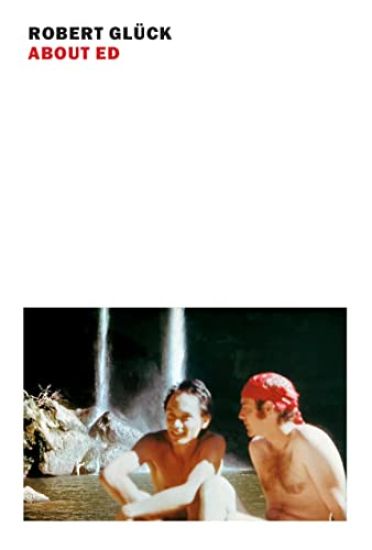
A moving memoir about love, AIDS, grief, and memory by one of the most adventurous writers to come out of San Francisco's LGBTQ+ scene. "I was a writer, but not the writer I needed to be. For that I had to become a different person," Robert Gl ck, widely acclaimed as a novelist and as a theorist of "the new narrative," recently told the Paris Review, in which a section of About Ed has appeared. About Ed is Gl ck's portrait of the artist Ed Aulerich-Sugai, his sometime lover, met in the seventies in San Francisco, when gay life emerged unabashedly from the closet. "I wanted to find in Ed something to latch on to that was outside my egotism and fear, my threadbare relation to the world--a leap through Ed into lyric time," Gl ck has said, and in this book that is both "a novel and my version of an AIDS memoir" he wanted to capture the full range of his feelings for Ed: "estranged from Ed, bored by him, moved by him." It is a book about the life they lived together--art and writing and family and sex and death--and, composed over many decades, it is also a book about how the past continues to change in memory and to charge the present. "What is the right question to ask about a life?" Gl ck asks, describing About Ed as a "collaborative project," since "Ed helped me write this book." Ed gave him "notes to fashion a chapter about the day he was diagnosed so I could describe his experience from the inside," and "after Ed died, Daniel, Ed's partner, lent me Ed's dream journals. . . . He started writing them in 1970, the year that we met. We both used his journals, not as puzzles to solve the truth of a self but as a commons producing images that we harvested for paintings and poems. And fifty years later, there I was reading and copying out and running away from his dreams. Are they a condensed version of Ed? Shorthand? Distillation? Is he knowable and unknowable in the same degree sleeping or waking?" About Ed is a challenging and beautiful book by one of America's finest and most adventurous writers.
Roof Books presents Robert Glü ck's unmissable new work: I, Boombox. Glü ck is a seminal figure in the experimental landscape. In 1980s San Francisco, he co-founded the venerated New Narrative movement. His innovative prose has long made him an underground favorite. His contributions as a verse poet are equally exciting, but harder to come by. Fans have been hungrily anticipating I, Boombox, a jolting new provocation full of restless musical desire and "synchronies of/recognition."
The collected essays of the cofounder of the New Narrative movement, on theory, identity, poetry, and muses from Kathy Acker to Georges Bataille. I read and wrote to invoke what seemed impossible-relation itself-in order to take part in a world that ceaselessly makes itself up, to "wake up" to the world, to recognize the world, to be convinced that the world exists, to take revenge on the world for not existing.-from Communal NudeSince cofounding San Francisco's influential New Narrative circle in 1979, Robert Gluck has been one of America's finest prose stylists of innovative fiction, bending narrative into the service of autobiography, politics, and gay writing. This collection brings together for the first time Gluck's nonfiction, a revelatory body of work that anchors his writing practice. Gluck's essays explore the ways that storytelling and selfhood are mutually embedded cultural forms, cohering a fractured social reality where generating narrative means generating identity means generating community. "I'd laugh at (make art from) any version of self," Gluck writes, "I write about these forms-that are myself-to dispense with them, to demonstrate how they disintegrate before the world, the body." For any body-or text-to know itself, it must first see how it sees the world, and understand itself as writing. Gluck's essays affirm this radical narratorial precept in rich spirals of reading, self-reflection, anecdote, escapade, and "metatext." These texts span the author's career and his creative affinities-from lost manifestos theorizing the poetics of New Narrative; to encomia for literary and philosophic muses (Kathy Acker, the HOW(ever) poets, Frank O'Hara, Georges Bataille, and others); to narrative journalism, book reviews, criticism, and public talks. Many of the texts are culled from obscure little magazines and ephemeral online sources; others have never been published. As lucid as story, as lush as theory, and as irresistible as gossip, Gluck's essays are the quintessence of New Narrative theory in practice.