Kirjojen hintavertailu – 12 859 819 kirjaa ja 27 kauppaa

Kirjailija

Robert H. Dorff

Kirjat ja teokset yhdessä paikassa: 7 kirjaa, julkaisuja vuosilta 1992–2014, suosituimpiin kuuluu The Persian Gulf Crisis. Vertaile teosten hintoja ja tarkista saatavuus suomalaisista kirjakaupoista.

7 kirjaa

Kirjojen julkaisuvuodet: 1992–2014.

Educating International Security Practitioners: Preparing to Face the Demands of the 21st Century International Security Environment

Educating International Security Practitioners: Preparing to Face the Demands of the 21st Century International Security Environment

James M. Smith; Daniel J. Kaufman; Robert H. Dorff; Linda P. Brady; Strategic Studies Institute

Lulu.com
2014
nidottu
The end of the Cold War brought challenges not only for practitioners of national security policy and strategy but for those involved in the education and development of future strategic leaders and security policy practitioners. One of the primary contributors to this book, Professor James M. Smith of the U. S. Air Force Academy, launched this project in initial conversations in 1996-97 with Brigadier General Daniel J. Kaufman of the U. S. Military Academy, Dr. Robert L. Wendzel of the Air War College, and Colonel Jeffrey D. McCausland of the U. S. Army War College. All four shared a concern about the future of security studies generally, but especially about the education and development of military officers as future strategic leaders.
The Persian Gulf Crisis

The Persian Gulf Crisis

Robert H. Dorff; Robert Helms

Praeger Publishers Inc
1992
sidottu
This book examines the implications of the Persian Gulf crisis in order to enhance our understanding of the post-Cold War international system. More than just another analysis of the Iraqi invasion of Kuwait and the subsequent war, the book looks at the more general aspects of the use of force (political, economic, and military) evident in the Gulf crisis and what they can tell us about the emerging post-Cold War system. Contributors were selected on the basis of their ability to address specific questions and policy issues, and to cast their analyses at a broadly theoretical level. Each chapter looks at a different aspect of conflict in the international system and how that relates to the Persian Gulf crisis. Several aspects of the crisis and the new international system are examined such as the role of the United Nations, the utility of economic sanctions, the historical origin of the crisis itself, the potential sources of conflict and responses to it, and the changing nature of the use of military force. To the extent that the lessons found contradict the common wisdoms that emerged in the immediate aftermath of the war, many of the chapters challenge the trend to find sweeping generalizations in the Gulf crisis that bear directly on international relations in the 1990s and beyond. Civilian and military policymakers, as well as students and teachers of international studies, will find this book of interest.
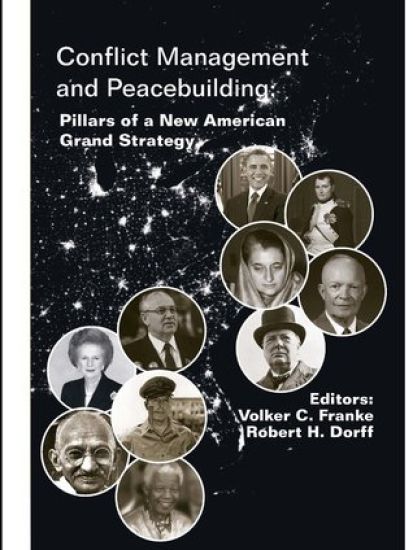
Conflict Management and Peacebuilding: Pillars of a New American Grand Strategy (Enlarged Edition)

Conflict Management and Peacebuilding: Pillars of a New American Grand Strategy (Enlarged Edition)

Volker C. Franke; Robert H. Dorff; Strategic Studies Institute; U.S. Army War College

Lulu.com
2014
nidottu
The authors examine the utility of the U. S. Government's whole-of-government (WoG) approach for responding to the challenging security demands of operations in Iraq and Afghanistan. They specifically discuss the strategic objectives of interagency cooperation particularly in the areas of peacebuilding and conflict management. Discussions range from the conceptual to the practical, with a focus on the challenges and desirability of interagency cooperation in international interventions. Shared were experiences and expertise on the need for and future of an American grand strategy in an era characterized by increasingly complex security challenges and shrinking budgets. All agreed that taking the status quo for granted was a major obstacle to developing a successful grand strategy and that government, the military, international and nongovernmental organizations, and the private sector are all called on to contribute their best talents and efforts to joint global peace and security efforts.