Kirjojen hintavertailu – 12 903 725 kirjaa ja 27 kauppaa

Kirjailija

Robert Hillenbrand

Kirjat ja teokset yhdessä paikassa: 11 kirjaa, julkaisuja vuosilta 1995–2022, suosituimpiin kuuluu Studies in the Islamic Arts of the Book. Vertaile teosten hintoja ja tarkista saatavuus suomalaisista kirjakaupoista.

11 kirjaa

Kirjojen julkaisuvuodet: 1995–2022.

The Great Mongol Shahnama

The Great Mongol Shahnama

Robert Hillenbrand

Hali Publications Ltd
2022
sidottu
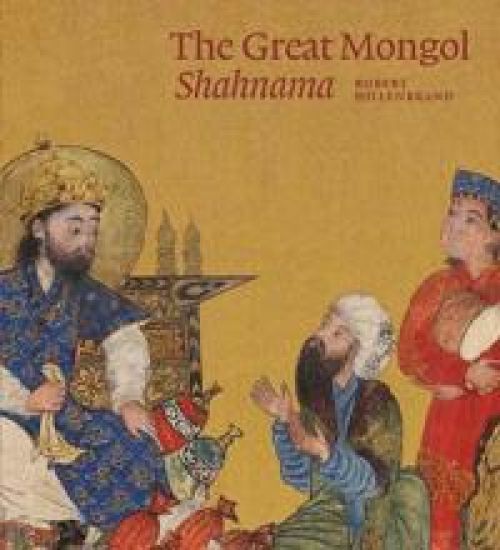
A detailed study of the Great Mongol Shahnama, considered to be the greatest of all Persian illustrated manuscripts? The Great Mongol Shahnama is widely considered to be the definitive version of Firdausi’s epic poem, and the greatest of all Persian illustrated manuscripts. The paintings from this manuscript are held in private collections and institutions around the world, and have only been seen together in a single volume once since they were originally dispersed. This monograph reunites the paintings and reproduces them as 67 full-page, high quality color plates, alongside an analysis by leading scholar of Islamic art, Robert Hillenbrand. With newly commissioned photographs and insights into technical aspects of the paintings, The Great Mongol Shahnama is a comprehensive resource for those interested in Persian art and manuscripts. Distributed for Hali Publications Ltd. and the Freer|Sackler, Smithsonian. Co-published by Hali Publications Ltd. and the Freer Gallery of Art and Arthur M. Sackler Gallery, the Smithsonian’s National Museum of Asian Art, and supported by Qatar Museums. Exhibition Schedule:Freer Gallery of Art and Arthur M. Sackler Gallery, Washington, DC (December 2020–June 2021)
Islamic Art and Architecture

Islamic Art and Architecture

Robert Hillenbrand

Thames Hudson Ltd
2021
nidottu

Halvin toimitettuna 24,40 €

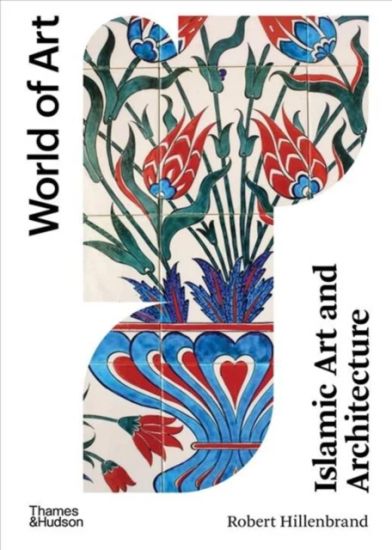
Embracing over a thousand years of history and an area stretching from the Atlantic to the borders of India and China, this is an unrivalled synthesis of the arts of Islamic civilization. From the death of the Prophet Muhammad to the present day, Robert Hillenbrand traces the evolution of an extraordinary range of art forms, including architecture, calligraphy, book illumination, painting, ceramics, glassware, textiles and metalwork. New to this edition is a chapter ranging from c. 1700 to c. 1900, a period very often neglected in books on this subject. Hillenbrand explores how recent centuries, far from being a dark age, have seen incredible artistic ferment and creativity across the Islamic world. Full-colour illustrations of masterpieces of Islamic art and architecture – from Moorish Spain to contemporary Iran – show the far-reaching stylistic developments as well as the recurrent preoccupations that have shaped the arts of Islam since the seventh century. With 227 illustrations in colour
Studies in the Islamic Decorative Arts

Studies in the Islamic Decorative Arts

Robert Hillenbrand

Pindar Press
2019
sidottu
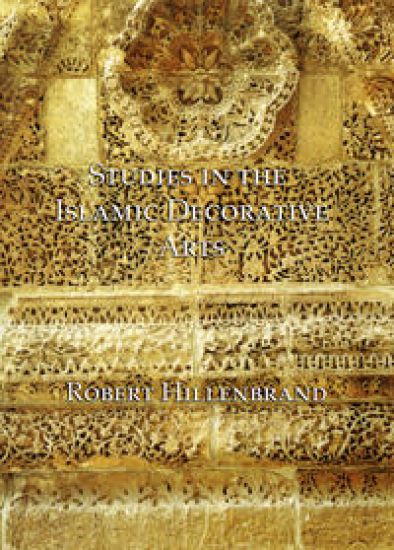
Islamic artists channelled their energies not into easel painting and large-scale sculpture, but rather into what Western scholars, obeying a very different hierarchy of art forms, rather disparagingly term the decorative arts or even the minor arts. In point of fact, some of the greatest masterpieces of Islamic art are in the media of ceramics, metalwork, textiles, ivory and glass. Often the images they bear express a complex set of meanings, for Islam inherited much material from the iconographic systems of earlier civilizations, notably those of the ancient Near East and of the classical world. Islam also developed its own distinctive vocabulary of signs and symbols. Accordingly, questions of iconography and meaning bulk large among the studies gathered together in the present volume. These studies, written over a period of almost thirty years, and taken from a wide variety of published sources, deal with aspects of the decorative arts from Spain to India and from the 7th to the 17th century. They focus in turn upon ceramics and metalwork; on coins, carpets and calligraphy; and on carving in wood and ivory. They are arranged under three headings. The first comprises general surveys of the field covering the content of these arts and confronting the challenges they present, such as the Islamic approach to three-dimensional sculpture. The second deals with questions of iconography and meaning, while the third comprises a series of studies devoted to specific media such as ivory, woodwork and numismatics. This volume therefore offers not only a general introduction to some of the problems posed by Islamic art, but also readings of key objects in an attempt to explore their meaning; and finally, an in-depth focus on individual objects representing specific genres and media.
Court and Craft

Court and Craft

Robert Hillenbrand; Charles Melville; Marianna Shreve Simpson; Rachel Ward

Paul Holberton Publishing
2014
pokkari
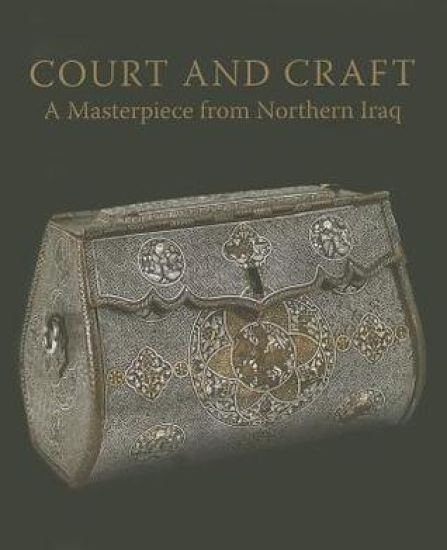
Accompanying a major scholarly exhibition at The Courtauld Gallery, this book explores one of the most beautiful and enigmatic objects in The Courtauld's collection: the so-called 'Courtauld wallet', a brass container richly inlaid with gold and silver, imitating a lady's textile or leather bag, and probably made in Mosul in northern Iraq around 1300. No other object of this kind is known. Decorated all round with courtly figures and on the top with an elaborate banqueting scene featuring an enthroned couple, it has long been recognized as a masterpiece of Arab metalwork. Yet, despite the superb quality of its design and craftsmanship and its status as a unique object, this exceptional metalwork bag has never been properly published. Thus it remains little known outside a small circle of specialists, and little understood even within that circle. Encompassing a variety of multidisciplinary essays by distinguished historians and art historians - on subjects ranging from music at the Mongol court, Mosul under Mongol governorship and Mongol marriage customers to the role of women under the Ilkhanids - this publication aims to explore the origins, function and iconography of this splendid luxury object as well as the cultural context in which it was made and used. It will bring together other images of enthroned Mongols with female consorts, as well as scenes of hunters, revelers an musicians in a variety of media, including illustrated manuscripts, ceramics, textile, and metalwork. By presenting the bag alongside carefully selected contemporary material, it will provide an insight into courtly life under the Mongols in the newly conquered areas of their empire, and will also provide an unrivaled opportunity to investigate the inlaid brass tradition in Mosul after the Mongol Conquest. Objects made before and after this seismic event will be reproduced side by side to demonstrate how the Mosul metalworkers adapted their work for their new patrons.
Studies in the Islamic Arts of the Book

Studies in the Islamic Arts of the Book

Robert Hillenbrand

Pindar Press
2012
sidottu
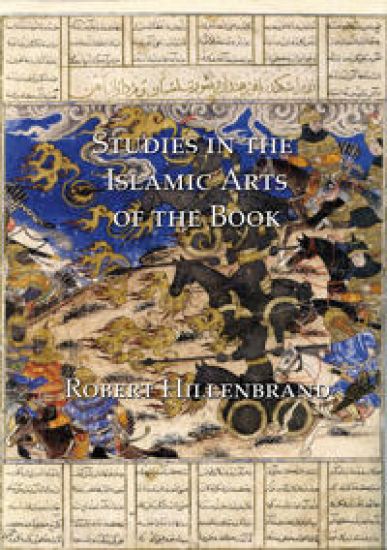
The studies collected in this volume, some of them rather difficult to access, date mostly from the last fifteen years and focus primarily on Persian book painting of the 14th to the early 16th centuries. In this period, Iran dominated the art of book painting in the Islamic world. The articles reprinted here examine various aspects of this, the golden age of Persian painting. They range from the period of Mongol rule, when the impact of Far Eastern themes and modes radically transformed the heritage bequeathed to Iran by Arab painting - a textbook case of the clash of civilisations - to the dawn of the modern era and the swansong of the classical style of Persian painting under the early Safavids. Yet other articles focus on the roots of book painting in the themes and styles developed in painted ceramics, on medieval Qur'anic calligraphy, on bookbinding and on the remarkably original variations played on the hitherto hackneyed theme of the figural frontispiece by Arab painters. Two major leitmotifs are explored in this selection of essays. One is provided by the constantly varying interpretations of the Shahnama ( The Book of Kings ), the Persian national epic, and especially the tendency of painters to interpret this familiar text in terms of contemporary politics. The other is the interplay of text and image, which highlights the tendency of painters to strike out on their own and to leave the literal text progressively further behind while they develop plots and sub-plots of their own. These enquiries are set within the context of a concerted effort to explore in detail how Persian painters achieved their most spectacular visual effects. In its combination of general surveys and closely focused analyses of individual manuscripts, this collection of articles will be of interest to specialists in book painting and in Islamic art as a whole
Studies in Medieval Islamic Architecture, Volume II
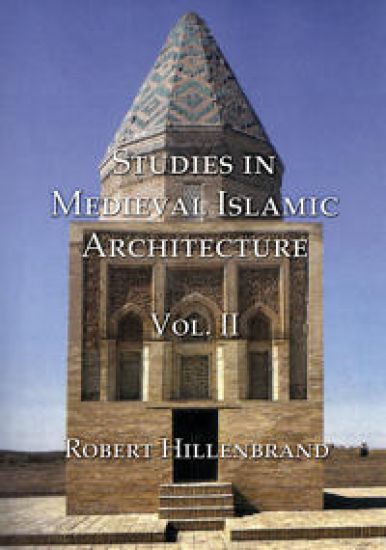
Professor Hillenbrand has written extensively over the last twenty-five years on Islamic architecture from Spain to India and from the seventh to the twentieth century. He has paid consistent attention to the architecture of Iran, focusing particularly on the Saljuq period (11th-12th centuries), but has also worked on Umayyad monuments in the Levant between 660 and 750 A. D., a period when Islamic architecture came of age. Apart from recording unfamiliar buildings, he has increasingly concerned himself with the iconographic significance of Muslim buildings The papers in these two volumes closely reflect these interests. Some present primary material, others attempt to explore the achievements of a specific period or dynasty while yet others analyse the religious, royal, or political context of an important monument or school of architecture. The opportunity has been taken to add illustrations to articles, and to provide additional notes and a comprehensive index.
Studies in Medieval Islamic Architecture, Volume II
Professor Hillenbrand has written extensively over the last twenty-five years on Islamic architecture from Spain to India and from the seventh to the twentieth century. He has paid consistent attention to the architecture of Iran, focusing particularly on the Saljuq period (11th-12th centuries), but has also worked on Umayyad monuments in the Levant between 660 and 750 A. D., a period when Islamic architecture came of age. Apart from recording unfamiliar buildings, he has increasingly concerned himself with the iconographic significance of Muslim buildings The papers in these two volumes closely reflect these interests. Some present primary material, others attempt to explore the achievements of a specific period or dynasty while yet others analyse the religious, royal, or political context of an important monument or school of architecture. The opportunity has been taken to add illustrations to articles, and to provide additional notes and a comprehensive index.
Studies in Medieval Islamic Architecture, Vol. I
Professor Hillenbrand has written extensively over the last twenty-five years on Islamic architecture from Spain to India and from the seventh to the twentieth century. He has paid consistent attention to the architecture of Iran, focusing particularly on the Saljuq period (11th-12th centuries), but has also worked on Umayyad monuments in the Levant between 660 and 750 A. D., a period when Islamic architecture came of age. Apart from recording unfamiliar buildings, he has increasingly concerned himself with the iconographic significance of Muslim buildings The papers in these two volumes closely reflect these interests. Some present primary material, others attempt to explore the achievements of a specific period or dynasty while yet others analyse the religious, royal, or political context of an important monument or school of architecture. The opportunity has been taken to add illustrations to articles, and to provide additional notes and a comprehensive index.
Studies in Medieval Islamic Architecture, Vol. I
Professor Hillenbrand has written extensively over the last twenty-five years on Islamic architecture from Spain to India and from the seventh to the twentieth century. He has paid consistent attention to the architecture of Iran, focusing particularly on the Saljuq period (11th-12th centuries), but has also worked on Umayyad monuments in the Levant between 660 and 750 A. D., a period when Islamic architecture came of age. Apart from recording unfamiliar buildings, he has increasingly concerned himself with the iconographic significance of Muslim buildings The papers in these two volumes closely reflect these interests. Some present primary material, others attempt to explore the achievements of a specific period or dynasty while yet others analyse the religious, royal, or political context of an important monument or school of architecture. The opportunity has been taken to add illustrations to articles, and to provide additional notes and a comprehensive index.
Islamic Architecture

Islamic Architecture

Robert Hillenbrand

Edinburgh University Press
2000
nidottu
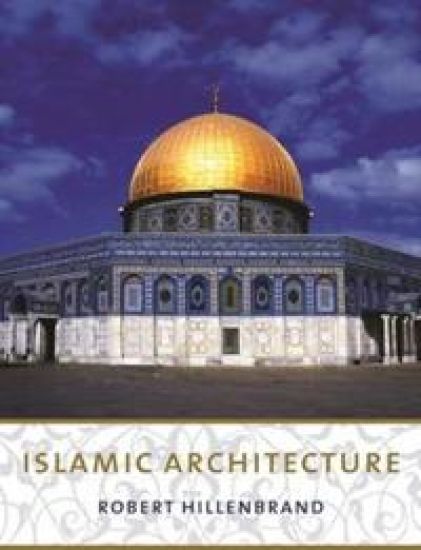
Winner of the American Publishers Association's Award for an outstanding Professional and Scholarly title and the Alice Davis Hitchcock Medallion 1996 from the Society of Architectural Historians of Great Britain. In a dazzling display of erudition, Robert Hillenbrand surveys the major building-types of the Islamic World: religious architecture (the mosque, the minaret, the madrasa), the mausoleum 'between Heaven and Earth', and the caravansarai and the palace representing the secular side. All the building-types are discussed in art-historical terms, with the interplay of form and function taken as the underlying theme of the analysis. All are comprehensively illustrated with a full range of colour and black-and-white photographs, analytical drawings, thumbnail comparative assemblies and ground plans. This major reference work, covering from Spain to Afghanistan and c. 700 to c. 1700, is a source of fascination for all seeking to appreciate the rich heritage of the Islamic World. Recurrent themes and patterns take on a wider significance - a persistent reminder that the Islamic faith and the particular type of society which it engendered makes light of vast gulfs of time and space. Features: *24 colour plates *300 black-and-white photographs *1246 line drawings *Section of composite drawings and ground plans Available in Hardback (originally published in 1994) and a revised paperback edition published in 2000. This new paperback edition includes a previously unpublished index, designed to make the book more user-friendly.
Islamic Architecture

Islamic Architecture

Robert Hillenbrand

Columbia University Press
1995
sidottu
This beautifully conceived and produced survey of Islamic architecture explores the glorious world of the caravansarai, mausoleum, palace, and mosque. Focusing on the multifaceted relation of architecture to society, Robert Hillenbrand covers public architecture in the Middle East and North Africa from the medieval period to 1700. Extensive photographs and ground plans- among which are hundreds of newly executed three-dimensional drawings that provide an accurate and vivid depiction of the structure-are presented with an emphasis on the way the specific details of the building fulfilled their function. Included are chapters on religious and secular architecture and the architecture of tombs. Each building is discussed in terms of function, the links between particular forms and specific uses, the role of special types of buildings in the Islamic order, and the expressions of different sociocultural groups in architectural terms. Here the student or historian of Islamic architecture will find an astonishing resource, including Maghribi palaces, Anatolian madrasas, Indian minarets, Fatimid mausolea, and Safavid mosques, each rendered in lavish illustrations and explained with incomparable precision.