
Kirjailija
Robert Hugh Benson
Kirjat ja teokset yhdessä paikassa: 354 kirjaa, julkaisuja vuosilta 2001–2026, suosituimpiin kuuluu None Other Gods. Vertaile teosten hintoja ja tarkista saatavuus suomalaisista kirjakaupoista.
Nimi esiintyy myös muodoissa: Robert-Hugh Benson
354 kirjaa
Kirjojen julkaisuvuodet: 2001–2026.
"The Light Invisible" by Robert Hugh Benson is a collection of supernatural short stories that delve into spiritual themes, mystical experiences, and ethereal beings. Set within the backdrop of Victorian literature, Benson's tales are rich in religious allegory and Christian symbolism, offering readers a journey into otherworldly realms. Through these captivating short stories, Benson explores the afterlife, redemption, and the metaphysical aspects of existence. Each narrative is a masterful blend of symbolism and metaphysical exploration, inviting readers to ponder deeper meanings and spiritual truths. With vivid descriptions and intricate storytelling, Benson crafts a world where the boundaries between the physical and spiritual are blurred, and the mysteries of the unseen are unveiled. The characters encounter ethereal beings and embark on journeys that lead to profound revelations and spiritual enlightenment. "The Light Invisible" stands as a testament to Benson's literary prowess, offering readers a glimpse into the mysteries of the supernatural and the transformative power of spiritual experiences. Through these mesmerizing tales, Benson leaves an indelible mark on the landscape of supernatural fiction, inviting readers to explore the depths of the human soul and the realms beyond.
Lord of the World is a dystopian novel which depicts a future where religion is scorned, a one-world government has been established and euthanasia is the norm. The Catholic Church can do nothing as most of the world becomes Humanistic or Pantheistic. The story follows Percy Franklin, a modest priest, who hastily becomes the Pope, and Julian Felsenburgh, a magnetic and charismatic man who becomes ruler of the world. Lord of the World first published in 1907, is disturbing and prophetic. "I advise you to read it." -Pope FrancisRobert Hugh Benson was an Anglican pastor turned Catholic priest, and a highly prolific writer. Lord of the World is among his greatest works, and is today as vital as it was when it was first published.

Robert Hugh Benson's Lord of the World delivers a stark warning of the dangers of secular humanism. Written in 1907, the novel chronicles the rise of the Antichrist in a dystopian future, where God has been abandoned and humanity itself has become the object of worship. Percy Franklin, one of the few Catholic priests left, finds himself putting everything on the line for the faith that is now a crime punishable by death. Both Pope Benedict XVI and Pope Francis recognized the prophetic character of this novel, which depicts the ultimate consequences of a secular "new world order." What promises peace and progress in reality brings only destruction and despair, and in the face of such evil can stand only one opponent: the Catholic Church.
The Light Invisible, has been acknowledged as a major work throughout human history, and we have taken precautions to assure its preservation by republishing this book in a modern manner for both present and future generations. This book has been completely retyped, revised, and reformatted. The text is readable and clear because these books are not created from scanned copies.
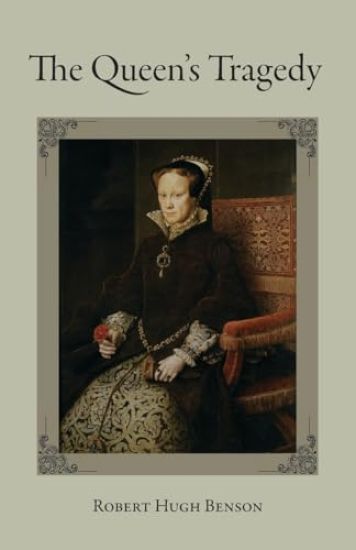
"Upon the publication of former books of mine several kindly critics remarked that the reign of Mary Tudor told a very different story with regard to the Catholic character. It is that story which I am now attempting to set forth as honestly as I can. . . ."
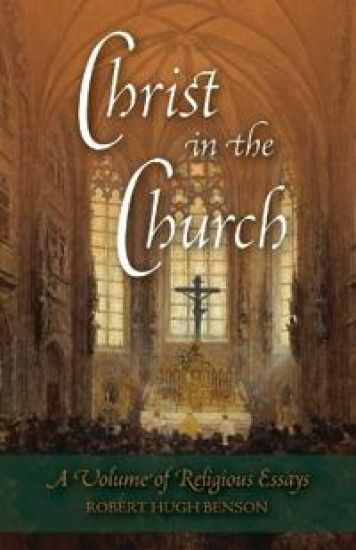
Do you question the Church's possession of the Truth? So did Pilate. Do you think Her too worldly? Consider Christ enthroned as King. Does it seem as though She is hopelessly outdated, doomed to pass away? Remember that Christ was crucified and then He rose again This book is a source of hope for faithful Catholics, a scourge for detractors, an exegetical work of art. In these essays, Robert Hugh Benson counters some of the strongest attacks that have been levied against the Church by showing how She relives the life of Christ in the world today. Benson begins the collection with a radical, yet orthodox, premise: Christ lives in and acts through His Church just as He acted in his Incarnate Body here on Earth. If this claim is valid, if the Church is truly the Mystical Body of Christ, then we should expect to see close parallels between the Church in the world and Christ in the Gospels. Christ in the Church considers Christ's work on Earth in three sections: His life and ministry, His passion and rejection, and His ultimate failure and triumph. In the first, Benson exhibits the very character of the Church and her ministry. Like Christ Himself, who was both a poor carpenter's son and the Messiah, the Church especially draws the lowest and the mightiest, the shepherds and the kings to Herself. The second section masterfully parallels Christ's condemners to the Church's modern-day critics. Benson's third section shows how, just as Christ's ultimate victory was in His defeat-His death on the cross-so, too, does the Church triumph in Her splendor of Truth despite tides of scandal and corruption. Her ultimate victory despite these challenges is sure evidence that She is Christ's Mystical Body.
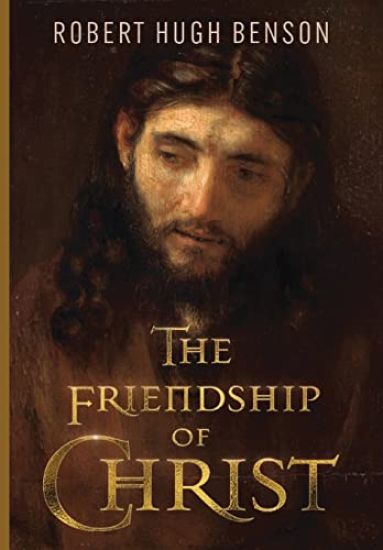
Christ desires to be our Friend. But how can we respond? Taking up themes from great mystical writers, Benson gives a prophetic corrective for those in the Church who mistake "Christ's gifts for Christ, religiosity for religion, and the joys possible on earth for the joys awaiting us in heaven." Benson steers the soul away from temptations to despair and from presumption upon Christ's friendship, pointing to the consoling truth: "I am in all things His debtor, but He bids me call Him Friend." In these pages, Benson will guide you in the ways of Christ's friendship, from first love, through purgation, to illumination. You will see how to be friends with Christ in Himself, but also in the modes by which He offers Himself; some more obvious, such as the saints and the Eucharist; others more strangely disguised, such as the Average Man and the Sinner. Lastly, through the historical life of our Friend crucified and vindicated, Benson will bring you to that crowning moment when Christ pledged His friendship and won ours. This book reveals how one can be friends with Him who asks for our "adoration, dependence, obedience". Wherever you are in your friendship with Christ, whether it is the initial exhilaration of attending "every instant to this new intimate," or whether you are in the thralls of "disillusionment"; whether you perceive Him in the chalice, or whether you are blinded to Him by the sins of the Church and the cry of the Sufferer, Benson shows how in each of these to see the face of your Friend.
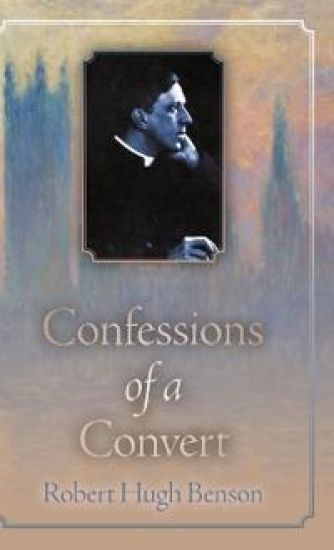
Confessions of a Convert is Robert Hugh Benson's autobiographical account of his journey from an Anglican brought up in "the moderate High Church school of thought" to a Catholic priest living under "the sunlight of Eternal Truth." Benson was raised as a faithful, yet unreflective member of the Anglican communion, whose childhood was dominated by his father's, the Archbishop of Canterbury's, unquestioning commitment to doctrine. Theology was merely the family business, and hints at a more personal relationship with God only arose with snatches of poetry or a fleetingly splendid line from a sermon. As the years progressed, however, Benson felt called to join his father in the priesthood, and he was ordained a priest in the Church of England in 1895. Benson recounts how his growing love of ritual and the sacrament of Confession first turned his thoughts towards Catholicism, transforming his childhood contempt for the Church into sympathy. These loves simultaneously planted doubts about the Anglican communion since he could nowhere find a unanimous interpretation of its doctrines. For years, Benson alternated between contented faith and turbulent questioning. Eventually, however, Catholicism's invincible unity and deep ritual swayed his mind and heart, and Benson was received into the Church in 1903. Benson weaves an intricate tapestry of thoughts, images, impressions and arguments-all of which lead to his conversion. Above all, it is the Church's unflinching and eternal answer to the perennial question, "Master, what must I do to be saved?" that stands as the cornerstone of Benson's Catholic faith. Confessions of a Convert appeals to neophytes and cradle-Catholics alike as a testament to true faith, revealing how God uses family, history, beauty, and liturgy to call His children home. Mgr Benson's 'Confessions of a Convert' are edifying and entertaining in equal measure, and a fascinating snapshot of the Anglican and Catholic scenes in his day. They remind us of the great soul-searching and also personal suffering undertaken by the generations of converts, from Newman up to the 1950s, who enriched the Catholic Church in the British Isles while the Church was subject to the soft persecution of prejudice and social exclusion.-Joseph Shaw PhD, Fellow and Tutor in Philosophy at St Benet's Hall, Oxford University, Chairman of the Latin Mass Society of England and WalesThis is a story about a man who was obedient to the Truth, wherever it led. By worldly standards, Benson had everything to lose by converting to Catholicism, and nothing to gain. As an affluent, cultured, and well-connected son of an Archbishop of Canterbury, he lacked no opportunity to build for himself an exquisitely pleasant life as an Anglican priest. But he left that life behind, because it was not built upon the foundation Christ had established for His Church. This is a moving story of deep loss, but even deeper joy, as the author realizes that what is True is also equally Good and Beautiful. - Thomas Ward PhD, Associate Professor of Philosophy, Baylor UniversityIn Robert Hugh Benson's most candid and autobiographical work, the reader is struck by the intellectual honesty that paved the way for his renunciation of the Anglican religion. Continually guided by his love for the truth, the book reads like an epic journey into what one contemporary of his calls 'the City of Peace'. Those who grew up in the Catholic Church will find in Confessions of a Convert an intriguing insight into the seismic transformation that can sometimes occur en route to Catholicism: non-Catholics will find in it all the reasons they need to convert. - Fr. Patrick O'Donohue, Irish Apostolate of the Fraternity of St. Peter
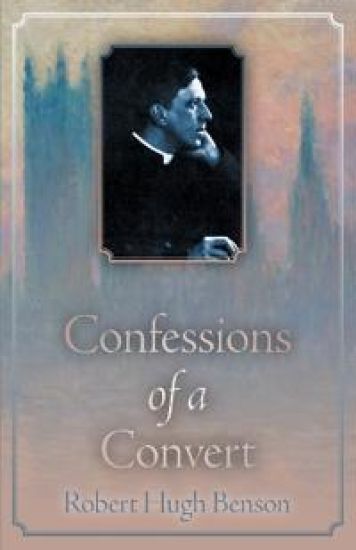
Confessions of a Convert is Robert Hugh Benson's autobiographical account of his journey from an Anglican brought up in "the moderate High Church school of thought" to a Catholic priest living under "the sunlight of Eternal Truth." Benson was raised as a faithful, yet unreflective member of the Anglican communion, whose childhood was dominated by his father's, the Archbishop of Canterbury's, unquestioning commitment to doctrine. Theology was merely the family business, and hints at a more personal relationship with God only arose with snatches of poetry or a fleetingly splendid line from a sermon. As the years progressed, however, Benson felt called to join his father in the priesthood, and he was ordained a priest in the Church of England in 1895. Benson recounts how his growing love of ritual and the sacrament of Confession first turned his thoughts towards Catholicism, transforming his childhood contempt for the Church into sympathy. These loves simultaneously planted doubts about the Anglican communion since he could nowhere find a unanimous interpretation of its doctrines. For years, Benson alternated between contented faith and turbulent questioning. Eventually, however, Catholicism's invincible unity and deep ritual swayed his mind and heart, and Benson was received into the Church in 1903. Benson weaves an intricate tapestry of thoughts, images, impressions and arguments-all of which lead to his conversion. Above all, it is the Church's unflinching and eternal answer to the perennial question, "Master, what must I do to be saved?" that stands as the cornerstone of Benson's Catholic faith. Confessions of a Convert appeals to neophytes and cradle-Catholics alike as a testament to true faith, revealing how God uses family, history, beauty, and liturgy to call His children home. Mgr Benson's 'Confessions of a Convert' are edifying and entertaining in equal measure, and a fascinating snapshot of the Anglican and Catholic scenes in his day. They remind us of the great soul-searching and also personal suffering undertaken by the generations of converts, from Newman up to the 1950s, who enriched the Catholic Church in the British Isles while the Church was subject to the soft persecution of prejudice and social exclusion.-Joseph Shaw PhD, Fellow and Tutor in Philosophy at St Benet's Hall, Oxford University, Chairman of the Latin Mass Society of England and WalesThis is a story about a man who was obedient to the Truth, wherever it led. By worldly standards, Benson had everything to lose by converting to Catholicism, and nothing to gain. As an affluent, cultured, and well-connected son of an Archbishop of Canterbury, he lacked no opportunity to build for himself an exquisitely pleasant life as an Anglican priest. But he left that life behind, because it was not built upon the foundation Christ had established for His Church. This is a moving story of deep loss, but even deeper joy, as the author realizes that what is True is also equally Good and Beautiful. - Thomas Ward PhD, Associate Professor of Philosophy, Baylor UniversityIn Robert Hugh Benson's most candid and autobiographical work, the reader is struck by the intellectual honesty that paved the way for his renunciation of the Anglican religion. Continually guided by his love for the truth, the book reads like an epic journey into what one contemporary of his calls 'the City of Peace'. Those who grew up in the Catholic Church will find in Confessions of a Convert an intriguing insight into the seismic transformation that can sometimes occur en route to Catholicism: non-Catholics will find in it all the reasons they need to convert. - Fr. Patrick O'Donohue, Irish Apostolate of the Fraternity of St. Peter
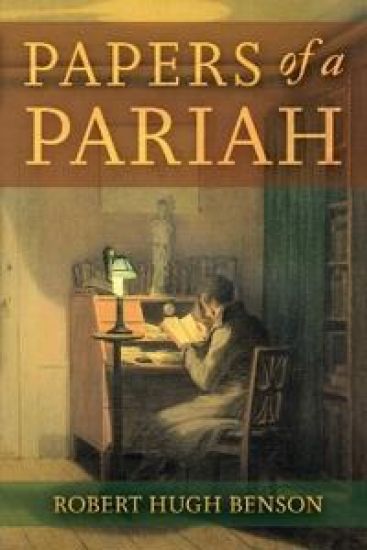
"Even to me, Protestant as I am, it did seem completely suitable that an event so stupendous could scarcely be approached by any other process than that of a sacred dramatic dance, with an accompaniment of rigid and minute Court etiquette. To leave the conduct of such a thing to the individual personality and the private taste of a simple clergyman in a surplice, would be nothing else than bathos of the worst description; human outlines must be obliterated by some overpowering uniform, personal tastes and methods of behaving must be rigidly supplanted by set movements and gestures. In fact, for such a drama as this we need not clericalism, but the most emphatic sacerdotalism. Originality in the sanctuary, as has been well observed, is the grossest vulgarity known to men." In this work of imaginative fiction, Catholic priest and writer Robert Hugh Benson "edits the notes" of a non-Catholic actor who is attempting to understand the belief and worship of Catholics. Only moderately successful in his career, the author of these "papers" finds himself quite alone in the world, his wife having died within a year of their marriage. His own health beginning to fail, he pays serious attention to the subject of religion for the first time. After a brief dalliance with the Anglican Church, he is drawn to the local Catholic church, where he attends various liturgies-a Requiem, a Low Mass, Benediction, and the ceremonies of Holy Week. He struggles with "a great deal of inchoate agnosticism" while writing about the powerful impressions these ceremonies make on him. Finally, the actor is received into the Church shortly before he dies. Benson, himself a convert from Anglicanism, creatively weaves surprising, poignant, and profound insights into the traditional beliefs and customs of Catholics by viewing them through the eyes of "a pariah"-a lonely outcast. Robert Hugh Benson (1871-1914), the son of the Archbishop of Canterbury, was educated at Eton and Trinity College. Drawn toward the High-Church tradition, Benson was ordained an Anglican priest by his father, but began to investigate the claims of the Catholic Church during a trip to the Middle East in 1896. He converted to Roman Catholicism in 1903 and was ordained to the Catholic priesthood the following year. Amid his various ecclesial duties, he was a well-known preacher and a prolific writer, and his works span many genres, including science and historical fiction, contemporary novels, children's books, apologetics, plays, poetry, and devotional material.
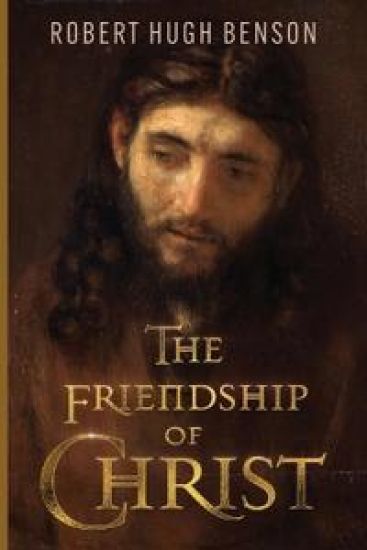
Christ desires to be our Friend. But how can we respond? Taking up themes from great mystical writers, Benson gives a prophetic corrective for those in the Church who mistake "Christ's gifts for Christ, religiosity for religion, and the joys possible on earth for the joys awaiting us in heaven." Benson steers the soul away from temptations to despair and from presumption upon Christ's friendship, pointing to the consoling truth: "I am in all things His debtor, but He bids me call Him Friend." In these pages, Benson will guide you in the ways of Christ's friendship, from first love, through purgation, to illumination. You will see how to be friends with Christ in Himself, but also in the modes by which He offers Himself; some more obvious, such as the saints and the Eucharist; others more strangely disguised, such as the Average Man and the Sinner. Lastly, through the historical life of our Friend crucified and vindicated, Benson will bring you to that crowning moment when Christ pledged His friendship and won ours. This book reveals how one can be friends with Him who asks for our "adoration, dependence, obedience". Wherever you are in your friendship with Christ, whether it is the initial exhilaration of attending "every instant to this new intimate," or whether you are in the thralls of "disillusionment"; whether you perceive Him in the chalice, or whether you are blinded to Him by the sins of the Church and the cry of the Sufferer, Benson shows how in each of these to see the face of your Friend.
The book "" By What Authority? "" has been considered important throughout the human history, and so that this work is never forgotten we have made efforts in its preservation by republishing this book in a modern format for present and future generations. This whole book has been reformatted, retyped and designed. These books are not made of scanned copies and hence the text is clear and readable.