Kirjailija
Robert I. Rotberg
Kirjat ja teokset yhdessä paikassa: 17 kirjaa, julkaisuja vuosilta 1965–2023, suosituimpiin kuuluu Peacekeeping and Peace Enforcement In Africa. Vertaile teosten hintoja ja tarkista saatavuus suomalaisista kirjakaupoista.
Nimi esiintyy myös muodoissa: Robert I Rotberg
17 kirjaa
Kirjojen julkaisuvuodet: 1965–2023.
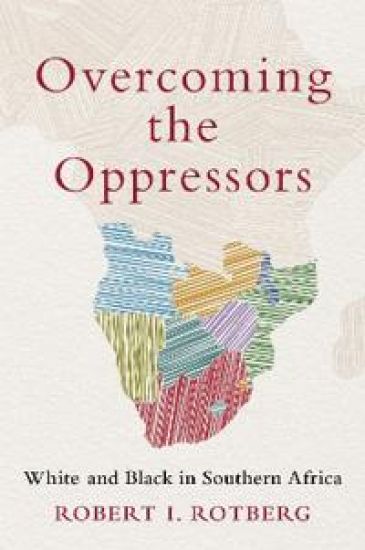
Overcoming the Oppressors traces southern Africa's long walk to freedom, the overturning of colonial rule in the northern territories, and the dissolution of backs-to-the-wall white settler suzerainty, first in what became Zimbabwe and then in South Africa. Chapters on the individual countries detail the stages along their sometimes complicated and tortuous struggle to attain the political New Zion. Rotberg explains how and why the Federation of Rhodesia and Nyasaland failed, how and why apartheid eventually collapsed, and exactly how the various components of this heavily white conquered, and later white oppressed, domain transitioned via diverse fits and starts into today's assemblage of proud, politically charged, and still mostly fragmented nation-states. But what did the new republics make of their hard-won freedoms? Having liberated themselves successfully, several soon dismantled democratic safeguards, established effective single-party states, closed their economies, deprived citizens of human rights and civil liberties, and exchanged economic progress for varieties of central planning experiments and stunted forms of protected economic endeavors. Only Botswana, of the new entities, embraced full democracy and good governance. The others, even South Africa, at first tightly regimented their economies and attempted to severely limit the degrees of economic freedom and social progress that citizens could enjoy. Corruption prevailed everywhere except Botswana. Today, as the chapters on contemporary southern Africa reveal, most of the southern half of the African continent is returning, if sometimes struggling, to the patterns of probity and good governance that many countries abandoned in the decades after independence.
Black Heart unveils the dual legacy of Stewart Gore-Browne, a remarkable figure whose journey intertwined with the colonial and post-colonial histories of Northern Rhodesia, now Zambia. On one hand, Gore-Browne was a statesman and advocate for African rights, championing progressive legislation and fostering dialogue that challenged the colonial status quo. As Northern Rhodesia’s representative at pivotal conferences, he tirelessly advanced African interests in imperial circles. On the other, he was a quintessential English squire, managing his sprawling Shiwa Ngandu estate while hosting an eclectic mix of titled guests, political figures, and African leaders—long before such integration was socially acceptable among the settler elite. His life exemplified the rare convergence of privilege, reformist ideals, and a profound commitment to equitable race relations in colonial Africa. Drawing from an extraordinary archive of personal letters, diaries, and official documents, this biography sheds light on the forces that shaped Gore-Browne’s transformation from aristocratic officer to a pioneer of African nationalism. The work examines his family ties, his wartime experiences, and the moral convictions that led him to embrace African self-governance. Through interviews with key figures, including President Kenneth Kaunda, and meticulous research across continents, the book delves into Gore-Browne’s complex identity and enduring influence. Combining political history with personal narrative, Black Heart offers an intimate portrait of a man who stood out as both a settler and a champion of African liberation, making a profound impact on the trajectory of modern Zambia. This title is part of UC Press's Voices Revived program, which commemorates University of California Press’s mission to seek out and cultivate the brightest minds and give them voice, reach, and impact. Drawing on a backlist dating to 1893, Voices Revived makes high-quality, peer-reviewed scholarship accessible once again using print-on-demand technology. This title was originally published in 1977.
The phenomenon of corruption has existed since antiquity; from ancient Mesopotamia to our modern-day high-level ethical morass, people have sought a leg up, a shortcut, or an end run to power and influence. In this volume in the MIT Press Essential Knowledge series, Robert Rotberg, a recognized authority on governance and international relations, offers a definitive guide to corruption and anticorruption, charting the evolution of corruption and offering recommendations on how to reduce its power and spread. The most important component of anticorruption efforts, he argues, is leadership that is committed to changing dominant political cultures. Rotberg explains that corruption is the conversion of a public good into personal gain-either by the exchange of cash for influence or by the granting of special favors even without explicit payments. He describes successful anticorruption efforts in countries ranging from Denmark and Sweden to Canada and Costa Rica, and discusses the roles of judicial systems, investigative journalism, multinational corporations, and technological advances. He shows how the United States has become more corrupt than before, and contrasts recent US and Canadian experiences. Without sufficient political will to eliminate corruption, it persists. Rotberg outlines thirteen practical steps for battling corruption, including removing holdover officials tainted by corruption and the public declaration of financial assets by elected officials and appointees.
The Corruption Cure
Robert I. Rotberg
Princeton University Press
2019
pokkari
Halvin toimitettuna 37,30 €
Why leadership is key to ending political and corporate corruption globallyCorruption corrodes all facets of the world’s political and corporate life, yet until now there was no one book that explained how best to battle it. The Corruption Cure puts some thirty-five countries under an anticorruption microscope to show exactly how to beat back the forces of sleaze and graft. Robert Rotberg defines corruption in its many forms, describes the available remedies, and examines how we identify and measure corruption’s presence. He demonstrates how determined past and contemporary leaders changed their wildly corrupt countries—even the Nordics—into paragons of virtue, and how leadership is making a significant difference in stimulating political anticorruption movements in places like India, Croatia, Botswana, and Rwanda. Rotberg looks at corporate corruption and how it can be checked, and also offers an innovative fourteen-step plan for nations that are ready to end corruption. Tougher laws and better prosecutions are not enough. This book enables us to rethink the problem completely—and to solve it once and for all.
Christian Missionaries and the Creation of Northern Rhodesia 1880-1924
Robert I. Rotberg
Princeton University Press
2016
sidottu
A study of the contribution made by Christian missionaries to the formation of Northern Rhodesia based on firsthand information and study by the author, who has visited nearly every mission station in Northern Rhodesia, consulted missionary diaries, journals, and records. Originally published in 1965. The Princeton Legacy Library uses the latest print-on-demand technology to again make available previously out-of-print books from the distinguished backlist of Princeton University Press. These editions preserve the original texts of these important books while presenting them in durable paperback and hardcover editions. The goal of the Princeton Legacy Library is to vastly increase access to the rich scholarly heritage found in the thousands of books published by Princeton University Press since its founding in 1905.
Christian Missionaries and the Creation of Northern Rhodesia 1880-1924
Robert I. Rotberg
Princeton University Press
2015
pokkari
A study of the contribution made by Christian missionaries to the formation of Northern Rhodesia based on firsthand information and study by the author, who has visited nearly every mission station in Northern Rhodesia, consulted missionary diaries, journals, and records. Originally published in 1965. The Princeton Legacy Library uses the latest print-on-demand technology to again make available previously out-of-print books from the distinguished backlist of Princeton University Press. These editions preserve the original texts of these important books while presenting them in durable paperback and hardcover editions. The goal of the Princeton Legacy Library is to vastly increase access to the rich scholarly heritage found in the thousands of books published by Princeton University Press since its founding in 1905.
Accomplished political leaders have a clear strategy for turning political visions into reality. Through well-honed analytical, political, and emotional intelligence, leaders chart paths to promising futures that include economic growth, material prosperity, and human well-being. Alas, such leaders are rare in the developing world, where often institutions are weak and greed and corruption strong - and where responsible leadership therefore has the potential to effect the greatest change. In "Transformative Political Leadership", Robert I. Rotberg focuses on the role of leadership in politics and argues that accomplished leaders demonstrate a particular set of skills. Through illustrative case studies of leaders who have performed ably in the developing world - among them Nelson Mandela in South Africa, Seretse Khama in Botswana, Lee Kuan Yew in Singapore, and Kemal Ataturk in Turkey - Rotberg examines how these leaders transformed their respective countries. The importance of capable leadership is woefully understudied in political science, and this book will be an important tool in exploring how leaders lead and how nations and institutions are built.
For as long as there has been war, there have been those who have opposed such bloodshed. Here Robert Rotberg details the flowering of the great American peace movement in the late nineteenth century and the remarkable life of its foremost proponent, Edwin Ginn. Born into poverty, Ginn rose to become one of the wealthiest men of his day. While in his mid-fifties, after his second marriage to a much younger woman, he began to direct his time and money to various social causes, primarily the nascent American peace movement. This is the story of Ginn's personal attempt to change world attitudes regarding the dangers of arming for war by appealing to logic, reason, and common sense. In conjunction with the World Peace Foundation, which he founded in 1910, Ginn's vigorous peace campaigning and organizational activities shed substantial light on important foreign and domestic issues in the decades leading up to the First World War. Featuring a colorful cast of characters, including Andrew Carnegie, Henry Ford, and David Starr Jordan, the first president of Stanford University, A Leadership for Peace explores fundamental questions of war and peace that are still relevant today.
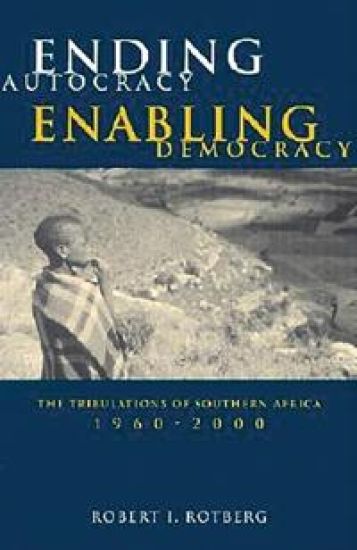
"In this comprehensive narrative of the political and economic evolution of Africa, Robert I. Rotberg explains the critical events, players and policies in the continent¡¯s tumultuous shift toward democracy. The book reviews the process of decolonization throughout the continent--and subsequent debut of democracy and authoritarianism--the transition of settler-run Rhodesia into African Zimbabwe, and the battle for Southern Africa. Rotberg then traces the epic struggle to free South Africa from the yoke of apartheid, including the contributions of leaders such as Nelson Mandela. He concludes with a look at how current developments will affect Africa¡¯s continuing transition to democratic rule into the 21st century. The book includes a collection of Rotberg¡¯s best opinion pieces and analytical articles from 40 years of reporting on Africa¡¯s democratic efforts."
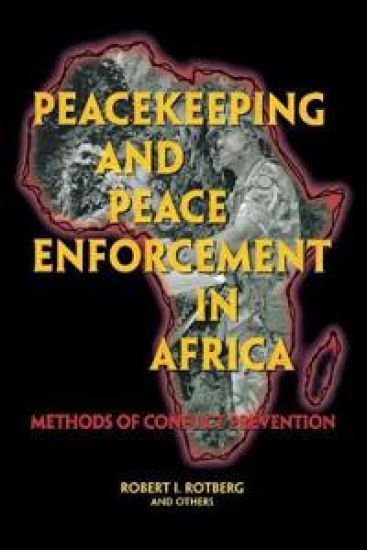
Edited by World Peace Foundation president Robert I. Rotberg, the chapters in this volume focus on preventing outbreaks of civil war and other vicious internal conflicts in Africa. The contributors review the sorry state of African conflict prevention and weigh the merits of new methods of peace enforcement, including militant early intervention by African crisis response forces to avoid or reduce intrastate mayhem. Peacekeeping and Peace Enforcement in Africa assesses the realities and challenges of reducing the frequency of civil warfare in Africa. It features a detailed report of extensive candid discussions of these issues by leading African ministers of defense and chiefs of staff.
With the publication of The Population History of England in 1981 it has become possible for the first time to trace in detail the demographic changes that occurred in a major European country throughout the early modern period and during the industrial revolution. It is therefore also now possible to test our understanding of the functioning of early modern economies in relation to their demographic patterns against the new empirical data. The discussion of this historical theme, first initiated by Malthus in the late eighteenth century, can now be taken a substantial step further. All of the essays published here take advantage of this new possibility, either by using the English data themselves, or by reflecting on the implications of a comparison between English patterns and those found elsewhere. The essays contribute not only to a richer understanding of the relationships in the past between population and economy, but also to a fuller appreciation of the circumstances that limited economic growth in pre-industrial economies and with the train of events that led to the escape from these constraints with the industrial revolution.
The Black Homelands of South Africa
Jeffrey Butler; Robert I. Rotberg; John Adams
University of California Press
1978
pokkari
"An admirable mixture of first-rate scholarship and controversial political thinking. For anybody who wants to know what the homelands policy is all about, and how it works out in practice, this rightly wrin en volume can be highly recommended."--Cape Times "Many volumes on South Africa have appeared in recent years, but few have analyzed in detail the country's program for eventually creating ten independent black African 'homelands': This book presents a detailed account of the history and conditions ...of two of the homelands, Bophmhatswana (located near Preroria) and KwaZulu (bordering on the Indian Ocean), plus some interpretation of the overall homeland policy. The two homelands studied consist of patches of noncontiguous land and have meager natural resources and virtually no modern economic infrastructures. They could exist as viable independent entities only if a large proportion of their citizens continued to live and work in white-controlled South Africa. On a slightly optimistic note, the authors observe that the homelands, with their new political structures, have created constituencies for modern leaders who may be able to wrest concessions from the whites." --Library journal "The authors, each a major scholar of the current South African scene, address their subject from an historical and legislative background, moving on the separate treatment of the two 'homelands' administration and politics; leadership (principally Lucas Mangope of Bophuthatswana and Gatsha Burhelezi of KwaZulu); income and public finance; and economic development. The study is liberally illustrated with informative tables and maps. They conclude with an excellent (though depressing) conclusion on the future of the two homelands The book is a model study of its subjects--comprehensive, searching, and candid... An indispensible addition to the slim body of book literature (of any substance) on current South African socioeconomic and political conditions, particularly as they relate to the homelands." --Choice "Striving visibly for objectiv ity, this study considers the possible contributions of the homelands to the achievement of evolut ionary change in South Africa, while at the same time thoroughly documenting the vast physical and political constraints on homeland development. An extremely useful source."--Foreign Affairs
This first comprehensive and thoroughly documented study of the political development of two of the newly formed nations of Central Africa presents the full story of the successful efforts of the people of Malawi and Zambia to achieve self-government. Following a detailed examination of the impact of British colonial rule, the author provides a new interpretation of the earliest demonstrations of native discontent and he explains how the forces of protest found expression through proto-political parties and the formation of religious sects and millennial movements. He also interprets the objectives and tactics of the ruling white settlers in their abortive effort to establish the Federation of Rhodesia and Nyasaland. Basing his analysis on archival and other primary sources, including interviews with leading figures, Robert Rotberg traces the origins of the full-fledged political parties in both countries and describes the early congresses which were to become the dominant movements during the struggle for independence in Central Africa. He ends with an analysis of that struggle, bringing the story to its successful conclusion in late 1964. A postscript discusses the important changes of 1965.