Kirjojen hintavertailu – 12 859 819 kirjaa ja 27 kauppaa
Kirjailija
Robert Ignatius Letellier
Kirjat ja teokset yhdessä paikassa: 23 kirjaa, julkaisuja vuosilta 2006–2025, suosituimpiin kuuluu L'Africaine. Vertaile teosten hintoja ja tarkista saatavuus suomalaisista kirjakaupoista.
This book aims to present an appreciation of the historical evolution of ballet in the 17th and 18th centuries, and how this gave birth to the flourishing of a very distinctive art form in the 19th century. The narrative illustrates the efflorescence of ballet during the Romantic period in the great centres of Italy, France, England, Denmark and Russia. Tracing the movement from the work of the great Italian choreographers Salvatore Vigano and Gaetano Gioia in Milan and Vienna in the early nineteenth century (with works like Ludwig van Beethoven’s The Creatures of Prometheus), attention then moves to Paris and the extraordinary flowering of the ballet under Jean-Pierre Aumer (Ferdinand Héold, La Fille mal gardée), Fillipo Taglioni (Jean-Madeleine Schneitzhoeffer, La Sylphide) and Jean Coralli (Adolphe Adam, Giselle, Le Corsaire). This was the period of the five great stars of the era: Marie Taglioni, Fanny Elssler, Fanny Cerrito, Carlotta Grisi and Lucile Grahn. The heyday of the Romantic ballet extended to London with the work of Jules Perrot (Cesare Pugni, Esmeralda) and Copenhagen, where a vigorous native tradition received fresh impulse from the dynamic work of Auguste Bournonville (Hermann Lovenskjold, La Sylphide, Eduard Helsted and Holger Simon Paulli, Napoli). The second half of the century saw the focus of Romantic creativity shift to Russia, where in both Moscow and St Petersburg an age of legendary achievement was initiated by the work of Marius Petipa, working with Ludwig Minkus (Don Quixote, La Bayadere), Peter Illych Tchaikovsky (Sleeping Beauty and The Nutcracker) and later Alexander Glazunov (Raymonda, The Seasons). This saw the end of an era but the paradoxical sunset glory of a vibrant art at its zenith.
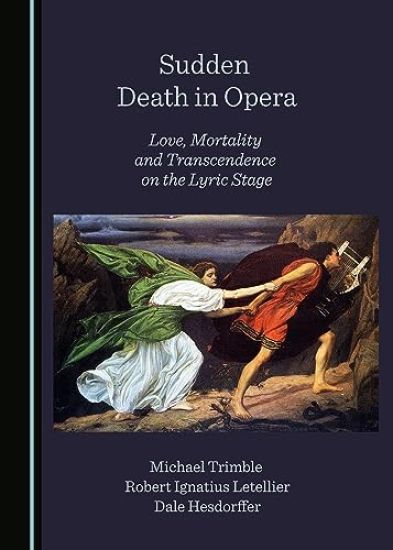
An aspect of dying in opera, rarely observed or commented on, is Sudden Unexpected Death. There are many deaths in this melodramatic genre: most follow expected causes like murder, suicide, or old age. This book explores those deaths which occur without obvious natural causes. These are often central to the overall drama of the opera, representing denouements forming the epiphany of the story and the apotheosis for the audience. The book identifies 50 operas where such events occur, exploring the role of the dramatis personae, the circumstances of their dying, and specific themes that emerge. These include a preponderance of females, especially in the 19th century, who die mainly at the end of the operas, often in the context of tragedy. It charts the growing awareness in the medical sciences of the unconscious forces driving human behaviour, including liminal mental states and trances, which influenced these operas and continue to affect human behaviour to the present day. In addition, the changing philosophies that are intertwined with operatic narratives, in particular stemming from Kant, Hegel, Schopenhauer and Nietzsche, are important in the book’s exegesis, as is the special role of Wagner’s compositions. This leads to the exploration of recurrent concepts such as the Liebestod, the ewig Weibliche and redemption itself.
Vasco de Gama was the last collaboration between Giacomo Meyerbeer and Eugène Scribe, the famous playwright and librettist. The work had intermittently preoccupied them both since 1838, and it had become legendary as L’Africaine years before its completion. The first version of the opera became known as the Vecchia Africana of the long years of Meyerbeer’s anxious labours on this most troublesome of his operas An adoring public gave Meyerbeer a tumultuous posthumous accolade on the première of L'Africaine on 28 April 1865, a year after his death. This opera which involved Meyerbeer and Scribe’s creative energies for so long includes in one last and splendid achievement many of the elements that had hitherto featured in varying degrees in all their other joint creations. Both composer and librettist were men of immense imagination and genius. Between them, they created four works of great power and beauty that radically affected the history of opera. This study examines the origins and creation of the opera, its dramaturgy and musical style, the history of its astonishing reception around the world until the 1930s, its revival in more recent times. One of the special features of the book is the collection of iconography associated with the work, and its interpretation by many of the greatest singers of the Golden Age of opera. This imagery and many musical examples help to bring out the themes explored in this work more fully.
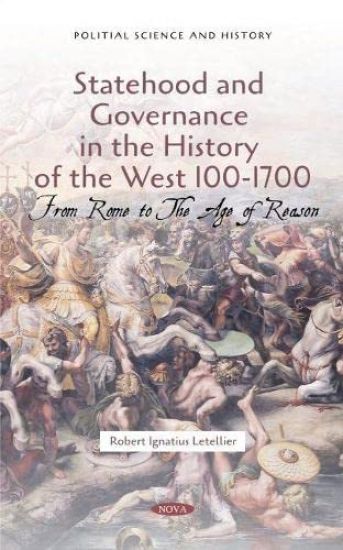
The subject is historical and cultural, and focuses on the unfolding of the big movements and people that have shaped Western History from Roman times to the late 17th century. It would be informative and exploratory in asking questions, and suitable for all students of history and political philosophy at postgraduate level, as well as for a wider readership. The history of Western Europe from the fall of the Roman Empire (478 AD) until the end of the 17th century saw a process of discontinuity, deconstruction and loss turn, through the various reengagements and regroupings of the former barbarian invaders, into increasingly self-defined and viable national groupings. Over the centuries of the Dark Ages and early medieval period, these would consolidate further into ever-more closely defined nation states. The Renaissance, Reformation and Age of Discovery carried the process further and through colonialism and mercantilism saw the restitution of concepts of empire spread globally.
In his lifetime, the opera composer Fromental Halévy was considered the leader of the French school; his admirers included Wagner, Berlioz, and later Mahler. Today, he is chiefly remembered for his grand tragic opera La Juive (Paris, 1835), a unique work exploring the nature of freedom, faith, and tolerance. It has enjoyed rediscovery in recent times, and its perennial challenge to our presuppositions makes it a work of intense artistic significance. Halevy worked in the heady context of Paris after the 1830 Revolution and before the debacle of 1870—when the French capital was at the centre of the operatic world. He wrote some 30 operas in the established genres of grand opéra and opéra-comique. L'Éclair (1835) and Guido et Ginévra (1838) consolidated his success in these genres. This study throws light on this shadowy figure, looking at his life, his letters, contemporary opinion about him, and, most importantly, his operas. Each one is examined in terms of its origin, libretto, musical features, and place in the vibrant critical journalism of mid-19th century France. The text provides musical examples and something of the rich iconography that accompanied the creation of his works.
In his lifetime, the opera composer Fromental Halévy was considered the leader of the French school; his admirers included Wagner, Berlioz, and later Mahler. Today, he is chiefly remembered for his grand tragic opera La Juive (1835). Halévy, a native of Paris, was active when the French capital was at the centre of the operatic world. His 30 operas worked within established genres of grand opéra and opéra-comique, and many of them attained considerable popularity across Europe and the wider world (such as La Reine de Chypre 1841, Charles VI 1843, Les Mousquetaires de la reine 1846, and Le Val d'Andorre 1848). Although acclaimed in their day, most have not been staged for decades. This study throws light on this shadowy figure, looking at his life, contemporary opinion about him, and, most importantly, his operas. Each one is examined in terms of its origin, libretto, musical features, and place in the vibrant critical journalism of mid-19th century France. The book provides musical examples and something of the rich iconography that accompanied the creation of his works.
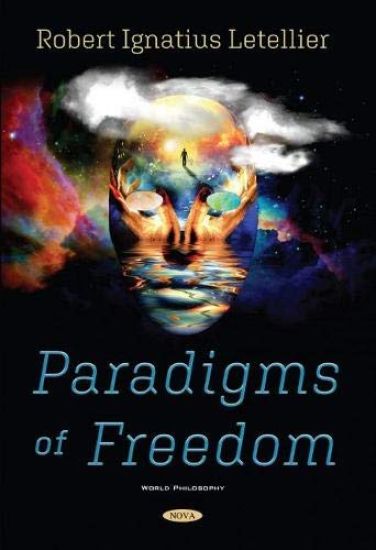
The integrity of the human being made in the image and likeness of God (Genesis 1:26) has been a challenge confronting not just the theologian, but great rulers, politicians, reformers, scientists, poets, artists, composers and novelists over centuries. The Orthodox Tradition might note that our human condition in time and space is shaped and challenged by this journey from likeness to image. Biblically we journey to see the face of God. Less theologically, the human condition is shaped by the tensions and contradictions as we journey to seek 'freedom'. Paradigms of Freedom explores, in the context of the unfolding of modern history, how this challenge has been compounded and enriched by the people and institutions who have sought to find and promote the concept of freedom (and issues of personal liberty) in the face of contrary or oppressive circumstances and systems. Importantly, it will examine the contribution of the artist to various models of freedom, some of which may be identified as vectors of transcendence; when image becomes likeness. The nature of human society, the sense of social harmony and paternalistic control that characterized society for centuries, and especially the emergence of Western culture, began to crumble in the fourteenth century with the cataclysmic onslaught of the Black Death; the challenge to the monolithic power of the Church and the nature of feudalism; the growth of new philosophical and political theories; and overall crumbling of authority. In the fifteenth century new developments like the invention of printing; the standardization of modern languages; and the global expansion of exploration, mercantilism and colonization presented unprecedented horizons of growth and challenges to the place and meaning of humanity in the world. These challenges are embodied in the Renaissance and Reformation, where the very foundations of belief and knowledge were questioned in new processes of discovery in both the world and the cosmos. The nature of freedom to search, to question and to discover new things brought about political and intellectual developments in an ever-expanding series of movements and interrogations. Moved by the annals of the times, individuals have sought to understand and perpetuate the heroic struggles through their own creative power. This in turn can draw us to share in those lost or sorrowful times, and reflect on the sacrifice and vision of those who have been prepared to witness fearlessly to the indomitable spirit of mankind, and his slow but inexorable movement or journey into the light. This exposition will examine various types/paradigms that have proposed and embodied concepts of freedom. These have tried, and often succeeded, in serving as vectors of transcendence, meditating on and mediating human aspiration. Such reflective movements of mind and heart are embodied both contemporaneously and retrospectively in various historical movements, political gestures and artistic creativity that have provoked thoughts on human liberty: political actions, decrees, philosophy, books, pictorial art, novels, poetry, theatre, opera and film. Representatives and examples (in words and imagery) of all these modes are exemplified in the chapters that explore certain iconic movements and personalities in some of the key historical and social events of the past six centuries. The process is of necessity selective. Religious conflict, freedom of thought and denomination, the wars fought over faith and control of the land, the desire for liberty of choice, challenging new discoveries in science and geography, cosmology, colonialism and slavery, Enlightenment, revolution and the search for national identity and independence-these are all areas that have absorbed human thought, knowledge and aspiration, and resulted in inevitable artistic reflection. This is not a history but a consideration of mankind's search to be free, and how this striving is embodied in the poetry of liberation.
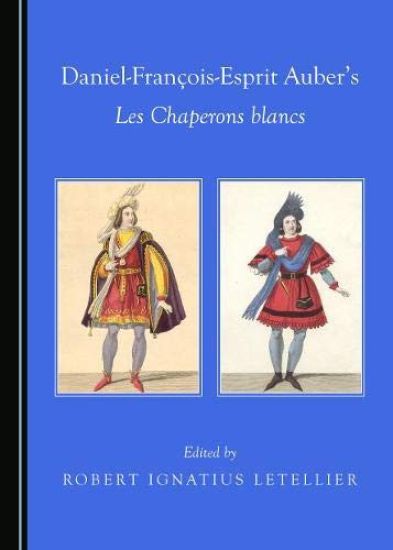
Daniel-François-Esprit Auber (1782-1871), the most amiable French composer of the nineteenth century, came to his abilities late in life. After a stalled commercial career, he studied with Cherubini. His first works were not a success, but La Bergère Châteleine (1820), written at the age of 38, established him as an operatic composer. He then met the librettist Eugène Scribe (1791-1861), with whom he developed a working partnership, one of the most successful in musical history, that lasted until Scribe's death. After Le Maçon (1825) and La Muette de Portici (1828), Auber's life was filled with success. In 1829 he was appointed a member of the Institut, in 1839 Director of Concerts at Court, in 1842 Director of the Conservatoire, in 1852 Musical Director of the Imperial Chapel, and in 1861 Grand Officer of the Légion d'Honneur. Les Chaperons blancs is one of Auber's least known operas, falling between Le Cheval de bronze (1835) and Le Domino noir (1837), two of his most famous works. The première also took place only five weeks after that of Meyerbeer's celebrated Les Huguenots (29 February 1836) had carried all before it. Like the latter, Auber's opera is centred around a theme of political conspiracy, although obviously observed through the lighter lens of the comique style. The tradition of the rescue opera, popular since the French Revolution, also features in the storyline, as does the motif of apparent death through soporifics so memorably used by Shakespeare in Romeo and Juliet (c. 1594). The leading characters were created by two great stars of the Opéra-Comique, Jean-Baptiste-Marie Chollet and Geneviève-Aimeé-Zoé Prévost, both of whom had brought to life the leading roles in Auber's most famous comic creation, Fra Diavolo (1830). This book presents an insight into the life and work of Auber by close examination of this little-known opera, with consideration of origins, casting, and plot, and analysis of dramaturgy, musical style, and reception history. This volume provides the vocal/piano score of Les Chaperons blancs, preceded by an introduction to the life and work of Auber, and a reading of the opera. There are examples from the score, prints from contemporary sources and other theatrical memorabilia, adding an important iconographical aspect to the general place and relevance of this work in nineteenth-century French operatic culture.
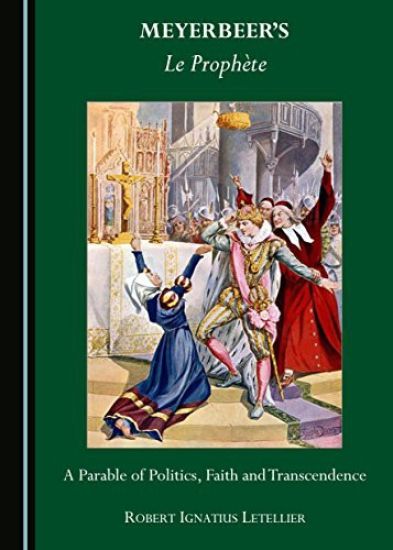
For a period of close to half a century, French grand opéra, as exemplified by the works of Giacomo Meyerbeer and his school, was the preferred form of music for the theatre in most of the civilized world. During the July Monarchy, French grand operas, with their plots drawn from historical events, tended to be received as metaphors for current political themes. Meyerbee's Le Prophète illustrates the complex, contested nature of political meaning during this period. This opera was set in the context of the emerging liberal historiography pioneered by Jules Michelet, and reactions to it illustrate the manner in which audiences and critics constructed 'meanings' with reference to their personal and collective experience and memories, with grand opera occupying a central role at that time. Le Prophète was once one of the most famous of operas, performed over 500 times at the Paris Opéra, and given throughout the civilized world, in the days when opera was ever-present in society. The plot has been called absurd, based as it is on the history of the Anabaptists in Münster (1534-35). However, history is far stranger than fiction, and Eugene Scribe's libretto provides a modification of the garish facts in the interests of a highly symbolic scenario based on a tragic Reformation episode, and exploring the implication of the role of religion, power and politics in the fate of humanity. The music is powerful, gripping, and torrential in its flow. Each act is beautifully structured, each set piece crafted to perfection, dominated by an overwhelming sound world of instrumental colours and disturbing harmony. The ballet plays a vital function as a countersign to the human deeds of darkness and despair that characterize the action. The Coronation Scene is fascinating, and overwhelming in its impact, one of opera's greatest moments. This study examines the origins and creation of the opera, its dramaturgy and musical style, the history of its astonishing reception around the world until the 1930s. One of the special features of this book is the collection of iconography associated with the work and its interpretation by many of the greatest singers of the Golden Age of opera.
Giacomo Meyerbeer (1791-1864) was a great musical dramatist in his own right. The fame of his operas rests on his radical treatment of form, his development of scenic complexes and greater plasticity of structure and melody, his dynamic use of the orchestra, and close attention to all aspects of presentation and production, all of which set new standards in Romantic opera and dramaturgy. This book carries forward the process of rediscovery and reassessment of Meyerbeer’s art ”including not just his famous French operas, but also his German and Italian ones”placing them in the context of his entire dramatic oeuvre, including his ballets, oratorios, cantatas and incidental music. From Meyerbeer’s first stage presentation in 1810 to his great posthumous accolade in 1865, some 24 works mark the unfolding of this life lived for dramatic music. The reputation of the famous four grand operas may well live on in the public consciousness, but the other works remain largely unknown. This book provides an approachable introduction to them. The works have been divided into their generic types for quick reference and helpful association, and placed within the context of the composer’s life and artistic development. Each section unfolds a brief history of the work’s origins, an account of the plot, a critical survey of some of its musical characteristics, and a record of its performance history. Robert Letellier examines each work from a dramaturgical view point, including the essential”often challenging”philosophical and historical elements in the scenarios, and how these concepts were translated musically onto the stage. A series of portraits and stage iconography assist in bringing the works to life.
Meyerbeer's first opera, Jephtas Gelübde, has a libretto by the German academic Alois Schreiber, based on a Biblical theme taken from chapters 11-12 of the Book of Judges. The conflict between paternal love and love of country intrinsic to this story was is also the basic theme of the opera scenario, and is reflected in the overture, a symphonic anticipation of the essential features of the action. The opera, whose final rehearsals were conducted by the composer in person, was admirably produced by the Munich Court Opera on 23 December 1812, but on account of its novelty met with indifference, so that it was withdrawn. A newspaper report did, however, observe: 'A delicate sensibility, united to a profound and mature insight into the workings of the impassioned human heart, is manifested throughout in a grand and elevated style that gives promise of something great in the future'. This score contains the seeds of the whole of Meyerbeer's future development. It is impossible to conceive of Meyerbeer's progress to mastership without the Jephta score. Meyerbeer was responding to the heritage of his predecessors the Handel of the oratorios (in the depiction of grandiose biblical drama), and the Gluck of the tragédie lyrique (in the depth of both public and private emotional exploration), but also alert to issues in contemporary opera, like the rescue motif and development of the villain. There is also evidence of Meyerbeer's famed orchestral virtuosity and imagination already at work. In his psychological exploration, Meyerbeer already begins to use thematic tagging and foreshadowing most imaginatively, and points the way far beyond Gluck, in the direction of Weber-Wagner. A performing edition of the opera has been prepared from the manuscript source: text by Robert Letellier, music by Mark Starr. Cambridge Scholars Publishing is printing the vocal score and the orchestral score. The orchestral parts are included in the catalogue of Noteworthy Musical Editions' Rental Library who make the parts available to opera companies for staged productions.
Cesare Pugni (1802–70) made his debut as a composer at La Scala in 1826 with the opera Elerz e Zulmida. In the 1840s he worked closely with the choreographer Jules Perrot (1810–92) in Paris and in London, creating some of the most renowned ballets of the 19th century, a number of which still find their place in some modern repertories. Pugni later followed Perrot to St Petersburg, and became official composer of the Imperial Russian theatres. Some of his earlier ballets were transferred to St Petersburg, and he also composed many new works for that city. Along with Perrot, Pugni also worked with Arthur Saint-Léon (1821–70), Paolo Taglioni (1808–84), Marius Petipa (1818–1910), and some of the greatest dancers of the century. His most famous collaboration, with Marius Petipa, lasted until the composer's death on 26 January 1870. Pugni was extremely prolific, composing more than 300 ballets, a dozen operas, over 40 masses, other polyphonic works and a few symphonies. He was very popular with the public, who were delighted by his direct uncomplicated style, with its attractive melodies and infectious rhythms. Ondine, choreographed and danced by Perrot and Fanny Cerrito, was premiered at Her Majesty's Theatre in 1845. It is a variant on the famous water nymph story Undine by Friedrich de la Motte Fouqué. The ballet became famous for the conception of the generic scene type of the Pas de l'Ombre, where the nymph sees her own shadow in the moonlight for the first time and tries to catch it. The ballet was praised for its magnificent décor and for Pugni's score: ". . . the musical accompaniment which describes the rise and fall of the waves is eminently characteristic and beautiful: the very ripple of the flow, and the rushing sound of the ebb over the pebbly strand, are heard and fully satisfy the ear". Esmeralda, choreographed by Perrot and premiered with Perrot, Carlotta Grisi and Saint-Léon in the principal roles, was first performed at Her Majesty's Theatre in London in 1844. The ballet is based on the story of Victor Hugo's Notre-Dame de Paris. It was reasonably successful, and Grisi was pronounced the perfect personification of the gypsy girl Esmeralda. The ballet later became immensely popular in Russia; Fanny Elssler enjoyed one of her biggest triumphs in the title role. Pugni's music successfully evokes an atmosphere of Medieval Paris, the changing moods of the story, and the delicate vulnerability of the heroine. For Petipa's production of 1888, Riccardo Drigo was asked to compose several new numbers, including the Esmeralda Pas de Deux and the Diana and Acteon Pas de Deux, which became very popular in their own right. The Pas de quatre was a divertissement choreographed by Perrot for four of the leading ballerinas of the time, and premiered at Her Majesty's Theatre in 1845. Created by Marie Taglioni, Carlotta Grisi, Fanny Cerrito and Lucile Grahn, this plotless ballet epitomizes the Romantic cult of the ballerina. Pugni's variations were exquisitely tailored to the character and particular skills of each of the illustrious protagonists. There were four performances of the Pas de quatre with the original dancers, and there have been many revivals, starting in 1847 (when the part created by Grahn was given to Carolina Rosati), and continuing through to later reconstructions in the 20th century. Catarina, ou La Fille du bandit was choreographed by Perrot, with the principal roles created by Lucile Grahn, Perrot and Louis Gosselin. It was first performed at Her Majesty's Theatre in 1846. The plot revolves around the love of the painter Salvator Rosa for Catarina, a bandit chief. The ballet grew in popularity due to the fascination and humanity of the unconventional characters from an original story based on the artist's life, and the incomparable elegance of its mass movements. Founded on the contrast between feminine grace and military precision, this work was one of the greatest triumphs of both Lucile Grahn and Fanny Elssler. Théolinda, ou Le Lutin de la vallée, an opera-ballet in 2 acts and 3 scenes, with choreography by Arthur Saint-Léon, and music by Eugène Gautier, was first performed in Paris at the Théâtre Lyrique in 1853. Later Saint-Léon reworked the piece as Théolinda l'Orpheline for the Bolshoi Theatre of Moscow in 1862, with the score arranged by Pugni. Saint-Léon chose the new young star Marfa Muravieva to create the title role. The work was revived in 1865 with Praskovia Lebedeva, again with Lebedeva in 1866, and once more, in 1870, this time with Ekaterina Vazem. Pugni's adaptation of the music became popular in Russia, and was published in Saint-Petersburg by Stellowsky.
Daniel-François-Esprit Auber (1782–1871) was long considered one of the most typically French as well as one of the most successful of the opera composers of the 19th century. Although musically gifted, he initially chose commerce as a career, but soon realized that his future lay in music. He studied under Cherubini, and it was not long before his opéra-comique La Bergère Châteleine (1820), written at the age of 38, established him as an operatic composer. Perhaps the greatest turning point in Auber's life was his meeting with the librettist Eugène Scribe (1791–1861), with whom he developed a long and illustrious working partnership that only ended with Scribe's death. Success followed success; works such as Le Maçon (1825) and La Muette de Portici (1828) brought Auber public fame and official recognition. In 1829 he was appointed a member of the Institut, in 1839 Director of Concerts at Court, in 1842 Director of the Conservatoire, in 1852 Musical Director of the Imperial Chapel, and in 1861 Grand Officer of the Légion d'Honneur. Auber seems to have been fated to live in revolutionary times; during his long life no less than four revolutions took place in France (1789, 1830, 1848, 1870). Auber's famous historical grand opera La Muette de Portici (also known by its hero's name as Masaniello) is perhaps unsurprisingly based on revolution, depicting the 1647 Neapolitan uprising against Spanish rule. It is a key work in operatic history, and has a revolutionary history itself: it was a performance of this work in Brussels in 1830 that helped spark the revolution that led to the separation of Belgium from Holland. It was a revolution that hastened Auber's death at the old age of 89. He died on 12 May 1871 as a result of a long illness aggravated by the privations and dangers of the Siege of Paris. He had refused to leave the city he had always loved, even after his house had been set on fire by the petroleurs et petroleuses. In a twist of fate, a mark had been placed on the house of the composer of Masaniello, the very voice of Romantic liberty! Auber's overtures were once instantly recognizable, favourites of the light Classical repertoire. His gracious melodies and dance rhythms had a huge influence, both on piano and instrumental music, and on the genre of Romantic comic opera, especially in Germany. Musical tastes and fashions have changed, and contemporary audiences are more accustomed to the heavier fare of verismo, Wagnerian transcendentalism, and twentieth-century experimentalism. The operas themselves, apart from Fra Diavolo (1830), are seldom performed, yet Auber's elegant, delicate and restrained art remains as appealing to the discerning listener as ever it was. Le Premier Jour de bonheur, an opéra-comique in three acts, was first performed at the Opéra-Comique (Deuxième Salle Favart) on 15 February 1868. It was the 86-year-old Auber's second-last opera. Eugène Scribe had died in 1861, and Auber chose Adolphe-Philippe Dennery (actually Adolphe Philippe) and Eugène Cormon (Pierre-Etienne Piestre) as his collaborators for his last two operas. The subject of Le Premier Jour de bonheur was borrowed from a comedy by Souques called Le Chevalier de Canolle given at the Odéon on 17 May 1816. For Gaston de Mailleprés, an officer serving in the French army during the colonial wars with Britain, every happy event is marred by some misfortune. He has fallen in love, but with an unknown woman whom he saw twice in London before the wars, as her carriage went by. An English girl, Hélène, and her craven fiancée Sir John Littlepool arrive, having been apprehended as spies while on their way to the English garrison at Madras. Gaston recognizes in Hélène his mysterious lady; she is in fact the daughter of the governor of Madras. Gaston releases Hélène, but keeps Littlepool as a hostage. In act 2 Gaston comes to Madras under a flag of truce to see Hélène, but is taken prisoner, and condemned to be shot the next day in reprisal for Sir John's predicament. Hélène takes pity on him and confesses her love for him. Gaston's joy at this helps him to forget his despair over his imminent fate. In the last act the impressionable Sir John, released from captivity, relinquishes all claims to Hélène, now believing that Hélène has chosen Gaston simply to save his life, and is reconciled to their union. Gaston's first day of happiness has at last arrived. The libretto was constructed with skill, but the givens of the situation lack enough power and simplicity to sustain interest. The score contains lovely pieces. The overture presents an overall contrast between the Indian elements of the story (the graceful Ballad of the Djinns) and the French colonial ones (a bellicose march full of military swagger and dance themes from the act 2 ball). Le Premier Jour de bonheur was the only significant work of the last decade of Auber's life, and indeed his last great success. The cast was very accomplished, consisting of: Joseph-Amédée-Victor Capoul (Gaston de Mailleprés); Marie Cabel (Hélène); Charles-Louis Sainte-Foy (Littlepool); Mlle Marie-Rose (Djelma); Léon Melchissédec (De Mailly, a French officer); Victor Prilleux (Bergerac, a French officer); and Bernard (the governor of Madras). Between 1867–70 there were 167 performances in Paris. The work was given in German, Italian and Hungarian.
Daniel-François-Esprit Auber (1782–1871), the most amiable French composer of the 19th century, came to his abilities late in life. After a stalled commercial career, he studied with Cherubini. His first works were not a success, but La Bergère Châteleine (1820), written at the age of 38, established him as an operatic composer. He then met the librettist Eugène Scribe (1791–1861), with whom he developed a working partnership, one of the most successful in musical history, that lasted until Scribe's death. After Le Maçon (1825) and La Muette de Portici (1828), Auber's life was filled with success. In 1829 he was appointed a member of the Institut, in 1839 Director of Concerts at Court, in 1842 Director of the Conservatoire, in 1852 Musical Director of the Imperial Chapel, and in 1861 Grand Officer of the Légion d'Honneur. Auber's famous historical grand opera La Muette de Portici (also known by its hero's name as Masaniello) is a key work in operatic history, and helped to inspire the 1830 revolution in Brussels that led to the separation of Belgium from Holland. Auber himself experienced four French Revolutions (1789, 1830, 1848, 1870). The latter (the Commune) hastened the end of his life. He died on 12 May 1871, at the advanced old age of 89, and in the pitiful conditions of civil strife, after a long and painful illness which worsened during the Siege of Paris. He had refused to leave the city he had always loved despite the dangers and privation, even after his house had been set on fire by the petroleurs et petroleuses. By some irony a mark had been placed against the house of the composer of Masaniello, the very voice of Romantic liberty! Auber's overtures were once known everywhere, a staple of the light Classical repertoire. The influence of his gracious melodies and dance rhythms on piano and instrumental music, and on the genre of Romantic comic opera, especially in Germany, was overwhelming. The operas themselves, apart from Fra Diavolo (1830), have virtually passed out of the repertoire, since Auber's elegant and restrained art now has little appeal for the world of music, attuned as it is to the meatier substance of verismo, high Wagnerian ideology, and twentieth-century experimentalism. Rêve d'amour, an opéra-comique in three acts, with libretto by Adolphe-Philippe Dennery (Adolphe Philippe) and Eugène Cormon (Pierre-Etienne Piestre), was first performed at the Opéra-Comique (Deuxième Salle Favart) on 20 December 1869. It was Auber's last work. The story is set in the French countryside, in the 18th century. It concerns the peasant farmer Marcel and the vicissitudes of his love for both his cousin Denise and the wealthy heiress Henriette. The latter is in turn, however, loved by the gallant Chevalier. To prove himself, Marcel leaves and becomes a successful soldier. He is eventually united with Denise, while Henriette marries the Chevalier. The scenario is without great interest, but the score is of musical worth. The short binary overture is charming and full of fresh ideas. It neatly juxtaposes the two male protagonists, and the overall thematic pull between the dream of love and the glory of soldierly prowess. It is a lovely pastorale that reaches its climax in a mood of great playfulness. Act 2 takes one into the heart of the pastoral experience explored in this opera. It opens with a charming scene of Colin-Maillard (blindman's buff) and a Villanelle, while the extended finale—a lovely waltz followed by Marcel's embracing of the soldier's life—counterposes the archetypal polarity of the pastoral and military traditions of the opéra-comique. The military solution to the hero's emotional dilemma is also the determining action in Auber's earlier works La Fiancée and Le Philtre. For the premiere stage set one of the charming scenes of Lancret was reproduced, complemented by costumes and décor modelled on those of Watteau. The Balançoire and the Colin-Maillard were ingeniously re-created by the stage designers to sustain the illusion of this last pastoral dream of love. The cast consisted of: Joseph-Amédée-Victor Capoul (Marcel); Mlle Marguerite-Marie-Sophie Priola (Henriette); Mlle Maria-Dolorès-Bénédicta-Joséphine Nau (Denise); Mlle Caroline Girard (Marion); Charles-Louis Sainte-Foy (Andoche, a peasant); Victor Prilleux (Bertrand, a farmer); Pierre Gailhard (Le chevalier de Bois-Joli); and Julien (Thomas, a peasant). The opera was in the repertoire 1869–70, and numbered 27 performances. Performances were interrupted in 1870 by the outbreak of the Franco-Prussian War, and never resumed.
Daniel-François-Esprit Auber (1782–1871), the most amiable French composer of the 19th century, came to his abilities late in life. After a stalled commercial career, he studied with Cherubini. His first works were not a success, but La Bergère Châteleine (1820), written at the age of 38, established him as an operatic composer. He then met the librettist Eugène Scribe (1791–1861), with whom he developed a working partnership, one of the most successful in musical history, that lasted until Scribe's death. After Le Maçon (1825) and La Muette de Portici (1828), Auber's life was filled with success. In 1829 he was appointed a member of the Institut, in 1839 Director of Concerts at Court, in 1842 Director of the Conservatoire, in 1852 Musical Director of the Imperial Chapel, and in 1861 Grand Officer of the Légion d'Honneur. Auber's famous historical grand opera La Muette de Portici (also known by its hero's name as Masaniello) is a key work in operatic history, and helped to inspire the 1830 revolution in Brussels that led to the separation of Belgium from Holland. Auber himself experienced four French Revolutions (1789, 1830, 1848, 1870). The latter (the Commune) hastened the end of his life. He died on 12 May 1871, at the advanced old age of 89, and in the pitiful conditions of civil strife, after a long and painful illness which worsened during the Siege of Paris. He had refused to leave the city he had always loved despite the dangers and privation, even after his house had been set on fire by the petroleurs et petroleuses. By some irony a mark had been placed against the house of the composer of Masaniello, the very voice of Romantic liberty! Auber's overtures were once known everywhere, a staple of the light Classical repertoire. The influence of his gracious melodies and dance rhythms on piano and instrumental music, and on the genre of Romantic comic opera, especially in Germany, was overwhelming. The operas themselves, apart from Fra Diavolo (1830), have virtually passed out of the repertoire, since Auber's elegant and restrained art now has little appeal for the world of music, attuned as it is to the meatier substance of verismo, high Wagnerian ideology, and twentieth-century experimentalism. Marco Spada, an opéra-comique in three acts, with libretto by Eugène Scribe, was first performed at the Opéra-Comique (Deuxième Salle Favart) on 21 December 1852. The opera is set in the Romagna around 1830. The governor of Rome is planning a journey to the Adriatic accompanied by his niece, the Marchesa de Sanpietri, and his aide Pepinelli. They become enmeshed in the intrigues of the Abruzzi bandits headed by Marco Spada. Angela, the daughter of the Baron de Torrida (really Marco Spada), offers them hospitality. Pepinelli declares his love for the Marchesa but is rejected. At a ball Angela meets her long-lost beloved Fédérici, the governor's nephew. The Baron is identified as the bandit chief, but only to Fédérici and Angela. She chooses to remain with her father despite this revelation, and renounces her beloved, who thereupon publicly announces his engagement to the Marchesa. Eventually Marco Spada is fatefully wounded in a successful skirmish with the carabinieri. Pepinelli and the Marchesa, who have been captured, are forced to marry, leaving Fédérici and Angela free to realize their love. The eternal brigand, so much exploited by the librettist, turns up here again. Indeed, the final scene was inspired by Horace Vernet's famous painting La Confession du bandit. But this time the recurrence of this favoured type was less successful than in Fra Diavolo and La Sirène: public reception was comparatively cool. The overture is one of Auber's most accomplished. The music has all those features that distinguish the composer's style, as skilled as it is inspired. Act 1 includes a beautiful serenade for Fédérici, a tender paternal aria for the Baron, and Angéla's pastoral couplets. Act 2 famously includes Angela's declaration of love in four languages: Russian, English, Italian, and French. The finale is the highpoint of the opera: the grand and moving theme of the stretta already familiar from the overture. Act 3 contains Angela's chanson "Fille de la montagne"; and the final scene which is full of noble pathos, presaged in the very opening bars of this work. The original cast was: Charles-Amable Battaille (Marco Spada); Caroline Duprez (Angela); Jean-Jacques Boulo (Fédérici); Léon Carvalho (Prince Osorio); Joseph-Antoine-Charles Couderc (Pepinelli); Mlle Andrea Favel (the Marchesa Sanpietri); Bussine (Fra Borromeo); and Elias Nathan and Lejeune (Geronio and Gianetti, bandits). The relationship between the Baron and Angela, sustained throughout the opera, provided the great bass Charles-Amable Battaille and the bright high soprano Caroline Duprez (daughter of the famous tenor Gilbert Duprez), both rising stars, with the opportunity for an effective working partnership. Marco Spada played for two years only, until 1854, and was not revived. The work was destined for transformation into a ballet five years later. In all, there were a respectable 78 performances. The opera was translated into German, Polish and Swedish, and performed in Brussels, Berlin, Hannover, Dresden, Mannheim, Vienna, Warsaw and Stockholm.
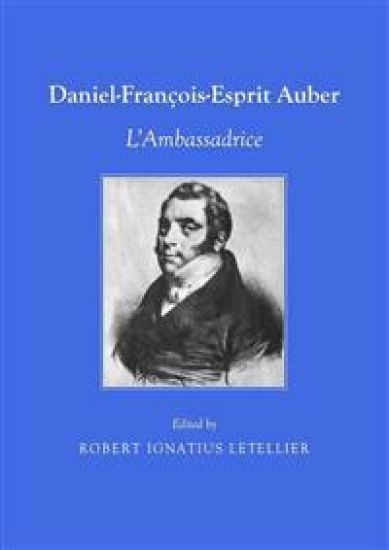
Daniel-François-Esprit Auber (1782–1871), the most amiable French composer of the 19th century, came to his abilities late in life. After a stalled commercial career, he studied with Cherubini. His first works were not a success, but La Bergère Châteleine (1820), written at the age of 38, established him as an operatic composer. He then met the librettist Eugène Scribe (1791–1861), with whom he developed a working partnership, one of the most successful in musical history, that lasted until Scribe's death. After Le Maçon (1825) and La Muette de Portici (1828), Auber's life was filled with success. In 1829 he was appointed a member of the Institut, in 1839 Director of Concerts at Court, in 1842 Director of the Conservatoire, in 1852 Musical Director of the Imperial Chapel, and in 1861 Grand Officer of the Légion d'Honneur. Auber's famous historical grand opera La Muette de Portici (also known by its hero's name as Masaniello) is a key work in operatic history, and helped to inspire the 1830 revolution in Brussels that led to the separation of Belgium from Holland. Auber himself experienced four French Revolutions (1789, 1830, 1848, 1870). The latter (the Commune) hastened the end of his life. He died on 12 May 1871, at the advanced old age of 89, and in the pitiful conditions of civil strife, after a long and painful illness which worsened during the Siege of Paris. He had refused to leave the city he had always loved despite the dangers and privation, even after his house had been set on fire by the petroleurs et petroleuses. By some irony a mark had been placed against the house of the composer of Masaniello, the very voice of Romantic liberty! Auber's overtures were once known everywhere, a staple of the light Classical repertoire. The influence of his gracious melodies and dance rhythms on piano and instrumental music, and on the genre of Romantic comic opera, especially in Germany, was overwhelming. The operas themselves, apart from Fra Diavolo (1830), have virtually passed out of the repertoire, since Auber's elegant and restrained art now has little appeal for the world of music, attuned as it is to the meatier substance of verismo, high Wagnerian transcendentalism, and 20th-century experimentalism. L'Ambassadrice, an opéra-comique in three acts with libretto by Eugène Scribe, had its first performance at the Opéra-Comique (Salle de la Place de la Bourse) on 21 December 1836. This tale of social intrigue and artistic integrity centres around the lives of two opera singers in Munich, Henriette and Charlotte. Henriette is wooed by the Prussian ambassador, Count Benedict de Valberg, and is persuaded by her aunt, Mme Barnek, a social climber, to accept him. In Berlin, where Henriette awaits the sovereign's consent to the marriage, she and her aunt pass themselves off as Bavarian aristocrats, but when the Munich opera company arrives in Berlin, Charlotte, recognizing her old rival, betrays her. Henriette then finds a compromising note in Charlotte's handwriting addressed to the Count, and vows revenge on both of them. Henriette takes Charlotte's place on the stage, and after the performance, she tears up the marriage contract, vowing to devote her life to the stage rather than to continue aristocratic pretence with an unfaithful husband. This work is one of the composer's best. The libretto is ingenious and charming. The score was written especially for Laure Cinti-Damoreau, and is rich in vocal display, fitting for a prima donna. The original success of this opera was later augmented in 1850 by topical developments, when the famous singer Henriette Sontag left the stage to marry the Sardinian diplomat the Comte de Rossi. The whole scenario is buoyed by the perennial and resonant folk motif of personal victory over challenge, optimally realized in professional success combined with social advancement. The scale and structure of the opera reflects a more intimate dramaturgy. Auber's music is by turns lively, touching, playful and tender. There are some fascinating touches, especially in the variety and subtly demanding nature of the heroine's vocal line. The opera was created by Laure Cinti-Damoreau (Henriette), Jenny Colon (Charlotte), Théodore-Étienne Moreau-Sainti (Valberg), Marie-Julienne Boulanger (Madame Barnek), Roy (Fortunatus), Mlle Mousel (Countess Augusta de Fierschemberg), and Joseph-Antoine-Charles Couderc (Bénédict). L'Ambassadrice was in the repertoire from 1836–73. There were 417 performances altogether, and the work was translated into German, Danish, English, Swedish and Spanish.
This volume brings together a collection of the orchestral works of the composer Giacomo Meyerbeer. He is remembered as one of the great figures of 19th-century opera—a master of brilliant vocalism, impassioned drama and vivid orchestral power and colour. His operas are noted for their precise construction and urgent propulsion, and never linger for long in music for its own sake. Nevertheless, the orchestral passages are integral to the dramatic logic: brief thematically pertinent preludes and precise introductions to the individual acts, always providing a sense of colour and purpose. The operas are also famous for their ballets as an integral aspect of the dramaturgy of the grand French style, but even here the music is kept within strict temporal control. Some of these dance sequences (like the Ballet of the Nuns in Robert le Diable and the Skaters' Ballet in Le Prophète became very famous in themselves: the former was of seminal influence on the development of the Romantic Ballet, both in musical and conceptual terms; the latter is known universally as the ballet of winter joy, Les Patineurs). Other orchestral episodes from the operas also enjoyed great independent popularity—like the resplendent Coronation March in Le Prophète and the exotic Marche Indienne in L'Africaine. The former continues to be Meyerbeer's most widely known composition. All these works have been gathered together in this volume to constitute orchestral suites from the French operas—both grand and the smaller opéras comiques. The two latter works L'Étoile du Nord and Dinorah each has an extended overture. Meyerbeer's most substantial orchestral work, however, is the incidental music he wrote for his brother, Michael Beer's tragedy Struensee (1846). The overture is Meyerbeer's crowing achievement in orchestral writing, and the rest of the incidental music is enthralling in its drama, passion and pathos. The composer was also asked to write instrumental music for other public occasions, most especially for the weddings of the Prussian Royal Family. He provided four stirring Fackeltänze for the torchlight procession held at the Hohenzollern nuptial celebrations, superb works in processional polonaise style, full of grandezza, dramatic gesture and affecting lyricism. In 1861 Meyerbeer was asked to compose the music for the royal procession of King Wilhelm I of Prussia at the ancient capital of Königsberg. The result was another Coronation March, this one of more formal and stately character, that reaches its climax most appropriately in the Prussian national anthem "Ich bin ein Preusser". In 1862 Meyerbeer was commissioned to write music for the opening of the London Exhibition in the Crystal Palace. His Overture in March Style is in the form of a Baroque suite, and provides a series of four variants on the march genre, culminating in a fantasia on "Rule Britannia". This grandiose festive piece is full variety, surprises and subtle orchestral colours. Like all this composer's work, this fine composition is waiting to be rediscovered.
Giacomo Meyerbeer, one of the most important and influential opera composers of the nineteenth century, enjoyed a fame during his lifetime hardly rivalled by any of his contemporaries. This ten volume set provides in one collection all the operatic texts set by Meyerbeer in his career. The texts offer the most complete versions available. Each libretto is translated into modern English by Richard Arsenty; and each work is introduced by Robert Letellier. In this comprehensive edition of Meyerbeer's libretti, the original text and its translation are placed on facing pages for ease of use. The eleventh volume presents the fourth of Meyerbeer's grands opéras, and his final work. By 1860 long-imposed labor had started to tell upon the composer's health: he knew that he must concentrate on the "navigator project" which he had started twenty years earlier if he intended to finish it. Meyerbeer died on 2 May 1864, the day after the completion of the copying of the full score of this his last opera, Vasco da Gama. Minna Meyerbeer and César-Victor Perrin, the director of the Opéra, entrusted the editing of a performing edition to the famous Belgian musicologist François-Joseph Fétis, while the libretto was revised by Mélesville. The original title of L'Africaine was restored out of deference to public expectation. Much of the music and action was suppressed, in spite of the strain this inflicted on the internal logic of the story. While L'Africaine is not lacking in the grandeur of statement and stirring climaxes for which the composer was so famous, there is a new intimacy, a new intensity of melancholic lyricism. Like its famous predecessors, it is basically an historical work, derived from the period of sixteenth-century Renaissance. The account of Vasco da Gama's voyage of discovery around the Cape of Good Hope and conquest of Calicut (1497-98) is subjected to a fictional treatment that raises many interesting issues. The framework is historical, but most of the characters and course of action are not; in fact the end of the opera, in the suicide of the heroine, suddenly leaves the terra firma of reality, and transports us into the mystical realms of the spirit. It is this mixture of modes that is central to the dramaturgy of L'Africaine, a confusion of history and fairytale, ancient certainties and challenging discoveries, in the creation of a new mythology. There is also originality in formal developments, with the great tenor scene in act 4 providing a new malleability in handling the constraints of shape and genre: recitative, arioso and cabaletta have a fluent integration in trying to explore the text more pointedly. L'Africaine was produced on 28 April 1865, a great posthumous tribute to its famous creators. The Ship Scene, the exotic Indian act, and the Scene of the Manchineel Tree exerted a fascination on audiences, and elicited new praise. The work full of melodic beauty and rapturous lyricism, began a triumphal progress through the world, beginning with the big stages of London and Berlin.
The subject-matter of Meyerbeer's second opera Wirt und Gast, or Aus Scherz Ernst (also called Alimelek), written in Munich in 1812, was taken from a tale in The Arabian Nights. The story of the man who would be sovereign, if only for one day, so frequently treated in the literature of all nations. The opera is an example of the Oriental or "Turkish" operas which were so popular in Germany during the second third of the eighteenth century. The orchestra includes, besides the strings, doubled wood-wind, and threefold percussion, only two horns, two trumpets, and one trombone. While Meyerbeer's contemporaries were puzzled by the far-fetched singularity of the Alimelik music, and the work had no success in Stuttgart and Vienna (6 January 1813; 20 October 1814), Weber had the insight to recognize its true significance. He produced it Prague on 20 October 1815, and praised the 'active, alert imagination, the well-nigh voluptuous melody, the correct declamation, the entire musical attitude.' He was also impressed by the instrumentation: "It is surprisingly combined, interwoven with great delicacy, and consequently demands almost the care of a quartet performance." Weber's enduring admiration meant that he again produced the work in Dresden years later (1820), when he pointed out how this early opera "bears witness to the composer's singular emotional capacity." This facsimile edition contains the composer's entire conception of the work, restoring material cut from the first performance. Meyerbeer shows astonishing maturity for a composer of twenty-one. Not only the psychic state of the leading characters, but also the conflict of the entire plot, is presented in concentrated style by the aid of recurrent themes. "The specifically romantico-psychological modification of the leading-motive is met with here for the first time, i.e., two years before Wagner's birth" (Edgar Istel).