Kirjojen hintavertailu – 12 903 735 kirjaa ja 27 kauppaa

Kirjailija

Robert J. Bigart

Kirjat ja teokset yhdessä paikassa: 6 kirjaa, julkaisuja vuosilta 2010–2026, suosituimpiin kuuluu Duncan McDonald. Vertaile teosten hintoja ja tarkista saatavuus suomalaisista kirjakaupoista.

6 kirjaa

Kirjojen julkaisuvuodet: 2010–2026.

Duncan McDonald

Duncan McDonald

Robert J. Bigart; Joseph McDonald

Salish Kootenai College
2016
pokkari
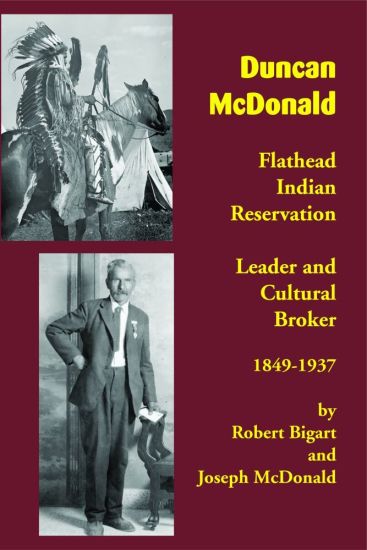
Duncan McDonald (1849–1937) led a remarkable life as an entrepreneur, tribal leader, historian, and cultural broker on the Flathead Indian Reservation in western Montana. The mixed-blood son of a Hudson’s Bay Company fur trader and a Nez Perce Indian woman, Duncan accompanied the Pend d’Oreille Indians on a buffalo hunt and horse-stealing expedition to the Montana plains during the early 1870s. During the late nineteenth century he was put in charge of Fort Connah, the Hudson’s Bay Company post on the Flathead Indian Reservation, and worked as an independent trader across the northern Rocky Mountains. Duncan established a hotel and restaurant, among other businesses, on the Flathead Reservation. In 1878 and 1879 he wrote a history of the 1877 Nez Perce Indian War, which was published in a Deer Lodge, Montana, newspaper. Long a thorn in the side of Flathead Indian agents, Duncan was chairman of the Flathead Business Committee between 1909 and 1924 and for many years represented the interests and views of tribal members to the Montana white community.
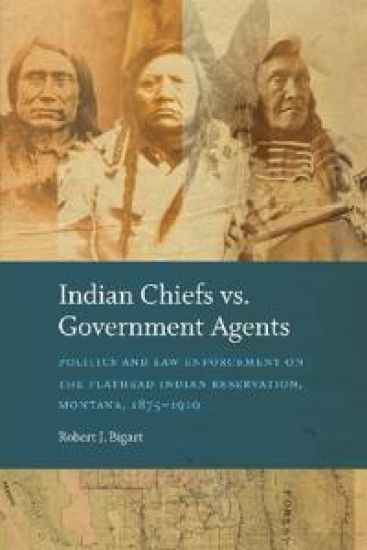
Indian Chiefs Vs. Government Agents

Indian Chiefs Vs. Government Agents

Robert J. Bigart

University of Nebraska Press
2026
sidottu
In Indian Chiefs vs. Government Agents Robert J. Bigart examines the years of dramatic change that occurred between 1875 and 1910 for the Salish and Kootenai tribes of the Flathead Indian Reservation in western Montana. Major changes in the tribal economy were accompanied by the growing power of the Flathead Indian agent on the reservation. The tribes moved from a hunting-gathering economy supplemented by farming and livestock in 1875 to a ranching and farming economy supplemented by hunting and gathering in 1910. After 1885 the Flathead agent directed a new tribal police force that replaced the traditional police directed by the chiefs. The agency police and, later, the Missoula County sheriff and the federal and state court systems competed with the chiefs for control of law and order on the reservation. Yet through it all the agent had to accommodate the chiefs and tribal leaders to maintain law and order. Indians Chiefs vs. Government Agents recounts the metamorphosis of the Flathead Reservation’s economy and politics and reveals the competence and astuteness of tribal members as they resisted Office of Indian Affairs and federal impositions on their lands. The Salish and Kootenai navigated a rapidly changing world, and though they lost some political and economic battles, the tribes never stopped fighting to protect tribal members and their interests.
Warrior Athletes

Warrior Athletes

Robert J. Bigart; Joseph McDonald

SALISH KOOTENAI COLLEGE
2023
pokkari
Warrior Athletes tells the story of ten prominent twentieth-century Salish and Kootenai Indian athletes from the Flathead Indian Reservation in western Montana: Charles Allard Jr. was a University of Montana football star and the 1901 captain of the Grizzly football team. Two Feathers, William Matt, and Henry Matt wrestled professionally in Montana and the Pacific Northwest from 1903 to 1905. Nick Lassa played on the Carlisle Indian School football team in Carlisle, Pennsylvania, from 1914 to 1918. Between 1918 and 1921 he played football for the Haskell Indian Institute in Lawrence, Kansas, and was a member of the only all-Indian National Football League team from 1922 to 1923. Jimmy Dupuis fought regular boxing matches in western Montana from 1930 to 1940. Frenchy Roullier and Sam Clairmont were basketball stars at Ronan High School, Mount Saint Charles College, and western Montana independent basketball teams from 1925 to 1940. Archie McDonald played football for the Haskell Indian Institute in Kansas and the Montana State University Grizzlies at Missoula from 1930 to 1939. Marvin Camel was the only Native American two-time world boxing champion and boxed professionally from 1973 to 1990.
Providing for the People

Providing for the People

Robert J. Bigart

UNIVERSITY OF OKLAHOMA PRESS
2022
nidottu
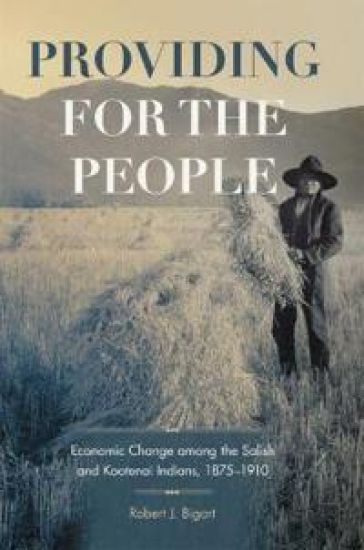
The years between 1875 and 1910 saw a revolution in the economy of the Flathead Reservation, home to the Salish and Kootenai Indians. In 1875 the tribes had supported themselves through hunting—especially buffalo—and gathering. Thirty-five years later, cattle herds and farming were the foundation of their economy. Providing for the People tells the story of this transformation. Author Robert J. Bigart describes how the Salish and Kootenai tribes overcame daunting odds to maintain their independence and integrity through this dramatic transition—how, relying on their own initiatives and labor, they managed to adjust and adapt to a new political and economic order. Major changes in the Flathead Reservation economy were accompanied by the growing power of the Flathead Indian Agent. Tribal members neither sought nor desired the new order of things, but as Bigart makes clear, they never stopped fighting to maintain their economic independence and self-support. The tribes did not receive general rations and did not allow the government to take control of their food supply. Instead, most government aid was bartered in exchange for products used in running the agency. Providing for the People presents a deeply researched, finely detailed account of the economic and diplomatic strategies that distinguished the Flathead Reservation Indians at a time of overwhelming and complex challenges to Native American tribes and traditions.
Providing for the People

Providing for the People

Robert J. Bigart

University of Oklahoma Press
2020
sidottu
The years between 1875 and 1910 saw a revolution in the economy of the Flathead Reservation, home to the Salish and Kootenai Indians. In 1875 the tribes had supported themselves through hunting - especially buffalo - and gathering. Thirty-five years later, cattle herds and farming were the foundation of their economy. Providing for the People tells the story of this transformation. Author Robert J. Bigart describes how the Salish and Kootenai tribes overcame daunting odds to maintain their independence and integrity through this dramatic transition - how, relying on their own initiatives and labor, they managed to adjust and adapt to a new political and economic order. Major changes in the Flathead Reservation economy were accompanied by the growing power of the Flathead Indian Agent. Tribal members neither sought nor desired the new order of things, but as Bigart makes clear, they never stopped fighting to maintain their economic independence and self-support. The tribes did not receive general rations and did not allow the government to take control of their food supply. Instead, most government aid was bartered in exchange for products used in running the agency. Providing for the People presents a deeply researched, finely detailed account of the economic and diplomatic strategies that distinguished the Flathead Reservation Indians at a time of overwhelming and complex challenges to Native American tribes and traditions.
Getting Good Crops

Getting Good Crops

Robert J. Bigart

University of Oklahoma Press
2010
sidottu
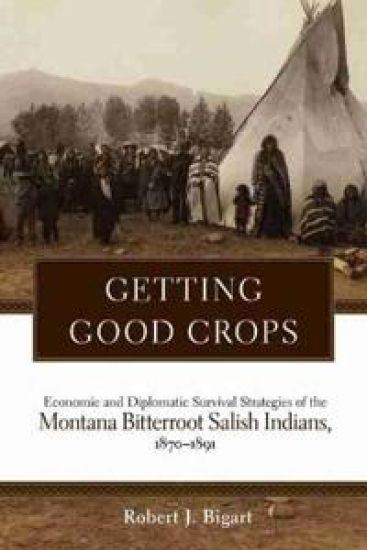
Tells how one American Indian tribe survived despite overwhelming challengesIn 1870, the Bitterroot Salish Indians - called ""Flatheads"" by the first white explorers to encounter them - were a small tribe living on the western slope of the Northern Rocky Mountains in Montana Territory. Pressures on the Salish were intensifying during this time, from droughts and dwindling resources to aggressive neighboring tribes and Anglo-American expansion. In 1891, the economically impoverished Salish accepted government promises of assistance and retreated to the Flathead Reservation, more than sixty miles from their homeland. In Getting Good Crops, Robert J. Bigart examines the full range of available sources to explain how the Salish survived into the twentieth century, despite their small numbers, their military disadvantages, and the aggressive invasion of white settlers who greedily devoured their land and its natural resources. Bigart argues that a key to the survival of the Salish, from the early nineteenth century onward, was their diplomatic agility and willingness to form strategic alliances and friendships with non-Salish peoples. In doing so, the Salish navigated their way through multiple crises, relying more on their wits than on force. The Salish also took steps to sustain themselves economically. Although hunting and gathering had been their mainstay for centuries, the Salish began farming - ""getting good crops"" - to feed themselves because buffalo were becoming increasingly scarce. Raised on the Flathead Reservation himself, the author is seeking to convey the Salish story from their perspective, despite the paucity of written Salish testimony. What emerges is a picture - both inspiring and heartbreaking - of a people maintaining autonomy against all odds.