

Kirjailija
Robert J. Smith
Kirjat ja teokset yhdessä paikassa: 14 kirjaa, julkaisuja vuosilta 1978–2016, suosituimpiin kuuluu Japanese Culture: Its Development and Characteristics. Vertaile teosten hintoja ja tarkista saatavuus suomalaisista kirjakaupoista.
Nimi esiintyy myös muodoissa: Robert J Smith
14 kirjaa
Kirjojen julkaisuvuodet: 1978–2016.

True Petectives - A Yoshi & Gatsby OmnibusThree stories plus interviews, character profiles and other extra features Cat detectives Yoshi and Gatsby spend a year on the prowl for excitement and mystery. First up, its Halloween and Yoshi and Gatsby's search for a missing cat leads them headlong into a frightful confrontation with a dogfighting ring. Then its wintertime and someone's out to put an obnoxious dog on ice. Can the Petectives use a Christmas celebration to smoke out a would-be killer? Finally the boys spend a sweltering Fourth of July causing fireworks as they dig up the truth behind a vicious attack and shut down a protection racket. Animal crime never takes a holiday and neither do the Petectives Three stories: -Petectives-Petectives: Christmas Party-Petectives: Under Fir





Japanese Culture: Its Development and Characteristics
Robert J. Smith; Richard K. Beardsley
Literary Licensing, LLC
2011
nidottu
This book presents an authoritative and illuminating insight into the development and most important characteristics of Japanese society and culture. Approaching the subject from a number of different points of view. Originally published in 1963.
Japanese Culture: Its Development and Characteristics
Robert J. Smith; Richard K. Beardsley
Literary Licensing, LLC
2011
sidottu
Japanese Culture: Its Development And Characteristics is a comprehensive book written by Robert J. Smith that explores the history and evolution of Japanese culture. The book provides an in-depth analysis of the various aspects of Japanese culture, including its art, literature, religion, philosophy, and social customs. The author begins by discussing the origins of Japanese culture and how it has been influenced by various external factors such as China, Korea, and the Western world. He then delves into the unique characteristics of Japanese culture, such as its emphasis on harmony, respect for tradition, and the importance of group dynamics. The book also covers the role of religion in Japanese culture, including Shintoism and Buddhism, and how these beliefs have shaped Japanese society. The author also explores the various forms of Japanese art, including traditional forms such as calligraphy, painting, and sculpture, as well as contemporary forms such as manga and anime. Overall, Japanese Culture: Its Development And Characteristics is a comprehensive guide to understanding the history and key features of Japanese culture. It is an essential read for anyone interested in Japanese culture, history, or society. This scarce antiquarian book is a facsimile reprint of the old original and may contain some imperfections such as library marks and notations. Because we believe this work is culturally important, we have made it available as part of our commitment for protecting, preserving, and promoting the world's literature in affordable, high quality, modern editions, that are true to their original work.
The understanding and use of conscience in Roman Catholicism has undergone evaluation within the broader efforts of the renewal of moral theology called for by Vatican II. A review of the literature reveals that among contemporary Catholic moral theologians there are differences in the way conscience is understood and employed. These differences are reflected in the distinct perspectives of ^D
As the world's only major industrial society yet to emerge from outside the Western tradition, Japan has evolved into an industrial state very different from those of the West. Robert Smith argues that this difference is found not so much in organisational and institutional forms as in the Japanese view of the relationship of individuals to one another and to society as a whole. He traces the origin of this difference to the historical traditions of Japan, which rest on cultural premises quite unlike those of the Western world. His compelling and convincing analysis of contemporary Japanese society has far-reaching implications for our understanding of the nature of the modern industrial world.
As the world's only major industrial society yet to emerge from outside the Western tradition, Japan has evolved into an industrial state very different from those of the West. Robert Smith argues that this difference is found not so much in organisational and institutional forms as in the Japanese view of the relationship of individuals to one another and to society as a whole. He traces the origin of this difference to the historical traditions of Japan, which rest on cultural premises quite unlike those of the Western world. His compelling and convincing analysis of contemporary Japanese society has far-reaching implications for our understanding of the nature of the modern industrial world.
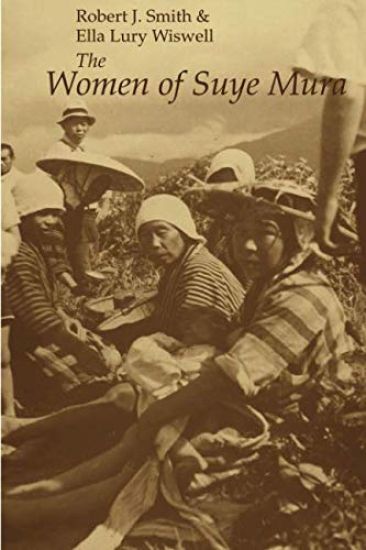
Japanese women are frequently perceived by foreigners as stereotypes. Pictured as compliant, long-suffering, and charming in a childlike way, they are said to be child-centered and restricted in their interests and actions to the domestic realm. The appear as victim, pawn, or tragic heroine: Madame Chrysanthemum, Madame Butterfly, and even the impossible Mariko of Shogun. The Women of Suye Mura provides a rich body of information by means of which such stereotypes may be reevaluated and challenged. Based on Ella Wiswell's extensive field notes from the mid-1930s-when she and her late husband John Embree undertook a joint research project in rural Japan-this volume forms a companion to Embree's now-standard Suye Mura: A Japanese Village. Its focus on the women of the village affords a unique look at their daily lives and a detailed portrait of their world-views and social understandings at a time when the orthodoxies of the contemporary state were not yet completely accepted. Through Ella Wiswell's journal, sensitively edited by Robert Smith, we may understand some of their hopes and fears, see what amuses and angers them, and hear their comments on everything from adultery and illness to religion, magic and the origins of the imperial house. The body of data, secured by direct observation, is unparalleled in the literature. No other account of the lives of Japanese rural women of this era remains, and in no contemporary community can their like be found. The Women of Suye Mura will thus serve as an important resource for anyone interested in the past-and present-of the Japanese woman.
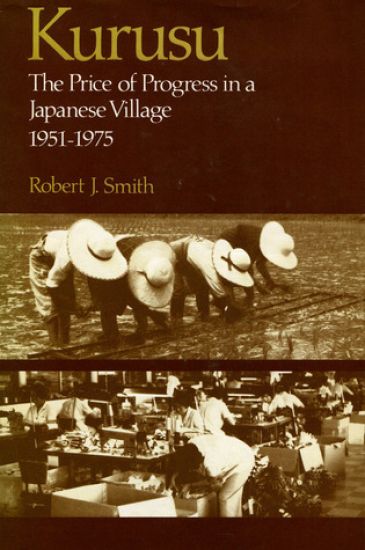
A Stanford University Press classic.