Kirjojen hintavertailu – 12 903 724 kirjaa ja 27 kauppaa
Kirjailija
Robert Jackson
Kirjat ja teokset yhdessä paikassa: 94 kirjaa, julkaisuja vuosilta 1975–2026, suosituimpiin kuuluu Madi Marsh - Detective or Special Agent?. Vertaile teosten hintoja ja tarkista saatavuus suomalaisista kirjakaupoista.
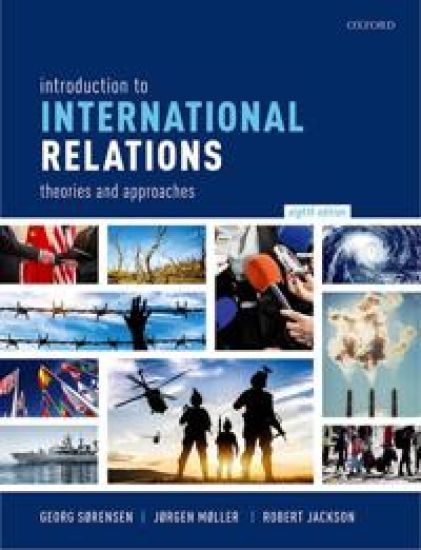
Offering unrivalled coverage of classical theories, contemporary approaches, and current issues, together with an exceptionally clear writing style, Introduction to International Relations provides a uniquely accessible and engaging introduction to the subject. With an emphasis on theoretical approaches and their application to the real world, the authors encourage critical engagement with the theories presented, highlighting their strengths, weaknesses, and the major points of contention. The eighth edition has been thoroughly updated to incorporate current events and key developments in the discipline. The changes include a new, three-part structure, which helps students to build a clear understanding of how key debates in the discipline are connected with each other, and how these can be applied to the world around them. The first part, 'Studying IR', emphasises the practical reality of international relations in everyday life, and how to connect this reality with the academic study of the subject. The second part, 'Major IR Theories and Approaches', guides the reader through the essential theories in the field, including Realism, Liberalism, Social Constructivism, Postcolonialism, and Feminism, among others. Finally, the third part, 'Theory Meets the Real World: Policy and Issues', builds on this foundation by exploring how we can understand current issues such as climate change and terrorism through the lens of IR theory. A new final chapter, 'The Big Question: World Order or World Chaos?', concludes the text by tracing the development of, and theoretical debates around, the concept of 'world order', providing students with a nuanced and compelling analysis of the key challenges confronting the contemporary world. Opening with an overview of the concept, the authors go on to examine the consequences of the rise of China and the resurgence of Russian influence, the new issues facing established democracies and parts of the Global South, as well as international institutions and their ability to provide global governance. The chapter ends with a discussion that answers the question posed at the start: are we witnessing world order or world chaos? Digital formats and resources In addition to helpful learning features within the book, the text is accompanied by online resources designed to help students to take their learning further. These include: For students: - Reinforce your understanding of each chapter's key themes with short case studies - Test your understanding and revise for exams with review questions - Explore different theoretical debates through a series of annotated web links to reliable content - Test your knowledge of key terminology using the flashcard glossary - Extend your learning with videos exploring key issues in IR For registered lecturers: - Encourage debate and critical thinking in class with seminar resources - Download figures from the text for use in your own teaching materials
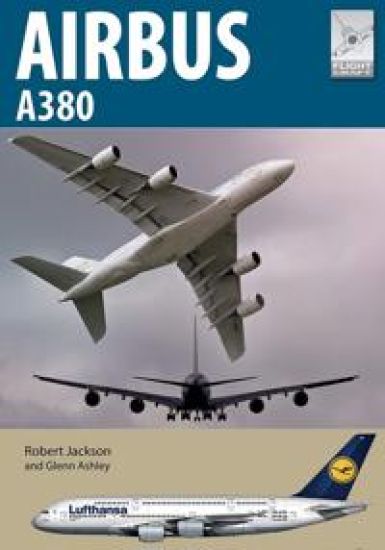
On 27 April 2005, an aircraft lifted away from the runway of Toulouse-Blagnac Airport under the power of six massive Rolls-Royce Trent 900 turbofan engines. It carried a six-man crew, it was making its first flight, and it was making history. For this was the Airbus A380, the largest passenger aircraft in the world. Airbus Industrie was a latecomer to the commercial airliner market, and initially struggled to win orders away from the well-established US giants, Boeing and McDonnell Douglas. Part of Airbus's strategy for success was to offer customers distinct families of aircraft that could be tailored to meet a wide range of performance and capacity demands. Before 2005, the largest and arguably most important members of this family strategy were the Airbus A330 and 340 high-capacity airliners; then along came the A380. With air traffic continuing to double every 15 years, the A380 was designed to meet the needs of the passengers and airports, while also delivering the level of efficiency necessary to protect the environment for future generations. The design incorporated two full-length decks with wide-body dimensions, meaning its two passenger levels offered an entire deck's worth of additional space compared to the next largest twin-engine jetliner. With more seats than any other aircraft, the A380 offered solutions to overcrowding; needing fewer journeys to carry 60 percent more passengers, making it the perfect solution to airport congestion, fleet planning optimization and traffic growth. Typical seating capacity was 525, although the aircraft was certified to carry up to 853 passengers. By mid-2019, fifteen airlines were operating 238 aircraft throughout the world, the original customer being Singapore Airlines, which launched its first A380 service in October 2007\. Production of the A380 peaked at 30 aircraft per year in 2012 and 2014\. Then, in February 2019, the biggest customer, Emirates, announced that it was to reduce its latest order by 39 aircraft in favour of two other Airbus Models, the A350 and A330neo, a version using the same engines as the Boeing 787 Dreamliner. For Airbus, it was the last act. The Company announced that production of the A380 would cease by 2021.
A Sketch Of The History And Cure Of Febrile Diseases: More Particularly As They Appear In The West-Indies Among The Soldiers Of The British Army (Volume I) has been considered by academicians and scholars of great significance and value to literature. This forms a part of the knowledge base for future generations. So that the book is never forgotten we have represented this book in a print format as the same form as it was originally first published. Hence any marks or annotations seen are left intentionally to preserve its true nature.
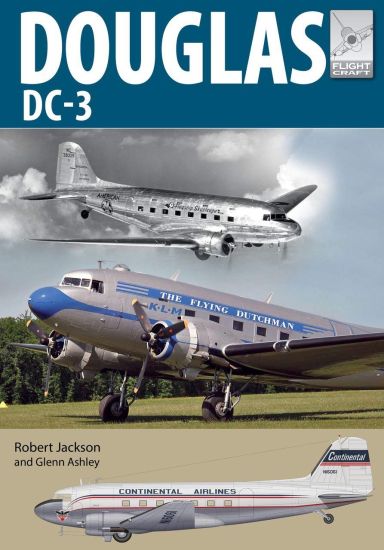
No airliner in the history of commercial aviation has had a more profound effect than the Douglas DC-3\. It was reliable, easy to maintain and carried passengers in greater comfort than ever before. Its origins stem from a design by the Douglas Aircraft Company of Santa Monica, California. Known as the Douglas Commercial One, or DC-1, this new aircraft was revolutionary in concept. It was quickly developed into the DC-2, an airliner that lead to Douglas' domination of the domestic air routes of the United States, and of half the world. Experience with the DC-2 led to the development of an improved version, the Douglas Sleeper Transport (DST), first flown on 17 December 1935\. This in turn evolved into a 21-seat variant, the DC-3, featuring many improvements. The first American Airlines DC-3 entered service in June 1936, and within three years of its introduction the aircraft accounted for a staggering 95 percent of all commercial air traffic in the United States. From commencement of service to the Japanese attack on Pearl Harbor, the DC-3 increased domestic revenue passenger miles more than fivefold. Of the 322 aircraft operated by the country's airlines in December 1941, 260 were DC-3s. At the pre-war peak, 30 foreign airlines operated the DC-3\. On the eve of war, the DC-3's scheduled flights represented 90 percent of international air traffic. In addition to over 600 civil examples of the DC-3, 10,048 military C-47 variants were built, as well as 4,937 produced under licence in the USSR as the Lisunov Li-2 and 487 built by Showa and Nakajima in Japan as the L2D. After the war, thousands of surplus C-47s, previously operated by several air forces, were converted for civilian use. These aircraft became the standard equipment of almost all the world's airlines, remaining in frontline service for many years. The ready availability of cheap, easily maintained ex-military C-47s, both large and fast by the standards of the day, jumpstarted the worldwide post-war air transport industry. The full remarkable story of the DC-3, and its ancestor, the DC-2, is told in these pages, providing a wealth of information for the modeller and the enthusiast alike.
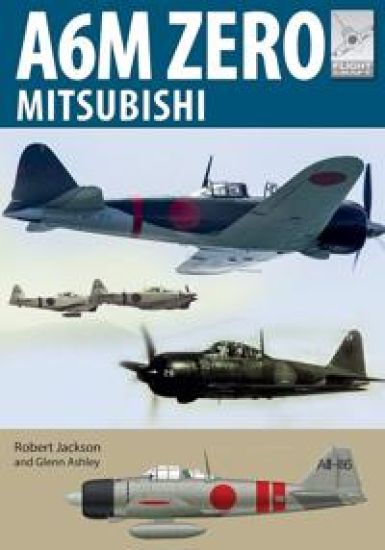
The quality of Japanese aircraft came as an unpleasant surprise to the Allies at the outbreak of the Pacific War, and it was personified in one type, the Mitsubishi A6M Zero. One of the finest aircraft of all time, the Mitsubishi A6M Reisen (Zero fighter) first flew on 1 April 1939\. It soon showed itself to be clearly superior to any fighter the Allies could put into the air in the early stages of the Pacific campaign. Armed with two 20mm cannon and two 7.7mm machine-guns, it was highly manoeuvrable and structurally very strong, despite being lightweight. Instead of being built in several separate units, the Zero was revolutionary in that it was constructed in two pieces. The engine, cockpit and forward fuselage combined with the wings to form one rigid unit; the second part comprised the rear fuselage and the tail. The two units were joined by a ring of 80 bolts. Although the Mitsubishi Zero had some serious drawbacks in combat, the greatest of which was its inability to absorb punishment because of its lack of self-sealing fuel tanks and armour plating, its greatest assets were its manoeuvrability and its long range. In 1942 the Americans allocated the code-name Zeke to the A6M, but as time went by the name Zero came into general use. During the first months of the Pacific War, the Zeros carved out an impressive combat record. For example, in the battle for Java alone, which ended on 8 March 1942, they destroyed 550 Allied aircraft. As the war progressed, however, the Zero gradually came to be outclassed by American fighters such as the Grumman F6F Wildcat and Vought Corsair. In the latter months, many were fitted with bombs and expended in Kamikaze suicide attacks. This book provides a perfect introduction to the design and combat career of a fighter that made history. Why was the Zero conceived? What was it like to fly in combat? How did it compare with Allied types? Who were the engineers and designers who brought it to fruition and the pilots who became aces while flying it? Here is a feast for the modeller, with a wealth of technical information, photographs and colour profiles.
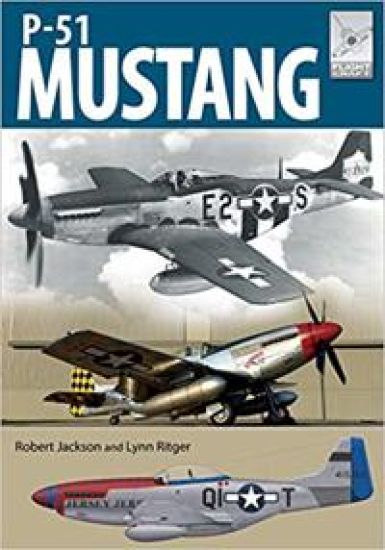
The North American P-51 Mustang was one of the most successful and effective fighter aircraft of all time. It was initially produced in response to a 1940 RAF requirement for a fast, heavily-armed fighter able to operate effectively at altitudes in excess of 20,000ft. North America built the prototype in 117 days, and the aircraft, designated NA-73X, flew on 26 October 1940. The first of 320 production Mustang Is for the RAF flew on 1 May 1941, powered by a 1,100hp Allison V-1710-39 engine. RAF test pilots soon found that with this powerplant the aircraft did not perform well at high altitude, but that its low-level performance was excellent. It was when the Mustang airframe was married to a Packard-built Rolls-Royce Merlin engine that the aircraft's true excellence became apparent. Possessing a greater combat radius than any other Allied single-engine fighter, it became synonymous with the Allied victory in the air. During the last eighteen months of the war in Europe, escorting bomber formations, it hounded the Luftwaffe to destruction in the very heart of Germany. In the Pacific, operating from advance bases, it ranged over the Japanese Home Islands, joining carrier-borne fighters such as the Grumman Hellcat to bring the Allies massive air superiority. Yet the Mustang came about almost by accident, a product of the Royal Air Force's urgent need for new combat aircraft in the dark days of 1940, when Britain, fighting for survival, turned to the United States for help in the island nation's darkest hour.
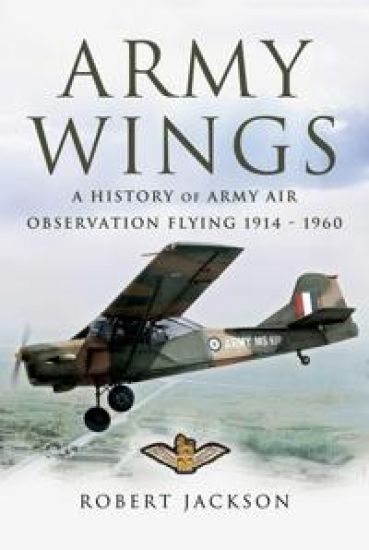
This is the fascinating story of army fixed-wing co-operation units who were made up of specially trained volunteer army personnel. These men were trained to fly, to reconnoitre across the front line in search of enemy forces and then guide artillery gunners onto the target. From its earliest days in World War I, small low-flying aircraft have flown unarmed into combat and relayed vital information to aid accurate fall of shot and to advise front-line ground troops of enemy strength and postion. They were frequently attacked by fighter aircraft and had to avoid ground-fire, often flying below treetop height. They relied purely on flying skill to outwit the enemy and yet little is known of these unsung heroes of many wars. This book redresses the balance.
In the World Library of Educationalists series, international experts themselves compile career-long collections of what they judge to be their finest pieces – extracts from books, key articles, salient research findings, major theoretical and practical contributions – so the world can read them in a single manageable volume. Readers will be able to follow the themes and strands and see how their work contributes to the development of the field. Religious Education for Plural Societies highlights key writings from Robert Jackson’s international career in education. It provides a historical perspective in relation to current debates about religious education in the UK and internationally, drawing attention to current issues of concern. Carefully selected examples explore the key themes in religious education that allow us to consider how things were, how they are now and the future for the field of study. Split into parts: empirical research; the interpretive approach to religious education pedagogy; religious education and plurality and human rights and international policy developments, Robert Jackson also provides an overview of the text in the form of a general introduction, and also introductions to each section of the book, allowing the reader a personal insight into why each piece has been chosen. Religious Education for Plural Societies allows readers to follow themes and strands across Robert Jackson’s career and see how his work has contributed to the development of the fields of religions and education. It will be of interest to all followers of Robert Jackson’s work and any reader interested in the development of religious education in the UK and internationally.
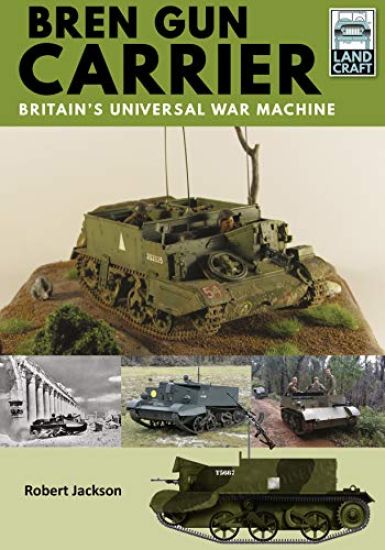
One of the most versatile fighting vehicles in the British army and many other forces for a quarter of a century, the Universal Carrier - more popularly known by its original title of Bren Gun Carrier - was developed as a fast and agile infantry-support vehicle. In this volume in Pen & Sword's LandCraft series, Robert Jackson traces its design and manufacturing history and describes its operational role throughout its long career. The Bren Carrier served in every theatre of the Second World War, from northwest Europe, North Africa and the Soviet Union to the Far East. Then, with the war over, it was operated by many belligerents in a string of other conflicts around the world, including Israel's struggle for independence and the war in Korea. A selection of archive photographs showing the Bren Carrier in action gives a graphic impression of how adaptable it was and records the variety of equipment it could carry. The book is an excellent source for the modeller, providing details of available kits together with specially commissioned colour profiles which illustrate how the Bren Carriers used by different units and armies appeared.
Winner of AM&P EXCEL Gold Award""They don't care about their education."" ""They are not capable of learning."" ""I can't work with them."" ""I can't get through to them."" Just as you may have thought these things about your students, they, too, may have similar thoughts about you: ""She doesn't care about my education."" ""He is not capable of understanding me."" ""I can't work with her."" ""I can't get through to him.""While all students in your class, building, or school district need your support, the Black and Latino male students—the most underserved, suspended, and expelled students in education—need you to understand them as you support them so that they can thrive academically. In Becoming the Educator They Need, former professional athlete turned educator Robert Jackson reminds teachers and administrators that although ""a great majority of all the stories in the news about Black and Latino males are negative,"" these young men—the most likely to be incarcerated, drop out of school, and become victims of homicide—need you to work through any biases you may have and internalize and employ the five core beliefs and mindsets necessary to best serve your Black and Latino male students, the six core values for teaching Black and Latino males, and the 11 characteristics of strong, healthy relationships and become the educator that these students need.
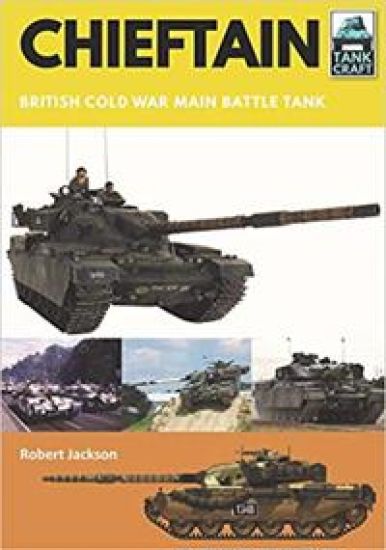
The British Chieftain - designed in the late 1950s as the replacement for the Centurion - was perhaps the best main battle tank in service with Nato during the 1960s and 1970s. Its 120mm rifled main gun and advanced armour made it one of the most formidable tanks of its time, and Robert Jackson's book is an authoritative introduction to it. Although it was intended to fight Soviet armour on the plains of northern Germany, it was in the heat and sand of the Middle East that the Chieftain fought its major battles during the Iran-Iraq War of the 1980s, and it proved to be very effective during the Gulf War of 1991\. Variants of the Chieftain were exported to Iran, Oman, India, Kenya and Nigeria, and its chassis was adapted to fulfil a variety of tasks, including armoured recovery and bridge-laying As well as tracing the history of the Chieftain, Robert Jackson's work provides an excellent source of reference for the modeller, providing details of available kits and photographs of award-winning models, together with artworks showing the colour schemes applied to these tanks. Each section of the book is supported by a wealth of archive photographs.
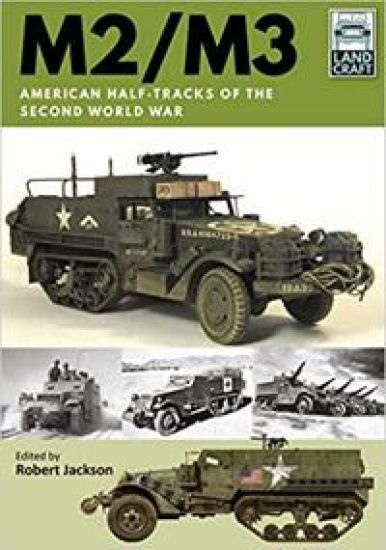
Among the most successful armoured vehicles produced by American industry - known as the Arsenal of Democracy - during the Second World War were the M2 and M3 half-tracks. They served on every battlefront and were as recognizable as other famous American wartime vehicles like the Sherman and the Jeep, and around 40,000 were produced between 1941 and 1945\. They were easy to assemble, operate and maintain, and their versatility allowed them to fulfil a variety of purposes. This volume in Pen & Sword's LandCraft series traces the design, development and manufacturing history of the M2/M3 and describes its operational role within the Allied armies. A selection of archive photographs showing the M2/M3 in action gives a graphic impression of how adaptable these vehicles were and records the range of equipment they could carry. The book is an excellent source for the modeller, providing details of available kits, together with specially commissioned colour profiles demonstrating how the M2/M3 used by different units and armies appeared.
Research shows that discipline problems are prevalent in public schools and continue to be one of the greatest challenges in education. In Building Bridges, author Dr. Don Parker shows educators how to address this issue head-on. He shares an array of evidence-based strategies to build teacher-student relationships and create a welcoming learning environment that fosters student engagement, motivation, and achievement. Support students at risk by creating a positive school culture and building trust: Consider the student behaviors, characteristics, and experiences that are typically barriers to success in school. Learn how and why punitive punishments and zero-tolerance policies have failed to curb poor behavior in schools or provide adequate interventions for struggling students. Understand the importance of teacher-student relationships in teaching students at risk and the ways in which trust and positive relationships improve student behavior. Develop your ability to build positive teacher-student relationships through educational techniques, classroom management strategies, and teaching methods. Study the research that supports the many academic and social benefits of positive teacher-student relationships when teaching students at risk. Examine the ways in which school culture and climate affect the behavior of students and classroom engagement. Contents: Foreword Introduction Chapter 1: Develop the Mindset Chapter 2: Show That You Care Chapter 3: Establish a Culture for Learning Chapter 4: Don't Take Bad Behavior Personally Chapter 5: Create an Effective Classroom Management Plan Chapter 6: Connect Through Content Chapter 7: Use the Back Door Chapter 8: Take an Ecological Approach Chapter 9: Develop Empathy Chapter 10: Teach Life Skills and Give Students Hope Chapter 11: Build Students' Self-Esteem Chapter 12: Get to the Root of the Problem Chapter 13: Communicate With Your Heart Chapter 14: Open Up Chapter 15: Seal the Bond and Provide Effective Feedback Epilogue References and Resources Index
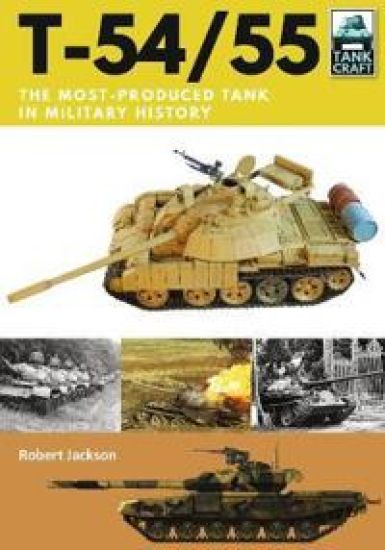
During the Cold War, the T-54/55 series of tanks represented the most serious threat to Nato land forces in Europe. Available in huge quantities, it formed the core of the Warsaw Pact armoured warfare doctrine, which envisaged massed tank attacks against the weakest point in Nato's front-line defences. Yet the T-54/55 could be stopped by smaller numbers of tanks which had the benefit of better technology and training, as was demonstrated during the Yom Kippur War of 1973 when Israeli tanks dealt out appalling punishment to T-55s of the Syrian army. Despite these limitations, the T-54/55 was one of the most successful tanks ever produced, and this volume in the TankCraft series by Robert Jackson is the ideal introduction to it. As well as tracing the history of the T-54/55, his book is an excellent source of reference for the modeller, providing details of available kits and photographs of award-winning models, together with artworks showing the colour schemes applied to these tanks. Each section of the book is supported by a wealth of archive photographs.