Kirjojen hintavertailu – 12 859 818 kirjaa ja 27 kauppaa

Kirjailija

Robert Kirk

Kirjat ja teokset yhdessä paikassa: 26 kirjaa, julkaisuja vuosilta 1994–2026, suosituimpiin kuuluu The Secret Commonwealth of Elves, Fauns, & Fairies. Vertaile teosten hintoja ja tarkista saatavuus suomalaisista kirjakaupoista.

26 kirjaa

Kirjojen julkaisuvuodet: 1994–2026.

Mind and Body

Mind and Body

Robert Kirk

Acumen Publishing Ltd
2003
sidottu
A great deal of work in philosophy today is concerned with some aspect of the complex tangle of problems and puzzles roughly labelled the mind-body problem. This book is an introduction to it. It is a readable, lucid and accessible guide that provides readers with authoritative exposition, and a solid and reliable framework which can be built on as needed. The first chapter briefly introduces the subject and moves on to discuss mechanism - the idea that minds are machines - focusing on Searle's Chinese Room argument. The next three chapters discuss dualism, physicalism, and some hard problems for physicalism, especially those concerning phenomenal consciousness. Chapters on behaviourism and functionalism follow. The central mind-body topics are then each given deeper consideration in separate chapters. Intentionality is investigated via Fodor's doctrine of the Language of Thought, taking account of connectionism. The main theories of consciousness are examined and the author's own approach outlined. The concluding chapter briefly resumes the theme of psychological explanation, linking it to further topics. Each chapter ends with a summary of the main points together with suggestions for further reading.
Mind and Body

Mind and Body

Robert Kirk

Acumen Publishing Ltd
2003
nidottu
A great deal of work in philosophy today is concerned with some aspect of the complex tangle of problems and puzzles roughly labelled the mind-body problem. This book is an introduction to it. It is a readable, lucid and accessible guide that provides readers with authoritative exposition, and a solid and reliable framework which can be built on as needed. The first chapter briefly introduces the subject and moves on to discuss mechanism - the idea that minds are machines - focusing on Searle's Chinese Room argument. The next three chapters discuss dualism, physicalism, and some hard problems for physicalism, especially those concerning phenomenal consciousness. Chapters on behaviourism and functionalism follow. The central mind-body topics are then each given deeper consideration in separate chapters. Intentionality is investigated via Fodor's doctrine of the Language of Thought, taking account of connectionism. The main theories of consciousness are examined and the author's own approach outlined. The concluding chapter briefly resumes the theme of psychological explanation, linking it to further topics. Each chapter ends with a summary of the main points together with suggestions for further reading.
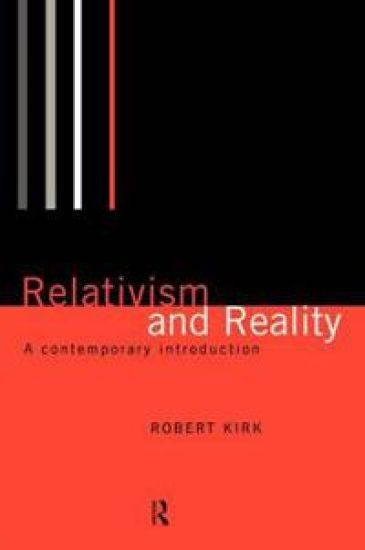
Relativism and Reality

Relativism and Reality

Robert Kirk

Routledge
1999
sidottu
Our thoughts about the world are clearly influenced by such things as point of view, temperament, past experience and culture. However, some thinkers go much further and argue that everything that exists depends on us, arguing that 'even reality is relative'. Can we accept such a claim in the face of events such as floods and other natural disasters or events seemingly beyond our control? 'Realists' argue that reality is independent of out thinking. 'Relativists' disagree, arguing that what there is depends on our point of view. Which is right? Robert Kirk provides a crystal clear account of this debate from the Greek philosophers to Wittgenstein and Rorty. Along the way, he unpacks some of the more complicated issues surrounding ideas of objectivity, subjectivity, pragmatism and realism essential for those beginning any study of philosphy.
Relativism and Reality

Relativism and Reality

Robert Kirk

Routledge
1999
nidottu
Our thoughts about the world are clearly influenced by such things as point of view, temperament, past experience and culture. However, some thinkers go much further and argue that everything that exists depends on us, arguing that 'even reality is relative'. Can we accept such a claim in the face of events such as floods and other natural disasters or events seemingly beyond our control? 'Realists' argue that reality is independent of out thinking. 'Relativists' disagree, arguing that what there is depends on our point of view. Which is right? Robert Kirk provides a crystal clear account of this debate from the Greek philosophers to Wittgenstein and Rorty. Along the way, he unpacks some of the more complicated issues surrounding ideas of objectivity, subjectivity, pragmatism and realism essential for those beginning any study of philosphy.
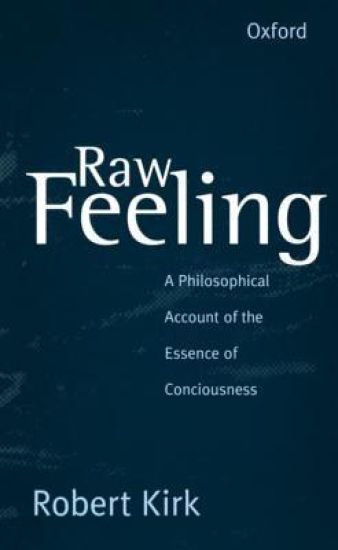
Raw Feeling

Raw Feeling

Robert Kirk

Oxford University Press
1996
nidottu
Consciousness is a perennial source of mystification in the philosophy of mind: how could processes in the brain amount to conscious experiences? Robert Kirk uses the notion of 'raw feeling' to bridge the intelligibility gap between our knowledge of ourselves as physical organisms and our knowledge of ourselves as subjects of experience; he argues that there is no need for recourse to dualism or private mental objects. The task is to understand how the truth about raw feeling could be strictly implied by narrowly physical truths. Kirk's explanation turns on an account of what it is to be a subject of conscious perceptual experience. He offers penetrating analyses of the philosophical problems of consciousness and suggests novel solutions which, unlike their rivals, can be accepted without gritting one's teeth.
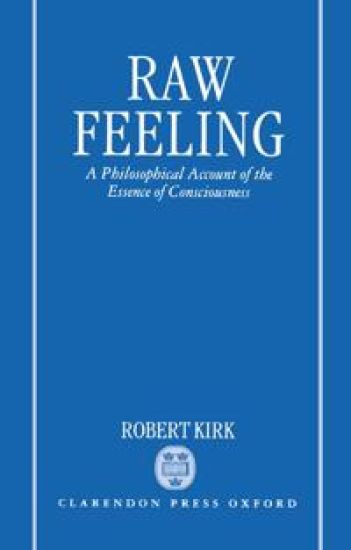
Raw Feeling

Raw Feeling

Robert Kirk

Clarendon Press
1994
sidottu
Consciousness is a perennial source of mystification in the philosophy of mind: how can processes in the brain amount to conscious experiences? Robert Kirk uses the notion of `raw feeling' to bridge the intelligibility gap between our knowledge of ourselves as physical organisms and our knowledge of ourselves as subjects of experience; he argues that there is no need for recourse to dualism or private mental objects. The task is to understand how the truth about raw feeling could be strictly implied by narrowly physical truths. Kirk's explanation turns on an account of what it is to be a subject of conscious perceptual experience. He offers penetrating analyses of the problems of consciousness and suggests novel solutions which, unlike their rivals, can be accepted without gritting one's teeth. His sustained defence of non-reductive physicalism shows that we need not abandon hope of finding a solution to the mind-body problem.