Kirjojen hintavertailu – 12 875 965 kirjaa ja 26 kauppaa

Kirjailija

Robert Koulish

Kirjat ja teokset yhdessä paikassa: 3 kirjaa, julkaisuja vuosilta 2009–2025, suosituimpiin kuuluu Detaining Immigrants, Scoring Criminals. Vertaile teosten hintoja ja tarkista saatavuus suomalaisista kirjakaupoista.

3 kirjaa

Kirjojen julkaisuvuodet: 2009–2025.

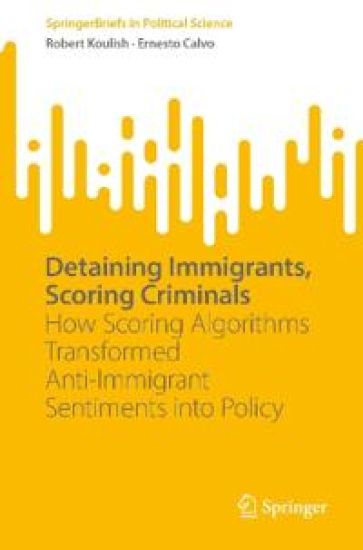
Detaining Immigrants, Scoring Criminals

Detaining Immigrants, Scoring Criminals

Robert Koulish; Ernesto Calvo

Springer International Publishing AG
2025
nidottu
Since 2012, scoring algorithms created to manage risks in the United States penal system have been adopted by Immigration and Customs Enforcement (ICE) agencies across the United States. First developed as a mechanism to reduce anti-immigrant biases and to ensure the humane treatment of detainees, scoring algorithms suffered constant revisions to accommodate DHS enforcement priorities as well as the preferences and punitive biases of ICE agents. With the arrival of the Trump administration, a technology created to ensure the humane treatment of undocumented immigrants became central to the policy of criminalization of the immigration process. This book provides historical, qualitative, and quantitative evidence of the process that placed risk assessment technologies at the forefront of the anti-immigration battle. Using very large data sets on immigration and detention proceedings obtained from DHS through multiple FOIA requests, this Brief reveals the inner workings of the risk classification algorithms (RCA) used to process tens of thousands of immigrants each day. Chapters examine the tension between risk algorithms and end users and explain how ICE officers’ preferences shape the scoring properties of RCA used in immigration enforcement. Illustrating how scoring algorithms oppress immigrants of color, this book is interest policymakers, immigration scholars, lawyers, criminologists, political scientists, and university professors, graduate students, and undergraduate students in the behavioral sciences.

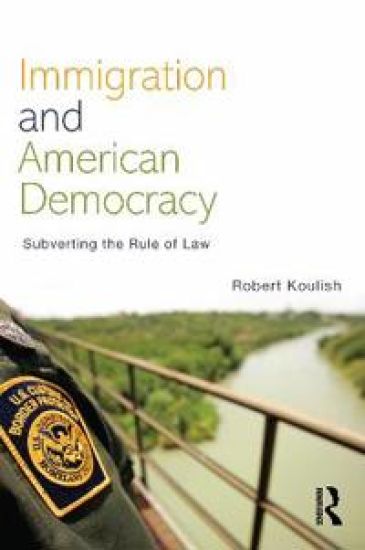
Immigration and American Democracy

Immigration and American Democracy

Robert Koulish

Routledge
2009
sidottu
While the idea of immigration embodies America’s rhetorical commitment to democracy, recent immigration control policies also showcase abysmal failures in democratic practice. Immigration and American Democracy examines these failures in terms of state sovereignty, neoliberalism, and surveillance-based techniques of social control. The ideological argument for privatization is not new. But immigration has provided a laboratory for replicating on American soil the sorts of outsourcing travesties that have occurred in America’s war in Iraq. As an outcome, abusive executive powers—many delegated to state and local governments and private actors—are manifested every day in data collection, spying, detention, and deportation hearings, and in many cases bypassing the Constitution. The practice of privatization extends this leviathan immigration state by clamping down on civil liberties without having to oblige the courts. Ultimately, Koulish examines the contested terrain between democratic and undemocratic forces in the immigration policy domain and concludes with recommendations for how democratic forces might well still win out.
Immigration and American Democracy

Immigration and American Democracy

Robert Koulish

Routledge
2009
nidottu
While the idea of immigration embodies America’s rhetorical commitment to democracy, recent immigration control policies also showcase abysmal failures in democratic practice. Immigration and American Democracy examines these failures in terms of state sovereignty, neoliberalism, and surveillance-based techniques of social control. The ideological argument for privatization is not new. But immigration has provided a laboratory for replicating on American soil the sorts of outsourcing travesties that have occurred in America’s war in Iraq. As an outcome, abusive executive powers—many delegated to state and local governments and private actors—are manifested every day in data collection, spying, detention, and deportation hearings, and in many cases bypassing the Constitution. The practice of privatization extends this leviathan immigration state by clamping down on civil liberties without having to oblige the courts. Ultimately, Koulish examines the contested terrain between democratic and undemocratic forces in the immigration policy domain and concludes with recommendations for how democratic forces might well still win out.