

Kirjailija
Robert Lee
Kirjat ja teokset yhdessä paikassa: 77 kirjaa, julkaisuja vuosilta 1991–2026, suosituimpiin kuuluu Patrick. Vertaile teosten hintoja ja tarkista saatavuus suomalaisista kirjakaupoista.
77 kirjaa
Kirjojen julkaisuvuodet: 1991–2026.


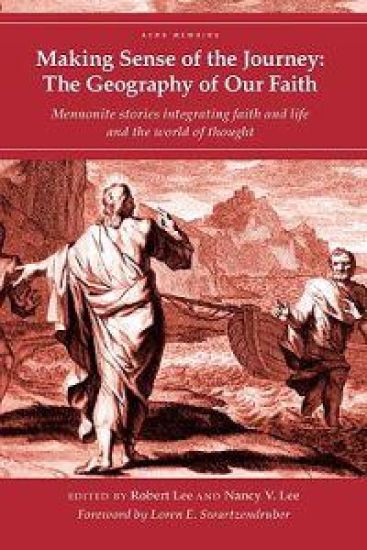
Making Sense of the Journey
Robert Lee; Nancy V Lee; E. Swartzendruber Loren
Cascadia Publishing House
2009
pokkari

Researches On The Pathology And Treatment Of Some Of The Most Important Diseases Of Women (1833)
Robert Lee
KESSINGER PUBLISHING, LLC
2009
pokkari

The New Regulation and Governance of Food
Terry Marsden; Robert Lee; Andrew Flynn; Samarthia Thankappan
Routledge
2009
sidottu
Major questions surround who, how, and by what means should the interests of government, the private sector, or consumers hold authority and powers over decisions concerning the production and consumption of foods. This book examines the development of food policy and regulation following the BSE (mad cow disease) crisis of the late 1990s, and traces the changing relationships between three key sets of actors: private interests, such as the corporate retailers; public regulators, such as the EU directorates and UK agencies; and consumer groups at EU and national levels. The authors explore how these interests deal with the conundrum of continuing to stimulate a corporately organised and increasingly globalised food system at the same time as creating a public and consumer-based legitimate framework for it. The analysis develops a new model and synthesis of food policy and regulation which reassesses these public/private sector responsibilities with new evidence and theoretical insights.


History Of The Discoveries Of The Circulation Of The Blood, Of The Ganglia And Nerves, And Of The Action Of The Heart (1865)
Robert Lee
KESSINGER PUBLISHING CO
2009
pokkari

The Reform Of The Church Of Scotland, Part 1, Worship: In Worship, Government And Doctrine (1864)
Robert Lee
KESSINGER PUBLISHING, LLC
2008
nidottu

The Last Days Of Alexander, And The First Days Of Nicholas, (Emperors Of Russia)
Robert Lee
Read Books
2008
pokkari

Environmental Law and Economics, Volumes I and II
Robert Lee
Ashgate Publishing Limited
2007
sidottu
The regulation of environmental pollution has long been a serious subject of study for scholars of economic analysis of law. This two volume collection explores central issues in the relationship between these two topics. It includes material on private law and property rights, presenting a critique of market failure and asking questions about the role of tort law remedies in regulating the environment. It is concerned not only with the remedies as such, but also with the impact of the common law in shaping the behaviour of actors in the market. It then moves on to issues of public law and interventions in market arrangements, looking at events of market failure, the idea of pollution as an externality, modes of regulation and instances of regulatory failure. These volumes contain the classic law and economics literature relating to environmental regulation, creating an indispensable source of reference.

A vivid and accessible reappraisal of the frequently uneasy relationship between the Victorian clergyman and his congregation. The conduct of divine service was only one item on the agenda of the nineteenth-century clergyman. He might have to sit on the magistrates' bench, or concern himself with business as a farmer or landowner, or attend a meeting of the Poor Law guardians. He would, in all probability, be closely involved with the day-to-day running of the local school, and he would almost certainly be the principle administrator of the parochial charities. While some of theseroles were clearly predestined to bring him into conflict with certain members of his flock, others seem ostensibly designed to operate in their interests. None, however, seem to have earned him much in the way of devotion and respect: instead, each of them at one time or another attracted the direct hostility of parishioners, most particularly those attached to dissenting and/or radical groups. This book is a detailed exploration of the relationship between Anglican clergymen and the inhabitants of rural parishes in the nineteenth century. Taking Norfolk as a focus, the author examines the many and profound ways in which the Victorian Church affected the daily lives and political destinies of local communities.
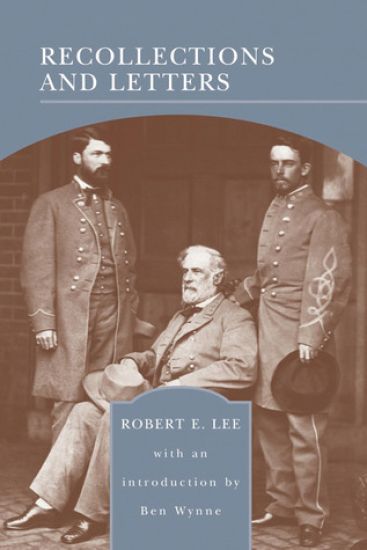
Recollections and Letters (Barnes & Noble Library of Essential Reading)
Robert Lee
Barnes Noble Inc
2004
pokkari
Just as its subject, General Robert E. Lee, was no ordinary man, "The Recollections and Letters" is no ordinary book. In defeat, the formal Confederate general became the personification of the South. This was a remarkable evolution for a man who in 1861 took up arms against the nation of his birth and subsequently led an army to a devastating end. Lee's transformation from defeated general to American hero was due in part to Robert E. Lee, Jr.'s, dedication to his father's memory. In 1904 the younger Lee produced "The Recollections and Letters", a book made up primarily of the general's personal correspondence, much of which was written to his wife and children. The book provided touching insights into the general's family life, allowing readers to connect with him on a more human level. Any study of Robert E. Lee, the South, the Civil War, or American history is incomplete without "The Recollections and Letters".
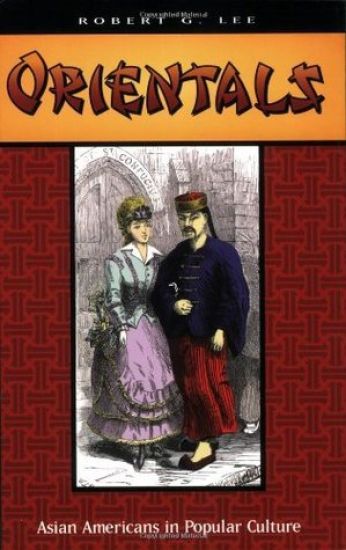
Sooner or later every Asian American must deal with the question \u0022Where do you come from?\u0022 It is probably the most familiar if least aggressive form of racism. It is a tip-off to the persistent notion that people of Asian ancestry are not real Americans, that \u0022Orientals\u0022 never really stop being loyal to their foreign homeland, no matter how long they or their families have been in this country. Confronting the cultural stereotypes that have been attached to Asian Americans over the last 150 years, Robert G. Lee seizes the label \u0022Oriental\u0022 and asks where it came from. The idea of Asians as mysterious strangers who could not be assimilated into the cultural mainstream was percolating to the surface of American popular culture in the mid-nineteenth century, when Chinese immigrant laborers began to arrive in this country in large numbers. Lee shows how the bewildering array of racialized images first proffered by music hall songsters and social commentators have evolved and become generalized to all Asian Americans, coalescing in particular stereotypes. Whether represented as Pollutant, Coolie, Deviant, Yellow Peril, Model Minority, or Gook, the Oriental is portrayed as alien and a threat to the American family -- the nation writ small. Refusing to balance positive and negative stereotypes, Lee connects these stereotypes to particular historical moments, each marked by shifting class relations and cultural crises. Seen as products of history and racial politics, the images that have prevailed in songs, fiction, films, and nonfiction polemics are contradictory and complex. Lee probes into clashing images of Asians as (for instance) seductively exotic or devious despoilers of (white) racial purity, admirably industrious or an insidious threat to native laborers. When Lee dissects the ridiculous, villainous, or pathetic characters that amused or alarmed the American public, he finds nothing generated by the real Asian American experience; whether they come from the Gold Rush camps or Hollywood films or the cover of Newsweek, these inhuman images are manufactured to play out America's racial myths. Orientals comes to grips with the ways that racial stereotypes come into being and serve the purposes of the dominant culture.
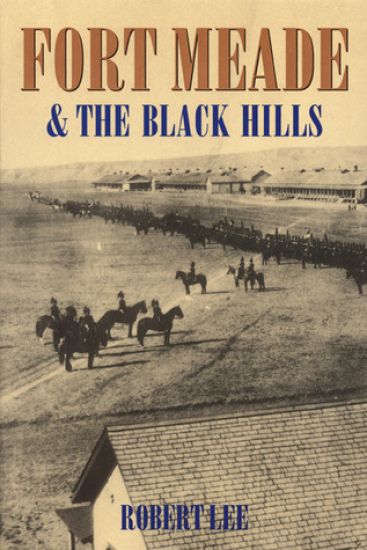
Fort Meade was the home of the famous Seventh Cavalry after its ignominious defeat in the Battle of the Little Bighorn. Troops from Fort Meade played a pivotal role in the events that led to the tragedy at Wounded Knee in 1890. It was the scene of imprisonment of Ute Indians who made the mistake of interpreting their new citizenship status as freedom from government control. The fort survived the mechanization of the horse cavalry, aided the record-breaking Stratosphere Balloon flight of 1935, and became a training site for the nation's first airborne troops. Fort Meade existed for sixty-six years, from 1878 to 1944. Robert Lee examines the strategic importance of its location on the northern edge of the Black Hills and the role it played in the settlement of the region, as well as the role played by the citizens of Sturgis in keeping it alive. One of the chief delights of Fort Meade and the Black Hills is a gallery of characters including the unfortunate Major Marcus Reno, the beautiful and fatal Ella Sturgis, and the cigar-smoking Poker Alice Tubbs. They, and events scaled to their larger-than-life size, are part of this long overdue story of Fort Meade.