Kirjailija
Robert Lewis
Kirjat ja teokset yhdessä paikassa: 43 kirjaa, julkaisuja vuosilta 1993–2027, suosituimpiin kuuluu A Journey Through The Eyes of An Original Highwaymen Artist R.L. Lewis, Jr.. Vertaile teosten hintoja ja tarkista saatavuus suomalaisista kirjakaupoista.
43 kirjaa
Kirjojen julkaisuvuodet: 1993–2027.
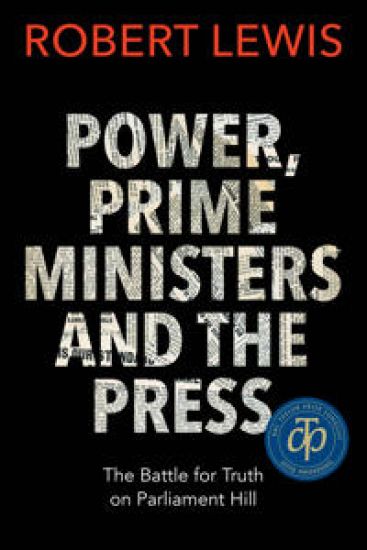
An intimate history of the journalists who covered Canadian history, and made some of their own. The history of the press gallery is rich in anecdotes about the people on Parliament Hill who have covered 23 prime ministers and 42 elections in the past 150 years. Mining the archives and his own interviews, Robert Lewis turns the spotlight on the watchers, including reporters who got too close to power and others who kept their distance. The Riel Rebellion, the Pacific Scandal, two world wars, the Depression, women's liberation, Quebec separatism, and terrorism are all part of the sweeping background to this lively account of how the news gets made, manipulated, and, sometimes mangled. Since Watergate, press gallery coverage has become more confrontational — a fact, Lewis argues, that fails Canadian democracy.

Railways Around Hereford features photographs taken by author Robert Lewis and a number of other railway enthusiasts, covering a period of around fifty years. The end of steam is featured, as well as up to date images of the current scene around Hereford. These images feature a large variety of locomotives and workings that have been recorded by local enthusiasts over the years. As well as changes in locomotives and stock, the changing nature of freight traffic in the area is also recorded here. It also features areas and lines that have now sadly been closed, including the Bulmer's Railway Centre and the Barton line and yard. With a wealth of previously unpublished images, this nostalgic look back on the railways in and around Hereford will appeal to any enthusiast who has taken a snap, recorded a number or simply caught a train at Hereford.
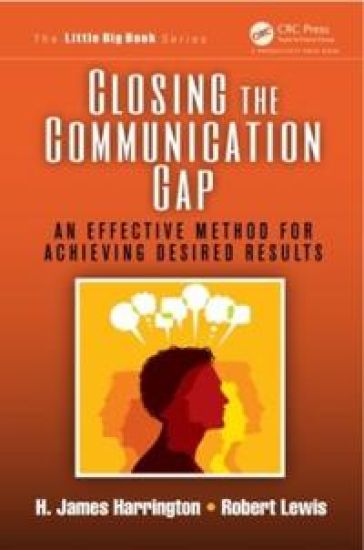
Improved communication in business means higher profits. Improved communication in government means happier citizens. Improved communication in healthcare means quicker recoveries, fewer lawsuits, and happier nurses and patients. Closing the Communication Gap can help readers improve communication by closing the gap between what the communicator means and what the listener actually understands. It supplies a complete overview of the various elements and dimensions of effective communication needed to stop talking and start communicating. Defining and discussing both the formal and the informal communication systems within an organization, the book demonstrates the importance of good communication and details the four types of poor-quality communication. It explains how to create a climate of communication in your organization. It describes how this climate of communication encourages the development of quality relationships as well as what it takes to maintain this culture of communication. After reading this book, you will understand how to be a better listener, how to use social media in marketing, how to deal with difficult people, and helpful tips for public speaking. You will gain valuable insights on how to talk to your employees, how to talk to your boss, and the best ways to communicate with a corporation. This book can be read for personal growth or it can be used by a company to teach employees the importance of quality communication. Quality assurance departments will find this book useful in lowering errors and waste in the workplace. The book is also suitable as a communication textbook or supplemental text at the introductory university level. If a corporation were a person, communication would be the bloodstream. Lee Iacocca, Former CEO, Chrysler Corporation
Combining theories of calculation and property relations and using an array of archival sources, this book focuses on the building and decommissioning of state-owned defense factories in World War II–era Chicago. Robert Lewis’s rich trove of material—drawn from research on more than six hundred federally funded wartime industrial sites in metropolitan Chicago—supports three major conclusions. First, the relationship of the key institutions of the military-industrial complex was refashioned by their calculative actions on industrial property. The imperatives of war forced the federal state and the military to become involved in industrial matters in an entirely new manner. Second, federal and military investment in defense factories had an enormous effect on the industrial geography of metropolitan Chicago. The channeling of huge lumps of industrial capital into sprawling plants on the urban fringe had a decisive impact on the metropolitan geographies of manufacturing. Third, the success of industrial mobilization was made possible through the multi-scale relations of national and locational interaction. National policy could only be realized by the placing of these relations at the local level. Throughout, Lewis shows how the interests of developers, factory engineers, corporate executives, politicians, unions, and the working class were intimately bound up with industrial space. Offering a local perspective on a city permanently shaped by national events, this book provides a richer understanding of the dynamics of wartime mobilization, the calculative actions of political and business leaders, the social relations of property, the working of state-industry relations, and the making of industrial space.
"We are brave and ready to fight for our lands... I will go now and I will fight you. As long as I live, I will fight you for the last hunting grounds of my people," said Red Cloud, war chief of the Oglala Lakota, to Colonel Carrington. The year was 1866, the Civil War had just ended, and the Bozeman Trail was the shortest route for prospectors to reach the gold rush territory of Montana-except that it passed straight through the lands of the powerful Oglala Lakota! When the US government demanded the construction of forts along the trail, the situation quickly dissolved into war. Captain William Fetterman had proudly boasted that he could destroy the entire Lakota nation with just 80 men. Red Cloud, with the support of Crazy Horse and Sitting Bull, had other ideas. In this commemorative edition, marking the 150th anniversary of Red Cloud's War, Goble recounts the tale of events through the eyes of Brave Eagle, a fictional young Lakota warrior. This new edition features an original never-before-published layout, updated and edited text, digitally enhanced artwork, and a new foreword by Robert Lewis, a Cherokee, Navaho, and Apache storyteller.
Have you ever wondered why pine trees stay green all winter long and don't lose their leaves like other trees? According to an ancient legend attributed to the Cherokee Indians, it was a simple act of kindness towards an injured little bird that earned pine trees this very honor. Retold by award-winning author Alexis York Lumbard, this story invites readers to experience a world where trees and birds speak and interact with each other, and which shows us that no act of kindness and sharing goes unrewarded. Featuring beautiful paintings by multiple award-winning illustrator Beatriz Vidal, you will never look at pine trees in the same way again!
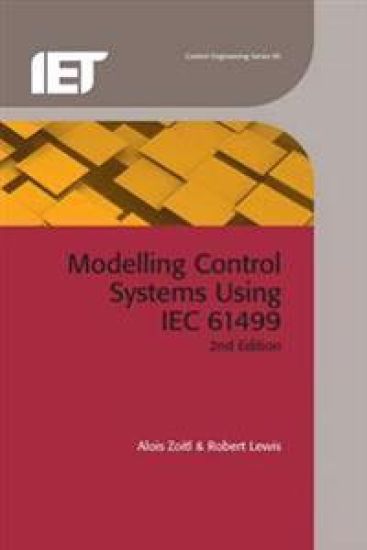
Modelling Control Systems Using IEC 61499
Alois Zoitl; Robert Lewis
Institution of Engineering and Technology
2014
sidottu
IEC 61499 is a standard for modelling distributed control systems for use in industrial automation, and is already having an impact on the design and implementation of industrial control systems that involve the integration of programmable logic controllers, intelligent devices and sensors. Modelling Control Systems Using IEC 61499. 2nd Edition provides a concise and yet thorough introduction to the main concepts and models defined in the standard. Topics covered include defining applications, systems, distributing applications on the system's devices, function blocks, structuring applications, service interface function blocks, event function blocks, and examples of industrial applications. This second edition has been significantly updated to reflect the current second release of IEC 61499, including changes in the function block model, its execution, and the newly standardized XML exchange format for model artefacts, and to reflect lessons learned from the author's teaching of IEC 61499 over the last ten years. This book will be of interest to research-led control and process engineers and students working in fields that require complex control systems using networked based distributed control.
Improved communication in business means higher profits. Improved communication in government means happier citizens. Improved communication in healthcare means quicker recoveries, fewer lawsuits, and happier nurses and patients. Closing the Communication Gap can help readers improve communication by closing the gap between what the communicator means and what the listener actually understands. It supplies a complete overview of the various elements and dimensions of effective communication needed to stop talking and start communicating. Defining and discussing both the formal and the informal communication systems within an organization, the book demonstrates the importance of good communication and details the four types of poor-quality communication. It explains how to create a climate of communication in your organization. It describes how this climate of communication encourages the development of quality relationships as well as what it takes to maintain this culture of communication. After reading this book, you will understand how to be a better listener, how to use social media in marketing, how to deal with difficult people, and helpful tips for public speaking. You will gain valuable insights on how to talk to your employees, how to talk to your boss, and the best ways to communicate with a corporation. This book can be read for personal growth or it can be used by a company to teach employees the importance of quality communication. Quality assurance departments will find this book useful in lowering errors and waste in the workplace. The book is also suitable as a communication textbook or supplemental text at the introductory university level. If a corporation were a person, communication would be the bloodstream.—Lee Iacocca, Former CEO, Chrysler Corporation
Retailing today is one of the largest, most buoyant and most competitive market sectors. The large, medium and small retailers, providers of systems are the major players in this market. The exploitation of information technology and the use of quantitative corporate models are emerging as key factors in determining the strength and effectiveness of marketing plans and support logistics. Many major retailers have developed considerable in-house expertise in this area and many hard ware manufacturers and systems houses have created special divisions to provide turn-key installations, products and services in order to exploit these opportunities. However, in the research leading up to the seminar on which this book is based, a number of important gaps in retailer useage of systems were noted. While many retailers, including the large multiples, had very sophisticated electronic point of sales devices, the information that was available was not being used to plan effective marketing and selling strategies, nor yet to plan for growth. In the medium and smaller companies there was still concern whether electronic point of sales were cost effective for them or whether being without such aids put them at a grave disadvantage vis-a-vis their larger competitors.
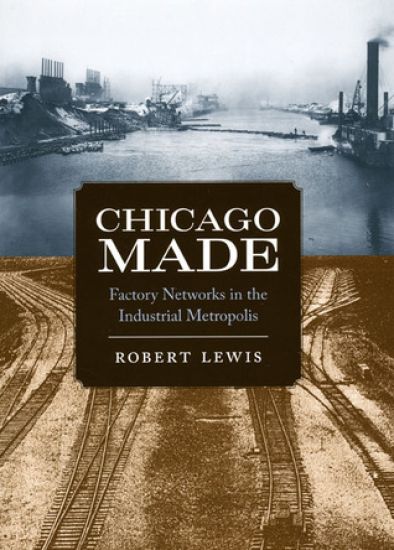
From the lumberyards and meatpacking factories of the Southwest Side to the industrial suburbs that arose near Lake Calumet at the turn of the twentieth century, manufacturing districts shaped Chicago's character and laid the groundwork for its transformation into a sprawling metropolis. Approaching Chicago's story as a reflection of America's industrial history between the Civil War and World War II, "Chicago Made" explores not only the well-documented workings of centrally located city factories but also the overlooked suburbanization of manufacturing and its profound effect on the metropolitan landscape. Robert Lewis documents how manufacturers, attracted to greenfield sites on the city's outskirts, began to build factory districts there with the help of an intricate network of railroad owners, real estate developers, financiers, and wholesalers. These immense networks of social ties, organizational memberships, and financial relationships were ultimately more consequential, Lewis demonstrates, than any individual achievement. Beyond simply giving Chicago businesses competitive advantages, they transformed the economic geography of the region. Tracing these transformations across seventy-five years, "Chicago Made" establishes a broad new foundation for our understanding of urban industrial America.
TestGen Computerized Test Bank for Marketing Essentials in Hospitality and Tourism
Robert Lewis; Jennifer Aiyer
Prentice Hall
2008
muu
""
Raising a Modern-Day Knight
Robert Lewis
Tyndale House Publishers
2007
nidottu
Halvin toimitettuna 25,80 €
Culture Shift, written for church leaders, ministers, pastors, ministry teams, and lay leaders, leads you through the process of identifying your church’s distinctive culture, gives you practical tools to change it from the inside-out, and provides steps to keep your new culture aligned with your church’s mission. Real transformation is not about working harder at what you’re already doing or even copying another church’s approach but about changing church culture at a foundational level.