Kirjojen hintavertailu – 12 859 818 kirjaa ja 27 kauppaa

Kirjailija

Robert M. Campbell

Kirjat ja teokset yhdessä paikassa: 4 kirjaa, julkaisuja vuosilta 1994–2004, suosituimpiin kuuluu The Politics of Postal Transformation. Vertaile teosten hintoja ja tarkista saatavuus suomalaisista kirjakaupoista.

4 kirjaa

Kirjojen julkaisuvuodet: 1994–2004.

The Politics of Postal Transformation

The Politics of Postal Transformation

Robert M. Campbell

McGill-Queen's University Press
2002
nidottu
In The Politics of Postal Transformation Robert Campbell investigates and analyses the most important policy innovations in recent years as countries struggle to create a postal regime that matches domestic political expectations with international and technological realities. Through extensive interviews with numerous key government, regulatory, postal, and union officials in North America, Europe, and Australasia, he identifies four models or strategies, each reflecting particular national characteristics and ambitions: from privatization (Netherlands, Germany) and deregulation (Finland, Sweden, New Zealand) to increased national support (France) and mixed strategies (UK, Australia). Campbell's comparative analysis provides a backdrop for a set of recommendations for policy-makers and lays the foundation for informed speculation about future international postal developments and the possible domination of the system by a select group of postal behemoths.
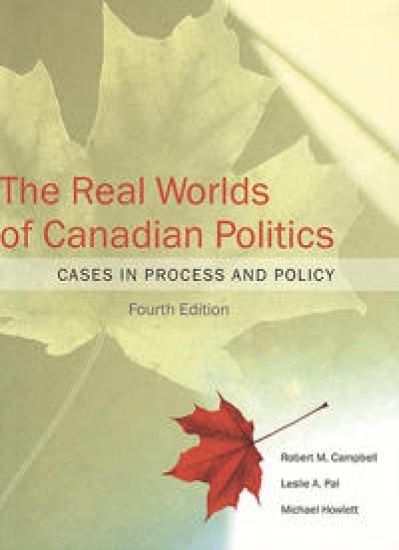
The Real Worlds of Canadian Politics

The Real Worlds of Canadian Politics

Robert M. Campbell; Leslie Pal; Michael Howlett

Broadview Press Ltd
2004
pokkari
Fifteen years ago the first edition of The Real Worlds of Canadian Politics was published to wide acclaim in university classrooms across the country. Its case study approach to Canadian politics and public policy was a unique contribution, and its enormous popularity resulted in two more editions in the following five years. In all three editions, interesting and compelling contemporary cases presented policy issues in a deliberately dramatic narrative style, emphasizing the passions, personalities, and unpredictability of Canadian politics. Real Worlds was a widely read companion volume to more traditional textbooks, illustrating the "real worlds" of Canadian politics while offering students opportunities for discussion and debate. This new edition of The Real Worlds of Canadian Politics renews this tradition and the case study approach established by the earlier editions. It zeroes in on five key areas of policy activity at the federal level during the late stages of the Chretien government and the beginning of the Paul Martin era. The volume considers the political and policy implications of deregulation in two vital industries - airlines and banking - whose claims that "bigger is better" in the globalized environment defied the general political desire for increased competition. And the hard politics of trade that have dogged governments since the Free Trade Agreement was signed is covered in a case study of the controversial Canada-US softwood lumber dispute. Highly charged and emotional issues that defy easy or traditional solutions are also addressed, such as those affecting First Nations and women. Case studies examine the real worlds of First Nations land claims as illustrated in one of the most dramatic accomplishments to date - the Nisga'a settlement - and the explosive issue of gun control after the Montreal massacre. The fourth edition of The Real Worlds of Canadian Politics is a collaborative enterprise, combining an editorial team and a superb research group comprising Karen Lochead, Andrea Migone, and Russell Williams of Simon Fraser University, and Samuel Bottomley of Carleton University.
The Politics of Postal Transformation

The Politics of Postal Transformation

Robert M. Campbell

McGill-Queen's University Press
2002
sidottu
In The Politics of Postal Transformation Robert Campbell investigates and analyses the most important policy innovations in recent years as countries struggle to create a postal regime that matches domestic political expectations with international and technological realities. Through extensive interviews with numerous key government, regulatory, postal, and union officials in North America, Europe, and Australasia, he identifies four models or strategies, each reflecting particular national characteristics and ambitions: from privatization (Netherlands, Germany) and deregulation (Finland, Sweden, New Zealand) to increased national support (France) and mixed strategies (UK, Australia). Campbell's comparative analysis provides a backdrop for a set of recommendations for policy-makers and lays the foundation for informed speculation about future international postal developments and the possible domination of the system by a select group of postal behemoths.