Kirjailija
Robert M. Howard
Kirjat ja teokset yhdessä paikassa: 9 kirjaa, julkaisuja vuosilta 2009–2021, suosituimpiin kuuluu Judging Law and Policy. Vertaile teosten hintoja ja tarkista saatavuus suomalaisista kirjakaupoista.
9 kirjaa
Kirjojen julkaisuvuodet: 2009–2021.
To what extent do courts make social and public policy and influence policy change? This innovative text analyzes this question generally and in seven distinct policy areas that play out in both federal and state courts—tax policy, environmental policy, reproductive rights, sex equality, affirmative action, school finance, and same-sex marriage. The authors address these issues through the twin lenses of how state and federal courts must and do interact with the other branches of government and whether judicial policy-making is a form of activist judging. Each chapter uncovers the policymaking aspects of judicial process by investigating the current state of the law, the extent of court involvement in policy change, the responses of other governmental entities and outside actors, and the factors which influenced the degree of implementation and impact of the relevant court decisions. Throughout the book, Howard and Steigerwalt examine and analyze the literature on judicial policy-making as well as evaluate existing measures of judicial ideology, judicial activism, court and legal policy formation, policy change and policy impact. This unique text offers new insights and areas to research in this important field of American politics.
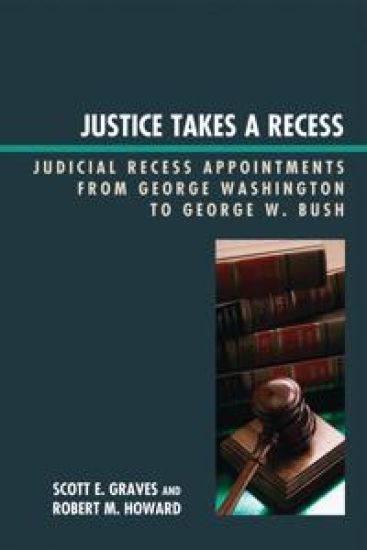
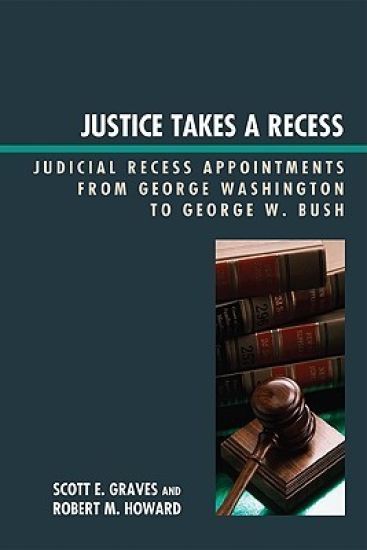
The Constitution allows the president to Ofill up all Vacancies that may happen during the Recess of the Senate, by granting Commissions which shall expire at the End of their next Session. O In Justice Takes a Recess, Scott E. Graves and Robert M. Howard address how presidents have used recess appointments over time and whether the independence of judicial recess appointees is compromised. They argue that these appointments can upset the separation of powers envisioned by the Framers, shifting power away from one branch of government and toward another. Examining every judicial recess appointment from 1789 to 2005, the authors discover that presidents are conditionally strategic when they unilaterally appoint federal judges during Senate recesses. Such appointments were made cautiously for most of the twentieth century, leading to a virtual moratorium for several decades, until three recent recess appointments to the courts in the face of Senate obstruction revived the controversy. These appointments suggest the beginning of a more assertive use of recess appointments in the increasingly politicized activity of staffing the federal courts. The authors argue that the recess appointment clause, as it pertains to the judiciary, is no longer necessary or desirable. The strategic use of such appointments by strong presidents to shift judicial ideology, combined with the lack of independence exhibited by judicial recess appointments, results in recess power that threatens constitutional features of the judicial branch.
The Constitution allows the president to “fill up all Vacancies that may happen during the Recess of the Senate, by granting Commissions which shall expire at the End of their next Session.” In Justice Takes a Recess, Scott E. Graves and Robert M. Howard address how presidents have used recess appointments over time and whether the independence of judicial recess appointees is compromised. They argue that these appointments can upset the separation of powers envisioned by the Framers, shifting power away from one branch of government and toward another. Examining every judicial recess appointment from 1789 to 2005, the authors discover that presidents are conditionally strategic when they unilaterally appoint federal judges during Senate recesses. Such appointments were made cautiously for most of the twentieth century, leading to a virtual moratorium for several decades, until three recent recess appointments to the courts in the face of Senate obstruction revived the controversy. These appointments suggest the beginning of a more assertive use of recess appointments in the increasingly politicized activity of staffing the federal courts. The authors argue that the recess appointment clause, as it pertains to the judiciary, is no longer necessary or desirable. The strategic use of such appointments by strong presidents to shift judicial ideology, combined with the lack of independence exhibited by judicial recess appointments, results in recess power that threatens constitutional features of the judicial branch.
Power, Constraint, and Policy Change
Robert M. Howard; Christine H. Roch; Susanne Schorpp; Shane A. Gleason
State University of New York Press
2021
pokkari
Examines how state courts change public policy through an analysis of their influence on state education finance reform. Power, Constraint, and Policy Change analyzes state court influence on state education finance reform. Beginning in the early 1970s litigants began filing suits in state courts to change state education funding in order to prevent disparities in education resources between wealthy and poor communities. These cases represent a fundamental policy debate in American society, pitting the importance of education against the cost and method of funding it. Through education finance, the authors explore how and why courts often end up determining and resolving policy funding debates. Education funding has involved both the federal constitution and state constitutions, as well as legislation and court-mandated remedies, which, ultimately, determine who and how we pay for this critical American value.
Power, Constraint, and Policy Change
Robert M. Howard; Christine H. Roch; Susanne Schorpp; Shane A. Gleason
State University of New York Press
2021
sidottu
Examines how state courts change public policy through an analysis of their influence on state education finance reform. Power, Constraint, and Policy Change analyzes state court influence on state education finance reform. Beginning in the early 1970s litigants began filing suits in state courts to change state education funding in order to prevent disparities in education resources between wealthy and poor communities. These cases represent a fundamental policy debate in American society, pitting the importance of education against the cost and method of funding it. Through education finance, the authors explore how and why courts often end up determining and resolving policy funding debates. Education funding has involved both the federal constitution and state constitutions, as well as legislation and court-mandated remedies, which, ultimately, determine who and how we pay for this critical American value.
Politics in Georgia
Robert M. Howard; Arnold Fleischmann; Richard N. Engstrom
University of Georgia Press
2017
pokkari
This new edition has been extensively updated to reflect developments in Georgia politics and government since 2007—a decade that has seen three presidential election cycles, two midterm elections, and a census. Updates reflect not only changes in how Georgia is governed but also the economic and social trends helping to drive those changes. These include the continued growth and dispersal of His panic and Asian populations; the decline, by a variety of measures, of rural areas; and the moderating effect of probusiness government factions on social conservative agendas. This edition maintains the book’s comparative approach, which examines the state from three revealing perspectives. This allows readers to determine the extent to which Georgia is similar to its peers on such topics as the length and features of the constitution, the organization of the state government, and the nature of policies. All this allows students and scholars to have a better understanding of the political and economic dynamics of Georgia and the relationship of those dynamics to national political and economic developments. The result is a thorough, up-to-date resource on Georgia’s dynamic political system. Features:-Coverage of trends and events since the prior edition appeared in 2007-Analysis of the most recent state elections-A rewritten chapter on the judiciary that reflects greater representation of women and minorities on the bench and a sharp rise in Republican appointees-A rewritten chapter on policy, with added detail on such topics as transportation, the environment, education, social welfare, and public safety and security-Extensive revisions to sections on the U. S. Constitution-The removal of a chapter on public opinion so that its contents can be more tightly woven throughout the book-Greater attention to the increased power of interest groups-Acknowledgment throughout of the impact of the web and social media in politics and government
Politics in Georgia
Robert M. Howard; Arnold Fleischmann; Richard N. Engstrom
University of Georgia Press
2017
sidottu
This new edition has been extensively updated to reflect developments in Georgia politics and government since 2007—a decade that has seen three presidential election cycles, two midterm elections, and a census. Updates reflect not only changes in how Georgia is governed but also the economic and social trends helping to drive those changes. These include the continued growth and dispersal of His panic and Asian populations; the decline, by a variety of measures, of rural areas; and the moderating effect of probusiness government factions on social conservative agendas. This edition maintains the book’s comparative approach, which examines the state from three revealing perspectives. This allows readers to determine the extent to which Georgia is similar to its peers on such topics as the length and features of the constitution, the organization of the state government, and the nature of policies. All this allows students and scholars to have a better understanding of the political and economic dynamics of Georgia and the relationship of those dynamics to national political and economic developments. The result is a thorough, up-to-date resource on Georgia’s dynamic political system. Features:-Coverage of trends and events since the prior edition appeared in 2007-Analysis of the most recent state elections-A rewritten chapter on the judiciary that reflects greater representation of women and minorities on the bench and a sharp rise in Republican appointees-A rewritten chapter on policy, with added detail on such topics as transportation, the environment, education, social welfare, and public safety and security-Extensive revisions to sections on the U. S. Constitution-The removal of a chapter on public opinion so that its contents can be more tightly woven throughout the book-Greater attention to the increased power of interest groups-Acknowledgment throughout of the impact of the web and social media in politics and government
Georgia's Constitution and Government
Richard N. Engstrom; Robert M. Howard; Arnold Fleischmann
University of Georgia Press
2014
pokkari
By state law, graduates of public colleges and universities in Georgia must demonstrate proficiency with both the U. S. and Georgia constitutions. This widely used textbook helps students to satisfy that requirement, either in courses or by examination. This brief and affordable study aid begins with a discussion of the ways that state and local governments, in providing services and allocating funds, affect our daily lives. Subsequent chapters are devoted to the development of our federal system and the importance of constitutions in establishing authority, distributing power, and formalizing procedures how the various state constitutions differ from each other, even as they all complement the U. S. Constitution how constitutions in Georgia have been amended or replaced Georgia’s governmental institutions at the state, county, and city levels elections in Georgia, including the basic ground rules for holding primaries, general elections, and runoffsKey terms and concepts are covered throughout the book, as well as important court cases at the national and state level. In addition, helpful lists, diagrams, and tables summarize and compare such information as the structure of Georgia’s court system the number of constitutions each of the fifty states has had, the number of times each state’s constitution has been amended, and the length of each state’s current constitution various procedures used by the states to amend their constitutions Georgia’s ten constitutions, with highlights of their major changes or features the number of amendments voted on in Georgia from 1984 to 2012 the executive branch officials elected by the public across states the constitutional boards and commissions in Georgia, with details on the methods by which members are chosen the number and types of local governments in Georgia since 1952 including counties, municipalities, school districts, and special districts the major federal cases in which Georgia has been a party, on issues of discrimination, representation, freedom of speech and the press, the accused or convicted of crimes, and the right to privacy rights and liberties, and how constitutions guarantee and protect them