Kirjojen hintavertailu – 12 903 735 kirjaa ja 27 kauppaa

Kirjailija

Robert M. Levine

Kirjat ja teokset yhdessä paikassa: 19 kirjaa, julkaisuja vuosilta 1990–2015, suosituimpiin kuuluu The Brazilian Photographs of Genevieve Naylor, 1940-1942. Vertaile teosten hintoja ja tarkista saatavuus suomalaisista kirjakaupoista.

Nimi esiintyy myös muodoissa: Robert M Levine

19 kirjaa

Kirjojen julkaisuvuodet: 1990–2015.

Pillaging the Empire

Pillaging the Empire

Kris E Lane; Kris Lane; Robert M. Levine

Routledge
2015
sidottu
Between 1500 and 1750, European expansion and global interaction produced vast wealth. As goods traveled by ship along new global trade routes, piracy also flourished on the world’s seas. Pillaging the Empire tells the fascinating story of maritime predation in this period, including the perspectives of both pirates and their victims. Brushing aside the romantic legends of piracy, Kris Lane pays careful attention to the varied circumstances and motives that led to the rise of this bloodthirsty pursuit of riches, and places the history of piracy in the context of early modern empire building. This second edition of Pillaging the Empire has been revised and expanded to incorporate the latest scholarship on piracy, maritime law, and early modern state formation. With a new chapter on piracy in East and Southeast Asia, Lane considers piracy as a global phenomenon. Filled with colorful details and stories of individual pirates from Francis Drake to the women pirates Ann Bonny and Mary Read, this engaging narrative will be of interest to all those studying the history of Latin America, the Atlantic world, and the global empires of the early modern era.
Pillaging the Empire

Pillaging the Empire

Kris E Lane; Kris Lane; Robert M. Levine

Routledge
2015
nidottu
Between 1500 and 1750, European expansion and global interaction produced vast wealth. As goods traveled by ship along new global trade routes, piracy also flourished on the world’s seas. Pillaging the Empire tells the fascinating story of maritime predation in this period, including the perspectives of both pirates and their victims. Brushing aside the romantic legends of piracy, Kris Lane pays careful attention to the varied circumstances and motives that led to the rise of this bloodthirsty pursuit of riches, and places the history of piracy in the context of early modern empire building. This second edition of Pillaging the Empire has been revised and expanded to incorporate the latest scholarship on piracy, maritime law, and early modern state formation. With a new chapter on piracy in East and Southeast Asia, Lane considers piracy as a global phenomenon. Filled with colorful details and stories of individual pirates from Francis Drake to the women pirates Ann Bonny and Mary Read, this engaging narrative will be of interest to all those studying the history of Latin America, the Atlantic world, and the global empires of the early modern era.
The Uniform Commercial Code Made Easy

The Uniform Commercial Code Made Easy

Robert M. Levine

Empowerment Publications, Inc.
2010
nidottu
The Uniform Commercial Code Made Easy marks the first time in the history of legal education that a novel has been used as a vehicle for delivering the content of a substantive body of law; in this case, a pervasive statutory scheme--The Uniform Commercial Code, law in all fifty states. Mirroring the factual assumptions upon which the UCC was drafted, The Uniform Commercial Code Made Easy places the application of these laws in concrete and interesting commercial settings where they come to life. Logical reader questions are anticipated, and answered through a variety of communication channels uniquely available to the format chosen: dialogue, memoranda of law, texting and emails, are illustrative. If you are in business, the Uniform Commercial Code directly, impacts your business hundreds, perhaps thousands of times per day. Virtually every phase of a transaction in goods, from sale or lease through financing, is impacted by the laws of the UCC. Of particular significance are those provisions which can literally save a business from going under. These potential landmines need to be identified before they are stepped on. The Uniform Commercial Code Made Easy accomplishes this important task. Consumers should understand the basic laws the surround and govern their purchases leases and financing of goods. They should also understand, as should businesses, the impact of signing a promissory note, how the transfer of that note can affect one's rights, and how to protect one's rights when promissory notes are executed. Understanding how to protect your rights in these transactions is both empowering and essential. The mass and complexity of the Uniform Commercial Code has made comprehension and learning the content very challenging. The ease of learning is greatly enhanced by the approach utilized in The Uniform Commercial Code Made Easy. As one prominent attorney and author wrote in a recently published book review: "Yes, Virginia, there is a Santa Claus In this case, he comes in the form of former University of Miami School of Law professor Robert M. LeVine, who has made one of the most complicated bodies of law in the United States-the Uniform Commercial Code-not only comprehensible but entertaining." Tom Shuck, Esq. Past President, Federal Bar Association Federal Bar Association Journal, August 2111 Law students, business students, and CPA's must know the Uniform Commercial Code. It is essential to graduate from law school and is on the bar examination of every state, and the CPA examination as well. The following are illustrative of testimonials received on The Uniform Commercial Code Made Easy: "It's true. The UCC is just as daunting as it looks, and this book is the key to unlocking its mysteries. Infused with practicality, The Uniform Commercial Code Made Easy combines every day transactions with straightforward law, allowing students to not only navigate the UCC with ease, but also develop a lasting understanding of the material. The Uniform Commercial Code Made Easy's revolutionary approach to the UCC has extensive application both in and out of the classroom as a resource for professors and a study aid for students. The Uniform Commercial Code Made Easy by LeVine was my key to success in understanding the UCC, and enjoying it " Melissa Carroll Stetson University College of Law "I was amazed. I never thought it possible to make the UCC interesting but I was wrong. For once I had found a book which made me understand the meaning and interrelationships among sections, and at the same time, I enjoyed reading it. F. William Harvey JD, MBA, Wharton School of Business The knowledge contained in the Uniform Commercial Code is invaluable to anyone in business, or any American who is involved in basic consumer transactions. The Uniform Commercial Code Made Easy creates a pathway to this level in a unique and entertaining manner.

The History of Brazil

The History of Brazil

Robert M. Levine

Greenwood Press
1999
sidottu
"Relatively bland historical introduction for general readers emphasizes economic development, social inequality, and apparent inability of reforms to address inequality. Begins in 1500, but more than half of volume is devoted to post-1930 Brazil and contemporary issues. Getâulio Vargas is central both as a reformist turning point in politics and as a representative enigma. Useful, but much less piquant and heartfelt than author's Brazilian legacies (item #bi 00006099#)"--Handbook of Latin American Studies, v. 58.http://www.loc.gov/hlas/
The Unedited Diaries of Carolina Maria De Jesus

The Unedited Diaries of Carolina Maria De Jesus

Robert M Levine; Jose Carlos Sebe Bom Meihy

Rutgers University Press
1998
nidottu
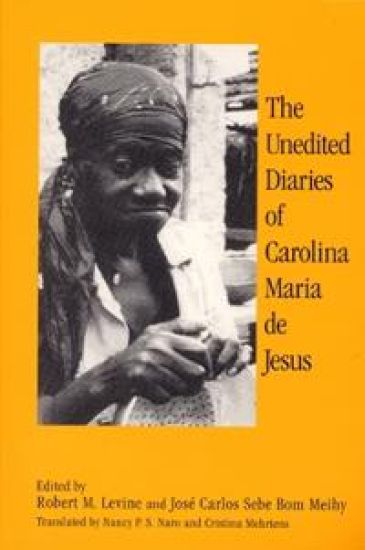
Carolina Maria de Jesus' book, Quarto de Despejo (The Trash Room), depicted the harsh life of the slums, but it also spoke of the author's pride in her blackness, her high moral standards, and her patriotism. More than a million copies of her diary are believed to have been sold worldwide. Yet many Brazilians refused to believe that someone like de Jesus could have written such a diary, with its complicated words (some of them misused) and often lyrical phrasing as she discussed world events. Doubters prefer to believe the book was either written by Audáulio Dantas, the enterprising newspaper reporter who discovered her, or that Dantas rewrote it so substantially that her book is a fraud. With the cooperation of de Jesus' daughter, recent research shows that although Dantas deleted considerable portions of the diary (as well as a second one), every word was de Jesus'. But Dantas did "create" a different Carolina from the woman who coped with her harsh life by putting things down on paper. This book sets the record straight by providing detailed translations of de Jesus' unedited diaries and explains why Brazilian elites were motivated to obscure her true personality and present her as something she was not. It is not only about the writer but about Brazil as recorded by her sarcastic pen. The diary entries in this book span from 1958 to 1966, five years beyond text previously known to exist. They show de Jesus as she was, preserving her Joycean stream-of-consciousness language and her pithy characterizations.
The Brazilian Photographs of Genevieve Naylor, 1940-1942

The Brazilian Photographs of Genevieve Naylor, 1940-1942

Robert M. Levine

Duke University Press
1998
pokkari
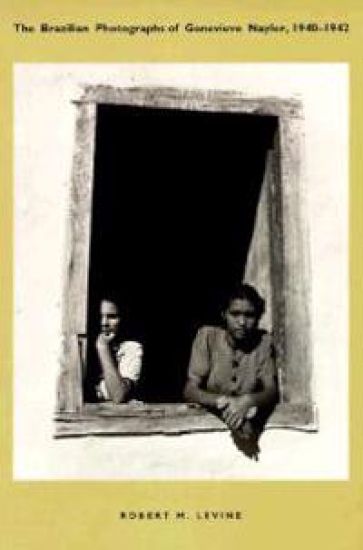
In the early 1940s as the conflict between the Axis and the Allies spread worldwide, the U. S. State Department turned its attention to Axis influence in Latin America. As head of the Office of Inter-American Affairs, Nelson Rockefeller was charged with cultivating the region’s support for the Allies while portraying Brazil and its neighbors as dependable wartime partners. Genevieve Naylor, a photojournalist previously employed by the Associated Press and the WPA, was sent to Brazil in 1940 by Rockefeller’s agency to provide photographs that would support its need for propaganda. Often balking at her mundane assignments, an independent-minded Naylor produced something far different and far more rich-a stunning collection of over a thousand photographs that document a rarely seen period in Brazilian history. Accompanied by analysis from Robert M. Levine, this selection of Naylor’s photographs offers a unique view of everyday life during one of modern Brazil’s least-examined decades. Working under the constraints of the Vargas dictatorship, the instructions of her employers, and a chronic shortage of film and photographic equipment, Naylor took advantage of the freedom granted her as an employee of the U. S. government. Traveling beyond the fashionable neighborhoods of Rio de Janeiro, she conveys in her work the excitement of an outside observer for whom all is fresh and new-along with a sensibility schooled in depression-era documentary photography of Dorothea Lange and Walker Evans, as well as the work of Cartier-Bresson and filmmaker Serge Eisenstein. Her subjects include the very rich and the very poor, black Carnival dancers, fishermen, rural peasants from the interior, workers crammed into trolleys-ordinary Brazilians in their own setting-rather than simply Brazilian symbols of progress as required by the dictatorship or a population viewed as exotic Latins for the consumption of North American travelers. With Levine’s text providing details of Naylor’s life, perspectives on her photographs as social documents, and background on Brazil’s wartime relationship with the United States, this volume, illustrated with more than one hundred of Naylor’s Brazilian photographs will interest scholars of Brazilian culture and history, photojournalists and students of photography, and all readers seeking a broader perspective on Latin American culture during World War II. Genevieve Naylor began her career as a photojournalist with Time, Fortune, and the Associated Press before being sent to Brazil. In 1943, upon her return, she became only the second woman to be the subject of a one-woman show at New York’s Museum of Modern Art. She served as Eleanor Roosevelt’s personal photographer and, in the 1950s and 1960s became well known for her work in Harper’s Bazaar, primarily as a fashion photographer and portraitist. She died in 1989.
The Brazilian Photographs of Genevieve Naylor, 1940-1942

The Brazilian Photographs of Genevieve Naylor, 1940-1942

Robert M. Levine

Duke University Press
1998
sidottu
In the early 1940s as the conflict between the Axis and the Allies spread worldwide, the U. S. State Department turned its attention to Axis influence in Latin America. As head of the Office of Inter-American Affairs, Nelson Rockefeller was charged with cultivating the region’s support for the Allies while portraying Brazil and its neighbors as dependable wartime partners. Genevieve Naylor, a photojournalist previously employed by the Associated Press and the WPA, was sent to Brazil in 1940 by Rockefeller’s agency to provide photographs that would support its need for propaganda. Often balking at her mundane assignments, an independent-minded Naylor produced something far different and far more rich-a stunning collection of over a thousand photographs that document a rarely seen period in Brazilian history. Accompanied by analysis from Robert M. Levine, this selection of Naylor’s photographs offers a unique view of everyday life during one of modern Brazil’s least-examined decades. Working under the constraints of the Vargas dictatorship, the instructions of her employers, and a chronic shortage of film and photographic equipment, Naylor took advantage of the freedom granted her as an employee of the U. S. government. Traveling beyond the fashionable neighborhoods of Rio de Janeiro, she conveys in her work the excitement of an outside observer for whom all is fresh and new-along with a sensibility schooled in depression-era documentary photography of Dorothea Lange and Walker Evans, as well as the work of Cartier-Bresson and filmmaker Serge Eisenstein. Her subjects include the very rich and the very poor, black Carnival dancers, fishermen, rural peasants from the interior, workers crammed into trolleys-ordinary Brazilians in their own setting-rather than simply Brazilian symbols of progress as required by the dictatorship or a population viewed as exotic Latins for the consumption of North American travelers. With Levine’s text providing details of Naylor’s life, perspectives on her photographs as social documents, and background on Brazil’s wartime relationship with the United States, this volume, illustrated with more than one hundred of Naylor’s Brazilian photographs will interest scholars of Brazilian culture and history, photojournalists and students of photography, and all readers seeking a broader perspective on Latin American culture during World War II. Genevieve Naylor began her career as a photojournalist with Time, Fortune, and the Associated Press before being sent to Brazil. In 1943, upon her return, she became only the second woman to be the subject of a one-woman show at New York’s Museum of Modern Art. She served as Eleanor Roosevelt’s personal photographer and, in the 1950s and 1960s became well known for her work in Harper’s Bazaar, primarily as a fashion photographer and portraitist. She died in 1989.
Father of the Poor?

Father of the Poor?

Robert M. Levine

Cambridge University Press
1998
sidottu
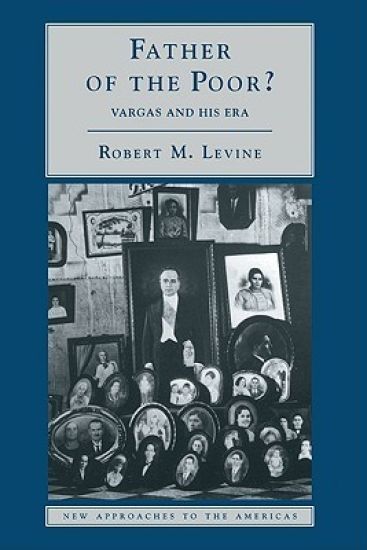
This book examines the life, times, and legacy of Getúlio Vargas, Brazil's dictator and president during most of the period from 1930 to 1954. Levine's chief concern is how Vargas' legacy influenced Brazil, and to what extent his social legislation affected people's lives. Vargas ignored individual rights, working for state-regulated citizenship without disharmony, without the right to dissent. His revolution was partial; one in which new constituencies and rules were grafted onto traditional political practices. Vargas devoted as much effort to manipulating workers as he did to benefiting them. By the end of his long tenure in power, some things had hardly changed at all: the readiness of the armed forces to intervene; the elite's tenacious hold on privilege; and the historical predominance of the Center-South. Brazil's distribution of income remained among the least equable in the world, but Vargas did not perceive this as a problem that needed to be solved. That Vargas promised much and delivered little did not diminish the adulation that Brazilians held for him. Ordinary people would shrug and say 'O presidente sempre lembrou da gente' ('The President always thought about us').
Father of the Poor?

Father of the Poor?

Robert M. Levine

Cambridge University Press
1998
pokkari
This book examines the life, times, and legacy of Getúlio Vargas, Brazil’s dictator and president during most of the period from 1930 to 1954. Levine’s chief concern is how Vargas’ legacy influenced Brazil, and to what extent his social legislation affected people’s lives. Vargas ignored individual rights, working for state-regulated citizenship without disharmony, without the right to dissent. His revolution was partial; one in which new constituencies and rules were grafted onto traditional political practices. Vargas devoted as much effort to manipulating workers as he did to benefiting them. By the end of his long tenure in power, some things had hardly changed at all: the readiness of the armed forces to intervene; the elite’s tenacious hold on privilege; and the historical predominance of the Center-South. Brazil’s distribution of income remained among the least equable in the world, but Vargas did not perceive this as a problem that needed to be solved. That Vargas promised much and delivered little did not diminish the adulation that Brazilians held for him. Ordinary people would shrug and say ‘O presidente sempre lembrou da gente’ (‘The President always thought about us’).
Bitita's Diary: The Autobiography of Carolina Maria de Jesus

Bitita's Diary: The Autobiography of Carolina Maria de Jesus

Carolina Maria De Jesus; Robert M. Levine; Beth Joan Vinkler; Emanuelle Oliveira

Routledge
1997
nidottu
"Carolina (1915-77), whose childhood nickname was Bitita, evokes the hardships of her early life in 1920s-30s rural Minas Gerais. Volume was written in 1970s and posthumously published, first in French in 1982 and finally in Portuguese in 1986. This verycareful translation aims to retain inconsistencies and nonstandard grammar of the original. Valuable introduction and afterword by Levine"--Handbook of Latin American Studies, v. 58.http://www.loc.gov/hlas/
I'm Going to Have a Little House

I'm Going to Have a Little House

Carolina Maria de Jesus; Robert M. Levine

University of Nebraska Press
1997
sidottu
In August 1960 the publication of "Quarto de Despejo" ("Child of the Dark") created a sensation in Brazil - and in the rest of the world - as it appeared in translations in fourteen languages. That diary of a poor black woman from a favela on the outskirts of Sao Paulo became the best-selling book in Brazilian history. In it, Carolina Maria de Jesus chronicled her life as an unemployed, single parent of three children, eking out a precarious existence selling scrap paper and other detritus found in the city streets. She described how she wrote at night on the scavenged scraps. Her remarkable diary - angry, proud, wretched, and hopeful - was found and published by an enterprising journalist. The book's success permitted Carolina to leave her flimsy shack in triumph and move into the cinder-block house of her fantasy." I'm Going to Have a Little House" is de Jesus' second diary. It covers the first year following her rise to fame. In it she recounts her struggles with celebrity, middle-class expectations, and the racial and social tensions her success had exacerbated. This work, never previously translated into English, tells the rest of the story - the grim truth that favela life doesn't prepare one for middle-class 'respectability' and that the fall back into poverty is as easy as the struggle to escape it is difficult. Carolina Maria de Jesus died in 1977, forgotten and in poverty. Robert M Levine is a professor of history and Director of Latin American Studies at the University of Miami. He is the author of "The Life and Death of Carolina Maria de Jesus". Melvin S. Arrington, Jr. is a professor of modern languages at the University of Mississippi.
I'm Going to Have a Little House

I'm Going to Have a Little House

Carolina Maria de Jesus; Robert M. Levine

University of Nebraska Press
1997
pokkari
In August 1960 the publication of Quarto de Despejo (Child of the Dark) created a sensation in Brazil—and in the rest of the world—as it appeared in translations in fourteen languages. That diary of a poor black woman from a favela on the outskirts of São Paulo became the best-selling book in Brazilian history. In it, Carolina Maria de Jesus chronicled her life as an unemployed, single parent of three children, eking out a precarious existence selling scrap paper and other detritus found in the city streets. She described how she wrote at night on the scavenged scraps. Her remarkable diary—angry, proud, wretched, and hopeful—was found and published by an enterprising journalist. The book's success permitted Carolina to leave her flimsy shack in triumph and move into the cinder-block house of her fantasy. I'm Going to Have a Little House is de Jesus's second diary. It covers the first year following her rise to fame. In it she recounts her struggles with celebrity, middle-class expectations, and the racial and social tensions her success had exacerbated. This work, never previously translated into English, tells the rest of the story—the grim truth that favela life doesn't prepare one for middle-class "respectability" and that the fall back into poverty is as easy as the struggle to escape it is difficult. Carolina Maria de Jesus died in 1977, forgotten and in poverty.
Brazilian Legacies

Brazilian Legacies

Robert M. Levine

Routledge
1997
nidottu
"Engaging, highly personal introduction to contemporary Brazilian society by a leading US historian adopts a bottom-up perspective, emphasizing frustrations of popular aspirations to dignity and justice. Essays on various topics - race, mobility, marginal 'outsiders' (includes women), informal political culture and corruption, coping strategies of the poor, and popular culture. Draws on a rich array of scholarly perspectives, personal anecdotes, and newspaper clippings"--Handbook of Latin American Studies, v. 58.http://www.loc.gov/hlas/
Vale of Tears

Vale of Tears

Robert M. Levine

University of California Press
1995
pokkari
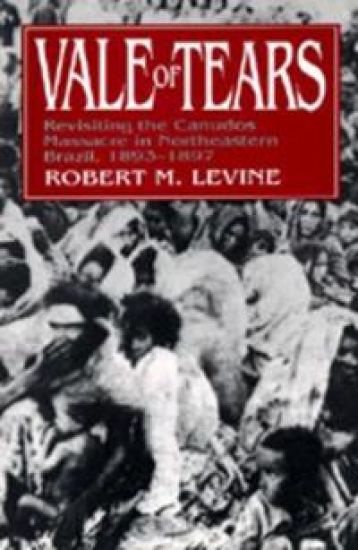
The massacre of Canudos in 1897 is a pivotal episode in Brazilian social history. Looking at the event through the eyes of the inhabitants, Levine challenges traditional interpretations and gives weight to the fact that most of the Canudenses were of mixed-raced descent and were thus perceived as opponents to progress and civilization. In 1897, Brazilian military forces destroyed the millenarian settlement of Canudos, murdering as many as 35,000 pious rural folk who had taken refuge in the remote northeast backlands of Brazil. Fictionalized in Mario Vargas Llosa's acclaimed novel, "War at the End of the World", Canudos is a pivotal episode in Brazilian social history. When looked at through the eyes of the inhabitants of Canudos, however, this historical incident lends itself to a bold new interpretation which challenges the traditional polemics on the subject. While the Canudos movement has been consistently viewed either as a rebellion of crazed fanatics or as a model of proletarian resistance to oppression, Levine deftly demonstrates that it was, in fact, neither. "Vale of Tears" probes the reasons for the Brazilian ambivalence toward its social history, giving much weight to the fact that most of the Canudenses were of mixed-race descent. They were perceived as opponents to progress and civilization and, by inference, to Brazil's attempts to 'whiten' itself. As a result there are major insights to be found here into Brazilians' self-image over the past century.
The Life and Death of Carolina Maria De Jesus

The Life and Death of Carolina Maria De Jesus

Robert M. Levine; José Carlos Sebe Bom Meihy

University of New Mexico Press
1995
nidottu
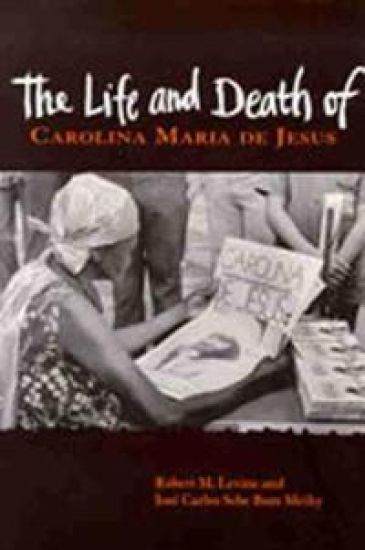
In the dozen years Carolina Maria de Jesus (1914-1977) lived in a Sao Paulo, Brazil, shanty slum, she survived by rummaging for junk. She also kept a diary of her abject poverty. Black, illegitimate, and poor, she suddenly became at age forty-six Brazil's best-selling author when a book drawn from her diaries appeared in 1960. An English translation, Child of the Dark, was published in 1962 and sold over 300,000 copies in the United States in a decade. Newsweek heralded her book as "a desperate, terrifying outcry from the slums of Sao Paulo . . . one of the most astonishing documents of the lower depths ever printed." Collaborating with a Brazilian colleague, Levine tells the story of Carolina's life, giving particular emphasis to the years following her publishing success, and engages in a provocative debate over what Carolina's life reveals about such issues as racism in Brazil, the rigidity of the country's class system, and the process of constructing an identity amid constant degradation and poverty.
Images of History

Images of History

Robert M. Levine

Duke University Press
1990
pokkari
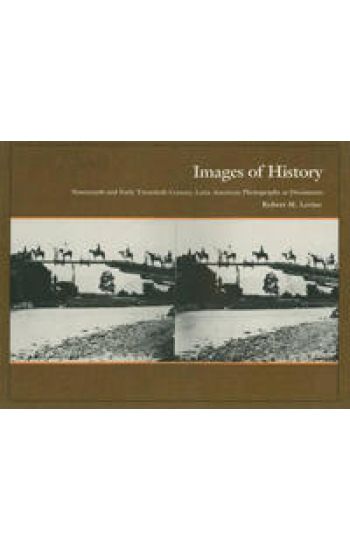
In this work Robert M. Levine undertakes two separate and important tasks: to provide the first overview of the history of photography in Latin America until the advent of the cheap cameras that permitted mass photography, and to analyze the photographic record for clues to the use of the images as historical documents. Levine has woven together an account of the development of photographic equipment and processes, with the artists and entrepreneurs who actually took the pictures, and places the emergence of photography firmly in the historical context of Latin American societies. Treating the photographs themselves-some 225 in all-Levine develops criteria for questions we can ask of the photographs in an attempt to extract emotional, psychological, and personal information, as well as the more obvious material evidence. This is an often subjective process, one that can lead to differing results, and observers may well come to conclusions departing radically from those of the author. But this may well be one of the most important functions of an innovative work, the creation of controversy that stimulates forward motion in a discipline.