
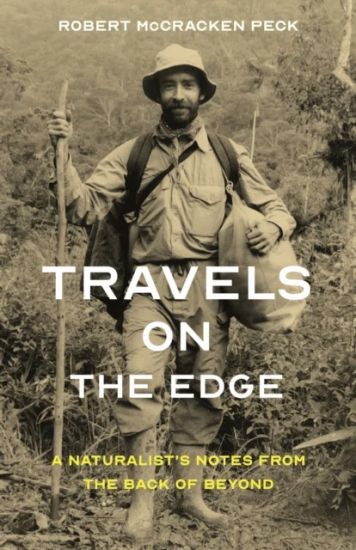
Kirjailija
Robert McCracken Peck
Kirjat ja teokset yhdessä paikassa: 4 kirjaa, julkaisuja vuosilta 2012–2026, suosituimpiin kuuluu Travels on the Edge. Vertaile teosten hintoja ja tarkista saatavuus suomalaisista kirjakaupoista.
4 kirjaa
Kirjojen julkaisuvuodet: 2012–2026.
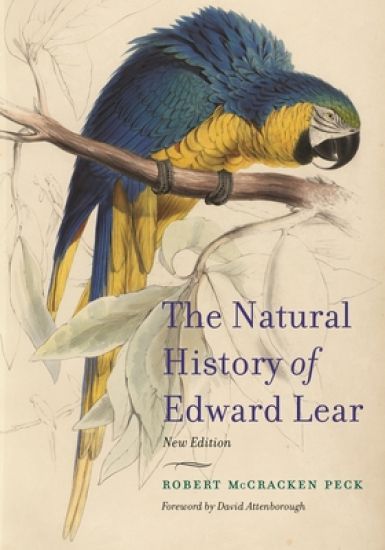
The Natural History of Edward Lear, New Edition
Robert McCracken Peck; David Attenborough
Princeton University Press
2021
nidottu
A beautifully illustrated exploration of Edward Lear's little-known career as a natural-history artist—now in a new expanded paperback editionEdward Lear (1812–1888) is best known today for his witty limericks and endearing nonsense verse. But the celebrated author of "The Owl and the Pussy-Cat" also created some of the most stunning paintings of birds and mammals during an age when many species were just being discovered and brought to private menageries and zoos throughout Europe. The Natural History of Edward Lear brings together more than 200 of Lear's strikingly beautiful illustrations of animals, plants, and landscapes. Robert McCracken Peck sheds light on Lear's astounding creativity, productivity, and success as an artist. He discusses Lear's humor, extensive travels, and important place in the history of science, and shows how Lear influenced other artists from Beatrix Potter and Maurice Sendak to James Prosek and Walton Ford. With a foreword by David Attenborough, a new chapter discussing Lear's interest in pets, and never-before-published illustrations by Lear, this new edition offers invaluable perspectives on a beloved writer who was also one of the greatest natural-history artists of all time.
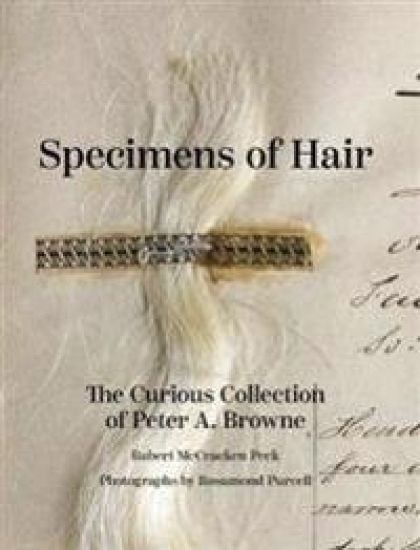
Strangely beautiful, utterly unique, "Specimens of Hair" presents the obsessive work of a 19th-century amateur naturalist who collected hundreds upon hundreds of specimens of hair--animal and human, Including thirteen of the first fourteen U. S. presidents--in his quest to understand the mysteries of the natural world. No matter who we are, old or young, fashion conscious or style indifferent, we are all aware of hair. We wash it; we comb it; we cut, curl, and dye it. Hair can be envied or derided, and hair can provide clues to everything from age to culture to genetic identity to health. To a nineteenth-century amateur naturalist named Peter A. Browne, hair was of paramount importance: he believed it was the single physical attribute that could unravel the mystery of human evolution. Thirty years before Charles Darwin revolutionized understanding of the descent of man, Browne vigorously collected for study what he called the “pile” (from the Latin word for hair, pilus) of as wide a variety of humans (and animals) as possible in his quest to account for the differences and similarities between groups of humans. The result of his diligent, obsessive work is a fastidious, artfully assembled twelve-volume archive of mammalian diversity. Browne’s growing quest for knowledge became an all-consuming specimen-collecting passion. By the time of his death in 1860, Browne had assembled samples from innumerable wild and domestic animals, as well as the largest known study collection of human hair. He obtained hair from people from all parts of the globe and all walks of life: artists, scientists, abolitionist ministers, doctors, writers, politicians, financiers, military leaders, and even prisoners, sideshow performers, and lunatics. His crowning achievement was a gathering of hair from thirteen of the first fourteen presidents of the United States. The pages of his albums, some spare, some ornately decorated, many printed ducit amor patriae—led by love of country—are distinctly idiosyncratic, captivating, and powerfully evocative of a vanished world. Browne’s albums have been sequestered in the archives of the Academy of Natural Sciences in Philadelphia to which Brown bequeathed them, narrowly escaping destruction in the 1970s. They are a unique manifestation of the avid collecting instinct in nineteenth-century scientific endeavors to explain the mysteries of the natural world.
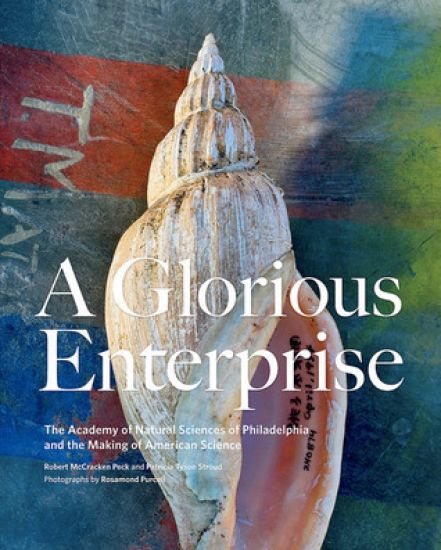
A Glorious Enterprise
Robert McCracken Peck; Patricia Tyson Stroud
University of Pennsylvania Press
2012
sidottu
Founded in 1812, the Academy of Natural Sciences of Philadelphia stands today as the oldest natural history museum in the Western hemisphere. Early expeditions organized at the Academy were of central importance to the exploration of America's western wilderness, and the plant and animal specimens that were brought back formed the foundation of a collection that today contains some eighteen million items. What began as a small gathering of devoted amateurs has grown into a vibrant international center for scientific education and research. A Glorious Enterprise, the first complete history of the Academy, tells the story of the brilliant and passionate men and women who endeavored to acquire and disseminate knowledge of the natural world. Thomas Jefferson, John James Audubon, Robert Peary, Ernest Hemingway, and James Bond are just a few of the colorful Academy associates profiled in this lively narrative. Naturalist and historian Robert McCracken Peck and historical biographer Patricia Tyson Stroud take readers behind the scenes of the Academy, recounting the signal moments and achievements that shaped its first two hundred years—from its landmark discoveries in North America and around the world, through the construction of its famed dioramas in the 1930s, to the pioneering work of Academy scientists in water pollution and conservation long before these were topics of popular concern. The book is richly illustrated throughout with hundreds of archival images and stunningly original works by acclaimed photographer Rosamond Purcell that cast specimens from the Academy's collections in a new light. Like Academy members on a quest for wondrous specimens, lovers of the sciences, American history, museums, and libraries will want to add A Glorious Enterprise to their collections. Filled with lively anecdotes, captivating biographical details, and fascinating facts, this beautiful and enlightening history will be treasured for years to come.