Kirjojen hintavertailu – 12 859 824 kirjaa ja 27 kauppaa
Kirjailija
Robert McDonald
Kirjat ja teokset yhdessä paikassa: 9 kirjaa, julkaisuja vuosilta 1997–2024, suosituimpiin kuuluu The Critical Response to Erskine Caldwell. Vertaile teosten hintoja ja tarkista saatavuus suomalaisista kirjakaupoista.
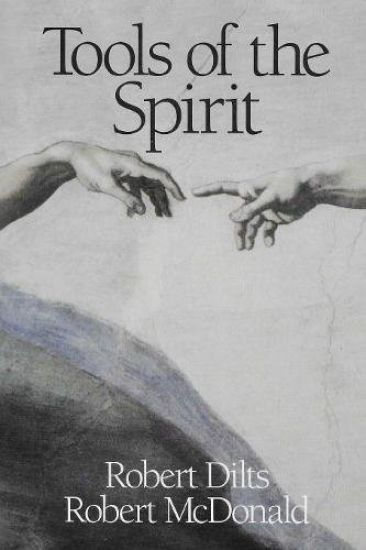
A book by Robert Dilts and Robert McDonald, Tools of the Spirit (1997) encompasses their approach to integrating basic NLP skills and tools with higher levels of experience. In the words of Gregory Bateson, Spirit is "the pattern which connects" all things together as a kind of "larger Mind" of which we as individuals are a subsystem. Manifestations of the Spirit, in the form of wisdom, vision, mission and healing, are the results of acknowledging and bringing Spirit more into our lives and actions. Fruits of the Spirit--such as love, compassion, joy and peace--are the generative and transformative results of being more in harmony with "God's thoughts," i.e., the patterns of this "larger Mind."'Tools' of the Spirit are aids which bring our individual minds and nervous systems more in harmony and alignment with the "larger Mind" and "larger nervous system" of which we are members. Traditional Tools of the Spirit include such things as prayer, meditation, singing, dancing, parables, rituals, and blessings. NLP can be considered a kind of 'meta tool'--a tool that can create other tools of the Spirit. The vision to be explored in this book is that of using NLP to "create a world to which people want to belong" via developing skills for living in a state of impeccability. Impeccability is a state of authenticity, humility and grace guided by the awareness of change, impermanence and death. NLP tools--such as sensory awareness, multiple perspectives, neuro-logical levels, metaphor, anchoring and time lines--can be combined with the principle of 'positive intent' and the core pre- suppositions of NLP to create new and effective 'tools of the Spirit.' These tools can allow us to bring more of the manifestations and fruits of the Spirit into our lives and to connect and participate more fully and ecologically with the larger Mind and systems of which we are a part. Join world renowned NLP trainers and developers Robert Dilts and Robert McDonald and be prepared for a profound journey into the mysteries of the Spirit. This book is for those who wish to learn more about their relationship to something greater than themselves. Learn to apply leading edge NLP tools to deepen your sense of purpose, mission and belonging through processes such as: - The Sacred Journey- The Presence of Eternity- Spiritual Healing- Discovering the Shadow- Releasing Enmeshment with the Shadow- Archetypal Self-Parenting- The Symbolic Rebirth Cycle- Spiritual RenewalAnd much more . . .
For courses in options, futures, and derivatives. To be financially literate in today’s market, business students must have a solid understanding of derivatives concepts and instruments and the uses of those instruments in corporations. The 3rd Edition has an accessible mathematical presentation, and more importantly, helps students gain intuition by linking theories and concepts together with an engaging narrative that emphasises the core economic principles underlying the pricing and uses of derivatives. The 3rd edition has been updated to include new data and examples throughout.
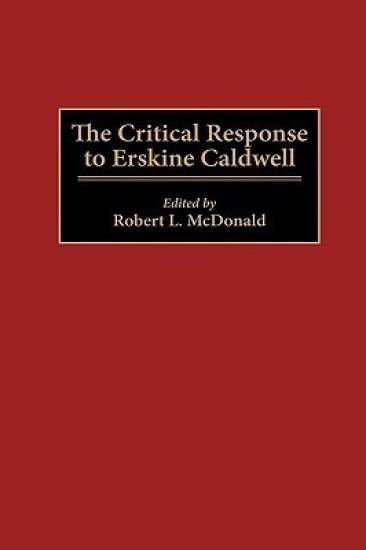
Author of such classics of 20th-century popular American literature as Tobacco Road (1932) and God's Little Acre (1933), Erskine Caldwell was something of a celebrity nearly all his life. But he was also a serious writer, one whose merits are as considerable as they remain underexplored. In the 1930s, he startled the literary world with his frank portrayals of the poor whites of the South. Beginning in the early 1940s, critics grew suspicious that he had exhausted his originality and his talent. In the late 1960s, some scholars began an effort, which continues intermittently today, to reconsider Caldwell's achievement. This collection of reviews, critical essays, and book excerpts provides a chronological portrait of the often contradictory and unfailingly colorful critical response to Caldwell from 1931 to the present. The 57 pieces collected in this volume were chosen to represent all sides and perspectives in the evolving critical opinion of Caldwell's work. The items are grouped in sections representing three chronological periods that encompass the prevailing critical moods concerning his writings: the 1930s, when readers of many persuasions found him promising and held out great hopes for his development; 1940 to 1968, when increasing critical scrutiny led to his dismissal as a writer of significance; and 1969 to the present, when there have been several substantial efforts to reconsider Caldwell's achievement. An introductory essay argues that Caldwell remains largely absent from our critical consciousness today because of a prevailing willingness among academics to rely on largely negative received opinions about his books in place of primary experience with them. The introduction is followed by a chronology, and the volume concludes with an extensive selected bibliography.
? This book argues that, paradoxically, at their moment of triumph and fastest growth, cities need nature more than ever. Only if our urban world is full of biophilic cities will the coming urban century truly succeed. Cities are quintessentially human, the perfect forum for interaction, and we are entering what could justly be called the urban century, the fastest period of urban growth in human history. Yet a growing body of scientific literature shows that the constant interaction, the hyper-connectedness, of cities leads to an urban psychological penalty. Nature in cities can be solution to this dilemma, allowing us to have all the benefits of our urban, connected world yet also have that urban home be a place where humanity can thrive. This book presents best practices and case studies from biophilic design, showing how cities around the world are beginning to incorporate nature into their urban fabric. It will be a valuable resource for scholars and professionals working in the area of sustainable cities.
? This book argues that, paradoxically, at their moment of triumph and fastest growth, cities need nature more than ever. Only if our urban world is full of biophilic cities will the coming urban century truly succeed. Cities are quintessentially human, the perfect forum for interaction, and we are entering what could justly be called the urban century, the fastest period of urban growth in human history. Yet a growing body of scientific literature shows that the constant interaction, the hyper-connectedness, of cities leads to an urban psychological penalty. Nature in cities can be solution to this dilemma, allowing us to have all the benefits of our urban, connected world yet also have that urban home be a place where humanity can thrive. This book presents best practices and case studies from biophilic design, showing how cities around the world are beginning to incorporate nature into their urban fabric. It will be a valuable resource for scholars and professionals working in the area of sustainable cities.