Kirjojen hintavertailu – 12 859 819 kirjaa ja 27 kauppaa

Kirjailija

Robert McNamara

Kirjat ja teokset yhdessä paikassa: 14 kirjaa, julkaisuja vuosilta 2000–2024, suosituimpiin kuuluu Argument Without End. Vertaile teosten hintoja ja tarkista saatavuus suomalaisista kirjakaupoista.

14 kirjaa

Kirjojen julkaisuvuodet: 2000–2024.

Abiding Time

Abiding Time

Robert McNamara

Lynx House Press
2024
pokkari
Abiding Time, Robert McNamara's fourth collection of poems, features a clear, direct and considered voice reminiscent, at times, of Herrick and Marvel, but fully contemporary. In poem after poem attention, reflection, and a sweeping, multi-faceted faith emerge as ingredients without which the individual life cannot be either fully known or lived. This book is a real contribution to the meditative tradition in American poetry.
The Personalism of Edith Stein

The Personalism of Edith Stein

Robert McNamara

THE CATHOLIC UNIVERSITY OF AMERICA PRESS
2023
sidottu
Edith Stein's life and thought intersect with many important movements of life and thought in the twentieth century. Through her life and eventual martyrdom, she gave witness to the primacy of truth and faith in the face of political totalitarianism, and in her philosophical works, she contributed to a synthesis of phenomenological thought with the thought of Aquinas, while also progressively advancing a compelling form of philosophical personalism. As a result, Stein represents one of the most important Catholic thinkers of the twentieth century and is a figure of growing fascination and devotion among believers and nonbelievers alike. The Personalism of Edith Stein is an investigation of Stein's mature philosophical anthropology, exploring her engagement with the thought of Aquinas and Thomism while maintaining the phenomenological mode of investigation. Through a careful examination of Stein's later works under the themes of human nature, the human individual, and the human being's relation to God, McNamara shows that Stein's mature personalism is considerably expanded and substantiated by her assimilation of key anthropological and metaphysical teachings of Aquinas and Thomism, and, conversely, that Stein significantly develops and deepens these same teachings through a phenomenological reconsideration of each from a personalist perspective. As a whole, the study reveals the profound accord between Stein's mature thought and the received teachings of Aquinas, while yet carefully attending to the remaining differences between them. Ultimately, the author proposes that Stein imbues the teachings of Aquinas with a fundamental personalization such that her mature anthropology can be understood as a Thomistically informed personalism that represents a significant, original contribution to the anthropological dimension of the philosophia perennis.
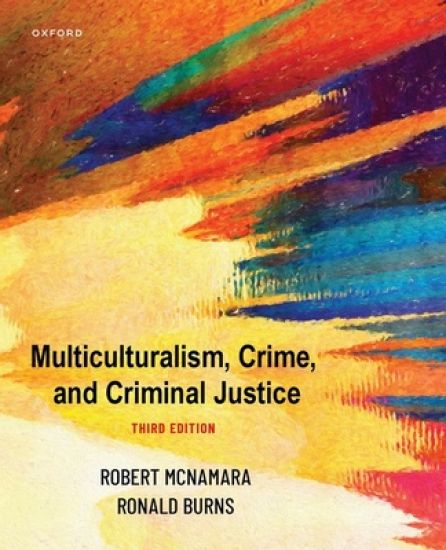
Multiculturalism, Crime, and Criminal Justice

Multiculturalism, Crime, and Criminal Justice

Robert McNamara

OXFORD UNIVERSITY PRESS INC
2023
nidottu
Multiculturalism, Crime, and Criminal Justice, Third Edition, provides an overview of the problems and promises of cultural diversity in society and within all facets of the criminal justice system. It focuses on how different marginalized groups--African Americans, Hispanic Americans, Asian Americans, Native Americans, women, the LGBTQ+ community, the elderly, and juveniles--are impacted by law enforcement, the courts, and correctional agencies, addressing the issues that each group faces. It also examines how multiculturalism affects those who work within the criminal justice system, including members of minority groups.
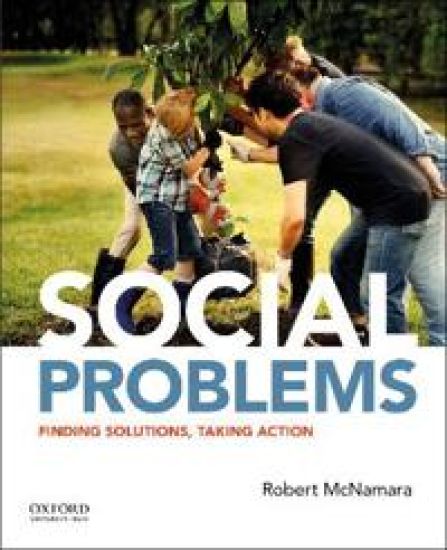
Social Problems

Social Problems

Robert McNamara

OXFORD UNIVERSITY PRESS INC
2021
nidottu
This new social problems book emphasizes how students can better understand social problems if they have a strong foundation in sociological theory. Ideal for students who are taking their first sociology course, it also presents a basic introduction to the discipline. The book highlights the social construction of social problems by taking a comparative approach - how are the problems we identify in US society understood and dealt with in other parts of the world? Finally, there is a heavy emphasis on solutions to social problems, providing students with the tools to think critically about how social problems can be effectively addressed.
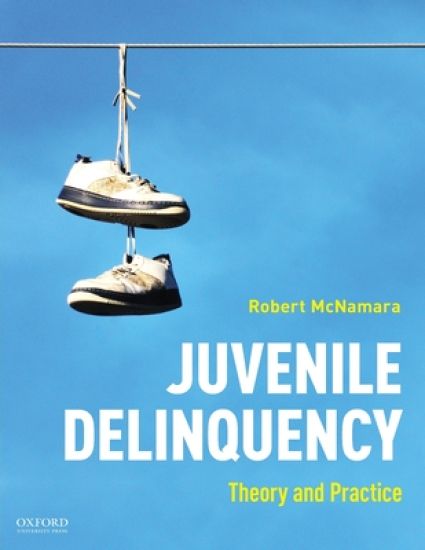
Juvenile Delinquency: Theory to Practice

Juvenile Delinquency: Theory to Practice

Robert McNamara

Oxford University Press
2020
nidottu
Focusing on today's students, this comprehensive juvenile delinquency text debunks myths, engages students to learn key theories, and provides compelling applications that students will find relevant and useful. Preface: The study of juvenile delinquency has a long and fascinating history. From the early days of treating juveniles like miniature adults to the Child Savers Movement, where advocates attempted to address issues stemming from the neglect and abuse of children. In the 1980s, the rise of violent juvenile gangs became a part of the larger narrative on delinquency, in part due to the discovery of crack cocaine and the turf battles that emerged over the distribution of the drug. In the 1990s, concerns about the violence and an increase in dangerous delinquents led to the prediction of a super predator of delinquent. Concerns about this group, along with the perception that the juvenile justice system was inadequate in addressing violent offenders, resulted in greater use of juvenile waivers, where the youthful offender is waived from juvenile court jurisdiction to adult court. Despite these concerns and perceptions about the dangerousness of juvenile offenders, in recent years, there has been a considerable decline in delinquency arrests along with decreases in the use of detention/incarceration in the past two decades. Generally speaking, the juvenile justice system has done an adequate job of diverting offenders before they become a part of the system and rehabilitating them when they become involved in it. However, it is important that we not to lose sight of how significant social issues shape our understanding of crime and delinquency. For instance, as the United States and other countries grapple with the enormous impact of COVID-19, including stay-at-home orders, the closing of schools, massive unemployment for millions of workers, and numerous risks for patients and health care workers, there are implications for juvenile offenders. While we are continuing to learn more about the COVID-19 disease, one of the more troubling trends is the high percentage of minorities who are affected by it. As troubling as a pandemic is for this country, in 2020 we have also seen a number of high-profile cases in which an African American was killed by a police officer or while they were in police custody. This trend is certainly not a new one-the disproportionality of African Americans in the justice system has a long and storied past. The social and political backlash to the recent events involving George Floyd's death have resulted in peaceful protests by citizens wanting meaningful change, violent demonstrations and looting by others, as well as demonstrators dismantling many statues of historical figures due to their involvement in or support of the slave trade. These protests, along with some political leaders stoking the fires of division, have damaged the social fabric of the United States. At the base of the protests and debates, such as whether Black Lives Matter or All Lives Matter, or whether or not to defund police departments, have, at their root, a history of exploitation of African Americans in the criminal justice system. The fascinating thing about the disproportionality of African Americans (and Hispanics/Latinos) in the system is that they are not confined to adults; the juvenile justice system struggles with the same type of disproportionality as its adult counterpart. Perhaps the most intriguing dimension of these findings is that there is little debate about them-unlike most social issues, when it comes to the challenges minorities face in the justice system, there are few if any debates about whether such a trend exists. The controversy stems from why these trends are occurring, but no one disputes whether the trends are real ones-in either the adult or the juvenile justice system. For our purposes, these protests, debates, and controversies are extraordinary reminders that the study of delinquency does not exist in a vacuum and that large scale social issues can dramatically influence our understanding of why youth commit criminal offenses. In the following pages, we attempt to balance the discussion of delinquency with a theoretical understanding and data typically found in sociological research, along with data and research on how to apply this information in a practical way. This juxtaposition of sociology and criminal justice is rather unique but it results in a more seamless and comprehensive understanding of delinquency. As someone trained in both sociology and in criminal justice, my hope is that such a collaboration helps students, faculty, policymakers, and the general public, to grasp the complexity involved in understanding and addressing delinquency. To accomplish this goal, throughout the textbook I attempt to provide examples of how to apply theory to reality, mini-research projects designed to help students understand delinquency in their local communities, as well as putting readers in real-life scenarios where they must consider the many factors involved in making a difficult decision and then decide how to proceed. Additionally, to address the frustration many students (and faculty) sometimes experience with the multitude of programs to reduce or prevent delinquency, where it is easy to think that "nothing works," I include examples of programs that are in fact effective. Of course, while I have done my best to provide the most up to date and accurate information about a variety of topics related to delinquency, any mistakes, omissions, or oversights, are mine to bear. Features Used in this Text: Chapter Scenarios: these are real life situations in which readers are presented with a case that unfolds throughout the chapter. In the context of learning the concepts and theories, students learn how these apply to the scenario. Video Interviews: interviews with convicted juvenile offenders are integrated into the text via URL links as well as excerpts into sections of the chapter. This is a defining feature of the book since it provides customized illustrations of the concepts and theories identified in each chapter. Make the Call: this exercise puts the reader in a role (e.g. juvenile court judge, police officer, social worker) and presented with a situation in which they have to render a decision. The factors that are relevant and important are considered with questions they must address before their decision is made. Apply Theory to Reality: this exercise provides students with the opportunity to begin learning how to apply delinquency theories to particular situations. The student must summarize the theory, apply it to the given set of circumstances and offer insight into how the theory extends the understanding of the particular crime. What Works?: These are examples of programs to address or prevent delinquency that have been empirically evaluated for effectiveness. Your Community: this feature has students exploring programs and issues in their local community. The task involves them conducting mini-research projects, where they interview and observe program directors, staff, and customers in an effort to learn more about the problem locally. Examples include runaway shelters, domestic violence diversion programs, gang prevention programs, or even police departments. RHM

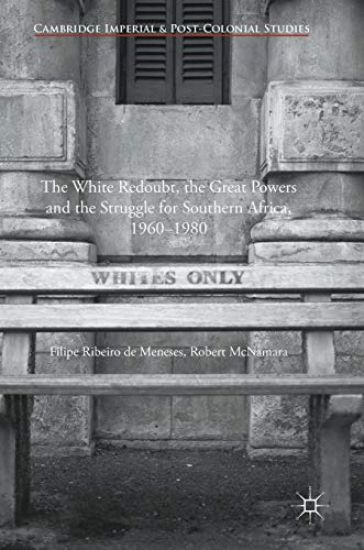
The White Redoubt, the Great Powers and the Struggle for Southern Africa, 1960–1980

The White Redoubt, the Great Powers and the Struggle for Southern Africa, 1960–1980

Filipe Ribeiro de Meneses; Robert McNamara

Palgrave Macmillan
2019
nidottu
This work examines the attempt by the governments of Portugal, Rhodesia and South Africa to defy the drive for African independence in the 1960s and 70s, and the international community’s response. From 1961 to 1974, Portugal, Rhodesia and South Africa collaborated in the attempt to preserve white minority rule in their respective territories. Hard-pressed by African nationalists, recently decolonized states, and many of the world’s Great Powers, they supported each other economically, politically and militarily, turning southern Africa into a major diplomatic concern which defied Cold War logic. This book examines how this collaboration came about and how the international community responded to it, paying close attention to the evolving situation in each country. The Portuguese Revolution of April 1974 undid this ‘white redoubt’, and the diplomatic policy subsequently adopted by apartheid South Africa – détente – led it to sacrifice Rhodesia in return for the illusion of permanentsafety. A true work of transnational history, this book is based on the archival material of eight different countries, yet it serves as well as an introduction to the politics of southern Africa during the late colonial era.
The White Redoubt, the Great Powers and the Struggle for Southern Africa, 1960–1980

The White Redoubt, the Great Powers and the Struggle for Southern Africa, 1960–1980

Filipe Ribeiro de Meneses; Robert McNamara

Palgrave Macmillan
2017
sidottu
This work examines the attempt by the governments of Portugal, Rhodesia and South Africa to defy the drive for African independence in the 1960s and 70s, and the international community’s response. From 1961 to 1974, Portugal, Rhodesia and South Africa collaborated in the attempt to preserve white minority rule in their respective territories. Hard-pressed by African nationalists, recently decolonized states, and many of the world’s Great Powers, they supported each other economically, politically and militarily, turning southern Africa into a major diplomatic concern which defied Cold War logic. This book examines how this collaboration came about and how the international community responded to it, paying close attention to the evolving situation in each country. The Portuguese Revolution of April 1974 undid this ‘white redoubt’, and the diplomatic policy subsequently adopted by apartheid South Africa – détente – led it to sacrifice Rhodesia in return for the illusion of permanentsafety. A true work of transnational history, this book is based on the archival material of eight different countries, yet it serves as well as an introduction to the politics of southern Africa during the late colonial era.
Making the Modern Middle East

Making the Modern Middle East

Andrew Mango; Robert McNamara

Gingko Library
2017
pokkari
In 1914 the Middle East was still dominated, as it had been for some four centuries, by the Ottoman Empire; by 1923, its political shape had changed beyond recognition as the result of the insistent claims of Arab and Turkish nationalism and of Zionism. This book examines that historic transformation, taking as its focus the work of three leaders. The Hashemite Emir Feisal hoped to head an Arab kingdom in Syria but was thwarted by the French. The Turkish war hero Mustafa Kemal defied the imperial ambitions of the European powers, inspiring a new Turkish nationalism and founding a secular republic on the ruins of a defeated empire. The Russian-born scientist Chaim Weizmann seized the chance to secure the Balfour Declaration in favour of Zionism from the British in 1917, and then successfully argued for a British mandate for Palestine which would carry this out.
Incomplete Strangers

Incomplete Strangers

Robert McNamara

Lost Horse Press
2013
pokkari
Robert McNamara’s poetry is crisp and formal, and attached to the world in the way very lively humans are who are both deeply sad, because they are here, and aware of those salvational voices tucked away in the brilliance of things. Fortunately this poetry is erudite, so the present doesn’t have to do all the heavy work—of supporting a true and wise adult on its shoulders. Read at your peril, and be lucky! This is a tremendous feast.
The Hashemites: The Dream of Arabia

The Hashemites: The Dream of Arabia

Robert McNamara

Haus Publishing
2010
sidottu
The story of the Arab Revolt and the Hashemite princes who led it during the First World War is inextricably linked in modern eyes to the legend of "Lawrence of Arabia" as portrayed in David Lean's 1962 film. But behind this romantic image lies a harsher reality of wartime expediency, double-dealing and dynastic ambition, which shaped the modern Middle East and laid the foundations of many of the conflicts that rack the region to this day. Arab nationalists claim that British instigation for the Arab Revolt against the Ottoman Empire was a commitment to independence for the Arab people, but in this book Robert McNamara shows how the British cultivated the Hashemite Sherifs of Mecca more as an alternative focus during the First World War for Muslim loyalty from the Ottoman Sultan, who as Caliph had declared a jihad against the Allies when the Turks joined the Central Powers, than a leader of an independent and united Arabia. At the same time, the Sykes-Picot Agreement divided up the Middle East between British and French spheres of influence. The sense of betrayal that this caused has coloured Arab nationalists' views of the West ever since. The main countries of the Middle East Jordan, Syria and Iraq are all the creations of the post-First World War settlement worked out at the Paris Peace Conference. The story of the Hashemite dynasty at the Paris Peace Conference is the story of the birth of the modern history of a region that is now more than ever at the centre of world affairs.
Wilson's Ghost

Wilson's Ghost

James Blight; Robert McNamara

PublicAffairs,U.S.
2003
pokkari
With Wilson's Ghost , Robert S. McNamara and James G. Blight deliver an impassioned plea and a decisive and multi-faceted program for making the 21st century a more peaceful century than the last. The terrorist attacks of September 11, 2001, and the war that has followed, have made their argument even more imperative. In a provocative synthesis of the pragmatic, historical, and philosophical arguments for avoiding war and achieving a sustainable peace, McNamara and Blight put forth a plan for realizing Woodrow Wilson's dream. The plan begins with a moral imperative that establishes the reduction of human carnage as a major goal of foreign policy across the globe, and details the necessity of adopting new policies to support that goal. McNamara and Blight argue that now is the time for a radical approach to reducing the risk of human carnage, and they demonstrate why we cannot afford to fail in this effort.
Argument Without End

Argument Without End

Herbert Schandler; James Blight; Robert K. Brigham; Robert McNamara; Thomas J Biersteker

PublicAffairs,U.S.
2000
pokkari
Did the Vietnam War have to happen? And why couldn't it have ended earlier? These are among the questions that Robert McNamara and his collabourators ask in Argument Without End, a book that will stand as a major contribution to what we know about the Vietnam War. Drawing on a series of meetings that brought together, for the first time ever, senior American and Vietnamese officials who had served during the war, the book looks at the many instances in which one side, or both, made crucial mistakes that led to the war and its duration. Using Vietnamese and Chinese documents, many never before made public, McNamara reveals both American and Vietnamese blunders, and points out ways in which such mistakes can be avoided in the future. He also shows conclusively that war could not be won militarily by the United States. McNamara's last book on Vietnam was one of the most controversial books ever published in this country. This book will reignite the passionate debate about the war, about McNamara, and about the lessons we can take away from the tragedy.