Kirjojen hintavertailu – 12 867 504 kirjaa ja 27 kauppaa

Kirjailija

Robert Myles

Kirjat ja teokset yhdessä paikassa: 4 kirjaa, julkaisuja vuosilta 1994–2023, suosituimpiin kuuluu Innovation & Digital Theatremaking. Vertaile teosten hintoja ja tarkista saatavuus suomalaisista kirjakaupoista.

4 kirjaa

Kirjojen julkaisuvuodet: 1994–2023.

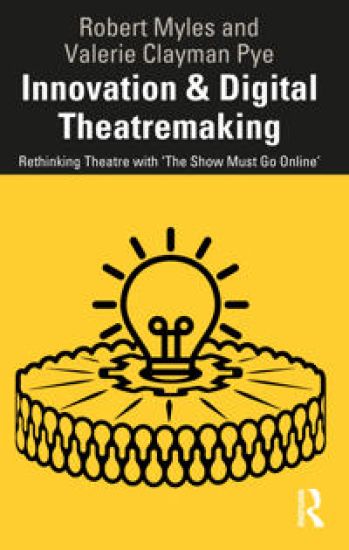
Innovation & Digital Theatremaking

Innovation & Digital Theatremaking

Robert Myles; Valerie Clayman Pye

TAYLOR FRANCIS LTD
2023
nidottu
Innovation & Digital Theatremaking introduces a blueprint for how to think differently about Theatre, how to respond creatively in uncertainty, and how to wield whatever resources are available to create new work in new ways. In 2020, the COVID-19 pandemic had a colossal impact on theatre across the world. At a time when even the wealthiest and best-supported theatre companies in the world ceased all operations and shuttered their stages, the theatre company The Show Must Go Online (TSMGO) forged its way into a new frontier: the highly accessible digital landscape of online performance. In this book, TSMGO creator Robert Myles and Valerie Clayman Pye explore the success of TSMGO from a practical standpoint, offering insights and strategies that can help theatremakers at every level respond proactively to the future of Theatre in the digital era. Each chapter addresses a different aspect of the creative process and concludes with take-homes so readers can learn how to innovate rapidly, undertake research and development in order to create their own models, and cultivate their own theatrical communities. Written for theatremakers, directors, producers, and creatives of all levels of experience, this book will help readers to think critically and creatively about theatre and theatre pedagogues to understand how to train their students for the theatre of the future.
Innovation & Digital Theatremaking

Innovation & Digital Theatremaking

Robert Myles; Valerie Clayman Pye

TAYLOR FRANCIS LTD
2023
sidottu
Innovation & Digital Theatremaking introduces a blueprint for how to think differently about Theatre, how to respond creatively in uncertainty, and how to wield whatever resources are available to create new work in new ways. In 2020, the COVID-19 pandemic had a colossal impact on theatre across the world. At a time when even the wealthiest and best-supported theatre companies in the world ceased all operations and shuttered their stages, the theatre company The Show Must Go Online (TSMGO) forged its way into a new frontier: the highly accessible digital landscape of online performance. In this book, TSMGO creator Robert Myles and Valerie Clayman Pye explore the success of TSMGO from a practical standpoint, offering insights and strategies that can help theatremakers at every level respond proactively to the future of Theatre in the digital era. Each chapter addresses a different aspect of the creative process and concludes with take-homes so readers can learn how to innovate rapidly, undertake research and development in order to create their own models, and cultivate their own theatrical communities. Written for theatremakers, directors, producers, and creatives of all levels of experience, this book will help readers to think critically and creatively about theatre and theatre pedagogues to understand how to train their students for the theatre of the future.
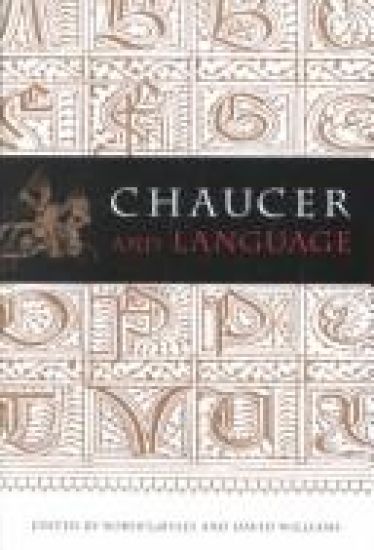
Chaucer and Language

Chaucer and Language

Robert Myles; David A. Williams

McGill-Queen's University Press
2001
sidottu
Every poet arrives at some sense of how language works. Chaucer's engagement, like that of the greatest literary figures, goes beyond the brilliant, skilful use of language as a tool of expression, beyond what we usually call "talent." He brings to the creative use of signification a sophisticated philosophical questioning of the very nature of language, of how we know and how we signify. Chaucer and Language argues that Chaucer's work points to answers to these questions, emphasizing that in various ways Chaucer made language itself the subject of his writing. The polyvalent nature of signs and the ambiguity this makes possible are discussed as one aspect of Chaucer's use of language as subject, as is irony. Chaucer's extension of the concept of language to include relics and the Eucharist, his exploitation of equivocation and the lie, and the semiotic dimensions of his poetic themes are also treated. These issues derive directly from the long tradition of mediaeval sign theory and anticipate the major issues of the modern theory of signs that is semantics.
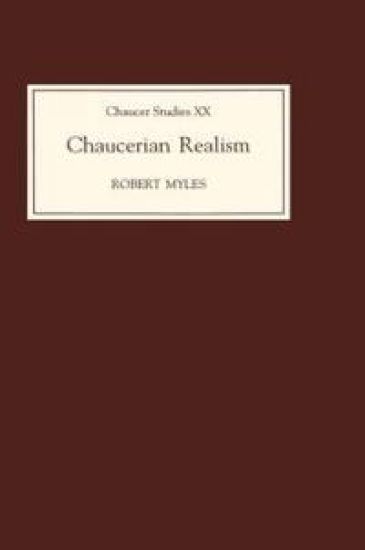
Chaucerian Realism

Chaucerian Realism

Robert Myles

D.S. Brewer
1994
sidottu
Myles challenges the convention of the `medieval mind' and perceives new semantic sophistication in Chaucer's language. NB DSB BLURB ON CERTAIN OCCASIONS What is the difference between saying something and meaning it, and saying something and not meaning it? A modern question. A Chaucerian question. Through his analysis of intentionality and the metaphysics of speech, Robert Myles shows why Chaucer's appreciation of the functioning of language and thought could be `modern'. Through his analysis of Chaucer's works, particularly the Friar's Tale, Myles demonstrates that Chaucer's understanding of these is modern and the myth of the medieval mind as other than our own is exploded. The medieval belief in intentionality, the object-directedness of all beings, allowed appreciationof a fact: thought and language areintentional. On a practical level Chaucer deliberately exploits three-level semantics (signs are simultaneously mind-drected and world-directed) to create `realistic' fiction in the modernliterary sense of the term. Myles also argues that Chaucer is a realist in the philosophical sense, a view which goes counter to the current of much recent criticism. This book will not only be a challenging addition to medievaland Chaucerian studies, but has interesting implications for the historical study of intentionality, semiotics and epistemology. DR ROBERT MYLESis senior lecturer at the English and French Language Centre, McGill University, and a research fellow at the Department of English, McGill University, Montreal, Canada.