Kirjojen hintavertailu – 12 903 725 kirjaa ja 27 kauppaa

Kirjailija

Robert Nash

Kirjat ja teokset yhdessä paikassa: 15 kirjaa, julkaisuja vuosilta 2009–2022, suosituimpiin kuuluu Teaching Adolescents Religious Literacy in a Post-9/11 World. Vertaile teosten hintoja ja tarkista saatavuus suomalaisista kirjakaupoista.

15 kirjaa

Kirjojen julkaisuvuodet: 2009–2022.

When the Blue Goes

When the Blue Goes

Robert Nash

ROWMAN LITTLEFIELD
2022
sidottu
So little is known about the poet Robert Nash. Until the 21st century, when his poems were discovered in a French basement, he remained undiscovered. The poems had been written in Maine and sent to Nash’s friend in France, to be discovered by the friend’s son decades later in a suitcase. Nash emigrated to America from Sussex, England, when he was a child. He lived in Maine with his wife Catriona and son Lee, and likely didn’t turn to writing poetry until his life took a tragic turn. Lee was killed in 1974 in Vietnam. Catriona died two years later. On May 31, 1995, one week after writing his last dated poem, Robert Nash disappeared. Anything else about Nash’s life is speculation and hypothesis. No trace has ever been found and no family or heirs have claimed him. But the poems he left behind demonstrate a true mastery of the craft and reveal his profound solitude and his intimate and healing relationship with nature. In his introduction, former Maine Poet Laureate finds Nash’s place in the Maine literary canon. Robert Nash has come home. Originally written in French (for his friend who didn’t speak English) and published in France in three separate volumes, these poems have been lovingly translated back to the poet’s native language by Françoise Canter.
Everyman at His Prie-dieu

Everyman at His Prie-dieu

Robert Nash

Hassell Street Press
2021
nidottu
This work has been selected by scholars as being culturally important and is part of the knowledge base of civilization as we know it. This work is in the public domain in the United States of America, and possibly other nations. Within the United States, you may freely copy and distribute this work, as no entity (individual or corporate) has a copyright on the body of the work. Scholars believe, and we concur, that this work is important enough to be preserved, reproduced, and made generally available to the public. To ensure a quality reading experience, this work has been proofread and republished using a format that seamlessly blends the original graphical elements with text in an easy-to-read typeface. We appreciate your support of the preservation process, and thank you for being an important part of keeping this knowledge alive and relevant.
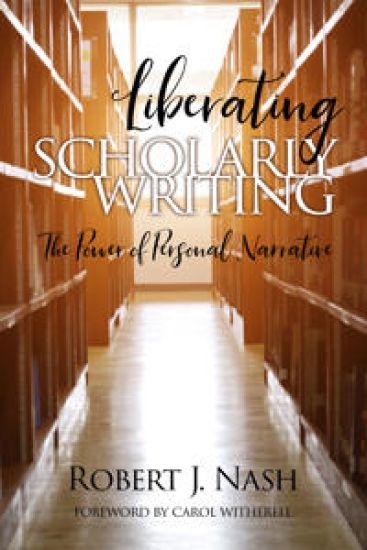
Liberating Scholarly Writing

Liberating Scholarly Writing

Robert Nash

Information Age Publishing
2019
nidottu
This book provides an alternative to the more conventional modes of qualitative and quantitative inquiry currently used in professional training programs, particularly in education. It features a very accessible presentation that combines application, rationale, critique, and inspiration—and is itself an example of this kind of writing. It teaches students how to use personal writing in order to analyze, explicate, and advance their ideas. And it encourages minority students, women, and others to find and express their authentic voices by teaching them to use their own lives as primary resources for their scholarship.
Liberating Scholarly Writing

Liberating Scholarly Writing

Robert Nash

Information Age Publishing
2019
sidottu
This book provides an alternative to the more conventional modes of qualitative and quantitative inquiry currently used in professional training programs, particularly in education. It features a very accessible presentation that combines application, rationale, critique, and inspiration—and is itself an example of this kind of writing. It teaches students how to use personal writing in order to analyze, explicate, and advance their ideas. And it encourages minority students, women, and others to find and express their authentic voices by teaching them to use their own lives as primary resources for their scholarship.
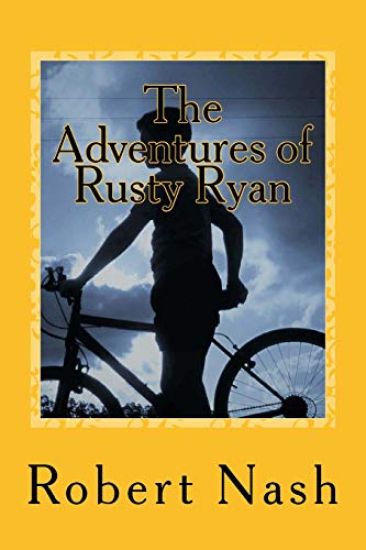
The Adventures of Rusty Ryan

The Adventures of Rusty Ryan

Robert Nash

Createspace Independent Publishing Platform
2018
nidottu
Rusty Ryan and trouble, seem to go together. First up, he has a run in with some modern day pirates in the form of bird smugglers. When Rusty upsets their plans he finds himself fighting for survival. Next, he and his mates find themselves in an abandoned gold mine. Without warning the mine entrance caves in and traps them inside with no apparent way out. Then something unusual happens and Rusty begins to wonder if the long dead miners are not still in there with them. But Rusty's biggest adventure comes when he discovers an old diary, which may have belonged to a famous bushranger . He suddenly finds himself at odds with the law and this time he could be in real trouble. These three stories are great reading for kids who love excitement and can see themselves responding to danger in the same way as our hero Rusty does.
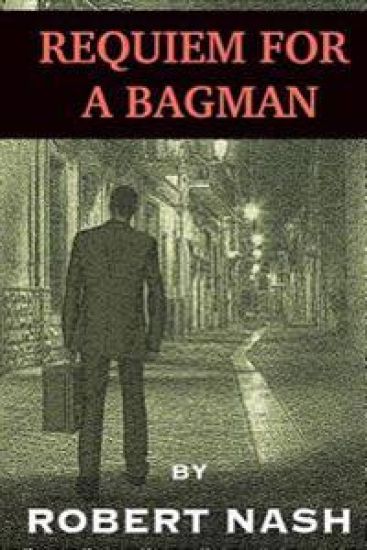
Requiem for a Bagman

Requiem for a Bagman

Robert Nash

Createspace Independent Publishing Platform
2016
nidottu
"Well Mr Marshall it's time for me to go," and in saying so he withdrew a box of matches from his pocket and removed several matches which he intended striking at one time. Ben knew that he had little hope of doing anything to stop this man but there was no way he would go down without a fight. He flexed his leg muscles preparatory to launching himself at his assailant when someone spoke from behind him." Hello Manny you murdering swine you can't help burning people can you?" Ben Marshall enjoyed what he considered to be a perfect life. He had a wonderful family and a business that allowed him to be a generous contributor to his community. Then one day an acquaintance left an old suit case in his care and for reasons beyond Ben's understanding his life went into a downward spiral. Everything he held dear was at risk and in the end he has to fight to stay alive. This is a story about ordinary people becoming caught up in the web of crime and corruption that surrounds us in our everyday life and of which most of us are unaware.
"U Do it ~ Credit Fixer"

"U Do it ~ Credit Fixer"

Robert Nash

Lulu.com
2015
nidottu
NEW 2ND EDITION 2017-LARGER 8.5 X 11 BOOK FOR MORE NOTE TAKING. Credit fixing, home loans, quit claiming deeds, bankruptcy, saving your house from foreclosure and more! Placing our books at every book store, grocery stores small and large, other retail locations, the desks of realtors, loan officers nationwide. Assist Americans with credit problems and make a little extra income at the same time. Become a Marketing Representative with proven traditional sales plan, contact your Rep or call (315) 652-2274 to join our TEAM as a REP. We are NOT a MLM-Multi Level Marketing systematic sales scheme. Americans pay hundreds and even thousands of dollars to bogus companies to "remove bad credit" with fly by night frauds. You cannot just pay someone to remove problem credit like magic, you have to address the problem, fix it and update the credit bureaus". Get started with marketing our book to fellow Americans with credit problems and make extra money.
Me-Search and Re-Search

Me-Search and Re-Search

Robert Nash; DeMethra LaSha Bradley

Information Age Publishing
2011
sidottu
What we intend to do in this book is to explain, and exemplify, in a nuts-and-bolts way, what we are calling Scholarly Personal Narrative (SPN) writing. This is a genre created over 15 years ago by Robert, one of the co-authors of this book. The other co-author, DeMethra, has actually written a thesis and dissertation using this genre, so she brings an author's direct SPN experience to the table. Both of us co-teach a course that we call "Scholarly Personal Narrative Writing for Pre-Professionals and Professionals." In the chapters that follow, we will present a step-by-step approach for composing an SPN manuscript. The book will be comprised of four general parts, consisting of several short, practical chapters, written in non-technical language. We will write each of the chapters as a way of responding to the most common questions that our students have raised about SPN writing through the years. We will attempt to write as we teach, with no frills and with clarity, empathy, and understanding. We will also provide several SPN writing examples, as well as authorial toolbox tips, throughout the book. In addition, we will conclude with a bibliography of the most relevant personal narrative writing guides we have been able to muster. Our desire is to minimize the number of in-text citations and references in order to maximize the space for us to present a useful, nuts-and-bolts guide to writing, as well as a realistic, down-to-earth rationale for scholarly personal narrative writing in the academy. After reading the book, and practicing the writing exercises, undergraduate and graduate students will be able to author research papers, theses, and dissertations using the Scholarly Personal Narrative research genre. Hundreds of students have done this already throughout the country.
Me-Search and Re-Search

Me-Search and Re-Search

Robert Nash; DeMethra LaSha Bradley

Information Age Publishing
2011
nidottu
What we intend to do in this book is to explain, and exemplify, in a nuts-and-bolts way, what we are calling Scholarly Personal Narrative (SPN) writing. This is a genre created over 15 years ago by Robert, one of the co-authors of this book. The other co-author, DeMethra, has actually written a thesis and dissertation using this genre, so she brings an author's direct SPN experience to the table. Both of us co-teach a course that we call "Scholarly Personal Narrative Writing for Pre-Professionals and Professionals." In the chapters that follow, we will present a step-by-step approach for composing an SPN manuscript. The book will be comprised of four general parts, consisting of several short, practical chapters, written in non-technical language. We will write each of the chapters as a way of responding to the most common questions that our students have raised about SPN writing through the years. We will attempt to write as we teach, with no frills and with clarity, empathy, and understanding. We will also provide several SPN writing examples, as well as authorial toolbox tips, throughout the book. In addition, we will conclude with a bibliography of the most relevant personal narrative writing guides we have been able to muster. Our desire is to minimize the number of in-text citations and references in order to maximize the space for us to present a useful, nuts-and-bolts guide to writing, as well as a realistic, down-to-earth rationale for scholarly personal narrative writing in the academy. After reading the book, and practicing the writing exercises, undergraduate and graduate students will be able to author research papers, theses, and dissertations using the Scholarly Personal Narrative research genre. Hundreds of students have done this already throughout the country.
Teaching Adolescents Religious Literacy in a Post-9/11 World
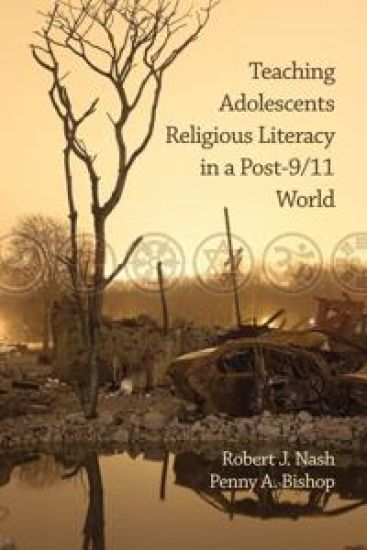
For thousands of years, religion has been a key element of human societies. Whenever we, as educators, exclude or minimize religion’s vast role in society, we leave out a large part of our world’s shared history. This is a serious act of educational omission, even neglect, on the part of our nation’s public middle and secondary schools, particularly when adolescents are so ready to engage in meaningful conversation about the world that surrounds them. Our book’s central purpose is to provide middle-level and high school teachers with the necessary background knowledge and pedagogical skills necessary to help adolescents become religiously literate learners and citizens. Currently, there is no text like ours on the market that both covers a number of world religions, and presents concrete recommendations for teaching and learning this material. Our book is meant to educate the following audiences: teacher educators, middle-level and high school teachers in all content areas, administrators, school boards, and parents. For us, educating for religious literacy is all about bringing adolescents into the 21st century of teeming religious and spiritual diversity—a long-neglected component of the multicultural curriculum in public schools. In a post-9/11 world, religious literacy requires that students understand the whats and whys of differing religious beliefs, both in their own country and elsewhere. It means looking for commonalities, as well as differences, between and among the great wisdom traditions—both nationally and internationally. It is about understanding how all of us might live peacefully in a religiously diverse world. Our book accomplishes these goals by being informative, practical, experiential, case-based, and, above all, accessible to beginners.
Teaching Adolescents Religious Literacy in a Post-9/11 World
For thousands of years, religion has been a key element of human societies. Whenever we, as educators, exclude or minimize religion’s vast role in society, we leave out a large part of our world’s shared history. This is a serious act of educational omission, even neglect, on the part of our nation’s public middle and secondary schools, particularly when adolescents are so ready to engage in meaningful conversation about the world that surrounds them. Our book’s central purpose is to provide middle-level and high school teachers with the necessary background knowledge and pedagogical skills necessary to help adolescents become religiously literate learners and citizens. Currently, there is no text like ours on the market that both covers a number of world religions, and presents concrete recommendations for teaching and learning this material. Our book is meant to educate the following audiences: teacher educators, middle-level and high school teachers in all content areas, administrators, school boards, and parents. For us, educating for religious literacy is all about bringing adolescents into the 21st century of teeming religious and spiritual diversity—a long-neglected component of the multicultural curriculum in public schools. In a post-9/11 world, religious literacy requires that students understand the whats and whys of differing religious beliefs, both in their own country and elsewhere. It means looking for commonalities, as well as differences, between and among the great wisdom traditions—both nationally and internationally. It is about understanding how all of us might live peacefully in a religiously diverse world. Our book accomplishes these goals by being informative, practical, experiential, case-based, and, above all, accessible to beginners.