Kirjojen hintavertailu – 12 903 725 kirjaa ja 27 kauppaa
Kirjailija
Robert O. Collins
Kirjat ja teokset yhdessä paikassa: 17 kirjaa, julkaisuja vuosilta 1990–2019, suosituimpiin kuuluu Historical Dictionary of Pre-Colonial Africa. Vertaile teosten hintoja ja tarkista saatavuus suomalaisista kirjakaupoista.
After a decade of uneasy peace, the historic conflict between the Northern Sudanese, who identify with their Middle Eastern neighbors, and the Southern Sudanese, who are of African heritage, erupted into violent conflict in 1983. This ferocious civil war, with its Arab militias and widespread use of automatic weapons, has devastated the populace. N
Robert O. Collins is one of the most prolific authors on Africa, the Sudan, and the Nile. The Southern Sudan in Historical Perspective, based on a series of lectures he gave at Tel Aviv University, is a succinct and engaging study of the Southern Sudan, from its origins in antiquity, the British occupation of the early twentieth century, the civil disturbances of 1955, its independence in 1956, to the violence of the late 1960s and early 1970s.
The second edition of A History of Sub-Saharan Africa continues to provide an accessible introduction to the continent's history for students and general readers. The authors employ a thematic approach to their subject, focusing on how the environment has shaped the societies and cultures of the African peoples. The text demonstrates how the geography, climate and geology of Africa influenced the rise of states and empires, the emergence of the trans-Atlantic slave trade, the European conquest and the creation of independent African nations. Yet the book maintains a focus on the peoples whose creative energies built unique communities and traditions within the challenging context of the Africa landmass. In the process of reconstructing this continent's rich history, the authors analyze the contentious scholarly debates that have emerged from this field. The book is illustrated with photographs, maps and sidebars that feature the salient points on either side of the debates.
The Heart of Darkness, this is the image that most in the West hold of pre-colonial Africa. Joseph Conrad's description of a continent lacking in civilization, commerce, and Christianity is familiar to many readers. Historians have been working to dispel this notion before since the institution of African independence after World War II. The A to Z of Pre-Colonial Africa seeks to familiarize the reader with pre-colonial Africa, the Africa that began with the migrations of the Bantu from their homeland in 500 B. C. and ended with European control in the 19th century, revealing the culture, events, achievement and rulers of Africa from this time.
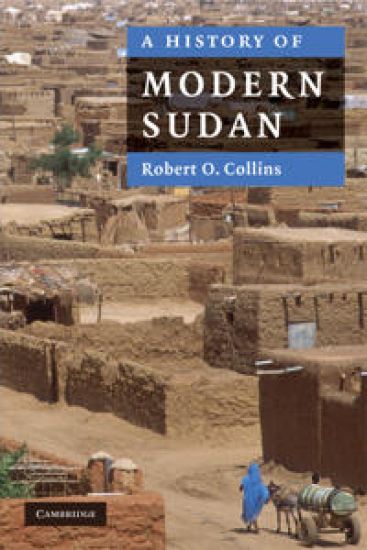
Sudan's modern history has been consumed by revolution and civil war. The country attracted international attention in the 1990s as a breeding ground of Islamist terrorism and recently tensions between the prosperous centre and the periphery, between north and south, have exploded in Darfur. In his latest book, Robert Collins, a frequent visitor and veteran scholar of the region, traces Sudan's history across two hundred years to show how many of the tragedies of today have been planted in its past. The story begins with the conquest of Muhammad 'Ali in 1821, and moves through the Anglo-Egyptian condominium to independence in 1956. It then focuses on Sudanese rule in the post-independence years when the fragile democracy established by the British collapsed under sectarian strife. It is these religious and ethnic divides, the author contends, in conjunction with failed leadership, which have prolonged and sustained the conflict in Sudan.
Sudan's modern history has been consumed by revolution and civil war. The country attracted international attention in the 1990s as a breeding ground of Islamist terrorism and recently tensions between the prosperous centre and the periphery, between north and south, have exploded in Darfur. In his latest book, Robert Collins, a frequent visitor and veteran scholar of the region, traces Sudan's history across two hundred years to show how many of the tragedies of today have been planted in its past. The story begins with the conquest of Muhammad 'Ali in 1821, and moves through the Anglo-Egyptian condominium to independence in 1956. It then focuses on Sudanese rule in the post-independence years when the fragile democracy established by the British collapsed under sectarian strife. It is these religious and ethnic divides, the author contends, in conjunction with failed leadership, which have prolonged and sustained the conflict in Sudan.
Robert O. Collins is one of the most prolific authors on Africa, the Sudan, and the Nile. The Southern Sudan in Historical Perspective, based on a series of lectures he gave at Tel Aviv University, is a succinct and engaging study of the Southern Sudan, from its origins in antiquity, the British occupation of the early twentieth century, the civil disturbances of 1955, its independence in 1956, to the violence of the late 1960s and early 1970s.
This is a concise but sweeping account of the African past, its peoples, and their institutions. The book attempts to provide an overview of African history without getting bogged down in details and data. This approach is very useful for general readers who seek to gain an understanding of the major trends and developments, and for teachers who plan to supplement this text with primary sources depending on the emphasis of the course.
This is a concise but sweeping account of the African past, its peoples, and their institutions. The book attempts to provide an overview of African history without getting bogged down in details and data. This approach is very useful for general readers who seek to gain an understanding of the major trends and developments, and for teachers who plan to supplement this text with primary sources depending on the emphasis of the course.
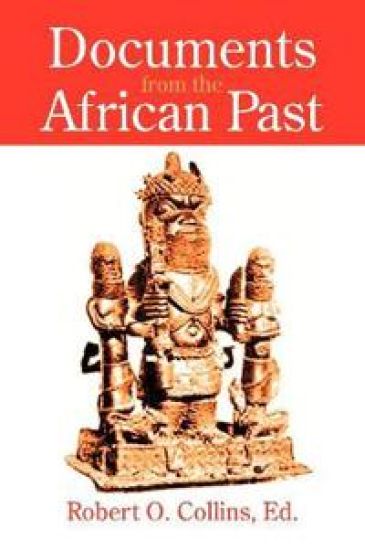
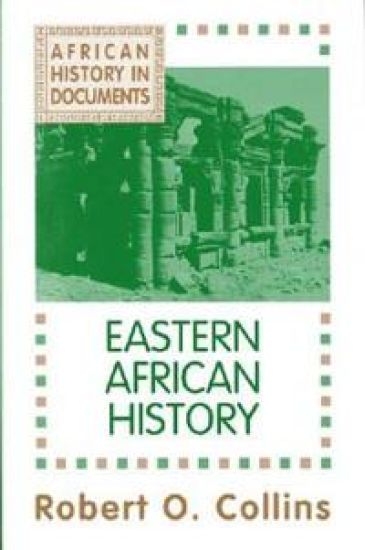
This fascinating collection spans two millennia, beginning with a first-century merchant’s guide to the Red Sea and Indian Ocean ports. Primary sources describe ancient and medieval trade routes, China’s discovery of Africa, the slave trade, kingdoms and court life in inner East and West Africa, and the experiences of Asian and European settlers, merchants, and colonialists. There are writings by important local authorities and scholars as well as travelers and administrators from other continents. The ideas of leaders who shaped modern Africa are represented in the documents of Jomo Kenyatta, Haile Selassie, Steven Biko, and Nelson Mandela.
The Heart of Darkness, this is the image that most in the West hold of pre-colonial Africa. Joseph Conrad's description of a continent lacking in civilization, commerce, and Christianity is familiar to many readers. Historians have been working to dispel this notion before since the institution of African independence after World War II. Collins seeks to familiarize the reader with pre-colonial Africa, the Africa that began with the migrations of the Bantu from their homeland in 500 B. C. and ended with European control in the 19th century, revealing the culture, events, achievement and rulers of Africa from this time.
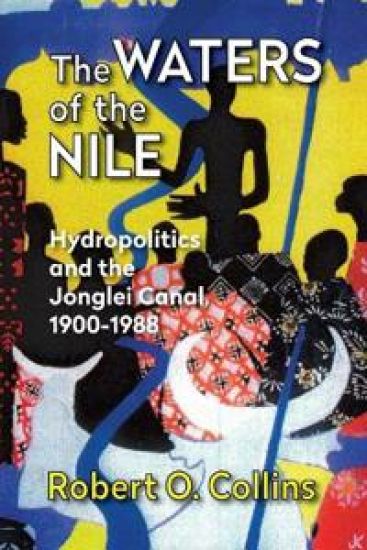
A history of the science of hydrology as applied to the Nile, whose annual flows can produce acute drought or disastrous floods. The author makes it clear that the decisive forces in his complex story are political ones, in a context of internal and international rivalries and brutal civil wars.
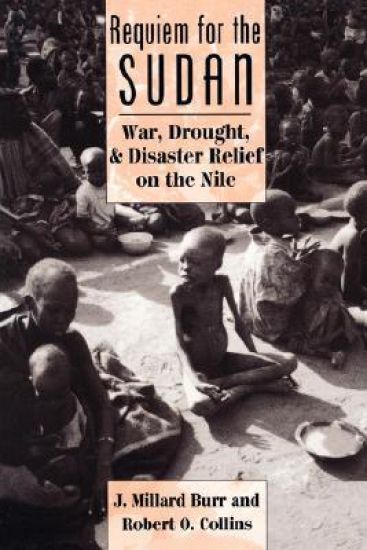
After a decade of uneasy peace, the historic conflict between the Northern Sudanese, who identify with their Middle Eastern neighbours, and the Southern Sudanese, who are of African heritage, erupted into violent conflict in 1983. This ferocious civil war, with its Arab militias and widespread use of automatic weapons, has devastated the populace. Nature has added to the miseries of war, bringing drought and famine to the already battered victims of violence. Although this regional calamity remains largely unknown to the outside world, the death toll among the Southern Sudanese far exceeds that in both Somalia or Bosnia. Over a million people have either perished or been displaced. This chilling account of the ravages of drought and civil war is based on a wealth of documents,never made public,from Sudanese government sources, private and foreign governmental aid agencies, research groups, international media, and other organizations involved in famine relief efforts. The authors graphically recount how the attempts of the international agencies and humanitarian organzations to provide food and medical relief have been thwarted by bureaucratic infighting, corruption, greed, and ineptitude. This rich narrative illustrates with great clarity the convoluted relationship that relief agencies had with the Sudanese government as they tried to negotiate the means of survival for the area's desperate population. It is a sad tale of the tragic human consequences of the failure of conflict resolution, of organizational mismanagement, and of a government hostile toward its own people.
This volume covers 3000 years in the history of eastern Africa. It features reports on: the ancient kingdoms of Ethiopia and Kush; ancient and medieval trade routes; the history of the east coast; the Nilotic slave trade; the appearance of Indian and white settlers; modern times; and more.
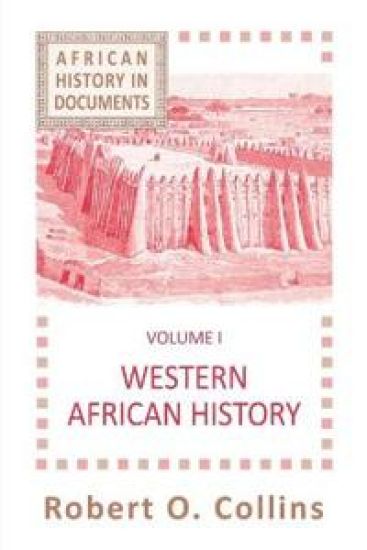
This volume covers five hundred years of history, beginning with the writings of travelers Ibn Battuta, Leo Africanus, Mungo Park, Heinrich Barth, René Caillé, and Mary Kingsley, as well as many others. Religious wars are described by chroniclers such as Abd Allah ibn Muhammad and Al-Kanami, Sire Abbas Soh, and Ahmadu Hampate Ba. The trans-Saharan and cross-Atlantic slave trades are a central concern of the book and the French and British colonial periods are also scrutinized. Modern times are examined in the texts of Nnamidi Azikiwe, Léopold Senghor, Sékou Touré, and Kwame Nkrumah. Special emphasis is placed on original African texts about political traditions, independence movements after WWII, the law, and other themes of social and political history. The African History in Documents series also features: Volume II: Eastern African History and Volume III: Central and South African History.
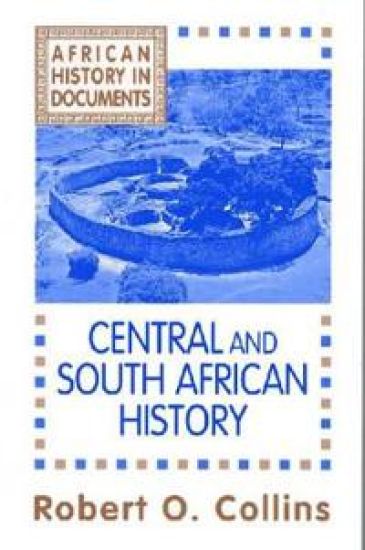
A history of Central and South Africa. Beginning with the kingdoms of the Congo in the 14th and 15th century, and their histories, this volume analyzes the influence and pressures of the Portuguese, Catholic Church, and the slave trader on these blossoming African states.
This is a study of the evolution of proposals to develop the Nile Basin to ensure the best use of its precious waters. The hydropolitics of the Nile Valley is the most important issue today for the future of the inhabitants of Egypt, the Sudan, Ethiopia, and East Africa. The story of `Nile Control' is the product of British, Egyptian, and Sudanese engineers and hydrologists, whose designs have determined the way of life of the millions who depend upon the Nile waters for their survival.