
Kirjailija
Robert Orlando
Kirjat ja teokset yhdessä paikassa: 4 kirjaa, julkaisuja vuosilta 2019–2025, suosituimpiin kuuluu The Divine Plan. Vertaile teosten hintoja ja tarkista saatavuus suomalaisista kirjakaupoista.
4 kirjaa
Kirjojen julkaisuvuodet: 2019–2025.
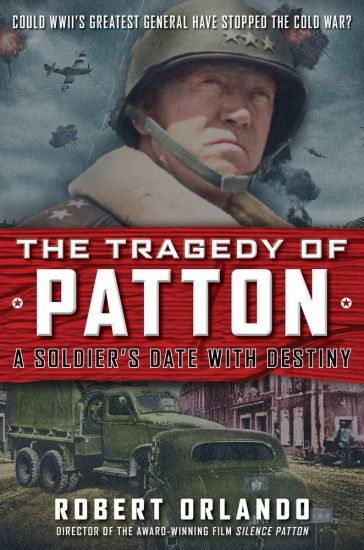
"Better to fight for something than live for nothing." — General George S. PattonIt is 75 years since the end of WW II and the strange, mysterious death of General George S. Patton, but as in life, Patton sets off a storm of controversy. The Tragedy of Patton: A Soldier's Date With Destiny asks the question: Why was General Patton silenced during his service in World War II? Prevented from receiving needed supplies that would have ended the war nine months earlier, freed the death camps, prevented Russian invasion of the Eastern Bloc, and Stalin's murderous rampage. Why was he fired as General of the Third Army and relegated to a governorship of post-war Bavaria? Who were his enemies? Was he a threat to Eisenhower, Montgomery, and Bradley? And is it possible as some say that the General's freakish collision with an Army truck, on the day before his departure for US, was not really an accident? Or was Patton not only dismissed by his peers, but the victim of an assassin's bullet at their behest? Was his personal silence necessary? General George S. Patton was America's antihero of the Second World War. Robert Orlando explores whether a man of such a flawed character could have been right about his claim that because the Allied troops, some within 200 miles of Berlin, or just outside Prague, were held back from capturing the capitals to let Soviet troops move in, the Cold War was inevitable. Patton said it loudly and often enough that he was relieved of command and silenced. Patton had vowed to “take the gag off” after the war and tell the intimate truth and inner workings about controversial decisions and questionable politics that had cost the lives of his men. Was General Patton volatile, bombastic, self-absorbed, reckless? Yes, but he was also politically astute and a brilliant military strategist who delivered badly needed wins. Questions still abound about Patton’s rise and fall. The Tragedy of Patton seeks to answer them.
The Problem of the Idea of Culture in John Paul II
John Corrigan; Robert Orlando
Lexington Books
2019
sidottu
The Problem of the Idea of Culture in John Paul II: Exposing the Disruptive Agency of the Philosophy of Karol Wojtyla exposes Wojtyla as a disruptive agency in contemporary philosophical debates, reformulating the problem of experience in light of the questions surrounding our idea of culture. Reconsidering the anthropological foundations of this idea, John Corrigan argues that the problem of experience manifests in the apparently divergent accounts of the meaning of human experience as presented by the philosophies of being and of consciousness. Wojtyla’s contemplation of the meaning of human existence led him to the problems of the structure of the person, human action, and the constitutive aspects of human culture. Analyzing the first two problems leads to an idea of the person capable of explaining human experience in relation to human culture; a proper understanding unfolds the experiences of self-knowledge, conscience, and the ontic-causal relationship of the person to human culture. The first part of the book concerns formal considerations regarding the constitutive aspects of Wojtyla’s approach, while the second part deals with pragmatic considerations drawn from his comments on culture. Corrigan provides a new lens with which to view and understand the philosophy of Karol Wojtyla/John Paul II.
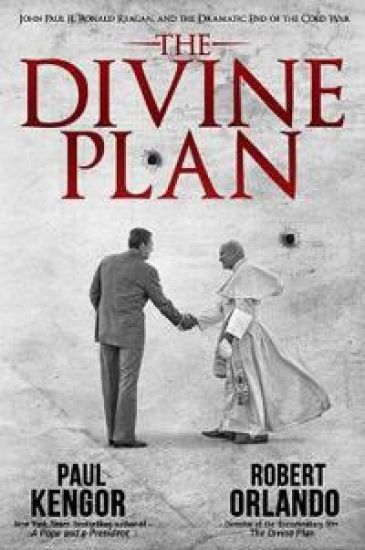
“Pope John Paul II and Ronald Reagan were preserved through this suffering for a high purpose. I don’t think you’ll understand either one of them without understanding that.” —Bishop Robert Barron in The Divine Plan Just six weeks apart in the spring of 1981, Pope John Paul II and President Ronald Reagan took bullets from would-be assassins. Few knew it at the time, but both men came close to dying. Surviving these near-death experiences created a singular bond between the Pope and the President that historians have failed to appreciate. When John Paul II and Reagan met in the Vatican only a year later, they confided to each other a shared conviction: that God had spared their lives for a reason. In this follow-up to Paul Kengor’s acclaimed bestseller A Pope and a President, Kengor teams up with writer-director Robert Orlando to shed new light on the extraordinary bond between John Paul II and Ronald Reagan, and how that bond drove the pope and the president to confront communism. Shorter and more focused than A Pope and a President, The Divine Plan also boasts an even greater range of authorities to fill in the picture. Kengor and Orlando interview more than a dozen experts, including well-known historians Douglas Brinkley, H. W. Brands, Anne Applebaum, John O’Sullivan, and Craig Shirley; the leading biographer of John Paul II, George Weigel; close Reagan adviser Richard V. Allen; and Cardinal Timothy Dolan and Bishop Robert Barron.