Kirjojen hintavertailu – 12 903 725 kirjaa ja 27 kauppaa

Kirjailija

Robert Orrison

Kirjat ja teokset yhdessä paikassa: 4 kirjaa, julkaisuja vuosilta 2018–2024, suosituimpiin kuuluu In a Single Blow. Vertaile teosten hintoja ja tarkista saatavuus suomalaisista kirjakaupoista.

4 kirjaa

Kirjojen julkaisuvuodet: 2018–2024.

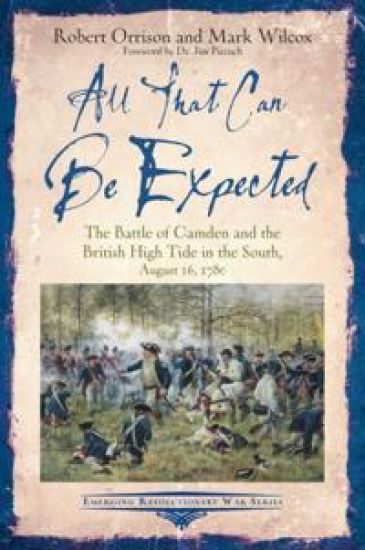
All That Can Be Expected

All That Can Be Expected

Robert Orrison; Mark Wilcox

Savas Beatie
2024
nidottu
“They have done all that can be expected of them; we are outnumbered and outflanked,” so described Lt. Col. Benjamin Ford of the desperate situation for his Marylanders at Camden on August 16, 1780. The battle of Camden is considered by many historians as the high tide of Great Britain’s prospects for victory in the American south. Beginning in the spring of 1780, British leadership focused their attention on conquering the southern colonies. In May 1780, Charleston, South Carolina capitulated and the British captured the bulk of the American Southern army. After the fall of Charleston, the British set up outposts through the South Carolina backcountry in an effort to secure the colony with hopes of moving into North Carolina. In response, the Continental Congress sent the “hero of Saratoga,” Gen. Horatio Gates, to establish a new American Southern army. Gates named this new force as his “Grand Army,” of which its core was a small contingent of experienced Continentals from Maryland and Delaware. However, the majority of Gates’ army were untested, newly-recruited militia from Virginia and North Carolina. Soon after arriving in North Carolina, Gates impetuously led his forces south to confront the British based near Camden, South Carolina. The mostly- inexperienced army lined up against some of the best units of the British army in America and commanded by one of their best generals, Gen. Lord Charles Cornwallis. In a series of misfortunes, what happened on August 16, 1780 was an unmitigated disaster for the Americans. In All That Can Be Expected: The Battle of Camden and the British High Tide in the South, August 16, 1780, historians Rob Orrison and Mark Wilcox describe the events that led to one of the worst American military defeats in United States history. The authors lead you in the footsteps of American and British soldiers throughout the South Carolina backcountry. They interweave a clear historic narrative while guiding the reader to historic locations, creating a precise understanding of the events of August 1780.
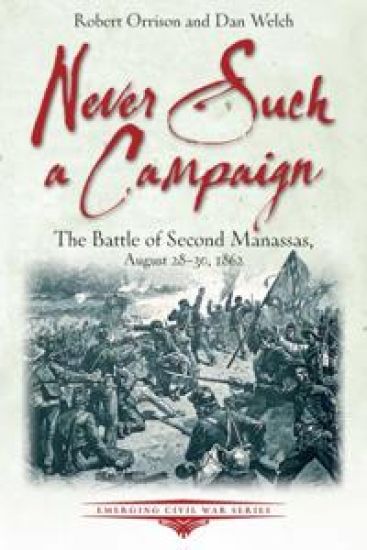
Never Such a Campaign

Never Such a Campaign

Robert Orrison; Dan Welch

Savas Beatie
2024
nidottu
July, 1862. General Robert E. Lee, now in command of the Confederate Army of Northern Virginia, had driven back the massive Federal Army of the Potomac from the very gates of the Confederate capital. Richmond was safe – at least for the moment. But soon, new threats emerged against Lee’s army and the Confederate war effort in Virginia. Rumors swirled that a Federal command headed towards Fredericksburg, and a new Federal army, the Army of Virginia, under Maj. Gen. John Pope, was shifting operations towards Confederate communications and supply points. Pope had come from the west, where he had scored successes along the Mississippi River. He brought with him a harder philosophy of war, one that would put pressure not just on Lee’s army but on the population of Virginia itself. Not only alarmed but also offended by “such a miscreant as Pope,” Lee began moving his own forces. He intended to not just counter the new threat but to “suppress” it. In Never Such a Campaign: The Battle of Second Manassas, August 28-30, 1862, historians Robert Orrison and Dan Welch follow Lee and Pope as they converge on ground once-bloodied just thirteen months earlier. Since then the armies had grown in size and efficiency, and combat between them would dwarf that first battle. For the second summer in a row, forces would clash on the plains of Manassas, and the results would be far more terrible.
To Hazard All

To Hazard All

Robert Orrison; Kevin Pawlak

Savas Beatie
2018
nidottu
“The present seems to be the most propitious time since the commencement of the war for the Confederate Army to enter Maryland,” wrote Robert E. Lee following his army’s stunning success at Second Manassas. Confederate armies advanced across a thousand mile front in the summer of 1862. The world watched anxiously—could the Confederacy achieve its independence? Reacting to the Army of Northern Virginia’s trek across the Potomac River, George B. McClellan gathered the broken and scattered remnants of several Federal armies within Washington, D. C. to repel the invasion and expel the Confederates from Maryland. “Everything seems to indicate that they intend to hazard all upon the issue of the coming battle,” he said of the invading force. Historians Robert Orrison and Kevin Pawlak trace the routes both armies traveled during the Maryland Campaign, ultimately coming to a climactic blow on the banks of Antietam Creek. That clash on September 17, 1862, to this day remains the bloodiest single day in American history. To Hazard All: A Guide to the Maryland Campaign, 1862 offers several day trip tours and visits many out-of-the-way sites related to the Maryland Campaign. Chapters include: Confederates Enter Maryland The Federals Respond The Investment of Harpers Ferry The Battle of South Mountain The Battle of Antietam Return to Virginia
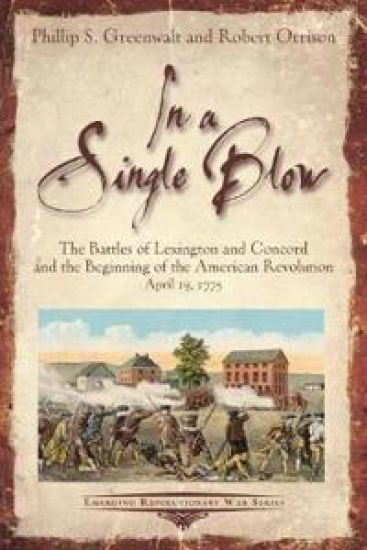
In a Single Blow

In a Single Blow

Phillip Greenwalt; Robert Orrison

Savas Beatie
2018
nidottu
“I have now nothing to trouble your Lordship with, but an affair that happened on the 19th instant . . .” General Thomas Gage penned the above line to his superiors in London, casually summing up the shots fired at Lexington and Concord on April 19, 1775. The history of the Battles of Lexington and Concord were the culmination of years of unrest between those loyal to the British monarchy and those advocating for more autonomy and dreaming of independence from Great Britain in the futre. On the morning of April 19th, Gage sent out a force of British soldiers under the command of Lieutenant Colonel Francis Smith to confiscate, recapture, and destroy the military supplies gathered by the colonists and believed to be stored in the town of Concord. Due to the alacrity of men such as Dr. James Warren, Paul Revere, and William Dawes, utilizing a network of signals and outriders, the countryside was well-aware of the approaching British, setting the stage for the day’s events. When the column reached the green of Lexington, Massachusetts, militiamen awaited their approach. The first shots of April 19th would be fired there. The rest of the day unfolded accordingly. Historians Phillip S. Greenwalt and Robert Orrison unfold the facts of April 19, 1775, uncovering the amazing history that this pivotal spring day ushered in for the fate of Massachusetts and thirteen of Great Britain’s North American colonies with In a Single Blow.