
Kirjailija
Robert P Vande Kappelle
Kirjat ja teokset yhdessä paikassa: 79 kirjaa, julkaisuja vuosilta 2010–2023, suosituimpiin kuuluu Love Never Fails, Second Edition. Vertaile teosten hintoja ja tarkista saatavuus suomalaisista kirjakaupoista.
79 kirjaa
Kirjojen julkaisuvuodet: 2010–2023.
Life's ultimate adventure--its grandest game and greatest challenge--is the spiritual transformation of the self. According to Swiss psychiatrist Carl Jung, personality and spirituality are interrelated, spirituality flowing out of individuality. Noting that people differ in fundamental ways, even though they possess the same instincts to drive them from within, Jung discovered that preference, rather than instinct, upbringing, environment, or genetic conditioning, is central to personality. The task of spirituality, then, is not to help us achieve correct doctrine or attain saintly status, but rather to help us best understand our humanity. This endeavor drives Deeper Splendor, a study of spirituality and personality in modern literature. We focus on modern literature, rather than on theology, philosophy, psychology, or sociology, because, as this volume makes clear, one of the best resources for studying transformative spirituality is great literature. The great power of literature is that it speaks of human action and thought, not in the dry, matter-of-fact terms of history, ethics, psychology, or some other science, but in ways that are lively, uplifting, and productive. Engaging with great literature is like beginning a love affair. Such encounters may appear daunting at first, but when you fall in love, you want to know everything about the object of your love, and every encounter leaves you wanting more. When literature enhances spirituality--as is true in the dozen or more selections examined in Deeper Splendor--each literary moment renders us more fully alive. Like its companion texts, Wading in Water and Deep Splendor, this volume is useful for individual or group study. Each chapter concludes with questions suitable for discussion or reflection.
People concerned with spirituality are seekers; instead of possessing truth, they seek to be possessed by it. Thus, a fully spiritual person is forever learning and growing. William Blake, the seminal mystic poet who worked to bring about change both in the social order and in common ways of thinking, taught that ""all we need to do is cleanse the doors of perception, and we shall see things as they are--infinite."" And nothing cleanses--and enlarges--the doors of perception like great literature. Whether it be poetry, a short story, a novel, historical fiction, fantasy literature, or biographical writing, the literary experience is slightly beyond a reader's horizon of understanding. When literature enhances spirituality--as is true of the dozen or more selections examined in Deep Splendor--each literary moment confounds in order to keep us forever enthralled, forever longing. The authors and works examined in this study explore timeless spiritual themes such as coming of age, relationships, self-integration, the struggle of good versus evil, the nature of change, and the corruptive aspects of power. When we think about great literature, it is easy to focus objectively on the literature itself, on what makes literature ""bad"" or ""good."" However, another essential distinction involves the reader, replacing the category ""good book"" with that of ""good reader."" As master teacher C. S. Lewis wrote, a quality of good readers is that they seek an enlargement of their being. Deep Splendor will teach you how to read great literature and how to be a good reader.
People concerned with spirituality are seekers; instead of possessing truth, they seek to be possessed by it. Thus, a fully spiritual person is forever learning and growing. William Blake, the seminal mystic poet who worked to bring about change both in the social order and in common ways of thinking, taught that all we need to do is cleanse the doors of perception, and we shall see things as they are--infinite. And nothing cleanses--and enlarges--the doors of perception like great literature. Whether it be poetry, a short story, a novel, historical fiction, fantasy literature, or biographical writing, the literary experience is slightly beyond a reader's horizon of understanding. When literature enhances spirituality--as is true of the dozen or more selections examined in Deep Splendor--each literary moment confounds in order to keep us forever enthralled, forever longing. The authors and works examined in this study explore timeless spiritual themes such as coming of age, relationships, self-integration, the struggle of good versus evil, the nature of change, and the corruptive aspects of power. When we think about great literature, it is easy to focus objectively on the literature itself, on what makes literature bad or good. However, another essential distinction involves the reader, replacing the category good book with that of good reader. As master teacher C. S. Lewis wrote, a quality of good readers is that they seek an enlargement of their being. Deep Splendor will teach you how to read great literature and how to be a good reader.
At a time when people are increasingly considering themselves ""spiritual but not religious,"" Wading in Water speaks of spirituality as an individual's connection to a greater whole. Hence, the process of coming to know what we call God is also the process of knowing oneself. Thinking comprehensively, spirituality involves what is, what can be, and what ought to be. When activity, rationality, and morality are infused with creativity and imagination, meaning that when body, mind, and soul are inspirited or harmonious with Spirit, spirituality is authentic, healthy, and vital. Healthy spirituality is integrative, both individually and corporately, in that it emerges from wholeness and yearns for wholeness. How do we know if we are on a path to increased wholeness? When we experience not only individual well-being, but help generate the same well-being toward others. In other words, wholesome self-love leads to greater love for others and for all of life. While Wading may be seen as a text on spirituality, its uniqueness is its connection of spirituality with creative arts such as poetry, literary allegory, film, music, theatre, drama, and dance. Wading is not a comprehensive study, for the purpose is to promote the enrichment of life through beauty, creativity, diversity, risk-taking, newness, serendipity, and synchronicity, joint features of spirituality and the arts. Like its companion text, Walking on Water, this volume is useful for individual or group study. Each chapter concludes with questions suitable for discussion or reflection.
At a time when people are increasingly considering themselves spiritual but not religious, Wading in Water speaks of spirituality as an individual's connection to a greater whole. Hence, the process of coming to know what we call God is also the process of knowing oneself. Thinking comprehensively, spirituality involves what is, what can be, and what ought to be. When activity, rationality, and morality are infused with creativity and imagination, meaning that when body, mind, and soul are inspirited or harmonious with Spirit, spirituality is authentic, healthy, and vital. Healthy spirituality is integrative, both individually and corporately, in that it emerges from wholeness and yearns for wholeness. How do we know if we are on a path to increased wholeness? When we experience not only individual well-being, but help generate the same well-being toward others. In other words, wholesome self-love leads to greater love for others and for all of life. While Wading may be seen as a text on spirituality, its uniqueness is its connection of spirituality with creative arts such as poetry, literary allegory, film, music, theatre, drama, and dance. Wading is not a comprehensive study, for the purpose is to promote the enrichment of life through beauty, creativity, diversity, risk-taking, newness, serendipity, and synchronicity, joint features of spirituality and the arts. Like its companion text, Walking on Water, this volume is useful for individual or group study. Each chapter concludes with questions suitable for discussion or reflection.
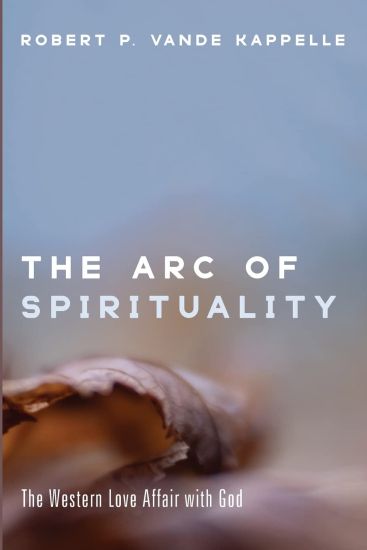
The Arc of Spirituality invites readers on a journey through Western history, a journey that begins with the pioneering concepts of ancient Israelites, who understood spirituality communally and covenantally. Continuing biblically with wisdom and apocalyptic conceptions, The Arc of Spirituality examines Western Christian spirituality as it developed historically through twelve phases, culminating in the modern period with ethical, ecumenical, pluralist, and ecological expressions, and most recently, with postmodern secular alternatives. Having described his own journey in previous volumes, in this culminating book Vande Kappelle builds on earlier writings such as Response to the Other, The Second Journey, and The Church Alumni Association to tell the story of the Western world's unfolding love affair with God. The narrative, while continuously inspiring, necessarily takes us through dark alleys and down deep rabbit holes in spirituality's never-ending quest to know and experience the transcendence around us and within. The goal of spirituality is always God, and while God makes the journey interesting, it is never easy, for there are no clear steps to follow or learn. While spirituality is more caught than taught, at some point we discover it is more about unlearning than learning, enriched more by subtraction than by addition. The Arc of Spirituality is useful for individual or group study. Each chapter concludes with questions for discussion or reflection.
The Arc of Spirituality invites readers on a journey through Western history, a journey that begins with the pioneering concepts of ancient Israelites, who understood spirituality communally and covenantally. Continuing biblically with wisdom and apocalyptic conceptions, The Arc of Spirituality examines Western Christian spirituality as it developed historically through twelve phases, culminating in the modern period with ethical, ecumenical, pluralist, and ecological expressions, and most recently, with postmodern secular alternatives. Having described his own journey in previous volumes, in this culminating book Vande Kappelle builds on earlier writings such as Response to the Other, The Second Journey, and The Church Alumni Association to tell the story of the Western world's unfolding love affair with God. The narrative, while continuously inspiring, necessarily takes us through dark alleys and down deep rabbit holes in spirituality's never-ending quest to know and experience the transcendence around us and within. The goal of spirituality is always God, and while God makes the journey interesting, it is never easy, for there are no clear steps to follow or learn. While spirituality is more caught than taught, at some point we discover it is more about unlearning than learning, enriched more by subtraction than by addition. The Arc of Spirituality is useful for individual or group study. Each chapter concludes with questions for discussion or reflection.
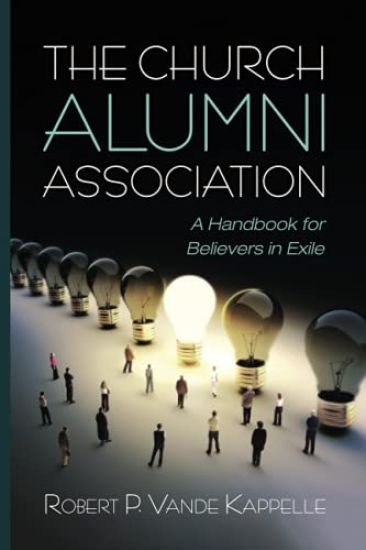
Many people today, including Christians of deep conviction, are deciding, for one reason or another, to stop attending church. They have been swept up by the avalanche in America known simply as the ""nones,"" thereby joining the ranks of the religiously unaffiliated dubbed the ""church alumni association""--or perhaps more accurately ""believers in exile""--by Anglican Bishop John Shelby Spong. Research shows that during the first two decades of the twenty-first century, a seismic shift occurred in the U. S. population away from religious institutions and toward disaffiliation. While the causes and effects of this dislocation are varied and numerous, by 2015, the phenomenon of shrinking faith communities was so widespread that ""nones"" became the third largest religious identity in the world, behind Christians and Muslims. Today there are more religious ""nones"" than Catholics or evangelicals, and 36 percent of those born after 1981 do not identify with any religion. Does this shift mark a loss of spirituality, or do these changes point to a new global religious awakening, one that affirms religious pluralism and views faith relationally rather than dogmatically--as a way of the heart and not of the head? While some Christians are staying put, experiencing the current shift in traditional church settings, this book proposes a new understanding of the church, a new pattern and vision for Christian living and thinking that can transform our understanding of God, others, nature, and ourselves. Useful for individual or church study, each chapter of The Church Alumni Association concludes with questions for discussion and reflection.
Many people today, including Christians of deep conviction, are deciding, for one reason or another, to stop attending church. They have been swept up by the avalanche in America known simply as the ""nones,"" thereby joining the ranks of the religiously unaffiliated dubbed the ""church alumni association""--or perhaps more accurately ""believers in exile""--by Anglican Bishop John Shelby Spong. Research shows that during the first two decades of the twenty-first century, a seismic shift occurred in the U. S. population away from religious institutions and toward disaffiliation. While the causes and effects of this dislocation are varied and numerous, by 2015, the phenomenon of shrinking faith communities was so widespread that ""nones"" became the third largest religious identity in the world, behind Christians and Muslims. Today there are more religious ""nones"" than Catholics or evangelicals, and 36 percent of those born after 1981 do not identify with any religion. Does this shift mark a loss of spirituality, or do these changes point to a new global religious awakening, one that affirms religious pluralism and views faith relationally rather than dogmatically--as a way of the heart and not of the head? While some Christians are staying put, experiencing the current shift in traditional church settings, this book proposes a new understanding of the church, a new pattern and vision for Christian living and thinking that can transform our understanding of God, others, nature, and ourselves. Useful for individual or church study, each chapter of The Church Alumni Association concludes with questions for discussion and reflection.
We live in a time of religious warfare, not just between different religions, but also between those with differing versions of the same faith. This religious distrust and political conflict may be the worst in American history since the Civil War. Speaking as a ""progressive conservative,"" biblical scholar Robert Vande Kappelle uses a four-stage model of faith development to rethink core Christian doctrines. Starting with current events and a discussion on the role of religion, this book examines how inadequate faith development makes people of faith susceptible to misinformation, conspiracy thinking, and even to cultic mindsets. People of faith do not choose to believe a lie; they all want to believe what is true. Hence, it is surprising that, in the realm of religion, so many people are willing to rely upon untested and even highly disputed beliefs, beliefs most received as children. Unfortunately, many of these teachings are based upon ancient hopes and fears rather than upon factual historical information. Taken literally, dualistic teachings concerning heaven and hell, sin and salvation, good and evil, and apocalyptic beliefs such as the ""end times"" and the imminent return of Christ to earth are questionable, not only because they are beyond historical and scientific verification, but also because they can be misused by authoritarian leaders to control and mislead devout individuals. Thankfully, there is a way to outgrow cultic Christianity. The path to spiritual maturity comes by restoring the role of religion, a form of spirituality discovered not by addition, but by a process of subtraction. Outgrowing Cultic Christianity is useful for individual or group study. Each chapter concludes with questions suitable for discussion or reflection.
The Bible is the single most important book in the history of Western civilization; it is also the most widely misunderstood. To understand the Bible, we must consider its historical and literary context. Utilizing the contributions of three disciplines--biblical introduction, biblical theology, and biblical interpretation, Understanding Scripture sets the record straight. Intended as a handbook or study guide, this work provides forty practical guidelines to make your reading of the Bible more useful and your understanding clearer. The goal of this book is not simply to persuade you to read the Bible more frequently, but to encourage you to read it with discernment. The forty concepts alluded to in the book's subtitle are not factual in nature, meaning they are little concerned with biblical information. Rather, they comprise interpretive tools, ""insider"" techniques used by biblical scholars but widely unknown or ignored by average readers or believers. Parabolic in nature, the forty statements are designed to promote conversation rather than close or clinch an argument. This book is designed to keep you awake at night, romancing Scripture rather than mastering it, nourishing your spirituality rather than gorging or starving it. Understanding Scripture is useful for individual or group study. Each chapter concludes with questions suitable for discussion or reflection.
The Bible is the single most important book in the history of Western civilization; it is also the most widely misunderstood. To understand the Bible, we must consider its historical and literary context. Utilizing the contributions of three disciplines--biblical introduction, biblical theology, and biblical interpretation, Understanding Scripture sets the record straight. Intended as a handbook or study guide, this work provides forty practical guidelines to make your reading of the Bible more useful and your understanding clearer. The goal of this book is not simply to persuade you to read the Bible more frequently, but to encourage you to read it with discernment. The forty concepts alluded to in the book's subtitle are not factual in nature, meaning they are little concerned with biblical information. Rather, they comprise interpretive tools, ""insider"" techniques used by biblical scholars but widely unknown or ignored by average readers or believers. Parabolic in nature, the forty statements are designed to promote conversation rather than close or clinch an argument. This book is designed to keep you awake at night, romancing Scripture rather than mastering it, nourishing your spirituality rather than gorging or starving it. Understanding Scripture is useful for individual or group study. Each chapter concludes with questions suitable for discussion or reflection.
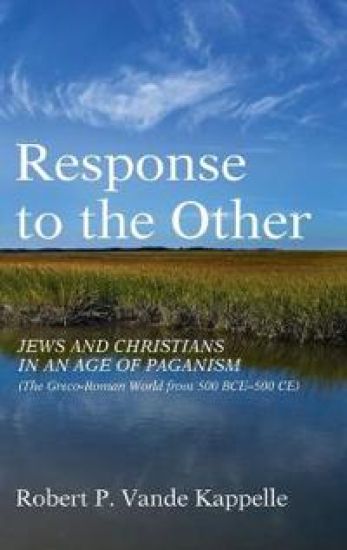
Human beings seek meaning and purpose. To do so, we tell stories about the past, which we call history, and stories about what will occur in the future, constructed from memory and imagination. History is not a subject we study, but one we live. History is our medium, as water is to fish. No period of antiquity is more informative and influential for Western civilization than the Greco-Roman, the period from the time of Alexander the Great to the fall of the Roman Empire, an age that saw the emergence of Judaism and Christianity--twin traditions shaped against the background of pagan dominance. The meeting between Jew and Greek, Christian and pagan, revolutionized the ancient world. It represented a crucial moment in the history of Western society, when politics, economics, culture, and religion took a new turn. In time, these separate streams mingled and merged, forming the single and ever-widening current that gave birth to modernity. Moving against the stream of religious exclusivism, this book does not seek to further the cause of one particular religious perspective, but rather to gain insight on how ancient pagans, Jews, and Christians interacted with one another. This study advances contemporary attempts at dialogue and cooperation, enabling people of differing agendas to focus their energy on finding solutions to problems plaguing our planet. Response to the Other has much to offer specialists and non-specialists alike. This work can be used as a study guide, the questions at the end of each chapter suitable for individual or group use.
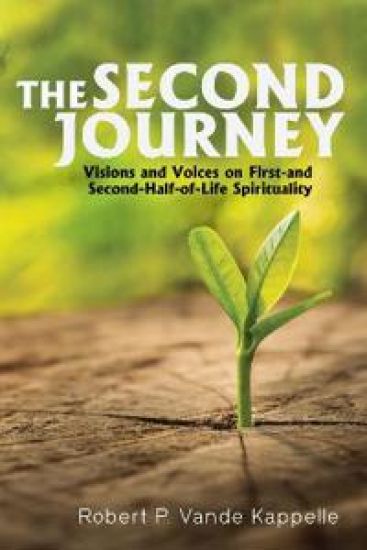
Spirituality is our connection to a greater whole. It is a journey ""from God, to God, and with God,"" and thus a journey toward Self. Through this process, we come to differentiate between our temporary self, called ego, and our permanent self, the part of us made for ongoing relationship with God. In the end, we discover that we know God by being known, much like one loves by being loved. There are two ""halves"" or phases in spirituality, sometimes flawed, sometimes overlapping, and other times distinct. While many people experience first-half-of-life spirituality, most never get to second-half-of-life thinking and living. Designed as a study guide for group or individual use, The Second Journey examines the development of Christian spirituality, starting with its conception in the biblical and Greek philosophical tradition and continuing in orthodox and heterodox expressions. Reading this book is like looking through one's favorite album of photographs, each illustrating some aspect or dimension vital to spirituality. The range of portraits examined is extensive, including groups such as Platonists, Stoics, Gnostics, Quakers, Revivalists, Neo-Orthodox, and Eastern Orthodox, and individuals such as Philo, Valentinus, Origen, Dionysius, Augustine, Julian of Norwich, John of the Cross, Jonathan Edwards, John Wesley, Schleiermacher, Kierkegaard, Barth, Tillich, and Richard Rohr. Examining traditional and non-traditional thinkers, readers will discover that knowing God involves both light and darkness, usually in that order. ""Spirituality does not make us otherworldly; it renders us more fully alive."" --Matthew Fox