Kirjojen hintavertailu – 12 903 725 kirjaa ja 27 kauppaa

Kirjailija

Robert Plomin

Kirjat ja teokset yhdessä paikassa: 14 kirjaa, julkaisuja vuosilta 1986–2022, suosituimpiin kuuluu The Genetic and Environmental Origins of Learning Abilities and Disabilities in the Early School Years. Vertaile teosten hintoja ja tarkista saatavuus suomalaisista kirjakaupoista.

14 kirjaa

Kirjojen julkaisuvuodet: 1986–2022.

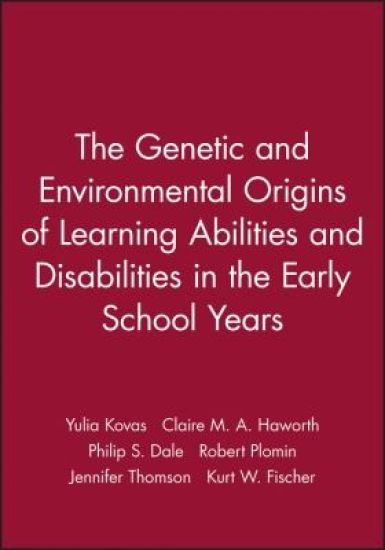
The Genetic and Environmental Origins of Learning Abilities and Disabilities in the Early School Years

The Genetic and Environmental Origins of Learning Abilities and Disabilities in the Early School Years

Yulia Kovas; Claire M. A. Haworth; Philip S. Dale; Robert Plomin; Jennifer Thomson; Kurt W. Fischer

Wiley-Blackwell (an imprint of John Wiley Sons Ltd)
2007
nidottu
Despite the importance of learning abilities and disabilities in education and child development, little is known about their genetic and environmental origins in the early school years. This study reports results for English (which includes reading, writing, and speaking), mathematics, and science as well as general cognitive ability in a large and representative sample of U. K. twins studied at 7, 9, and 10 years of agePresents new univariate, multivariate, and longitudinal analyses that systematically examine genetic and environmental influences for the entire sample at all ages for all measures for both the low extremes (disabilities) and the entire sample (abilities)Draws conclusions have far-reaching implications for education and child development as well as for molecular genetics and neuroscience
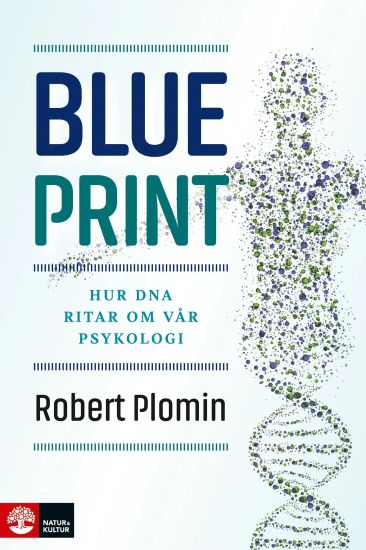
Blueprint : hur DNA ritar om vår psykologi

Blueprint : hur DNA ritar om vår psykologi

Robert Plomin

Natur Kultur Allmänlitteratur
2022
pokkari
Vårt DNA utgör själva den ritning som gör oss till dem vi är. Konsekvenserna för våra liv – för barnuppfostran, utbildningssystemet och samhället – är enorma. Men ändå är det bara en föraning av framtiden: att kunna förutse psykiska problem och styrkor med hjälp av vårt DNA. Vi befinner oss nu vid den vändpunkt där genetiken förändrar psykologin och dess betydelse för våra liv. Vår framtid stavas DNA. Blueprint summerar många års forskning om genetik och sambandet med psykologiska egenskaper, och Robert Plomin beskriver bättre än någon annan det genombrott som skett de senaste åren. Han utforskar på djupet en av samtidens stora frågeställningar: arvets kontra miljöns betydelse för individen. Robert Plominär psykolog och beteendegenetiker, född 1948 i Chicago och verksam som professor vid King’s College i London.
Blueprint : hur DNA ritar om vår psykologi

Blueprint : hur DNA ritar om vår psykologi

Robert Plomin

Natur Kultur Akademisk
2020
sidottu
Vårt DNA utgör själva den ritning som gör oss till dem vi är. Konsekvenserna för våra liv – för barnuppfostran, utbildningssystemet och samhället – är enorma. Men ändå är det bara en föraning av framtiden: att kunna förutse psykiska problem och styrkor med hjälp av vårt DNA. Vi befinner oss nu vid den vändpunkt där genetiken förändrar psykologin och dess betydelse för våra liv. Vår framtid stavas DNA. Blueprint summerar många års forskning om genetik och sambandet med psykologiska egenskaper, och Robert Plomin beskriver bättre än någon annan det genombrott som skett de senaste åren. Han utforskar på djupet en av samtidens stora frågeställningar: arvets kontra miljöns betydelse för individen. Robert Plominär psykolog och beteendegenetiker, född 1948 i Chicago och verksam som professor vid King’s College i London.
Blueprint, with a New Afterword

Blueprint, with a New Afterword

Robert Plomin

MIT Press
2019
muu

Halvin toimitettuna 24,80 €

A top behavioral geneticist makes the case that DNA inherited from our parents at the moment of conception can predict our psychological strengths and weaknesses. In Blueprint, behavioral geneticist Robert Plomin describes how the DNA revolution has made DNA personal by giving us the power to predict our psychological strengths and weaknesses from birth. A century of genetic research shows that DNA differences inherited from our parents are the consistent lifelong sources of our psychological individuality--the blueprint that makes us who we are. Plomin reports that genetics explains more about the psychological differences among people than all other factors combined. Nature, not nurture, is what makes us who we are. Plomin explores the implications of these findings, drawing some provocative conclusions--among them that parenting styles don't really affect children's outcomes once genetics is taken into effect. This book offers readers a unique insider's view of the exciting synergies that came from combining genetics and psychology. The paperback edition has a new afterword by the author.
Blueprint

Blueprint

Robert Plomin

Penguin
2019
pokkari

Halvin toimitettuna 17,00 €

The blueprint for our individuality lies in the 1% of DNA that differs between people. Our intellectual capacity, our introversion or extraversion, our vulnerability to mental illness, even whether we are a morning person - all of these aspects of our personality are profoundly shaped by our inherited DNA differences. In Blueprint, Robert Plomin, a pioneer in the field of behavioural genetics, draws on a lifetime's worth of research to make the case that DNA is the most important factor shaping who we are. Our families, schools and the environment around us are important, but they are not as influential as our genes. This is why, he argues, teachers and parents should accept children for who they are, rather than trying to mould them in certain directions. Even the environments we choose and the signal events that impact our lives, from divorce to addiction, are influenced by our genetic predispositions. Now, thanks to the DNA revolution, it is becoming possible to predict who we will become, at birth, from our DNA alone. As Plomin shows us, these developments have sweeping implications for how we think about parenting, education, and social mobility. A game-changing book by a leader in the field, Blueprint shows how the DNA present in the single cell with which we all begin our lives can impact our behaviour as adults.
Temperament (PLE: Emotion)

Temperament (PLE: Emotion)

Arnold H. Buss; Robert Plomin

Psychology Press Ltd
2016
nidottu
Originally published in 1984, this title looks at the development of temperament in early life. At the time of publication there were three major perspectives of temperament: paediatrics, individual differences in infants and inherited personality traits that appear in early life. Whatever the diversity of these perspectives, they converge on personality traits that develop early in life, hence the title of this book. The authors start by looking at the main research in this field, then go on to discuss their own approach to temperament, building on their original theory from 1975.
Behavioral Genetics

Behavioral Genetics

Valerie S. Knopik; Jenae M. Neiderhiser; John C. DeFries; Robert Plomin

Worth Publishers
2016
sidottu
Authored by leading experts in the field, the new 7th edition of this classic text provides the most up-to-date and comprehensive introduction to behavioural genetics available today. Behavioural Genetics, 7th edition introduces students to the field’s underlying principles, defining experiments, on-going controversies, and most recent discoveries. The text provides students with an understanding of heredity, it’s DNA basis, the methods used to discover genetic influence on behaviour and identify specific genes. It then examines what is known about genetic influence on cognitive ability, psychopathology, substance abuse, personality, health psychology, and aging. Finally, it looks to the future of the field, where some of the most exciting developments in behavioural sciences are being made.
Temperament (PLE: Emotion)

Temperament (PLE: Emotion)

Arnold H. Buss; Robert Plomin

Psychology Press Ltd
2014
sidottu
Originally published in 1984, this title looks at the development of temperament in early life. At the time of publication there were three major perspectives on temperament: paediatrics, individual differences in infants, and inherited personality traits that appear in early life. Whatever the diversity of these perspectives, they converge on personality traits that develop early in life, hence the title of this book. The authors start by looking at the main research in this field, then go on to discuss their own approach to temperament, building on their original theory from 1975.
G is for Genes

G is for Genes

Kathryn Asbury; Robert Plomin

John Wiley Sons Inc
2013
nidottu
G is for Genes shows how a dialogue between geneticists and educationalists can have beneficial results for the education of all children—and can also benefit schools, teachers, and society at large. Draws on behavioral genetic research from around the world, including the UK-based Twins’ Early Development Study (TEDS), one of the largest twin studies in the worldOffers a unique viewpoint by bringing together genetics and education, disciplines with a historically difficult relationshipShows that genetic influence is not the same as genetic determinism and that the environment matters at least as much as genesDesigned to spark a public debate about what naturally-occurring individual differences mean for education and equality
G is for Genes

G is for Genes

Kathryn Asbury; Robert Plomin

John Wiley Sons Inc
2013
sidottu
G is for Genes shows how a dialogue between geneticists and educationalists can have beneficial results for the education of all children—and can also benefit schools, teachers, and society at large. Draws on behavioral genetic research from around the world, including the UK-based Twins’ Early Development Study (TEDS), one of the largest twin studies in the worldOffers a unique viewpoint by bringing together genetics and education, disciplines with a historically difficult relationshipShows that genetic influence is not the same as genetic determinism and that the environment matters at least as much as genesDesigned to spark a public debate about what naturally-occurring individual differences mean for education and equality
Nature and Nurture during Infancy and Early Childhood

Nature and Nurture during Infancy and Early Childhood

Robert Plomin; John C. DeFries; David W. Fulker

Cambridge University Press
2006
pokkari
Quantitative genetics offers a general theory of the development of individual differences that suggests novel concepts and research strategies: the idea that genetic influences operate in age-to-age change as well as in continuity for example. Quantitative genetics also provides powerful methods to address questions of change and continuity, including model-fitting approaches that test the fit between a specific model of genetic and environmental influences and observed correlations among family members, which are here helpfully introduced. A simple parent and offspring model is extended to include longitudinal and multivariate analyses. Longitudinal quantitative genetic research is essential to the understanding of developmental change and continuity. The largest and longest longitudinal adoption study is the Colorado Adoption Project, which has generated much of the rich data on the progress from infancy to early childhood on which the authors draw throughout this 1988 book. Their conclusions about what we know, and what we need to learn, about the origins of individual differences will interest a wide range of readers.
The Relationship Code

The Relationship Code

David Reiss; Jenae M. Neiderhiser; E. Mavis Hetherington; Robert Plomin

Harvard University Press
2003
nidottu
The Relationship Code is the report of a longitudinal study, conducted over a ten-year period, of the influence of family relationships and genetic factors on competence and psychopathology in adolescent development. The sample for this landmark study included 720 pairs of same-sex adolescent siblings—including twins, half siblings, and genetically unrelated siblings—and their parents. Using a clear expressive style, David Reiss and his coinvestigators identify specific mechanisms that link genetic factors and the social environment in psychological development. They propose a striking hypothesis: family relationships are crucial to the expression of genetic influences on a broad array of complex behaviors in adolescents. Moreover, this role of family relationships may be very specific: some genetic factors are linked to mother–child relationships, others to father–child relations, some to relationship warmth, while others are linked to relationship conflict or control. The specificity of these links suggests that family relationships may constitute a code for translating genetic influences into the ontogeny of behaviors, a code every bit as important for behavior as DNA-RNA.
Nature and Nurture during Infancy and Early Childhood

Nature and Nurture during Infancy and Early Childhood

Robert Plomin; DeFries John C.; Fulker David W.

Cambridge University Press
1988
sidottu
Quantitative genetics offers a general theory of the development of individual differences that suggests novel concepts and research strategies: the idea that genetic influences operate in age-to-age change as well as in continuity for example. Quantitative genetics also provides powerful methods to address questions of change and continuity, including model-fitting approaches that test the fit between a specific model of genetic and environmental influences and observed correlations among family members, which are here helpfully introduced. A simple parent and offspring model is extended to include longitudinal and multivariate analyses. Longitudinal quantitative genetic research is essential to the understanding of developmental change and continuity. The largest and longest longitudinal adoption study is the Colorado Adoption Project, which has generated much of the rich data on the progress from infancy to early childhood on which the authors draw throughout this 1988 book. Their conclusions about what we know, and what we need to learn, about the origins of individual differences will interest a wide range of readers.
Development, Genetics and Psychology

Development, Genetics and Psychology

Robert Plomin

Lawrence Erlbaum Associates Inc
1986
sidottu
First published in 1986. This book is based on two simple ideas. The first is that genes are involved in change as well as continuity in development. The second is that the best way to study effects of environment on behavior is through the study of genetic influences, employing the theory and methods of quantitative genetics. These are the major themes of a new interdiscipline, developmental behavioral genetics, which applies the tools of quantitative genetics to the study of behavioral development. Research in developmental behavioral genetics has just begun, nonetheless significant advances already have been made and these have important implications for developmental psychologists.