Kirjojen hintavertailu – 12 903 725 kirjaa ja 27 kauppaa

Kirjailija

Robert Powell

Kirjat ja teokset yhdessä paikassa: 48 kirjaa, julkaisuja vuosilta 1990–2026, suosituimpiin kuuluu The Astrological Revolution. Vertaile teosten hintoja ja tarkista saatavuus suomalaisista kirjakaupoista.

48 kirjaa

Kirjojen julkaisuvuodet: 1990–2026.

The Real Is Unknowable, The Knowable Is Unreal

The Real Is Unknowable, The Knowable Is Unreal

Robert Powell

North Atlantic Books,U.S.
2005
pokkari
"Wisdom is to reject conventional wisdom about almost everything." Thus begins Robert Powell's inquiry into the nature of Totality and the unreality of all else. This small but profound book is divided into three parts. In the first, Reflections, Robert Powell comments on some of humankind's most timeless puzzles and questions: Does the body actually exist? What is man, if not that bundle of concepts and images that comes upon him at birth? The second, Interchanges, uses a dialogue format that recalls Plato's "Allegory of the Cave," in which a teacher and student questioner in a modern setting discuss non-duality, consciousness, and reality. The third part, Essays, is comprised of eight essays, each only a few pages long but addressing overarching themes including consciousness, fear of death, the end of the search, and the notion of the real as unknowable. Readers will leave the book with a satisfying conclusion to a brief, luminous work that can be read again and again.

Himalayan Drawings

Himalayan Drawings

Robert Powell

Kegan Paul
2002
nidottu
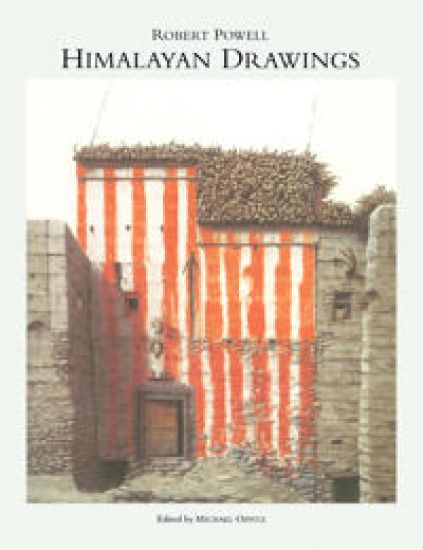
First published in 2002. Following twenty-five years in the Himalayas tirelessly documenting different forms of vernacular architecture and different local customs and beliefs as reflected in material objects, this book is the result. The arrangement of the works selected for the present show and for the accompanying catalogue is by region in a rough chronological order. The plates within carry inscribed a local traditional universe, for the better understanding of which the expert remarks have been added.
The Most Holy Trinosophia

The Most Holy Trinosophia

Robert Powell

SteinerBooks, Inc
2000
nidottu
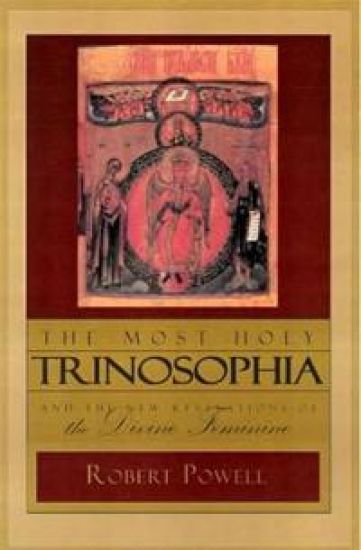
The rising interest in goddess spirituality expresses our current need to understand the feminine side of God, the Sophia (or Divine Wisdom), and her relationship to the masculine aspects of God. Offering a new perspective, the author draws on his own research and on the teaching of Russian philosopher Pavel Florensky, according to whom Sophia has a relationship to the masculine Trinity as an independent spiritual being. Robert Powell discusses Sophia as a Trinity-as Mother, Daughter, and Holy Soul- and as the feminine aspect of Divine Godhead. He connects our reawakening to the feminine aspect of God with many of the changes now taking place in the world. Also included is an introduction to the Divine Feminine by Daniel Andreev, author of The Rose of the World. C O N T E N T S Foreword by Carol E Parrish-HarraIntroduction by Robert PowellThe Divine Feminine by Daniel Ancreev The Most Holy TrinosophiaInterludeThe New Revelation of the Divine Feminine NotesBibliography
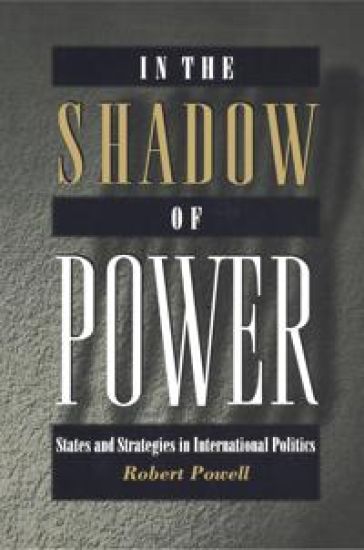
In the Shadow of Power

In the Shadow of Power

Robert Powell

Princeton University Press
1999
pokkari
Robert Powell argues persuasively and elegantly for the usefulness of formal models in studying international conflict and for the necessity of greater dialogue between modeling and empirical analysis. Powell makes it clear that many widely made arguments about the way states act under threat do not hold when subjected to the rigors of modeling. In doing so, he provides a more secure foundation for the future of international relations theory. Powell argues that, in the Hobbesian environment in which states exist, a state can respond to a threat in at least three ways: (1) it can reallocate resources already under its control; (2) it can try to defuse the threat through bargaining and compromise; (3) it can try to draw on the resources of other states by allying with them. Powell carefully outlines these three responses and uses a series of game theoretic models to examine each of them, showing that the models make the analysis of these responses more precise than would otherwise be possible. The advantages of the modeling-oriented approach, Powell contends, have been evident in the number of new insights they have made possible in international relations theory. Some argue that these advances could have originated in ordinary-language models, but as Powell notes, they did not in practice do so. The book focuses on the insights and intuitions that emerge during modeling, rather than on technical analysis, making it accessible to readers with only a general background in international relations theory.
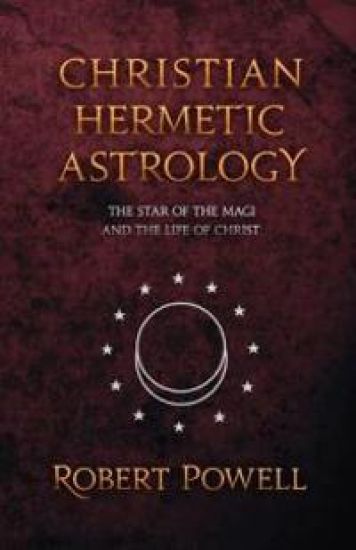
Christian Hemetic Astrology

Christian Hemetic Astrology

Robert Powell

SteinerBooks, Inc
1998
pokkari
Who were the three wise men and what was "the Star of the Magi" that led them to Bethlehem? Using the dialogue form, Christian Hermetic Astrology explores these questions and the basis for the inauguration of "Star Wisdom." Set in the Temple of the Sun, where Hermes, the Egyptian sage, gathers with his three pupils, Tat, Asclepius, and King Ammon, these discourses focus upon the path of Christ, culminating in the Mystery of Golgotha. With Rudolf Steiner and Anne Catherine Emmerich pointing the way, Robert Powell has produced a book, through independent research and careful study, intended as a contribution to a modern "path of the magi" leading to a Christian wisdom of the stars.
Nuclear Deterrence Theory

Nuclear Deterrence Theory

Robert Powell

Cambridge University Press
1990
sidottu
Applying advances in game theory to the study of nuclear deterrence, Robert Powell examines the foundations of deterrence theory. Game-theoretic analysis allows the author to explore some of the most complex and problematic issues in deterrence theory, including the effects of first-strike advantages, limited retaliation, and the number of nuclear powers in the international system on the dynamics of escalation. With the formalizations he develops, the author is able to demonstrate the fundamental similarity of the two seemingly disparate deterrrent strategies that have evolved in response to the nuclear revolution and the condition of mutually assured destruction: the strategy of limited retaliation. The author argues that the logic underlying both strategies centres on a search for ways to make the use of force or the threat of its use credible when any use of force might escalate to mutual devastation.