Kirjojen hintavertailu – 12 903 725 kirjaa ja 27 kauppaa

Kirjailija

Robert R. Clewis

Kirjat ja teokset yhdessä paikassa: 6 kirjaa, julkaisuja vuosilta 2009–2024, suosituimpiin kuuluu The Origins of Kant's Aesthetics. Vertaile teosten hintoja ja tarkista saatavuus suomalaisista kirjakaupoista.

6 kirjaa

Kirjojen julkaisuvuodet: 2009–2024.

The Origins of Kant's Aesthetics

The Origins of Kant's Aesthetics

Robert R. Clewis

Cambridge University Press
2024
pokkari
Organized around eight themes central to aesthetic theory today, this book examines the sources and development of Kant's aesthetics by mining his publications, correspondence, handwritten notes, and university lectures. Each chapter explores one of eight themes: aesthetic judgment and normativity, formal beauty, partly conceptual beauty, artistic creativity or genius, the fine arts, the sublime, ugliness and disgust, and humor. Robert R. Clewis considers how Kant's thought was shaped by authors such as Christian Wolff, Alexander Baumgarten, Georg Meier, Moses Mendelssohn, Johann Sulzer, Johann Herder, Francis Hutcheson, David Hume, Edmund Burke, Henry Home, Charles Batteux, Jean-Jacques Rousseau, and Voltaire. His resulting study uncovers and illuminates the complex development of Kant's aesthetic theory and will be useful to advanced students and scholars in fields across the humanities and studies of the arts.
The Origins of Kant's Aesthetics

The Origins of Kant's Aesthetics

Robert R. Clewis

Cambridge University Press
2023
sidottu
Organized around eight themes central to aesthetic theory today, this book examines the sources and development of Kant's aesthetics by mining his publications, correspondence, handwritten notes, and university lectures. Each chapter explores one of eight themes: aesthetic judgment and normativity, formal beauty, partly conceptual beauty, artistic creativity or genius, the fine arts, the sublime, ugliness and disgust, and humor. Robert R. Clewis considers how Kant's thought was shaped by authors such as Christian Wolff, Alexander Baumgarten, Georg Meier, Moses Mendelssohn, Johann Sulzer, Johann Herder, Francis Hutcheson, David Hume, Edmund Burke, Henry Home, Charles Batteux, Jean-Jacques Rousseau, and Voltaire. His resulting study uncovers and illuminates the complex development of Kant's aesthetic theory and will be useful to advanced students and scholars in fields across the humanities and studies of the arts.

Kant’s Humorous Writings

Kant’s Humorous Writings

Noël Carroll; Robert R. Clewis

Bloomsbury Academic
2020
sidottu
While Kant is commonly regarded as one of the most austere philosophers of all time, this book provides quite a different perspective of the founder of transcendental philosophy. Kant is often thought of as being boring, methodical, and humorless. Yet the thirty jokes and anecdotes collected and illustrated here for the first time reveal a man and a thinker who was deeply interested in how humor and laughter shape how we think, feel, and communicate with fellow human beings. In addition to a foreword on Kant’s theory of humor by Noël Carroll as well as Clewis’s informative chapters, Kant’s Humorous Writings contains new translations of Kant’s jokes, quips, and anecdotes. Each of the thirty excerpts is illustrated and supplemented by historical commentaries which explain their significance.
Kant’s Humorous Writings

Kant’s Humorous Writings

Noël Carroll; Robert R. Clewis

Bloomsbury Academic
2020
nidottu
While Kant is commonly regarded as one of the most austere philosophers of all time, this book provides quite a different perspective of the founder of transcendental philosophy. Kant is often thought of as being boring, methodical, and humorless. Yet the thirty jokes and anecdotes collected and illustrated here for the first time reveal a man and a thinker who was deeply interested in how humor and laughter shape how we think, feel, and communicate with fellow human beings. In addition to a foreword on Kant’s theory of humor by Noël Carroll as well as Clewis’s informative chapters, Kant’s Humorous Writings contains new translations of Kant’s jokes, quips, and anecdotes. Each of the thirty excerpts is illustrated and supplemented by historical commentaries which explain their significance.
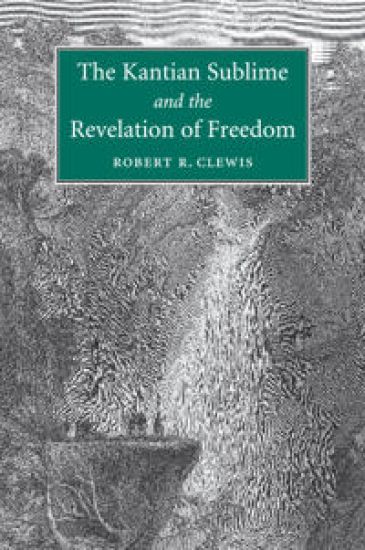
The Kantian Sublime and the Revelation of Freedom

The Kantian Sublime and the Revelation of Freedom

Robert R. Clewis

Cambridge University Press
2015
pokkari
In this book Robert R. Clewis shows how certain crucial concepts in Kant's aesthetics and practical philosophy - the sublime, enthusiasm, freedom, empirical and intellectual interests, the idea of a republic - fit together and deepen our understanding of Kant's philosophy. He examines the ways in which different kinds of sublimity reveal freedom and indirectly contribute to morality, and discusses how Kant's account of natural sublimity suggests that we have an indirect duty with regard to nature. Unlike many other studies of these themes, this book examines both the pre-Critical Observations and the remarks that Kant wrote in his copy of the Observations. Finally, Clewis takes seriously Kant's claim that enthusiasm is aesthetically sublime, and shows how this clarifies Kant's views of the French Revolution. His book will appeal to all who are interested in Kant's philosophy.
The Kantian Sublime and the Revelation of Freedom

The Kantian Sublime and the Revelation of Freedom

Robert R. Clewis

Cambridge University Press
2009
sidottu
In this book Robert R. Clewis shows how certain crucial concepts in Kant's aesthetics and practical philosophy - the sublime, enthusiasm, freedom, empirical and intellectual interests, the idea of a republic - fit together and deepen our understanding of Kant's philosophy. He examines the ways in which different kinds of sublimity reveal freedom and indirectly contribute to morality, and discusses how Kant's account of natural sublimity suggests that we have an indirect duty with regard to nature. Unlike many other studies of these themes, this book examines both the pre-Critical Observations and the remarks that Kant wrote in his copy of the Observations. Finally, Clewis takes seriously Kant's claim that enthusiasm is aesthetically sublime, and shows how this clarifies Kant's views of the French Revolution. His book will appeal to all who are interested in Kant's philosophy.