

Kirjailija
Robert R. Faulkner
Kirjat ja teokset yhdessä paikassa: 6 kirjaa, julkaisuja vuosilta 2009–2017, suosituimpiin kuuluu "Do You Know...?". Vertaile teosten hintoja ja tarkista saatavuus suomalaisista kirjakaupoista.
Nimi esiintyy myös muodoissa: Robert R Faulkner
6 kirjaa
Kirjojen julkaisuvuodet: 2009–2017.
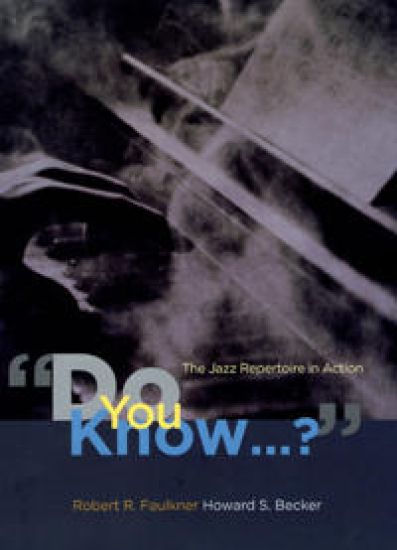
Every night, somewhere in the world, three or four musicians will climb on stage together. Whether the gig is at a jazz club, a bar, or a bar mitzvah, the performance never begins with a note, but with a question. The trumpet player might turn to the bassist and ask, 'Do you know "Body and Soul"?' - and from there the subtle craft of playing the jazz repertoire is tested in front of a live audience. These ordinary musicians may have never played together - they may have never even met - so how do they smoothly put on a show without getting booed off the stage? In "Do You Know...?" Robert R. Faulkner and Howard S. Becker - both jazz musicians with decades of experience performing - present the view from the bandstand, revealing the array of skills necessary for working musicians to do their jobs. While learning songs from sheet music or by ear helps, the jobbing musician's lexicon is dauntingly massive: hundreds of thousands of tunes from jazz classics and pop standards to more exotic fare. Since it is impossible for anyone to memorize all of these songs, Faulkner and Becker show that musicians collectively negotiate and improvise their way to a successful performance. Players must explore each others' areas of expertise, develop an ability to fake their way through unfamiliar territory, and respond to the unpredictable demands of their audience - whether an unexpected gang of polka fanatics or a tipsy father of the bride with an obscure favorite song. "Do You Know...?" dishes out entertaining stories and sharp insights drawn from the authors' own experiences and observations as well as interviews with a range of musicians. Faulkner and Becker's vivid, detailed portrait of the musician at work holds valuable lessons for anyone who has to think on the spot or under a spotlight.
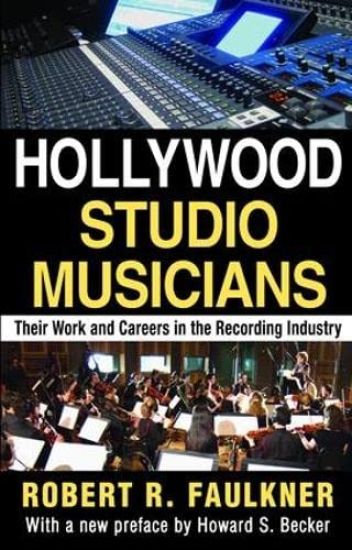
When originally published in 1971, Hollywood Studio Musicians was the first detailed analysis of the work and careers of production personnel in an industry devoted to mass culture. Previously, most researchers overlooked mass-culture industries as work settings, preferring to focus on content rather than the artists who created it. This lucid and insightful book looks under the hood of the Hollywood film scoring and recording industry, focusing upon the careers and work of top-flight musicians. A new preface by Howard S. Becker highlights the study's historical context and importance. Based upon in-depth interviews with freelance musicians, Faulkner provides original insights into how we conceptualize occupations as well as the highly stratified system of professional prestige that results in what we now call the "A-List." Faulkner develops a framework for discovering and exploring how rapidly changing and demanding freelance work induces status hierarchies, sustains and updates collegial reputations, tightens social networks between contractors, and musicians, and restricts access to upward career paths. This volume is a gem, a masterpiece of field research combined with probing, theoretically informed analysis. Aside from the value of its own findings, the volume offers students of sociology, film, and other creative industries a prime example of how to do good social science research. In short, it is a model for investigators to turn to when their own research needs help, an exemplar of how research is done when it is done well.
When originally published in 1971, Hollywood Studio Musicians was the first detailed analysis of the work and careers of production personnel in an industry devoted to mass culture. Previously, most researchers overlooked mass-culture industries as work settings, preferring to focus on content rather than the artists who created it. This lucid and insightful book looks under the hood of the Hollywood film scoring and recording industry, focusing upon the careers and work of top-flight musicians. A new preface by Howard S. Becker highlights the study's historical context and importance. Based upon in-depth interviews with freelance musicians, Faulkner provides original insights into how we conceptualize occupations as well as the highly stratified system of professional prestige that results in what we now call the "A-List." Faulkner develops a framework for discovering and exploring how rapidly changing and demanding freelance work induces status hierarchies, sustains and updates collegial reputations, tightens social networks between contractors, and musicians, and restricts access to upward career paths. This volume is a gem, a masterpiece of field research combined with probing, theoretically informed analysis. Aside from the value of its own findings, the volume offers students of sociology, film, and other creative industries a prime example of how to do good social science research. In short, it is a model for investigators to turn to when their own research needs help, an exemplar of how research is done when it is done well.
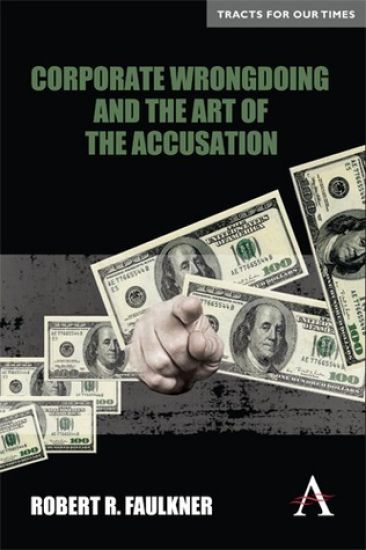
This book addresses an old and basic question: what is the moral order of the market? ‘Corporate Wrongdoing and the Art of the Accusation’ is an exploration of accusations of wrongdoing, and the revelations these accusations expose about the dark side of capitalism and modern corporations in their relationships with suppliers, buyers, peers, investment banks and state regulators. The study explores data gathered from the past twenty years, including over a thousand accusations of economic wrongdoing in corporate America.
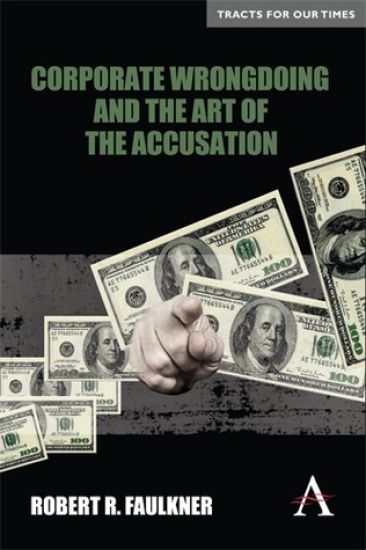
This book addresses an old and basic question: what is the moral order of the market? ‘Corporate Wrongdoing and the Art of the Accusation’ is an exploration of accusations of wrongdoing, and the revelations these accusations expose about the dark side of capitalism and modern corporations in their relationships with suppliers, buyers, peers, investment banks and state regulators. The study explores data gathered from the past twenty years, including over a thousand accusations of economic wrongdoing in corporate America.