Kirjojen hintavertailu – 12 903 735 kirjaa ja 27 kauppaa

Kirjailija

Robert R. Williams

Kirjat ja teokset yhdessä paikassa: 9 kirjaa, julkaisuja vuosilta 1961–2020, suosituimpiin kuuluu Tragedy, Recognition, and the Death of God. Vertaile teosten hintoja ja tarkista saatavuus suomalaisista kirjakaupoista.

Nimi esiintyy myös muodoissa: Robert R Williams

9 kirjaa

Kirjojen julkaisuvuodet: 1961–2020.

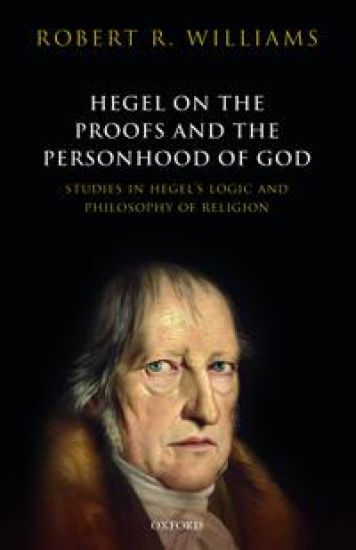
Hegel on the Proofs and the Personhood of God

Hegel on the Proofs and the Personhood of God

Robert R. Williams

Oxford University Press
2017
sidottu
Hegel's analysis of his culture identifies nihilistic tendencies in modernity i.e., the death of God and end of philosophy. Philosophy and religion have both become hollowed out to such an extent that traditional disputes between faith and reason become impossible because neither any longer possesses any content about which there could be any dispute; this is nihilism. Hegel responds to this situation with a renewal of the ontological argument (Logic) and ontotheology, which takes the form of philosophical trinitarianism. Hegel on the Proofs and the Personhood of God examines Hegel's recasting of the theological proofs as the elevation of spirit to God and defense of their content against the criticisms of Kant and Jacobi. It also considers the issue of divine personhood in the Logic and Philosophy of Religion. This issue reflects Hegel's antiformalism that seeks to win back determinate content for truth (Logic) and the concept of God. While the personhood of God was the issue that divided the Hegelian school into left-wing and right-wing factions, both sides fail as interpretations. The center Hegelian view is both virtually unknown, and the most faithful to Hegel's project. What ties the two parts of the book together-Hegel's philosophical trinitarianism or identity as unity in and through difference (Logic) and his theological trinitarianism, or incarnation, trinity, reconciliation, and community (Philosophy of Religion)-is Hegel's Logic of the Concept. Hegel's metaphysical view of personhood is identified with the singularity (Einzelheit) of the concept. This includes as its speculative nucleus the concept of the true infinite: the unity in difference of infinite/finite, thought and being, divine-human unity (incarnation and trinity), God as spirit in his community.
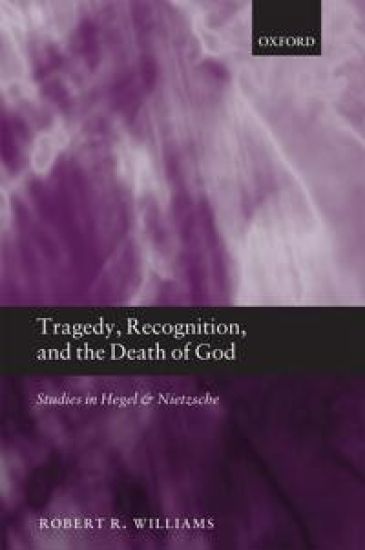
Tragedy, Recognition, and the Death of God

Tragedy, Recognition, and the Death of God

Robert R. Williams

Oxford University Press
2012
sidottu
Hegel and Nietzsche are two of the most important figures in philosophy and religion. Robert R. Williams challenges the view that they are mutually exclusive. He identifies four areas of convergence. First, Hegel and Nietzsche express and define modern interest in tragedy as a philosophical topic. Each seeks to correct the traditional philosophical and theological suppression of a tragic view of existence. This suppression of the tragic is required by the moral vision of the world, both in the tradition and in Kant's practical philosophy and its postulates. For both Hegel and Nietzsche, the moral vision of the world is a projection of spurious, life-negating values that Nietzsche calls the ascetic ideal, and that Hegel identifies as the spurious infinite. The moral God is the enforcer of morality. Second, while acknowledging a tragic dimension of existence, Hegel and Nietzsche nevertheless affirm that existence is good in spite of suffering. Both affirm a vision of human freedom as open to otherness and requiring recognition and community. Struggle and contestation have affirmative significance for both. Third, while the moral God is dead, this does not put an end to the God-question. Theology must incorporate the death of God as its own theme. The union of God and death expressing divine love is for Hegel the basic speculative intuition. This implies a dipolar, panentheistic concept of a tragic, suffering God, who risks, loves, and reconciles. Fourth, Williams argues that both Hegel and Nietzsche pursue theodicy, not as a justification of the moral God, but rather as a question of the meaningfulness and goodness of existence despite nihilism and despite tragic conflict and suffering. The inseparability of divine love and anguish means that reconciliation is no conflict-free harmony, but includes a paradoxical tragic dissonance: reconciliation is a disquieted bliss in disaster.

Toward a Conquest of Beriberi

Toward a Conquest of Beriberi

Robert R. Williams; W. H. Sebrell Jr

Literary Licensing, LLC
2011
sidottu
""Toward A Conquest Of Beriberi"" is a book written by Robert R. Williams that delves into the history and scientific understanding of the disease known as beriberi. Beriberi is a condition caused by a deficiency of thiamine (vitamin B1) and was prevalent in many parts of the world, particularly in Asia, during the early 20th century. The book explores the efforts made by scientists and medical professionals to understand the causes of beriberi and to develop effective treatments for the disease. Williams discusses the various theories that were proposed to explain the condition, including the idea that it was caused by a toxin in rice, and the experiments that were conducted to test these hypotheses. The book also examines the social and economic factors that contributed to the spread of beriberi and the challenges faced by those working to combat the disease. Overall, ""Toward A Conquest Of Beriberi"" provides a comprehensive and engaging account of the efforts to understand and eradicate a major public health problem of the early 20th century. This scarce antiquarian book is a facsimile reprint of the old original and may contain some imperfections such as library marks and notations. Because we believe this work is culturally important, we have made it available as part of our commitment for protecting, preserving, and promoting the world's literature in affordable, high quality, modern editions, that are true to their original work.
Hegel's Ethics of Recognition

Hegel's Ethics of Recognition

Robert R. Williams

University of California Press
2000
pokkari
In this significant contribution to Hegel scholarship, Robert Williams develops the most comprehensive account to date of Hegel's concept of recognition (Anerkennung). Fichte introduced the concept of recognition as a presupposition of both Rousseau's social contract and Kant's ethics. Williams shows that Hegel appropriated the concept of recognition as the general pattern of his concept of ethical life, breaking with natural law theory yet incorporating the Aristotelian view that rights and virtues are possible only within a certain kind of community. He explores Hegel's intersubjective concept of spirit (Geist) as the product of affirmative mutual recognition and his conception of recognition as the right to have rights. Examining Hegel's Jena manuscripts, his Philosophy of Right, the Phenomenology of Spirit, and other works, Williams shows how the concept of recognition shapes and illumines Hegel's understandings of crime and punishment, morality, the family, the state, sovereignty, international relations, and war. A concluding chapter on the reception and reworking of the concept of recognition by contemporary thinkers including Derrida, Levinas, and Deleuze demonstrates Hegel's continuing centrality to the philosophical concerns of our age.