Kirjojen hintavertailu – 12 903 725 kirjaa ja 27 kauppaa
Kirjailija
Robert S. Summers
Kirjat ja teokset yhdessä paikassa: 10 kirjaa, julkaisuja vuosilta 1967–2019, suosituimpiin kuuluu Interpreting Statutes. Vertaile teosten hintoja ja tarkista saatavuus suomalaisista kirjakaupoista.
This title was first published in 2000: Robert S. Summers is a distinguished legal theorist whose work has had significant influence in Europe as well as the United States. The study of form and substance in law, the theme of this collection, marks many of his most distinctive contributions to law and legal philosophy over four decades.
Provides law students with an in-depth introduction to the UCC without burdening them with unnecessary detail. Citations have been used to enable the reader to understand the kinds of cases that might be presented under particular provisions of the Code. The materials cover payment systems under UCC Articles 3, 4, 4A, and 5, as well as related statutes, regulations, and operating rules governing negotiable instruments, the banking system, the Federal Reserve, clearinghouses, electronic payments, and letters of credit.
This title was first published in 2000: Robert S. Summers is a distinguished legal theorist whose work has had significant influence in Europe as well as the United States. The study of form and substance in law, the theme of this collection, marks many of his most distinctive contributions to law and legal philosophy over four decades.
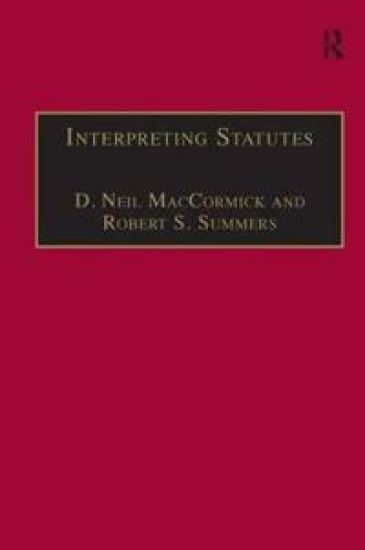
This book is a work of outstanding importance for scholars of comparative law and jurisprudence and for lawyers engaged in EC law or other international forms of practice. It reviews, compares and analyses the practice of interpretation in nine countries representing Europe as well as the US and Argentina in common and civil law; it also explores implications for general theories of interpretation and of justification. Its authors, who include Aulis Aarnio, Robert Alexy, Ralf Dreier, Enrique Zuleta-Puceiro, Michel Troper, Christophe Grzegorczyk, Jean-Louis Gardes, Enrico Pattaro, Michele Taruffo, Massimo La Torre, Jerry Wroblewski, Alexsander Peczenik, Gunnar Bergholtz and Zenon Bankowski, as well as editors Robert S. Summers and D. Neil MacCormick, constitute an international team of great distinction; they have worked on this project for over seven years.
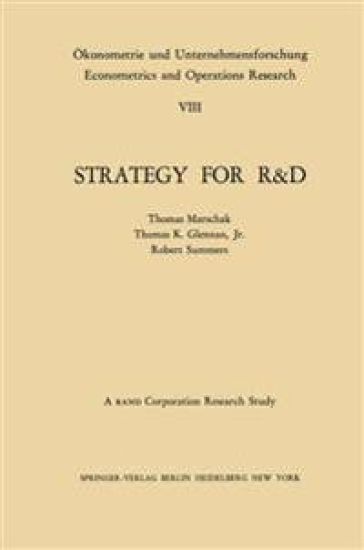
89 TABLE 5 USE OR PLANNED USE OF MAJOR ENGINES IN AIR FORCE AND NAVY AIRCRAFT a Engine Air Force Aircraft Navy Aircraft F-80, T-33, XF-92, YB-61, AJ2, F9F-7, TV-I, J-33 YB-62, F-94 (A, B), TM- T2-V, P4M-I 61 ( tactical missile) X-3, XF-88 F3D, F2H, F6U, F7U J-34 F-84 (B, C, D, E, G, H) J-35 FJ-I B-45, XB-51, XF-9J, B-36, J-47 B-47, F-86 (D, F, K) J-48 F-94C F9F J-57 B-52, YB-60, F-lOO, A3D, F4D, F8U F-I02A, F-I0l (A, B), SNARK, F-105A, F-I07, KC-135A, B-57D, X-16 F-84F, B-57 FIIF, A4D, FJ-3, J-65 FJ-4, F9F YQ-l, YQ-2, T-37 J-69 SNARK, YF-89E, B-66 J-71 F-I01, F-I02B, F-I05, J-75 F-I07 F8U, XP6M B-58, F-I04, F-IOIA (see J-79 note c, Table 4) F5D, FIIF, A3J, F4H T-34 C-133A, YC-97J, YC-12IF R7V-2 XF-84H T-40 R3Y,XFY,A2D YC-130, YC-131C T-56 Note: a Aircraft in which engine was used or was planned to be used. For at least one (and generally more) of the aircraft in the list associated with a given engine, the decision to use the engine was made when the engine was in the final stages of develop ment. (In the case of the J -57, J-79, andJ-75 this is true of nearly all the aircraft listed. ) No Jist extends beyond 1956. Summary For an engine developed independently of an airframe the de veloper may constrain the performance, weight, and size of an engine at the start.
This book addresses three major questions about law and legal systems: (1) What are the defining and organising forms of legal institutions, legal rules, interpretative methodologies, and other legal phenomena? (2) How does frontal and systematic focus on these forms advance understanding of such phenomena? (3) What credit should the functions of forms have when such phenomena serve policy and related purposes, rule of law values, and fundamental political values such as democracy, liberty, and justice? This book seeks to offer general answers to these questions and thus gives form in the law its due. The answers not only provide articulate conversancy with the subject but also reveal insights into the nature of law itself, the oldest and foremost problem in legal theory and allied subjects.
This book addresses three major questions about law and legal systems: (1) What are the defining and organising forms of legal institutions, legal rules, interpretative methodologies, and other legal phenomena? (2) How does frontal and systematic focus on these forms advance understanding of such phenomena? (3) What credit should the functions of forms have when such phenomena serve policy and related purposes, rule of law values, and fundamental political values such as democracy, liberty, and justice? This book seeks to offer general answers to these questions and thus gives form in the law its due. The answers not only provide articulate conversancy with the subject but also reveal insights into the nature of law itself, the oldest and foremost problem in legal theory and allied subjects.
The essays Professor Summers has brought together in this book consist of various authentic and representative formulations and applications of the dominant general theory of law and its use in the United States during the middle decades of the 20th century. The book includes a number of major contributions that are critical of that theory. The contributors are: The path of the law, Oliver Wendell Homes Jr. Force and coercion; Logical method and law, John Dewey. The need of a sociological jurisprudence; Mechanical jurisprudence; The possibility of a measure of values, Roscoe Pound. What is the law, Joseph W. Binham. A return to stare decisis, Herman Oliphant. A realistic jurisprudence-the next step; The normative, the legal, and the law-jobs: the problem of juristic method, K. N. Lewellyn. The problems of a functional jurisprudence, Felix S. Cohen. The causes of popular dissatisfaction with the administration of justice, Roscoe Pound. The judiciality of minimum-wage legislation, Thomas Red Powell. An institutional approach to the law of commercial banking, Underhill Moore and Theodore S. Hope Jr. Through title to contract and a bit beyond, K. N. Llewellyn. Williston on contracts; The logical and legal bases of the conflict of laws, Walter Wheeler Cook. American legal realism, L. L. Fuller. Legal rules: their function in the process of decision, John Dickenson. Some rationalism about realism, Hermann Kantorwicz. Pragmatic instumentalism in twentieth century American legal thought-a synthesis and critique of our dominant general theory about law and its use.
This book is a work of outstanding importance for scholars of comparative law and jurisprudence and for lawyers engaged in EC law or other international forms of practice. It reviews, compares and analyses the practice of interpretation in nine countries representing Europe as well as the US and Argentina in common and civil law; it also explores implications for general theories of interpretation and of justification. Its authors, who include Aulis Aarnio, Robert Alexy, Ralf Dreier, Enrique Zuleta-Puceiro, Michel Troper, Christophe Grzegorczyk, Jean-Louis Gardes, Enrico Pattaro, Michele Taruffo, Massimo La Torre, Jerry Wroblewski, Alexsander Peczenik, Gunnar Bergholtz and Zenon Bankowski, as well as editors Robert S. Summers and D. Neil MacCormick, constitute an international team of great distinction; they have worked on this project for over seven years.