Kirjojen hintavertailu – 12 903 725 kirjaa ja 27 kauppaa

Kirjailija

Robert Stam

Kirjat ja teokset yhdessä paikassa: 20 kirjaa, julkaisuja vuosilta 1992–2023, suosituimpiin kuuluu Unthinking Eurocentrism. Vertaile teosten hintoja ja tarkista saatavuus suomalaisista kirjakaupoista.

20 kirjaa

Kirjojen julkaisuvuodet: 1992–2023.

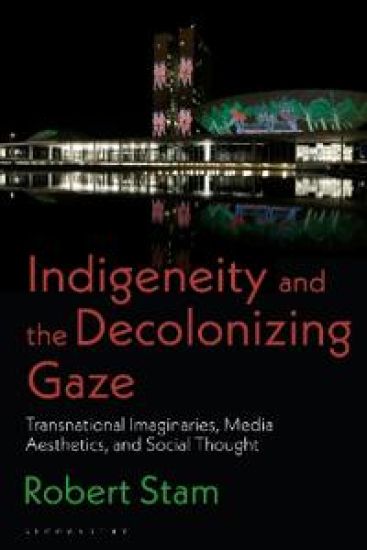
Indigeneity and the Decolonizing Gaze

Indigeneity and the Decolonizing Gaze

Robert Stam

BLOOMSBURY PUBLISHING PLC
2023
sidottu
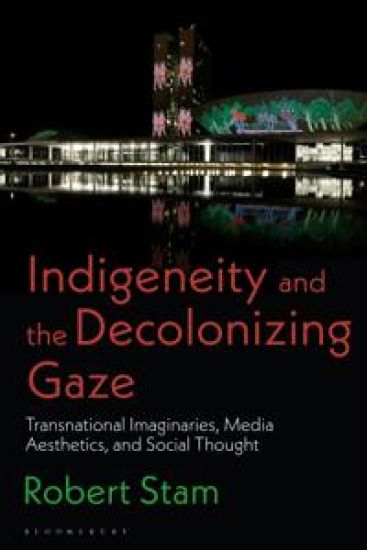
Against the long historical backdrop of 1492, Columbus, and the Conquest, Robert Stam's wide-ranging study traces a trajectory from the representation of indigenous peoples by others to self-representation by indigenous peoples, often as a form of resistance and rebellion to colonialist or neoliberal capitalism, across an eclectic range of forms of media, arts, and social philosophy. Spanning national and transnational media in countries including the US, Brazil, Canada, France, Germany, and Italy, Stam orchestrates a dialogue between the western mediated gaze on the 'Indian' and the indigenous gaze itself, especially as incarnated in the burgeoning movement of “indigenous media,” that is, the use of audio-visual-digital media for the social and cultural purposes of indigenous peoples themselves. Drawing on examples from cinema, literature, music, video, painting and stand-up comedy, Stam shows how indigenous artists, intellectuals and activists are responding to the multiple crises - climatological, economic, political, racial, and cultural - confronting the world. Significant attention is paid to the role of arts-based activism in supporting the struggle of indigenous artistic activism, of the Yanomami people specifically, to save the Amazon forest and the planet.
Unthinking Eurocentrism

Unthinking Eurocentrism

Ella Shohat; Robert Stam

Routledge
2014
sidottu
Unthinking Eurocentrism, a seminal and award-winning work in postcolonial studies first published in 1994, explored Eurocentrism as an interlocking network of buried premises, embedded narratives, and submerged tropes that constituted a broadly shared epistemology. Within a transdisciplinary study, the authors argued that the debates about Eurocentrism and post/coloniality must be considered within a broad historical sweep that goes at least as far back as the various 1492s – the Inquisition, the Expulsion of Jews and Muslims, the Conquest of the Americas, and the Transatlantic slave trade – a process which culminates in the post-War attempts to radically decolonize global culture. Ranging over multiple geographies, the book deprovincialized media/cultural studies through a "polycentric" approach, while analysing in depth such issues as postcolonial hybridity, antinomies of Enlightenment, the tropes of empire, gender and rescue fantasies, the racial politics of casting, and the limitations of "positive image" analysis. The substantial new afterword in this 20th anniversary new edition brings these issues into the present by charting recent transformations of the intellectual debates, as terms such as the "transnational," the "commons," "indigeneity," and the "Red Atlantic" have come to the fore. The afterword also explores some cinematic trends such as "indigenous media" and "postcolonial adaptations" that have gained strength over the past two decades, along with others, such as Nollywood, that have emerged with startling force. Winner of the Katherine Kovacs Singer Best Film Book Award, the book has been translated in full or in its entirety into diverse languages from Spanish to Farsi. This expanded edition of a ground-breaking text proposes analytical grids relevant to a wide variety of fields including postcolonial studies, literary studies, anthropology, media studies, cultural studies, and critical race studies.
Unthinking Eurocentrism

Unthinking Eurocentrism

Ella Shohat; Robert Stam

Routledge
2014
nidottu
Unthinking Eurocentrism, a seminal and award-winning work in postcolonial studies first published in 1994, explored Eurocentrism as an interlocking network of buried premises, embedded narratives, and submerged tropes that constituted a broadly shared epistemology. Within a transdisciplinary study, the authors argued that the debates about Eurocentrism and post/coloniality must be considered within a broad historical sweep that goes at least as far back as the various 1492s – the Inquisition, the Expulsion of Jews and Muslims, the Conquest of the Americas, and the Transatlantic slave trade – a process which culminates in the post-War attempts to radically decolonize global culture. Ranging over multiple geographies, the book deprovincialized media/cultural studies through a "polycentric" approach, while analysing in depth such issues as postcolonial hybridity, antinomies of Enlightenment, the tropes of empire, gender and rescue fantasies, the racial politics of casting, and the limitations of "positive image" analysis. The substantial new afterword in this 20th anniversary new edition brings these issues into the present by charting recent transformations of the intellectual debates, as terms such as the "transnational," the "commons," "indigeneity," and the "Red Atlantic" have come to the fore. The afterword also explores some cinematic trends such as "indigenous media" and "postcolonial adaptations" that have gained strength over the past two decades, along with others, such as Nollywood, that have emerged with startling force. Winner of the Katherine Kovacs Singer Best Film Book Award, the book has been translated in full or in its entirety into diverse languages from Spanish to Farsi. This expanded edition of a ground-breaking text proposes analytical grids relevant to a wide variety of fields including postcolonial studies, literary studies, anthropology, media studies, cultural studies, and critical race studies.
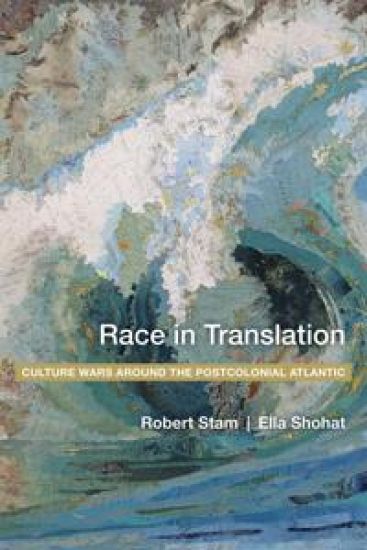
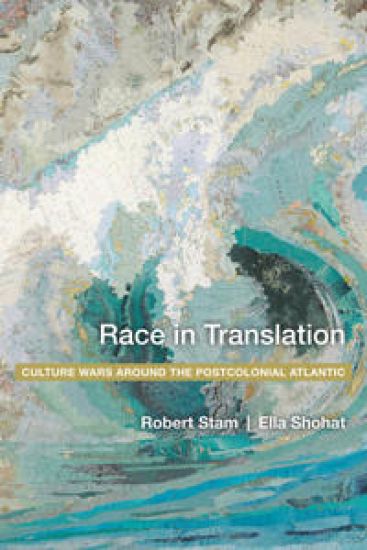
Race in Translation

Race in Translation

Ella Shohat; Robert Stam

New York University Press
2012
sidottu
While the term "culture wars" often designates the heated arguments in the English-speaking world spiraling around race, the canon, and affirmative action, in fact these discussions have raged in diverse sites and languages. Race in Translation charts the transatlantic traffic of the debates within and between three zones—the U. S., France, and Brazil. Stam and Shohat trace the literal and figurative translation of these multidirectional intellectual debates, seen most recently in the emergence of postcolonial studies in France, and whiteness studies in Brazil. The authors also interrogate an ironic convergence whereby rightist politicians like Sarkozy and Cameron join hands with some leftist intellectuals like Benn Michaels, Žižek, and Bourdieu in condemning "multiculturalism" and "identity politics." At once a report from various "fronts" in the culture wars, a mapping of the germane literatures, and an argument about methods of reading the cross-border movement of ideas, the book constitutes a major contribution to our understanding of the Diasporic and the Transnational.
Flagging Patriotism

Flagging Patriotism

Ella Shohat; Robert Stam

Routledge
2006
sidottu
The question "Why do they hate us?" is one of the most oft-cited puzzles of contemporary American affairs, yet it’s not clear to whom "they" or "us" refers, nor even what "hate" means. In this bold new work, Ella Shohat and Robert Stam take apart the "hate discourse" of right-wing politics, placing it in an international context. How, for example, do other nations love themselves, and how is that love connected to their attitudes toward America? Is love of country "monogamous" or can one love many countries? When can a country’s self-love be a symptom of self-hatred? Drawing upon their extensive experience with South American, European, and Middle Eastern societies, the authors have written a long engagement with a problem that refuses to go away. Flagging Patriotism considers these complex features of "being patriotic," and in so doing insists that the idea of patriotism, instead of being rejected or embraced, be accorded the complex identity it possesses.
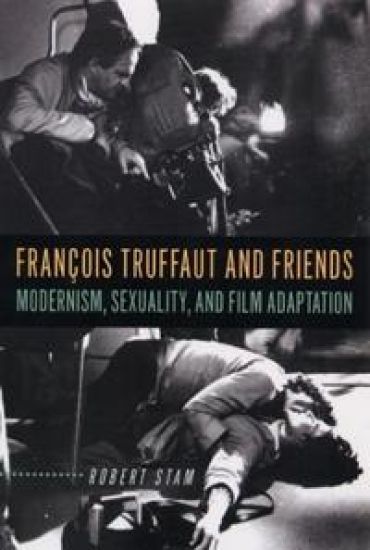
François Truffaut and Friends

François Truffaut and Friends

Robert Stam

Rutgers University Press
2006
nidottu
One of François Truffaut's most poignantly memorable films, Jules and Jim, adapted a novel by the French writer and art collector Henri-Pierre Roch. The characters and events of the 1960s film were based on a real-life romantic triangle, begun in the summer of 1920, which involved Roch himself, the German-Jewish writer Franz Hessel, and his wife, the journalist Helen Grund. Drawing on this film and others by Truffaut, Robert Stam provides the first in-depth examination of the multifaceted relationship between Truffaut and Roch. In the process, he provides a unique lens through which to understand how adaptation works-from history to novel, and ultimately to film-and how each form of expression is inflected by the period in which it is created. Truffaut's adaptation of Roch's work, Stam suggests, demonstrates how reworkings can be much more than simply copies of their originals; rather, they can become an immensely creative enterprise-a form of writing in itself. The book also moves beyond Truffaut's film and the mnage--trois involving Roch, Hessel, and Grund to explore the intertwined lives and work of other famous artists and intellectuals, including Marcel Duchamp, Walter Benjamin, and Charlotte Wolff. Tracing the tangled webs that linked these individuals' lives, Stam opens the door to an erotic/writerly territory where the complex interplay of various artistic sensibilities-all mulling over the same nucleus of feelings and events-vividly comes alive.
Tropical Multiculturalism

Tropical Multiculturalism

Robert Stam

Duke University Press
1997
sidottu
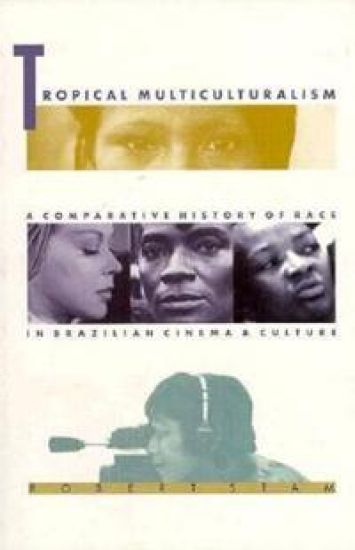
Tropical Multiculturalism provides a major study of race in Brazilian culture through the most complete critical analysis of Brazilian cinema in any language. Focusing on representations of multicultural themes involving Euro- and Afro-Brazilians, other immigrants, and indigenous peoples in the rich tradition of Brazilian fictional feature film, Robert Stam puts Brazilian culture at the center of a wide-ranging analysis of race, representation, history, and film. Drawing parallels between the histories of colonialism, slavery, and immigration in Brazil and the United States, he also contends that questions of ethnic and racial representations are best viewed within the larger context of a comparative analysis of racially plural societies. Stam examines the broad historical and cultural links that connect Brazil and the United States before considering multicultural imagery in Brazilian film as it has changed from the silent era to the present. His analysis moves through the comic chanchadas of the 1930s and 1940s, to the Hollywood-style films from Sao Paulo in the 1950s, and the diverse phases of Cinema Novo beginning in the 1960s. He explores a wealth of subjects, including the submerged "blackness" of Carmen Miranda, the anti-racist agenda of Orson Welles’s never-released Brazilian film It’s All True, the international background behind Black Orpheus, the career of Grande Otelo (Brazil’s greatest black film star), the allegorical "cannibalistic" films like How Tasty Was My Frenchman, and "indigenous media"-the attempt by Brazilian "indians" to use camcorders and VCRs for their own cultural and political purposes. Tropical Multiculturalism is simultaneously a history of Brazilian cinema from the standpoint of race, a history of Brazil itself through its cinematic representations, a comparative study of racial formations in Brazil and the United States, and a theorized analysis of racialized representations.
Indigeneity and the Decolonizing Gaze

Indigeneity and the Decolonizing Gaze

Robert Stam

BLOOMSBURY PUBLISHING PLC
2023
nidottu
Against the long historical backdrop of 1492, Columbus, and the Conquest, Robert Stam's wide-ranging study traces a trajectory from the representation of indigenous peoples by others to self-representation by indigenous peoples, often as a form of resistance and rebellion to colonialist or neoliberal capitalism, across an eclectic range of forms of media, arts, and social philosophy. Spanning national and transnational media in countries including the US, Brazil, Canada, France, Germany, and Italy, Stam orchestrates a dialogue between the western mediated gaze on the 'Indian' and the indigenous gaze itself, especially as incarnated in the burgeoning movement of “indigenous media,” that is, the use of audio-visual-digital media for the social and cultural purposes of indigenous peoples themselves. Drawing on examples from cinema, literature, music, video, painting and stand-up comedy, Stam shows how indigenous artists, intellectuals and activists are responding to the multiple crises - climatological, economic, political, racial, and cultural - confronting the world. Significant attention is paid to the role of arts-based activism in supporting the struggle of indigenous artistic activism, of the Yanomami people specifically, to save the Amazon forest and the planet.
World Literature, Transnational Cinema, and Global Media
With extraordinary transnational and transdisciplinary range, World Literature, Transnational Cinema, and Global Media comprehensively explores the genealogies, vocabularies, and concepts orienting the fields within literature, cinema, and media studies. Orchestrating a layered conversation between arts, disciplines, and media, Stam argues for their "mutual embeddedness" and their shared "in-between" territories. Rather than merely adding to the existing scholarship, the book builds a relational framework through the connectivities within literature, cinema, music, and media that opens up analysis to new categories and concepts, while crossing spatial, temporal, theoretical, disciplinary, and mediatic borders. The book also questions an array of hierarchies: literature over cinema; source novel over adaptation; feature film over documentary; erudite over vernacular culture; Western modernisms over "peripheral" modernisms; classical over popular music; written poetry over sung poetry, and so forth. The book is structured around the concept of the "commons," forming a strong thread which links various struggles against "enclosures" of all kinds, with emphasis on natural, indigenous, cultural, creative, digital, and the transdisciplinary commons. World Literature, Transnational Cinema, and Global Media is ideal to further the theoretical discussion for those undergraduate and graduate departments in cinema studies, media studies, arts and art history, communications, journalism, and new digital media programs at all levels.
World Literature, Transnational Cinema, and Global Media
With extraordinary transnational and transdisciplinary range, World Literature, Transnational Cinema, and Global Media comprehensively explores the genealogies, vocabularies, and concepts orienting the fields within literature, cinema, and media studies. Orchestrating a layered conversation between arts, disciplines, and media, Stam argues for their "mutual embeddedness" and their shared "in-between" territories. Rather than merely adding to the existing scholarship, the book builds a relational framework through the connectivities within literature, cinema, music, and media that opens up analysis to new categories and concepts, while crossing spatial, temporal, theoretical, disciplinary, and mediatic borders. The book also questions an array of hierarchies: literature over cinema; source novel over adaptation; feature film over documentary; erudite over vernacular culture; Western modernisms over "peripheral" modernisms; classical over popular music; written poetry over sung poetry, and so forth. The book is structured around the concept of the "commons," forming a strong thread which links various struggles against "enclosures" of all kinds, with emphasis on natural, indigenous, cultural, creative, digital, and the transdisciplinary commons. World Literature, Transnational Cinema, and Global Media is ideal to further the theoretical discussion for those undergraduate and graduate departments in cinema studies, media studies, arts and art history, communications, journalism, and new digital media programs at all levels.
Keywords in Subversive Film / Media Aesthetics

Keywords in Subversive Film / Media Aesthetics

Robert Stam

John Wiley Sons Inc
2015
nidottu
Keywords offers a conversational journey through the overlying terrains of politically engaged art and artistically engaged politics, combining a major statement on subversive aesthetics, a survey of radical film strategies, and a lexicon of over a thousand terms and concepts. No other book combines an ambitious essay on radical politics and aesthetics in film with a lexicon of terms and ideas, many of which are new and innovativeCreates and illustrates over a thousand terms and concept, drawing its examples from a wide range of mediaProvides a broad timespan, covering the very ancient (Ramayana, Aristotle) to the most current (digital mashups, memes)Uniquely discusses the areas of film, television and the internet within one bookNo other book combines an ambitious essay on radical politics and aesthetics in film with a lexicon of terms and ideas, many of which are new and innovative
Keywords in Subversive Film / Media Aesthetics

Keywords in Subversive Film / Media Aesthetics

Robert Stam

John Wiley Sons Inc
2015
sidottu
Keywords offers a conversational journey through the overlying terrains of politically engaged art and artistically engaged politics, combining a major statement on subversive aesthetics, a survey of radical film strategies, and a lexicon of over a thousand terms and concepts. No other book combines an ambitious essay on radical politics and aesthetics in film with a lexicon of terms and ideas, many of which are new and innovativeCreates and illustrates over a thousand terms and concept, drawing its examples from a wide range of mediaProvides a broad timespan, covering the very ancient (Ramayana, Aristotle) to the most current (digital mashups, memes)Uniquely discusses the areas of film, television and the internet within one bookNo other book combines an ambitious essay on radical politics and aesthetics in film with a lexicon of terms and ideas, many of which are new and innovative
Race in Translation

Race in Translation

Ella Shohat; Robert Stam

New York University Press
2012
pokkari
While the term "culture wars" often designates the heated arguments in the English-speaking world spiraling around race, the canon, and affirmative action, in fact these discussions have raged in diverse sites and languages. Race in Translation charts the transatlantic traffic of the debates within and between three zones—the U. S., France, and Brazil. Stam and Shohat trace the literal and figurative translation of these multidirectional intellectual debates, seen most recently in the emergence of postcolonial studies in France, and whiteness studies in Brazil. The authors also interrogate an ironic convergence whereby rightist politicians like Sarkozy and Cameron join hands with some leftist intellectuals like Benn Michaels, Žižek, and Bourdieu in condemning "multiculturalism" and "identity politics." At once a report from various "fronts" in the culture wars, a mapping of the germane literatures, and an argument about methods of reading the cross-border movement of ideas, the book constitutes a major contribution to our understanding of the Diasporic and the Transnational.
Flagging Patriotism

Flagging Patriotism

Ella Shohat; Robert Stam

Routledge
2006
nidottu
The question "Why do they hate us?" is one of the most oft-cited puzzles of contemporary American affairs, yet it’s not clear to whom "they" or "us" refers, nor even what "hate" means. In this bold new work, Ella Shohat and Robert Stam take apart the "hate discourse" of right-wing politics, placing it in an international context. How, for example, do other nations love themselves, and how is that love connected to their attitudes toward America? Is love of country "monogamous" or can one love many countries? When can a country’s self-love be a symptom of self-hatred? Drawing upon their extensive experience with South American, European, and Middle Eastern societies, the authors have written a long engagement with a problem that refuses to go away. Flagging Patriotism considers these complex features of "being patriotic," and in so doing insists that the idea of patriotism, instead of being rejected or embraced, be accorded the complex identity it possesses.
Literature Through Film

Literature Through Film

Robert Stam

Wiley-Blackwell (an imprint of John Wiley Sons Ltd)
2004
sidottu
This lively and accessible textbook, written by an expert in film studies, provides a fascinating introduction to the process and art of literature-to-film adaptations. Provides a lively, rigorous, and clearly written account of key moments in the history of the novel from Don Quixote and Robinson Crusoe up to Lolita and One Hundred Years of Solitude Includes diversity of topics and titles, such as Fielding, Nabokov, and Cervantes in adaptations by Welles, Kubrick, and the French New Wave Emphasizes both the literary texts themselves and their varied transtextual film adaptations Examines numerous literary trends – from the self-conscious novel to magic realism – before exploring the cinematic impact of the movement Reinvigorates the field of adaptation studies by examining it through the grid of contemporary theory Brings novels and film adaptations into the age of multiculturalism, postcoloniality, and the Internet by reflecting on their contemporary relevance.
Literature Through Film

Literature Through Film

Robert Stam

Wiley-Blackwell (an imprint of John Wiley Sons Ltd)
2004
nidottu
This lively and accessible textbook, written by an expert in film studies, provides a fascinating introduction to the process and art of literature-to-film adaptations. Provides a lively, rigorous, and clearly written account of key moments in the history of the novel from Don Quixote and Robinson Crusoe up to Lolita and One Hundred Years of Solitude Includes diversity of topics and titles, such as Fielding, Nabokov, and Cervantes in adaptations by Welles, Kubrick, and the French New Wave Emphasizes both the literary texts themselves and their varied transtextual film adaptations Examines numerous literary trends – from the self-conscious novel to magic realism – before exploring the cinematic impact of the movement Reinvigorates the field of adaptation studies by examining it through the grid of contemporary theory Brings novels and film adaptations into the age of multiculturalism, postcoloniality, and the Internet by reflecting on their contemporary relevance.
Film Theory

Film Theory

Robert Stam

JOHN WILEY AND SONS LTD
1999
nidottu
This book is a lively and provoking introduction to film theory. It is suitable for students from any discipline but is particularly aimed at students studying film and literature as it examines issues common to both subjects such as realism, illusionism, narration, point of view, style, semiotics, psychoanalysis and multiculturalism. It also includes coverage of theorists common to both, Barthes, Lacan and Bakhtin among others. Robert Stam, renowned for his clarity of writing, will also include studies of cinema specialists providing readers with a depth of reference not generally available outside the field of film studies itself. Other material covered includes film adaptations of works of literature and analogies between literary and film criticism.
Tropical Multiculturalism

Tropical Multiculturalism

Robert Stam

Duke University Press
1997
pokkari
Tropical Multiculturalism provides a major study of race in Brazilian culture through the most complete critical analysis of Brazilian cinema in any language. Focusing on representations of multicultural themes involving Euro- and Afro-Brazilians, other immigrants, and indigenous peoples in the rich tradition of Brazilian fictional feature film, Robert Stam puts Brazilian culture at the center of a wide-ranging analysis of race, representation, history, and film. Drawing parallels between the histories of colonialism, slavery, and immigration in Brazil and the United States, he also contends that questions of ethnic and racial representations are best viewed within the larger context of a comparative analysis of racially plural societies. Stam examines the broad historical and cultural links that connect Brazil and the United States before considering multicultural imagery in Brazilian film as it has changed from the silent era to the present. His analysis moves through the comic chanchadas of the 1930s and 1940s, to the Hollywood-style films from Sao Paulo in the 1950s, and the diverse phases of Cinema Novo beginning in the 1960s. He explores a wealth of subjects, including the submerged "blackness" of Carmen Miranda, the anti-racist agenda of Orson Welles’s never-released Brazilian film It’s All True, the international background behind Black Orpheus, the career of Grande Otelo (Brazil’s greatest black film star), the allegorical "cannibalistic" films like How Tasty Was My Frenchman, and "indigenous media"-the attempt by Brazilian "indians" to use camcorders and VCRs for their own cultural and political purposes. Tropical Multiculturalism is simultaneously a history of Brazilian cinema from the standpoint of race, a history of Brazil itself through its cinematic representations, a comparative study of racial formations in Brazil and the United States, and a theorized analysis of racialized representations.
Subversive Pleasures

Subversive Pleasures

Robert Stam

Johns Hopkins University Press
1992
pokkari
Subversive Pleasures offers the first extended application of Mikhail Bakhtin's critical methods to film, mass-media, and cultural studies. With extraordinary interdisciplinary and multicultural range, Robert Stam explores issues that include the "translinguistic" critique of Saussurean semiotics and Russian formalism, the question of language difference in the cinema, issues of national culture in Latin America, and "the carnivalesque" in literature and film. He discusses literary works by Rabelais, Shakespeare, and Jarry and treats films by Vigo, Bunuel, Wertmuller, Imamura, Mel Brooks, Monty Python, Marleen Gooris, and others. Now in paperback, Subversive Pleasures is a splendidly lucid introduction to the central concepts and analytical methods of Bakhtin and the Bakhtin circle.
Reflexivity in Film and Culture

Reflexivity in Film and Culture

Robert Stam

Columbia University Press
1992
pokkari
Reflexivity refers to those moments in fiction and film when the work suddenly calls attention to itself as a fictional construct. For example, in literature a character might suddenly step out of the story and address the reader. This study of reflexivity in film and literature pays special attention to "Don Quixote", one of the first such examples of reflexivity in the novel, and to Jean-Luc Godard and the nouvelle vague in cinema, where self-reflection prevailed. It examines the rise of modernism, the complicity of the reader-spectator in creating illusion and the production process in film. The discussion of film includes "Rear Window", "Tom Jones" and "The French Lieutenant's Woman".