
Kirjailija
Robert Thompson
Kirjat ja teokset yhdessä paikassa: 52 kirjaa, julkaisuja vuosilta 1989–2026, suosituimpiin kuuluu Purcell Manuscripts. Vertaile teosten hintoja ja tarkista saatavuus suomalaisista kirjakaupoista.
52 kirjaa
Kirjojen julkaisuvuodet: 1989–2026.
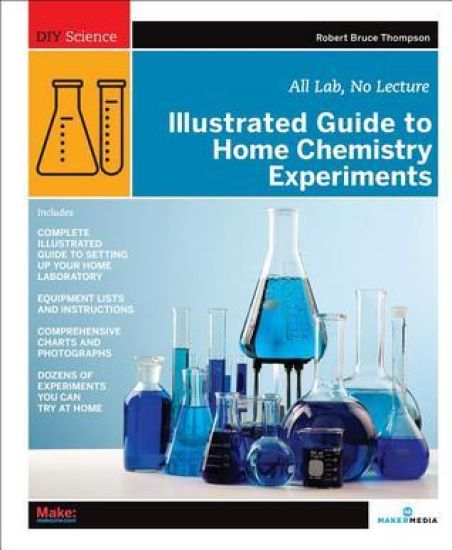
Illustrated Guide to Home Chemistry Experiments
Robert Thompson
Make Community, LLC
2008
nidottu
Halvin toimitettuna 24,00 €
For students, DIY hobbyists, and science buffs, who can no longer get real chemistry sets, this one-of-a-kind guide explains how to set up and use a home chemistry lab, with step-by-step instructions for conducting experiments in basic chemistry - not just to make pretty colors and stinky smells, but to learn how to do real lab work: purify alcohol by distillation; produce hydrogen and oxygen gas by electrolysis; smelt metallic copper from copper ore you make yourself; analyze the makeup of seawater, bone, and other common substances; synthesize oil of wintergreen from aspirin and rayon fiber from paper; perform forensics tests for fingerprints, blood, drugs, and poisons; and much more. From the 1930s through the 1970s, chemistry sets were among the most popular Christmas gifts, selling in the millions. But two decades ago, real chemistry sets began to disappear as manufacturers and retailers became concerned about liability. "The Illustrated Guide to Home Chemistry Experiments" steps up to the plate with lessons on how to equip your home chemistry lab, master laboratory skills, and work safely in your lab. The bulk of this book consists of 17 hands-on chapters that include multiple laboratory sessions on the following topics: Separating Mixtures; Solubility and Solutions; Colligative Properties of Solutions; Introduction to Chemical Reactions and Stoichiometry; Reduction-Oxidation (Redox) Reactions; Acid-Base Chemistry; Chemical Kinetics; Chemical Equilibrium and Le Chatelier's Principle; Gas Chemistry; Thermochemistry and Calorimetry; Electrochemistry; Photochemistry; Colloids and Suspensions; Qualitative Analysis; Quantitative Analysis; Synthesis of Useful Compounds; and Forensic Chemistry. With plenty of full-color illustrations and photos, Illustrated Guide to Home Chemistry Experiments offers introductory level sessions suitable for a middle school or first-year high school chemistry laboratory course, and more advanced sessions suitable for students who intend to take the College Board Advanced Placement (AP) Chemistry exam. A student who completes all of the laboratories in this book will have done the equivalent of two full years of high school chemistry lab work or a first-year college general chemistry laboratory course. This hands-on introduction to real chemistry - using real equipment, real chemicals, and real quantitative experiments - is ideal for the many thousands of young people and adults who want to experience the magic of chemistry.
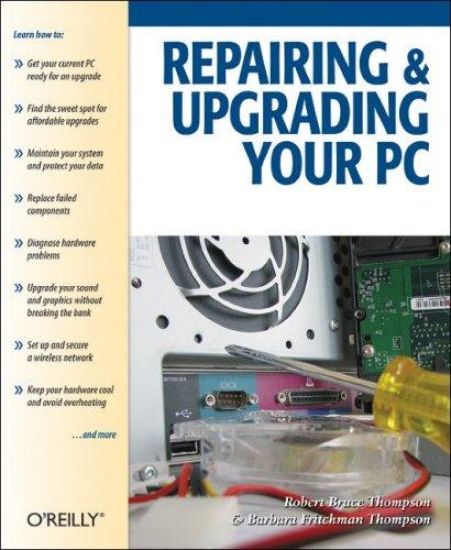
Repairing and Upgrading Your PC
Robert Thompson; Barbara Fritchman Thompson
Make Community, LLC
2006
nidottu
Most computer users think that fiddling with the insides of their PC is taboo. They fear that by removing the screws that hold the case on, they're crossing into forbidden territory. And even for those who know they can open the box and fix or upgrade their PC, analysis paralysis often stops them in their tracks: Which upgrades offer the best bang for the buck? How do you pinpoint the faulty component that's making your system freeze? What about compatibility issues? Get ready to get unstuck and get your PC running fast and running right. "Repairing and Upgrading Your PC" delivers start-to-finish instructions, simple enough for even the most inexperienced PC owner, for troubleshooting, repairing, and upgrading your computer. Written by hardware experts Robert Bruce Thompson and Barbara Fritchman Thompson, this book covers it all: how to troubleshoot a troublesome PC, how to identify which components make sense for an upgrade, and how to tear it all down and put it back together. This book shows how to repair and upgrade all of your PC's essential components: Motherboard, CPU, and Memory - choose the optimal match of these core components to keep your PC running at top speed; Hard Drive, Optical Drive, and Removable Storage - give your computer what it needs for long-term and short-term storage; Audio and Video - enhance your computing experience with the right sound and graphics devices for your needs; Input Devices - pick the best keyboard and mouse to keep your hands happy and healthy; Networking - set up secure wireless networking to keep the bits flowing between your computers and the outside world; and Cases and Power Supplies - keep everything running cool and reliably. With its straightforward language, clear instructions, and extensive illustrations, this book makes it a breeze for PC owners of any skill level to work on their computer.
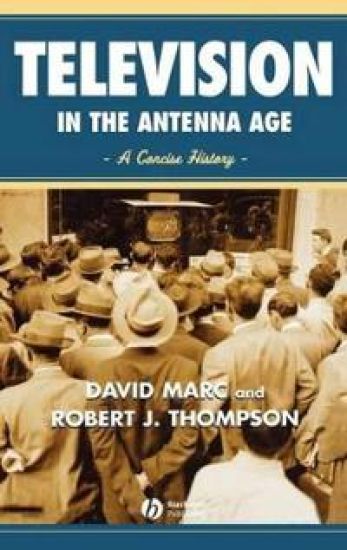
Television in the Antenna Age is a brief, accessible, and engaging overview of the medium’s history and development in the US. Integrating three major concerns--television as an industry, a technology, and an art—the book is a basic primer on the complex, fascinating, and often overlooked story of television and its impact on American life. Covers the entire history of American television, from its urban, middle-class beginnings in the late 40s, to the contemporary impact of new technologies and consolidated corporate. Includes interview segments with industry insiders, pictures, and sidebars to illustrate important figures, trends, and events
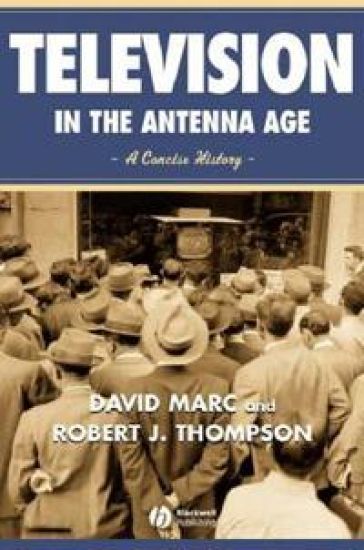
Television in the Antenna Age is a brief, accessible, and engaging overview of the medium’s history and development in the US. Integrating three major concerns--television as an industry, a technology, and an art—the book is a basic primer on the complex, fascinating, and often overlooked story of television and its impact on American life. Covers the entire history of American television, from its urban, middle-class beginnings in the late 40s, to the contemporary impact of new technologies and consolidated corporate. Includes interview segments with industry insiders, pictures, and sidebars to illustrate important figures, trends, and events
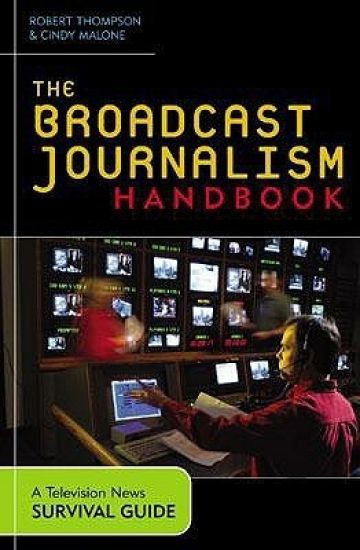
The Broadcast Journalism Handbook
Robert Thompson; Cindy Malone
Rowman Littlefield Publishers
2003
nidottu
The Broadcast Journalism Handbook has everything you ever wanted to know about working in the television news business but were afraid to ask! College courses teach the theory of how a television newsroom works; here, working journalists show the reality of the business. Learn the ropes—and how to head off amateur errors—from the authors' vast experiences and dozens of interviews with news professionals. The economic recession and new advances in technology are making this exciting career more competitive than ever, and this book will give budding journalists a head start with an insider's view of the job—necessary in today's environment. Complete with a news glossary, job-searching tips, helpful web sites, and real-life scenarios that put the student in the shoes of today's journalists, The Broadcast Journalism Handbook covers many newsroom positions, from assignment editors to producers, reporters, and anchors. It gives you newsroom experience before you get the job.

Empires on the Pacific smashes the standard narrative of World War II in the Pacific theatre, showing America's aim to replace Britain as East Asia's New Imperial Power. Robert Smith Thompson offers a long overdue explanation of what America's war against Japan was really about- in a word: China. The over-reaching British Empire was waning yet unwilling to relinquish its foothold in China, while an increasingly ambitious Japan was determined to dominate the region by conquering China. Enter the young upstart, America. For Franklin Delano Roosevelt and for the United States, the war with Japan had little to do with revenge for Pearl Harbor. Japan would have to be vanquished so that it would never again be an imperial rival. Thompson's recasting of the Asian conflict profoundly alters our understanding of World War II in the Pacific and of what followed in Korea and in Vietnam. Revisionist history at its best, Empires on the Pacific is a far-reaching book that requires us to re-evaluate what we thought we knew about twentieth-century American history and what many still consider our last "good war."
The Viola da Gamba Society Index of Manuscripts containing Consort Music
Andrew Ashbee; Robert Thompson
Ashgate Publishing Limited
2001
sidottu
The Viola da Gamba Society Thematic Index of Music for Viols (ed. Gordon Dodd), 1980-92 (and continuing), is composer-based. The present volume initiates a companion project to catalogue manuscripts containing consort music. The editors are all highly experienced in the field and have newly examined all sources. Volume 1 features over 50 MSS whose copyists or owners are known: Bing, Hutton, Jenkins, Le Strange, Lilly, Merro, North. As well as a detailed inventory of every book (with anonymous work identified where possible), the descriptions include information on date, size, binding, paper, rastra, watermarks, collations, scripts, inscriptions and provenance, together with bibliographical references. Brief notes on the owners and copyists are provided. Of particular importance is the inclusion of facsimiles of all hands. Also included is a comprehensive study and illustration of watermarks by Robert Thompson (serving for the whole series). With some printed catalogues such as the British Library and Christ Church, Oxford, now nearly 100 years old, this new and comprehensive study will be an invaluable tool for future research.
Part of Praeger's Media and Society Series, this contributed volume is the only collection of essays on television authorship. It includes work of some of the most prominent scholars in television studies. Rather than assigning one author to individual television texts, the contributors probe the relationship between the various authors at work within the institutional, cultural, and economic settings that characterize the television industry. This book analyzes and defines the unique methods of television authorship and suggests numerous candidates for authorial accountability allowing the medium to enter the realm of contemporary criticism. The first part of the volume provides a case study in four chapters on authorship issues surrounding Frank's Place, the short lived but compelling situation comedy. This is followed by three chapters focusing on issues of authorship in international television. The book then probes the studio's role as author, including essays on Warner Brothers, Desilu, and Screen Gems. Finally the contributors examine individual TV authors and cover such topics as point of view in music video, television production as collective action, and unconventional television.
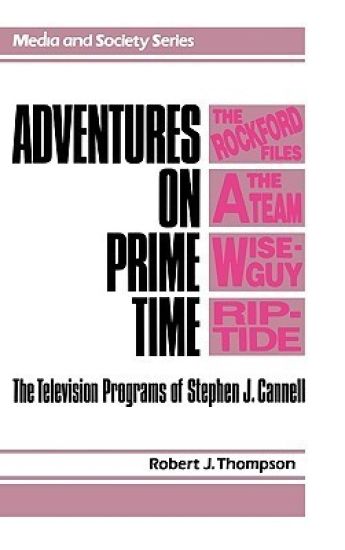
Part of Praeger's Media and Society Series, this volume breaks new ground in television studies as the first booklength study of an individual television producer. Robert J. Thompson examines the work of Stephen J. Cannell, one of television's most prolific and successful producers. Thompson uses theories of film authorship revised for application to television texts and provides close analysis of Cannell's programs, including individual episodes of The Rockford Files, The A-Team, and The Greatest American Hero. Moving away from the notion that a television series is the creation of an individual author, the book begins with a look at the televisionmaker. Thompson probes the polyauthorial nature of the medium and introduces a new method of studying television authorship. The book then turns to Cannell and a study of his career, focusing on how he developed the formula for his many highly rated television series. Students and teachers of television and television criticism will find Adventures on Prime Time a source of stimulating ideas about the nature of the medium.
Brain Mechanisms in Problem Solving and Intelligence
Robert Thompson; Francis M. Crinella; Jen Yu
Kluwer Academic/Plenum Publishers
1990
sidottu
This book is the outcome of a decade of research on the neu roanatomical mechanisms of learning in the young laboratory rat. It is essentially a discourse on the functional organization of the brain in relation to problem-solving ability and intelli gence. During the period between 1980 and 1989, well over 1000 weanling albino rats were subjected to localized brain damage (or sham operations in the case of the controls) under deep anesthesia and aseptic surgical conditions, were allowed tore cover, and subsequently were tested on a wide variety of prob lems designed to measure general learning ability. Since vir tually every part of the brain rostral to the medulla has been explored with lesions, it has become possible not only to map a number of "putative" brain systems underlying the acquisition of distinctive problem-solving tasks, but to isolate several neu roanatomical mechanisms that appear to be selectively in volved in the acquisition of particular kinds of goal-directed learned activities. Of particular interest was the discovery of a "nonspecific mechanism" (previously referred to in our re search reports as the "general learning system") inhabiting the interior parts of the brain. One objective of this volume was to make these maps available in a single source. Another was to provide a descrip tion of learning syndromes arising from local lesions to differ ent parts of the brain.
Burns and Thompson help to remedy the lack of a forum for current research on television by bringing together, in this volume, some of the best recent research in television studies. This work will begin to fill the gap in literature on television studies as a discipline. In compiling these 13 papers, the editors maintain a balance of timely interest and lasting relevance. The contributors study the texts of current TV dramatic and comic series, such as Dallas and Cheers, as well as current trends in nonfiction TV, such as network and local news coverage. Each analysis of a specific television text is complimented with rigorous theoretical argumentation. Students and scholars of communications and television criticism will find Television Studies valuable reading. The book begins with a two-chapter debate primarily seeking a definition of `television studies.' The debate includes a critical examination of the capitalist institutions that dominate television as an industry. Further chapters discuss dramatic television series; an examination of the development of the lengthy serial text of Dallas, and structural analysis of the pilot episode of Cheers. The book contains five essays on nonfiction television, including an insiders view of the production and promotion of local TV news and an analysis of CBS and ABC's TV news coverage of South Africa over a two week period in 1987. In a final essay, conventional wisdom about `the audience' is refuted.